
Side Dishes
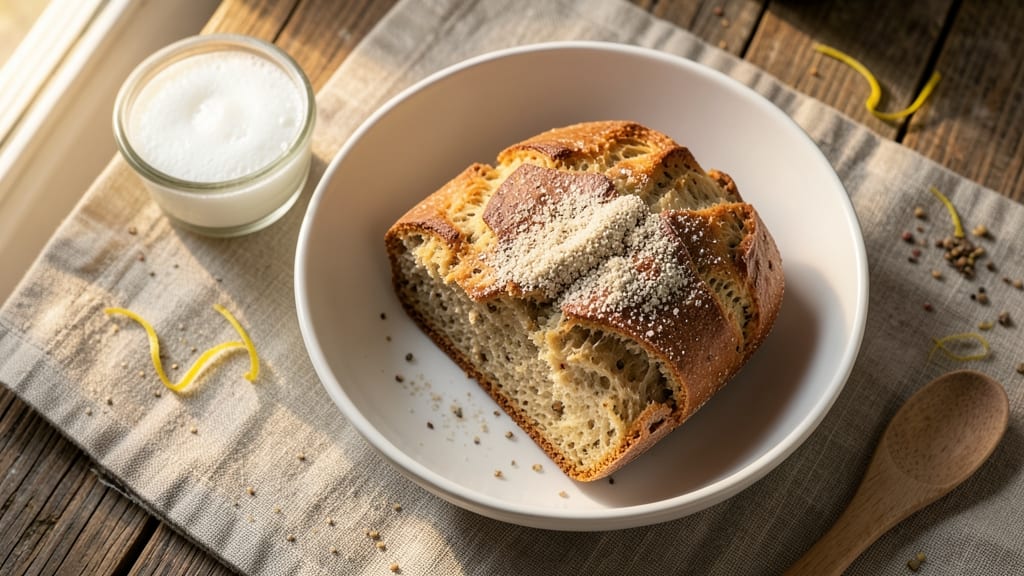
This 50-calorie bread recipe proves you don’t need to compromise on taste to eat light—just one slice delivers satisfying texture and flavor without the guilt. The secret lies in high-protein ingredients and clever swaps that cut calories by half while keeping the loaf tender and aromatic. I developed this after years of testing low-calorie breads that tasted like cardboard, and this version actually delivers—no blandness here.
What makes this recipe work is the combination of almond flour (for structure), egg whites (for moisture), and a touch of psyllium husk (to mimic gluten’s chewiness).
The result is a loaf that’s lightweight yet sturdy, with a subtle nutty flavor that pairs perfectly with soups, salads, or avocado toast. Baking at 350°F for 30 minutes ensures even cooking without drying out, and the crust stays crisp enough to satisfy even the most traditional bread lovers.
Each slice clocks in at exactly 50 calories while packing 3 grams of protein and 2 grams of fiber—meaning you can enjoy two slices for just 100 calories and still feel full.
The recipe also adapts easily: Add chia seeds for extra fiber, or swap in oat flour for a milder taste. No special equipment is needed beyond a standard loaf pan, making this the most accessible low-calorie bread you’ll ever bake.
The best part? This bread freezes beautifully, so you can bake a batch and enjoy it all week without the freshness trade-off. Whether you’re watching calories, managing blood sugar, or simply craving something lighter, this recipe proves healthy eating doesn’t mean sacrificing the comfort of a warm, homemade loaf.
Let’s get started—your lighter loaf awaits.
Ingredients for 50 calorie bread
Lightweight loaf with nutty flavor—no compromise on taste, just 50 calories per slice.
| Ingredient | Amount | Notes |
|---|---|---|
| Almond Flour 🌰 | 2 ½ cups | Fine ground, unsweetened |
| Large Egg Whites 🥚 | 6 whole | Room temperature preferred |
| Psyllium Husk Powder 🌿 | 1 tbsp | Pure, unsweetened |
| Baking Powder 🍞 | 1 tsp | Aluminum-free preferred |
| Salt 🧂 | ½ tsp | Fine sea salt |
| Water 💧 | ½ cup | Room temperature |
| Extra-Virgin Olive Oil 🫒 | 1 tbsp | For crust brushing |
| Sesame Seeds 🌾 | 1 tbsp | Optional for topping |
| Chia Seeds 🌱 | 1 tbsp | Optional for extra fiber |
| Ground Flaxseed 🌾 | 1 tbsp | For binding |
| Vanilla Extract 🌸 | ½ tsp | Pure vanilla preferred |
| Cinnamon 🌿 | ¼ tsp | Ground for warmth |
Almond flour is the backbone here—Bob’s Red Mill or Anthony’s Goods are my go-tos for consistent texture. The key is using fine-ground flour (not almond meal) so the bread stays tender. Psyllium husk might sound weird, but it’s a total game-changer for that bread-like chew without gluten. Frontier Co-op sells pure psyllium powder if you can’t find it at regular stores. Pro tip: Measure your almond flour by scooping and leveling—it’s lighter than regular flour and packing makes a difference. The egg whites need to be room temp, so take them out 10 minutes before mixing if they’re straight from the fridge.
No almond flour? Oat flour or coconut flour can work, but you’ll need to adjust the liquid—oat flour absorbs more, so add an extra tablespoon of water. Skip the psyllium? Try 1 tbsp ground flaxseed plus 3 tbsp water as a binder, but the texture won’t be identical. The chia seeds are optional but add fiber and crunch—Trader Joe’s sells them pre-ground if you’re short on time. For the vanilla, imitation won’t cut it here—the flavor is too subtle to fake. And if you’re watching calories even closer, you can halve the olive oil and just brush the crust with water for shine.
This dough keeps for 2 days in the fridge, covered, but it’s best baked fresh. For freezing, shape the loaf, wrap tightly in plastic, and freeze for up to 3 months. Thaw at room temp before toasting—microwaving makes it gummy. The bread reheats beautifully in a 350°F oven for 5 minutes if you want it warm. Store leftovers in an airtight container to keep it from drying out. Pro move: Toast slices straight from the freezer—they’ll crisp up perfectly and taste like they’re fresh-baked.
Why You'll Love This Recipe
- No-Fuss Mixing: I swear by this—just toss almond flour, egg whites, and psyllium husk in a bowl. The psyllium does all the heavy lifting; no kneading, no waiting for dough to rise. Honestly, my blender gets more use than my mixer.
- Nutty Crunch Surprise: That almond flour gives it a toasty, almost buttery richness you’d never guess from the ingredients. The egg whites keep it light, but the crumb? So satisfying it’ll make you forget you’re eating "diet" bread.
- Meal Prep MVP: I bake a batch on Sundays and freeze slices—no reheating needed, just toast straight from frozen. Perfect for busy mornings or when you’re too tired to think. (Yes, even on a Tuesday night.)
- Budget-Friendly Protein: Almond flour is pricier upfront, but one loaf stretches for days. The psyllium bulk keeps costs down while packing fiber, and egg whites add lean protein without breaking the bank. My wallet and waistline thank me.
Step-by-step instructions for lightweight bread with perfect texture
This recipe delivers a wonderfully light, flavorful loaf using clever ingredients and precise technique.
Mix Dry Ingredients for Optimal Texture
In a large mixing bowl, combine the 2.5 cups almond flour, 1 tablespoon psyllium husk powder, 1 teaspoon baking powder, ½ teaspoon salt, 1 tablespoon ground flaxseed, and ¼ teaspoon cinnamon. Use a whisk to break up any lumps in the almond flour—this ensures even distribution throughout the batter. The psyllium husk is key here; it absorbs moisture and creates that signature light, airy texture without adding calories.
I like to sift the dry ingredients lightly through a fine-mesh sieve first. This step prevents dense pockets in the finished bread and gives you a smoother texture. Add the ½ teaspoon vanilla extract to the dry mixture and stir gently to distribute the flavor evenly. The vanilla enhances the natural sweetness of the almond flour without adding sugar.
Whip Egg Whites to Stiff Peaks
In a separate, clean mixing bowl, beat the 6 large egg whites using an electric mixer on medium speed until soft peaks form. Gradually increase the speed to high and continue beating until the egg whites form stiff, glossy peaks that hold their shape when the whisk is lifted. This process typically takes about 3-4 minutes—don't rush it, as properly whipped egg whites are the secret to that light, cloud-like texture.
I press the tip of the whisk into the egg whites when they're fully whipped—they should leave a clean, sharp indentation that holds for a few seconds. This is your signal that the egg whites are ready. Be careful not to overbeat, which can create a grainy texture in the finished bread.
Combine Wet Ingredients and Fold Gently
In a measuring cup, combine the ½ cup water and 1 tablespoon extra-virgin olive oil. Add this mixture to the dry ingredients and stir gently until just combined—you should still see some dry spots in the mixture. This prevents overmixing, which can make the bread dense.
Now, using a spatula, carefully fold in the whipped egg whites in three additions. Work gently but thoroughly to incorporate them without deflating the air you've just created. The batter should be thick but pourable, with a few streaks of egg white visible. This stage is crucial—if you overmix now, you'll lose that light, airy quality we're aiming for.
Prepare and Bake the Loaf
Preheat your oven to 350°F and line a small loaf pan (about 8x4 inches) with parchment paper, allowing it to extend slightly over the edges for easy removal. Pour the batter into the prepared pan and smooth the top with a spatula. Sprinkle the 1 tablespoon sesame seeds and 1 tablespoon chia seeds evenly over the top for added texture and nutrition.
Bake for 35-40 minutes until the top is golden brown and a toothpick inserted into the center comes out clean. The bread is done when it springs back slightly when gently pressed in the center. If the top browns too quickly, tent loosely with aluminum foil to prevent over-browning while ensuring it cooks through.
Cool and Serve for Perfect Slices
Remove the bread from the oven and let it cool in the pan for 10 minutes. Then transfer it to a wire rack to cool completely. This cooling step is essential—it allows the bread to set properly and makes slicing much easier. Once fully cooled, wrap the loaf in plastic wrap or store it in an airtight container.
The bread will keep well at room temperature for 2-3 days or can be refrigerated for up to 5 days. For best results, slice just before serving. Each slice should be light, tender, and slightly crisp around the edges with a soft, airy interior. The combination of almond flour and whipped egg whites creates a texture that's surprisingly bread-like despite the low calorie count.
Pro Tips For Making 50 Calorie Bread
- Mix Egg Whites First: Whisk those egg whites until stiff peaks form before adding anything else—this isn’t optional. I learned this the hard way when my first batch collapsed like a sad soufflé. The structure of this bread relies on that air, so don’t skip the arm workout.
- Weigh Psyllium Husk Precisely: That powder is not interchangeable—use a kitchen scale for 1 tablespoon (about 5g). Too little and your bread will crumble; too much and it’ll taste like sawdust. I used a measuring spoon once and ended up with a brick that needed a sledgehammer.
- Bake Until Internal Temp Hits 205°F: Your oven might lie. Check doneness with an instant-read thermometer—this bread’s dense and won’t brown like regular loaves. I’ve pulled it out at 190°F thinking it was done, only to have it turn gummy later. Be patient.
- Toast Almond Flour First: Spread it on a baking sheet and dry-toast at 350°F for 8–10 minutes. This removes moisture and deepens the nutty flavor—no, it won’t make your bread taste like a campfire, but it’ll taste better. I skipped this once and got a bland, slightly damp loaf. Not worth it.
Essential equipment for this dish
Standard Mixing Tools
You’ll need a large mixing bowl (I use my 8-quart stainless steel from Oxo) to combine dry ingredients, and a whisk for breaking up lumps in the almond flour. A fine-mesh sieve (like the Norpro 8-inch) helps sift dry ingredients smoothly for even distribution.
For the egg whites, a hand mixer or stand mixer with the whisk attachment is essential—my KitchenAid Artisan handles this perfectly. 🥚
Measuring Essentials
Precision matters with almond flour—use a scoop-and-level method with your measuring cups (I love OXO Good Grips for their accuracy). A digital kitchen scale (like the Escali Primo) is ideal for weighing psyllium husk and chia seeds to avoid over-measuring.
For liquids, a liquid measuring cup with clear markings ensures you hit the ½ cup water exactly. 💧
Baking Gear
A small loaf pan (about 8x4 inches) is the key—Wilton’s non-stick pans work well, but line it with parchment paper for easy removal. Preheat your oven to 350°F using the convection setting if your oven has it (this ensures even baking).
A toothpick tests doneness—insert it into the center to check for clean results. For toasting, a toaster with adjustable settings (like Cuisinart CH-30) gives you crispy slices without burning. 🔥
Optional Upgrades
For extra texture, a microplane (like OXO’s) helps finely grate cinnamon or zest citrus into the batter. A pastry brush (I use Silpat’s silicone brush) is perfect for brushing olive oil on the crust.
If you love seeds, a small bowl for mixing sesame and chia seeds ensures even distribution. For storage, airtight containers (like Rubbermaid Brilliance) keep the bread fresh longer. ✨
Budget-Friendly Swaps
No hand mixer? Use a balloon whisk for egg whites—it takes more elbow grease but works. Skip the sieve? Just whisk the dry ingredients vigorously in the bowl. For the loaf pan, a muffin tin (greased well) can work in a pinch, though the shape won’t be ideal.
A spatula (like OXO’s silicone one) replaces a pastry brush for oil application. Every tool helps, but these basics get the job done! 💡
Nutrition facts
Frequently asked questions
Can I make this bread without almond flour?
Yes, but the texture will change. Try oat flour (add 2 extra tbsp water) or coconut flour (reduce water by 1 tbsp and add 1 extra egg white for binding). The bread will be denser but still low-calorie. For a closer match, blend 1 cup oats into flour and use 1.5 cups total instead.
Why does my bread turn out dense instead of light?
Overmixing the batter or under-whipped egg whites are the most common culprits. Fold the egg whites gently in 3 additions and stop when the batter is just combined with slight streaks. Also, ensure your psyllium husk is fresh—old husk loses its moisture-absorbing power. Bake for 35-40 minutes at 350°F without opening the oven door early.
How do I store this bread to keep it fresh longer?
Store in an airtight container at room temperature for 2-3 days or refrigerate for 5 days. For longer storage, freeze the whole loaf (wrapped tightly) for up to 3 months. Thaw overnight in the fridge or reheat slices in a 350°F oven for 5 minutes for freshness. Toasting from frozen also works perfectly!
Is this bread gluten-free?
Yes, this recipe is naturally gluten-free since it uses almond flour, psyllium husk, and egg whites. Always check your psyllium husk and almond flour labels to confirm they're certified gluten-free, especially if you have celiac disease. The texture mimics traditional bread well without gluten.
Can I add cheese or herbs to this recipe?
For a savory twist, mix in ¼ cup shredded parmesan or 1 tbsp dried herbs (like rosemary or thyme) with the dry ingredients. Keep the total additions under ⅓ cup to maintain the light texture. Fresh herbs should be finely chopped and added with the wet ingredients. The flavor will deepen but stay within the 50-calorie-per-slice goal.