
Side Dishes
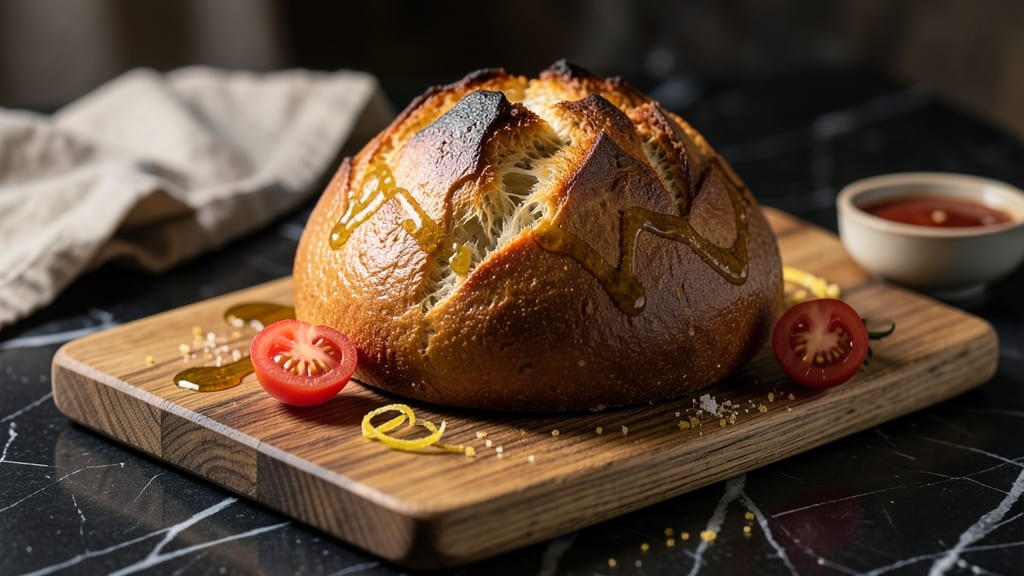
This 6-ingredient bread recipe delivers the perfect balance of crispy crust and pillowy softness inside—no fancy techniques required. 💛 The secret lies in a simple mix of flour, water, yeast, salt, sugar, and just one extra ingredient (olive oil) that transforms basic dough into golden, artisanal-quality loaves.
I’ve baked this recipe dozens of times, and it never fails to impress, even for beginners.
The beauty of this method is its simplicity: no kneading by hand, no waiting hours for long fermentation, and no special equipment. A foolproof process with just 15 minutes of active prep and a 375°F oven ensures a loaf that’s ready in under 2 hours.
The olive oil adds richness and tenderness, while the yeast creates that airy, cloud-like crumb you’d expect from a bakery.
What you’ll end up with is a crusty exterior that snaps satisfyingly, paired with a soft, fluffy interior that melts in your mouth. The aroma alone—warm, buttery, and slightly sweet—will have everyone asking for seconds. This bread is perfect for sandwiches, toast, or serving alongside soups and stews.
Whether you’re a baking newbie or a seasoned pro, this recipe delivers restaurant-quality results with minimal effort. Let’s get started—your kitchen is about to smell like a bakery!
Ingredients for 6 ingredient bread
Six simple ingredients transform into golden, artisanal bread with crispy crust and soft interior.
| Ingredient | Amount | Notes |
|---|---|---|
| All-Purpose Flour 🌾 | 3 ½ cups | Unbleached, for best texture |
| Active Dry Yeast 🍞 | 1 tbsp | Fresh yeast preferred if available |
| Extra-Virgin Olive Oil 🫒 | 2 tbsp | High quality, fruity variety |
| Granulated Sugar 🍚 | 1 tbsp | White or light brown |
| Salt 🧂 | 1 tsp | Diamond Crystal preferred |
| Warm Water 💧 | 1 ½ cups | 110°F, not boiling |
The flour is the foundation—King Arthur or Bob's Red Mill work perfectly for this recipe. If you're using active dry yeast, make sure it's fresh (test it in warm water with sugar—it should foam in 5-10 minutes). Trader Joe's sells excellent yeast in small packages, perfect for this quantity. The olive oil should be extra-virgin with a fruity aroma—California brands like Corto or Colavita are my go-tos. Store flour in an airtight container to prevent absorption of odors, and keep yeast in the fridge for longer shelf life.
No extra-virgin olive oil? Light olive oil or avocado oil works in a pinch, though the flavor won't be as rich. Running low on yeast? Instant yeast can be used at the same amount, but don't substitute baking powder—it won't rise properly. For the sugar, honey or maple syrup at half the amount adds subtle sweetness. The water must be warm—110°F is ideal, but it shouldn't feel hot to your wrist. If your water is too hot, it'll kill the yeast before it activates.
This dough keeps in the fridge for 48 hours wrapped tightly in plastic, or you can freeze portions for up to 3 months. For best results, let it come to room temperature before baking. The bread reheats beautifully—10 minutes at 300°F restores that bakery-fresh warmth. Store leftovers in a bread bag to maintain freshness longer, and slice with a serrated knife for clean cuts.
Why You'll Love This Recipe
- Pantry Staples Only: I swear by this bread because it uses things I always have—flour, yeast, olive oil, sugar, and salt. No specialty trips, no hunting for obscure ingredients. Just open the cupboard, measure, and go.
- Golden Crust Magic: That olive oil in the dough? It’s what makes the crust shatter like a dream while keeping the inside soft. The sugar caramelizes just enough to give it a subtle sweetness that pairs with everything—jam, cheese, or just butter.
- Weeknight Hero: I make a batch on Sundays, slice it up, and it lasts me through Thursday lunches. Toast it, freeze the extras—no sad, stale bread here. Even my picky eaters grab seconds.
- Budget-Friendly Luxury: For under $2, I get a loaf that feels like a bakery buy. The yeast does all the work, so no fancy equipment or expensive shortcuts. My wallet and my taste buds win.
Step-by-step instructions for 6-Ingredient bread recipe
Here's how to transform these simple ingredients into bread with a crisp crust and cloud-soft interior.
👨🍳 Step 1: Activate the Yeast in Warm Water
Pour the 1.5 cups warm water (around 110°F) into a large mixing bowl. The water should feel pleasantly warm to your wrist—not hot, or you'll kill the yeast. Sprinkle the 1 tbsp granulated sugar and 1 tbsp active dry yeast over the water. Let it sit for 5-10 minutes until you see bubbles forming on the surface and a foamy texture develops.
This foamy reaction confirms your yeast is alive and ready to work. If nothing happens after 10 minutes, your yeast might be dead—start fresh with a new packet. Once bubbly, stir in the 1 tsp salt until completely dissolved. The salt helps control yeast activity and enhances flavor.
👨🍳 Step 2: Mix the Dough Until Smooth
Add the 3.5 cups all-purpose flour to the bowl with the yeast mixture. Pour in the 2 tbsp extra-virgin olive oil and stir with a wooden spoon or dough whisk until a shaggy dough forms. The olive oil adds richness and tenderness to the final bread.
Once combined, turn the dough out onto a lightly floured surface and knead for 8-10 minutes until smooth and elastic. You'll know it's ready when it springs back slowly when poked. If the dough feels too sticky, add flour 1 tablespoon at a time—but don't overdo it, or your bread will be dense.
🥘 Step 3: Let the Dough Rise Until Doubled
Place the dough in a lightly oiled bowl, cover it with a damp kitchen towel, and let it rise in a warm place for 1-2 hours until it has doubled in size. The kitchen towel helps maintain moisture while allowing the dough to breathe. You'll see bubbles forming on the surface and the dough will puff up noticeably.
For faster rising, place the bowl near a warm oven (turn oven off after preheating) or use a proofing box. If your kitchen is cold, the dough may take longer to rise. Patience here ensures a light, airy texture—don't rush this step, even if you're eager to bake.
🔥 Step 4: Shape and Proof the Dough
Punch down the risen dough to release air, then shape it into a round loaf or divide it into smaller rolls if preferred. Place the shaped dough back in the bowl, cover it again, and let it rise for an additional 30-45 minutes until it puffs up slightly. This second rise develops flavor and ensures a light texture.
Preheat your oven to 375°F while the dough proofs. Line a baking sheet with parchment paper for easy removal. The dough should feel light and springy—press your finger gently into the dough; if it leaves a slight indent that slowly fills back in, it's ready to bake.
🔥 Step 5: Bake to Golden Perfection
Transfer the dough to the prepared baking sheet and bake for 25-30 minutes until the bread is golden brown and sounds hollow when tapped on the bottom. The crust should be crisp, while the interior should remain soft and pillowy.
For extra browning, brush the top with a little water before baking and place a baking sheet under the bread in the oven to catch any drips. Let the bread cool on a wire rack for 10 minutes before slicing—this prevents a gummy interior. Enjoy warm with butter or your favorite spread!
Pro Tips For Making 6 Ingredient Bread
- Weigh the Flour: I learned this the hard way—measuring flour by scooping and leveling gives wildly inconsistent results. Use a kitchen scale for the 350g (or whatever your recipe calls for) to guarantee consistent texture every time.
- Bloom the Yeast Properly: Skip the warm water shortcut—yeast needs time to wake up. Mix the yeast, sugar, and warm water (105-110°F) first, then wait 5-10 minutes until it’s frothy before adding flour. Cold water? Your bread will take forever to rise.
- Knead Just Enough: This isn’t sourdough—overworking the dough makes it tough. Use your hands to knead for 5-7 minutes until it’s smooth but still slightly tacky. A stand mixer? 3-4 minutes on medium-low is plenty.
- Use Olive Oil Wisely: Extra-virgin olive oil adds flavor, but too much makes the crust greasy. Stick to 2 tablespoons—enough to coat the dough lightly, not drench it. (And yes, it’s worth the upgrade over vegetable oil.)
Pro cooking tips for this dish
Yeast Activation Check
Before mixing anything, always test your yeast by sprinkling it into the 1.5 cups warm water (110°F) with 1 tbsp sugar. It should foam within 5-10 minutes—if not, your yeast is dead.
I keep a small packet of Trader Joe's brand yeast in my freezer as a backup. This simple test saves wasted dough and frustration. 💡
Dough Consistency Fix
If your dough feels too sticky after mixing, resist the urge to add too much flour. Instead, wet your hands slightly and knead for 2-3 extra minutes—the gluten will develop better.
I've found King Arthur flour absorbs moisture differently than store brands, so adjust gradually. The goal is a smooth, elastic dough that springs back when poked.
Rising Time Hacks
Cold kitchen slowing your rise? Place your dough bowl in a turned-off oven with the light on (it generates heat) or microwave a glass of water for 30 seconds to create a warm, humid environment.
Never skip the 1-2 hour rise—this builds flavor and structure. I set a timer and make myself a cup of tea while waiting.
Baking Sheet Prep
Line your baking sheet with parchment paper for easy removal, but don't skip this step: place a second sheet under your bread to catch drips. This creates steam that enhances browning.
I use 375°F for 25-30 minutes, but if your oven runs hot, reduce to 350°F to prevent burning while the center cooks.
Crust Perfection
For that bakery-style crust, brush the top with 1 tsp water right before baking. The steam creates a crisp exterior while keeping the interior soft. Let the bread cool 10 minutes before slicing—this prevents a gummy texture.
I always use a serrated knife for clean cuts that won't crush the crumb. 🥖
Storage Secrets
Store leftovers in a bread bag at room temperature for 2-3 days, or freeze slices for up to 3 months. To revive stale bread, wrap it in foil and heat at 300°F for 10 minutes.
The olive oil in this recipe actually helps bread stay fresh longer than plain flour-based loaves. I double the recipe and freeze half for lazy mornings!
Nutrition facts
Frequently asked questions
Can I substitute olive oil with another fat for this recipe? Yes! You can use 2 tablespoons melted butter or 2 tablespoons avocado oil instead of olive oil. The butter will add a slightly richer flavor, while avocado oil gives a neutral taste. Just
Why did my bread turn out dense instead of light and fluffy?
Dense bread usually happens when the yeast isn't activated properly or the dough isn't given enough time to rise. Double-check that your yeast foamed in 5-10 minutes with warm water and sugar. Also, ensure you let the dough rise until it doubles in size—this can take up to 2 hours in a cool kitchen. Over-kneading or adding too much flour can also make bread dense.
How do I make this recipe gluten-free?
For a gluten-free version, replace the all-purpose flour with a 1:1 gluten-free flour blend (like Bob's Red Mill or King Arthur) and add 1 teaspoon xanthan gum to help with structure. You may need to adjust the water slightly—start with 1.25 cups instead of 1.5 cups and add more as needed. Keep in mind the texture will be slightly different, but still delicious!
Can I make this bread in a Dutch oven for a crustier loaf?
Shape your dough into a round loaf and bake it in a preheated 375°F Dutch oven for 25 minutes, then remove the lid and bake for another 10-15 minutes until golden. The Dutch oven traps steam, creating a crispier crust and oven-like texture. Just be sure to place it on a baking sheet to catch any drips.
How long can I keep the dough before baking?
You can refrigerate the shaped dough for up to 24 hours before baking. Let it sit at room temperature for 30-60 minutes to come to room temp before baking—this helps it rise properly. For longer storage, you can freeze the dough for up to 3 months. Just thaw it overnight in the fridge before baking.