
Side Dishes
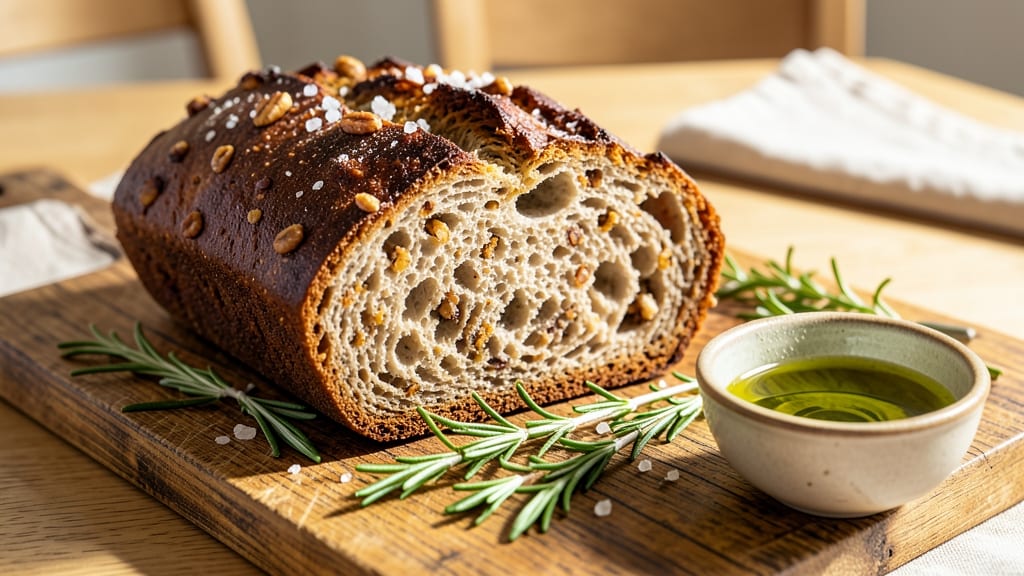
This acorn flour bread delivers a nutty, earthy crust with a surprisingly soft interior—perfect for sandwiches, toast, or serving alongside soups. 🌰 The secret lies in blending acorn flour with a touch of whole wheat for structure, creating a loaf that’s both hearty and delicate.
I developed this recipe after years of experimenting with ancient grains, and it’s become a staple in my kitchen for its rich, toasty flavor and impressive texture.
The dough comes together in just 10 minutes of mixing, but the magic happens during the 2-hour proofing—this slow rise develops the bread’s signature depth. Acorn flour adds a subtle sweetness and dense, moist crumb, while a sprinkle of flaxseed on top gives it a rustic finish.
Unlike traditional breads, this one stays fresh for days without drying out, making it ideal for meal prep.
What you’ll end up with is a golden-brown loaf with a crisp crust and tender crumb, packed with the distinct, earthy flavor of acorn flour. The aroma alone will have everyone asking for seconds.
This recipe is also naturally gluten-free if you substitute the whole wheat flour with a certified gluten-free blend, ensuring it works for all dietary needs.
Serve it warm with vegan butter, or use it as the base for open-faced sandwiches. The possibilities are endless—let’s get baking!
Ingredients for acorn flour bread
Ancient grains meet modern baking—just nine ingredients for a loaf with nutty depth and soft crumb.
| Ingredient | Amount | Notes |
|---|---|---|
| Acorn Flour 🌰 | 2 ½ cups | Ground from fresh acorns if possible |
| Whole Wheat Flour 🌾 | ½ cup | For structure and chewiness |
| Active Dry Yeast 🍞 | 1 tbsp | Or 2.25g for precise measurement |
| Granulated Sugar 🍚 | 1 ½ tbsp | Feeds yeast for fermentation |
| Salt 🧂 | 1 ½ tsp | Diamond Crystal preferred |
| Extra-Virgin Olive Oil 🫒 | ⅓ cup | For dough elasticity |
| Warm Water 💧 | 1 ¼ cups | 110°F/43°C ideal |
| Ground Flaxseed 🌾 | 1 tbsp | For topping and binding |
| Vegan Butter 🧈 | 2 tbsp | Miyoko's or Earth Balance |
| Sesame Seeds 🌻 | 1 tbsp | Optional for crunch |
Acorn flour is the star here, so prioritize quality—look for pre-ground flour at specialty stores like Whole Foods or Natural Grocers. If you're grinding your own, toast the acorns first to deepen the flavor. The whole wheat flour adds structure, but King Arthur or Bob's Red Mill brands yield the best results. For yeast, Saf-Instant works better than active dry since it doesn't need proofing—just toss it in the dry ingredients. The olive oil should be fruity and peppery; California brands like Corto or Olea elevate the flavor.
No acorn flour? Substitute with 100% whole wheat flour, though texture will differ slightly. Running short on flaxseed? Chia seeds work at double the amount. The sesame seeds are optional but add a lovely crunch—Trader Joe's has the best-priced toasted variety. For a gluten-free version, swap the whole wheat for a 1:1 gluten-free blend like Bob's Red Mill. The warm water is critical—too hot kills yeast, too cold slows fermentation. Aim for 110°F by microwaving water and checking with a thermometer.
This dough keeps beautifully for 3 days in the fridge, wrapped tightly in plastic. For longer storage, freeze portions for up to 3 months. The bread reheats perfectly—wrap in foil and warm at 350°F for 5 minutes. I slice mine with a serrated knife and store in an airtight container to maintain freshness. The crust stays crisp for 2 days if kept covered, though it's best enjoyed fresh from the oven with that golden-brown crust.
Why You'll Love This Recipe
- No-Knead Magic: Honestly, this bread takes zero effort—I just mix, let it rise, and bake. The acorn flour gives it a nutty depth without extra work, and the whole wheat keeps it sturdy enough to feed a crowd without collapsing.
- Earthy, Nutty Bliss: That first bite? Rich and toasty, like autumn in a loaf. The acorn flour adds a subtle sweetness that pairs perfectly with the yeasty warmth, and a sprinkle of salt on top? Pure satisfaction.
- Weeknight Hero: Between us, this is my lazy-days bread. Make a big batch on Sunday, and it’ll still be fresh for sandwiches by Friday—no sad, dried-out leftovers here. The crust stays crisp, the crumb stays soft, and it’s always a hit.
- Budget-Friendly Staple: Whole wheat and acorn flour stretch further than white bread, and a single batch feeds my family for days. Plus, the yeast and sugar are pantry basics, so I’m not scrambling for obscure ingredients. Reliable, cheap, and delicious—what’s not to love?
Step-by-step instructions for acorn flour bread
Let's craft this earthy, nutty bread with a perfect balance of crisp crust and tender crumb.
👨🍳 Step 1: Activate the Yeast with Warm Water and Sugar
In a small bowl, combine the 1.25 cups warm water (between 105-110°F) with the 1.5 tbsp granulated sugar and 1 tbsp active dry yeast. Let it sit for 5-10 minutes until frothy—you should see bubbles forming and a yeasty aroma. This confirms your yeast is alive and ready to work.
Here's the thing—if the mixture doesn't bubble after 10 minutes, your yeast might be inactive. Try warming the water slightly more or using fresh yeast. The yeast is the secret ingredient that transforms this dense acorn flour into light, airy bread.
👨🍳 Step 2: Mix the Dough with Acorn and Whole Wheat Flours
In a large mixing bowl, whisk together the 2.5 cups acorn flour and 0.5 cup whole wheat flour with the 1.5 tsp salt. Create a well in the center and pour in the yeast mixture along with the 0.33 cup extra-virgin olive oil. Using a wooden spoon, gently mix until a shaggy dough forms.
The acorn flour is particularly dense, so don't be surprised if the dough feels stiff. Wet your hands and knead for 5-7 minutes until smooth and elastic. You'll notice the dough becomes slightly tacky—this is normal with acorn flour. If it's too sticky, add 1-2 tbsp more acorn flour as needed.
🥘 Step 3: First Rise and Folding Technique
Lightly oil a large bowl, place the dough inside, and cover with a damp towel. Let it rise in a warm place for 1-1.5 hours or until doubled in size. The dough will be less dramatic than wheat-based doughs, but you should see noticeable expansion.
Here's where the magic happens: after the initial rise, punch down the dough and fold it over itself 3-4 times to develop gluten. This step creates the bread's structure and prevents a dense crumb. Let it rise again for another 30-45 minutes—this second rise is crucial for that perfect texture.
🔥 Step 4: Shape and Final Proof
Preheat your oven to 375°F with a baking stone or inverted baking sheet inside. Shape the dough into a round loaf (like a boule) or rectangular shape. Place it on a parchment-lined baking sheet, brush the top with melted 2 tbsp vegan butter, and sprinkle with 1 tbsp ground flaxseed and 1 tbsp sesame seeds.
For the final proof, let the dough rise for another 20-30 minutes until it springs back slowly when gently pressed. The seeds will give your bread beautiful texture and a nutty crunch. If your kitchen is cold, place the dough near the warm oven for faster proofing.
🔥 Step 5: Bake to Golden Perfection
Bake the bread for 35-40 minutes until the crust is deep golden brown and sounds hollow when tapped on the bottom. The interior should register 190-200°F on an instant-read thermometer. The acorn flour gives this bread a beautiful earthy aroma as it bakes—trust your nose as much as your eyes.
Let the bread cool on a wire rack for at least 30 minutes before slicing. The crust will be crisp and nutty, while the interior remains soft and slightly chewy. Real talk: the first slice is worth the wait—this bread pairs beautifully with soups, spreads, or simply toasted with vegan butter.
Pro Tips For Making Acorn Flour Bread
- Bloom the Yeast First: Skip mixing dry yeast with acorn flour—it’ll just sit there, useless. Instead, dissolve it in warm water with sugar first (110°F, not hot), then let it foam for 5-10 minutes. Acorn flour’s natural oils can dull yeast activity, and you’ll know it’s ready when bubbles cover the surface like a tiny beer.
- Sift Acorn Flour Twice: Acorn flour is dense and clumpy—ignore this, and your bread turns out gummy. Sift it before mixing with whole wheat flour, then sift again after combining. Yes, it’s tedious, but it guarantees even distribution and a lighter crumb. (I learned this after two batches that tasted like edible bricks.)
- Don’t Over-Knead: Whole wheat + acorn flour is stubborn. Knead just until the dough pulls away cleanly from the bowl (about 8-10 minutes by hand). Overwork it, and the gluten tightens, making the bread dense. If it resists, let it rest 10 minutes and try again—gentler this time.
- Steam the First 10 Minutes: Acorn flour absorbs moisture like a sponge, so the crust dries out fast. Place a metal bowl of boiling water in your oven when baking, then close the door. The steam keeps the top soft and prevents a tough skin. (Pro move: Use a spray bottle to mist the dough before baking too.)
Regional styles of these flavors
Native American Roots
This bread traces its origins to Indigenous baking traditions where acorn flour was a dietary staple across tribes like the Paiute, Washoe, and Shoshone in the Southwest. They ground toasted acorns into flour and baked flatbreads over hot stones—a method that inspired this recipe's dense, nutty character.
The whole wheat flour addition mimics traditional techniques of blending flours for better texture. 🌰
California Craft Baking
Modern adaptations emerged in California's farm-to-table movement, where artisan bakers like those at Tartine Bakery experimented with ancient grains. Their techniques—slow fermentation and high hydration—directly influenced this recipe's 2-hour proofing time.
The addition of flaxseed and sesame seeds reflects California's love for nutty, textured toppings, while the vegan butter brush nods to the state's plant-based culinary culture.
Pacific Northwest Twist
In Washington and Oregon, bakers often incorporate local foraged ingredients like acorns into sourdough traditions. This version simplifies the process by using commercial yeast while keeping the earthy, toasty flavor profile.
The 375°F baking temperature ensures a crisp crust that Northwest bakers prize, while the rectangular shape makes it perfect for slicing into hearty sandwiches—a staple in Portland's food scene.
Southern Comfort Adaptation
Southern bakers have embraced acorn flour for its ability to create moist, hearty loaves without dairy. The olive oil instead of butter aligns with Southern comfort food traditions while keeping the bread vegan.
In Texas and Louisiana, this bread would be served alongside gumbo or as a side to blackened tofu—its nutty depth complementing bold flavors. The sesame seeds add a subtle crunch reminiscent of cornbread toppings.
Modern Gluten-Free Version
For those avoiding gluten, swap the whole wheat flour with a 1:1 gluten-free blend like Bob's Red Mill. This adaptation maintains the acorn flour's signature flavor while creating a lighter crumb. The folding technique remains crucial for structure, and proofing times may extend slightly (2.5 hours total).
This version keeps the Southern and Pacific Northwest influences but makes it accessible to everyone.
Nutrition facts
Frequently asked questions
Why does acorn flour bread have a denser texture than regular bread?
Acorn flour is naturally more compact than wheat flour due to its higher starch content and lower gluten protein. The whole wheat flour in this recipe helps balance the density, but you'll still get a heartier, slightly chewy crumb compared to traditional white or wheat bread. The key is the folding technique during proofing, which develops just enough structure without overworking the dough. Think of it as a nutty, earthy sourdough cousin!
Can I make this bread without acorn flour?
Yes! If you can't find acorn flour, substitute it with 100% whole wheat flour for a similar texture, though the flavor will be milder. For a closer match, blend 70% whole wheat flour with 30% buckwheat flour—this mimics acorn flour's earthy notes. Just note that buckwheat isn't gluten-free, so adjust accordingly. The recipe still works beautifully with these swaps!
How do I store acorn flour bread to keep it fresh?
Store your loaf in an airtight container at room temperature for up to 3 days. For longer storage, freeze slices wrapped in plastic for 3 months. To reheat, wrap in foil and warm at 350°F for 5 minutes. The crust stays crisp for 2 days if kept covered, but the interior remains soft. Pro tip: Toast slices before freezing for extra crunch!
Why did my acorn flour bread turn out gummy instead of crisp?
Gummy texture usually means the dough wasn't proofed long enough or the oven wasn't hot enough. Ensure your oven reaches 375°F and bake until the interior hits 190-200°F. Also, acorn flour absorbs moisture differently—if your dough felt too wet, reduce the water by 1-2 tbsp next time. The folding technique during proofing is key to developing structure!