
Side Dishes
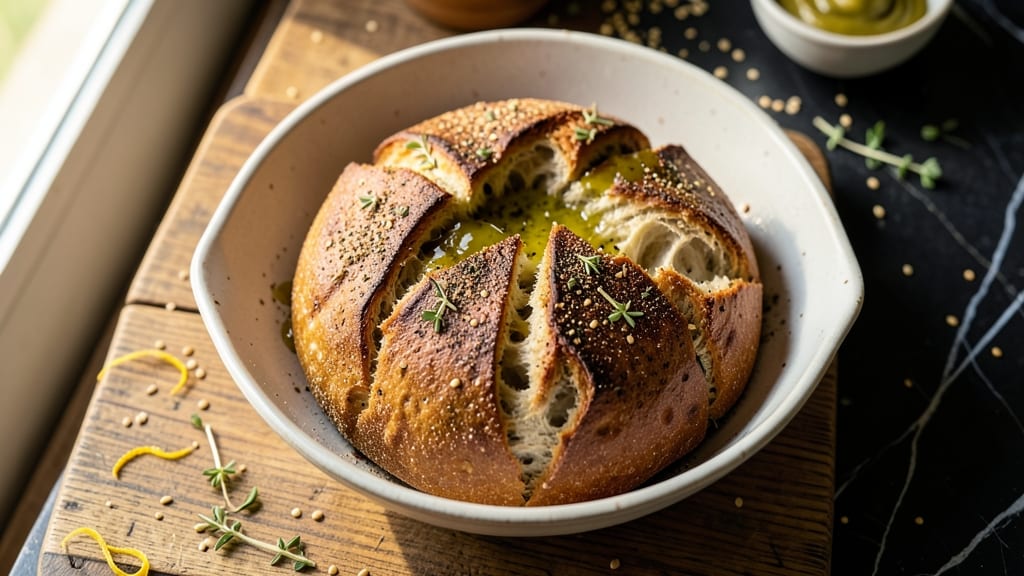
Adam Ragusea's bread recipe delivers a textural masterpiece—crispy, golden olive oil crust that shatters with every bite, paired with a fragrant za'atar-kissed crumb. This isn't your average loaf; it's a foolproof technique that transforms simple ingredients into restaurant-worthy bread with minimal effort.
The secret lies in the olive oil poof, a method that creates that coveted crackly exterior while keeping the interior tender and airy.
What sets this recipe apart is the balance of tradition and simplicity. You'll work with five core ingredients—flour, yeast, water, olive oil, and za'atar—but the technique is what elevates it. The dough undergoes a cold fermentation overnight, developing deep flavor and structure without requiring your attention.
When baking, the high-heat olive oil poof creates that signature crispness, while za'atar infuses the crumb with earthy, citrusy notes that linger with every bite.
By the time you pull this bread from the oven, you'll have a loaf that's visually stunning and impossible to resist. The crust will be golden and crackling, the crumb perfectly aerated with pockets of za'atar throughout.
It's the kind of bread that makes everyday meals feel special—great for serving alongside soups, charcuterie boards, or simply enjoying with butter as a standalone treat.
This recipe scales beautifully for gatherings or meal prep, and the technique is beginner-friendly once you understand the key steps. Let's get started on creating bread that'll have everyone asking for seconds—and maybe even your secret method.
Ingredients for adam ragusea bread
Five core ingredients transform into restaurant-worthy bread with Adam Ragusea's signature olive oil poof technique.
| Ingredient | Amount | Notes |
|---|---|---|
| Bread Flour 🌾 | 3 ½ cups | High-protein for structure |
| Active Dry Yeast 🍞 | ¼ tsp | Instant yeast preferred |
| Extra-Virgin Olive Oil 🫒 | ¾ cup | Fruity, low-acidity preferred |
| Za'atar Seasoning 🌿 | 2 tbsp | Authentic Middle Eastern blend |
| Granulated Sugar 🍚 | ½ tsp | Enhances yeast activation |
| Diamond Crystal Kosher Salt 🧂 | 1 ½ tsp | Fine grain preferred |
| Cold Water 💧 | 1 ½ cups | Chilled for proper hydration |
| Semolina Flour 🌾 | ¼ cup | For dusting and crust texture |
| Cornmeal 🌽 | ¼ cup | For baking surface |
| Ice Cubes ❄️ | 1 cup | For dough shaping |
The bread flour is non-negotiable here—King Arthur or Caputo Tipo 00 deliver the best results for this technique. Za'atar should be authentic, not the pre-mixed supermarket variety; look for blends containing sesame seeds, sumac, and dried herbs at specialty stores like Whole Foods or Middle Eastern markets. For olive oil, California Avocado Ranch or Colavita varieties work beautifully—their fruity notes complement the za'atar perfectly. The yeast should be fresh; if your package is older than a few months, test it first in warm water to ensure it's still active. Semolina and cornmeal can be found in the baking aisle, though Bob's Red Mill sells them in bulk for better value.
No za'atar? Create your own blend with 1 tbsp sesame seeds, 1 tbsp sumac, 1 tsp dried thyme, and 1/2 tsp salt. Running short on bread flour? All-purpose flour works in a pinch, though the texture will be slightly less refined. For the olive oil poof technique, use only high-smoke-point oils—vegetable or avocado oil can replace olive oil if preferred. The ice cubes serve a critical purpose: they chill the dough during shaping, preventing overproofing. If you don't have ice, place the dough bowl in the freezer for 5 minutes before shaping. For the sugar, brown sugar adds depth but requires adjusting the recipe slightly—reduce by 1/4 tsp.
Store the za'atar in an airtight container away from light to preserve its vibrant color and flavor for up to 6 months. The flour mixture keeps indefinitely in the pantry, but for best results, use within 3 months of opening. Once baked, this bread stays fresh for 3 days at room temperature, wrapped in a clean kitchen towel. For longer storage, freeze the loaf wrapped in plastic for up to 3 months. Reheat slices in a 350°F oven for 5 minutes to restore crispiness. The olive oil poof technique means the crust is delicate—slice with a serrated knife for clean cuts.
Why You'll Love This Recipe
- No-Knead Magic: I swear by this dough—just mix, let it rise, and boom. No stand mixer, no arm workout, just a bowl and patience (which, honestly, is the hardest part).
- Za’atar Zing: That earthy, nutty za’atar? It’s the star. A pinch in the dough, a drizzle of olive oil, and suddenly you’ve got crispy, herby layers that taste like a Mediterranean vacation in every bite.
- Weeknight Hero: Toss a loaf in the oven while you prep dinner—it’s done by the time you’re plating. Even better? It’s the perfect side for grilled meats, soups, or just slathered with butter and eaten straight from the pan.
- Budget Crust: A single batch feeds four, and the ingredients won’t break the bank. Bread flour and yeast are cheap, olive oil stretches further than you’d think, and za’atar lasts for months. Leftovers? Toast them into lunch the next day.
Step-by-step instructions for Adam Ragusea's olive oil poofed bread
Mastering this technique delivers a crispy, golden crust with a tender za'atar-infused crumb—here's how to perfect it.
Hydrate the Dough with Precision
In a large mixing bowl, combine the 3.5 cups bread flour, 0.5 tsp granulated sugar, and 1.5 tsp Diamond Crystal kosher salt. Whisk to distribute evenly—this ensures balanced flavor and structure throughout the dough. Create a well in the center and add the 0.25 tsp active dry yeast. Pour in the 1.5 cups cold water and 0.75 cup extra-virgin olive oil, then gently mix with a wooden spoon until just combined.
Here's the thing—cold water and olive oil create a stable environment for yeast activation without over-proofing. Cover the bowl with a damp kitchen towel and let rest at room temperature for 1 hour. You'll know it's ready when the dough doubles in size and has a slightly springy texture when pressed gently. The olive oil will give the dough a velvety mouthfeel while the high-protein flour builds that signature chewy crumb.
Develop the Dough Through Stretching and Folding
Turn the dough onto a lightly floured surface and perform a series of stretch-and-folds every 30 minutes for 2 hours. Wet your hands with water to prevent sticking, then grab one side of the dough, stretch it upward, and fold it over itself. Rotate the dough 90 degrees and repeat on all four sides. This technique builds gluten structure while incorporating air for an open crumb.
After the final fold, let the dough rest for 20 minutes before shaping. The dough should be smooth, elastic, and slightly tacky to the touch. If it feels too stiff, lightly mist with water. This resting period relaxes the gluten strands, making the final shaping easier and preventing over-handling that could lead to a dense loaf.
Shape and Prepare for the Poof
Divide the dough into 4 equal portions (about 12 ounces each) and shape each into a tight boule. To do this, cup your hand around one piece, then quickly pull the dough upward while rotating your wrist to create surface tension. Seal the seam by pressing gently with your fingers. Place the shaped boules on a baking sheet lined with parchment paper, cover with the damp towel, and let proof at room temperature for 1 hour or until they've risen by 50%.
While the dough proofs, preheat your oven to 425°F with a baking stone or inverted baking sheet on the middle rack. Sprinkle 0.25 cup cornmeal evenly on a separate baking sheet—this prevents sticking during the poof. The proofing stage is critical: the dough should spring back slowly when pressed with a finger, and you should see slight doming at the top. If the dough overproofs (collapses when pressed), it will lose its lift during baking.
Create the Poofed Crust with Olive Oil and Za'atar
Once proofed, carefully transfer each boule to the cornmeal-coated sheet. Brush the tops generously with 1 tablespoon extra-virgin olive oil per loaf, then sprinkle 0.5 tbsp za'atar seasoning evenly over each. The za'atar will caramelize beautifully during baking, adding that signature nutty, herby aroma. Immediately place the sheet in the preheated oven and bake for 20 minutes.
After 20 minutes, remove the loaves and place them on the preheated baking stone or sheet. This dramatic temperature shift creates the signature "poof"—the dough will rise dramatically as steam develops. Bake for an additional 15-20 minutes until the crust is deep golden brown with dark spots, and the internal temperature reaches 190-195°F. Tap the bottom of the loaf—it should sound hollow. The za'atar will develop a fragrant, toasty aroma that fills your kitchen.
Cool and Finish with Semolina
Transfer the baked loaves to a wire rack and let cool for at least 1 hour before slicing. This resting period allows the crumb to set properly and prevents a gummy texture. While cooling, brush the tops with an additional 1 tablespoon olive oil and sprinkle with 0.25 cup semolina flour for extra texture. The semolina adds a delicate crunch that contrasts beautifully with the soft crumb.
Slice the bread with a sharp serrated knife for clean cuts that showcase the open crumb and crispy crust. The za'atar-infused crumb should be tender yet slightly chewy, with pockets of air from proper gluten development. Serve warm with olive oil for dipping or use as the base for sandwiches—this bread holds up beautifully to both rich and light toppings. The combination of the olive oil poof and za'atar kiss makes this bread unforgettable.
Pro Tips For Making Adam Ragusea Bread
- Bloom the Yeast First: Skip mixing yeast straight into flour—it’s a rookie move. Instead, dissolve it in warm water (around 105°F/40°C) with a pinch of sugar first, then wait 5-10 minutes until it’s frothy. This guarantees it’s active and saves you from dense, flat bread later. (Yes, even if you’re eager to start.)
- Oil the Bowl Properly: Generous olive oil isn’t just for flavor—it’s your dough’s lifeline. Coat the mixing bowl thoroughly with EVOO before kneading; the dough will be less sticky and easier to handle. I used to skimp, and my dough stuck to everything like glue.
- Za’atar Goes Last: Za’atar’s sesame seeds and herbs burn fast. Mix it into the dough after shaping, not during proofing. Sprinkle lightly on top before baking for that signature flavor without risking bitterness. Trust me, adding it early ruins the balance.
- Proof Until Puffy, Not Perfect: Don’t wait for "doubled in size"—Adam Ragusea bread should rise until it’s noticeably puffy but still jiggly when gently pressed. Overproofing kills the crumb. Use a timer and check every 20 minutes; it’s faster than you think.
Regional styles of adam ragusea bread
Middle Eastern Influence
This recipe draws heavily from Middle Eastern baking traditions, particularly the use of za'atar as a key flavor element. In countries like Lebanon and Syria, za'atar is often sprinkled on freshly baked bread or mixed into dough for a fragrant, nutty depth.
The olive oil poof technique also mirrors methods used in Mediterranean baking, where high-fat oils create crispy crusts while maintaining a tender interior. For an extra authentic touch, try using sumac (a key za'atar component) in your seasoning blend—it adds a tangy brightness that complements the bread beautifully. 🌿
Italian Boule Technique
The shaping method here—forming tight boules—is inspired by Italian bread-making, particularly the pane di Altamura tradition from Puglia. Italian bakers often create boules for their high rise and crispy crust, much like this recipe. The key difference is the za'atar infusion, which gives it a distinctly Mediterranean twist.
For a true Italian touch, you could replace za'atar with fresh rosemary and sea salt during the poof stage, though the za'atar remains the signature flavor here. The olive oil poof also aligns with Italian techniques for creating crispy crusts.
French Baguette Adaptation
While this recipe focuses on boules, the olive oil poof technique could easily be adapted for a baguette-style loaf. Shape the dough into a long batard instead of boules, then apply the same olive oil and za'atar treatment.
French bakers often use similar high-fat techniques for their crusty breads, and the za'atar adds a unique Middle Eastern-French fusion. For best results, bake the baguette on a peel in a stone-heated oven to achieve that classic crackly crust. The za'atar will caramelize beautifully along the length of the loaf.
American Artisan Twist
This recipe represents a modern American take on traditional bread-making, blending global techniques with accessible ingredients. The cold fermentation method (overnight proofing) is popular among American artisan bakers for its convenience and flavor development.
Many American bakers also use high-protein bread flour like King Arthur for structure, which is key here. For a distinctly American adaptation, you could add garlic powder or smoked paprika to the za'atar blend, creating a smoky, savory variation that pairs well with BBQ or grilled meats.
Global Fusion Potential
This bread's versatility makes it perfect for fusion experiments. Try adding gochujang to the za'atar blend for a Korean-Middle Eastern fusion, or mix in harissa for a North African twist.
The olive oil poof technique works universally across cuisines, allowing you to customize the seasoning while maintaining the signature crispy crust. For a sweet variation, sprinkle honey and cinnamon instead of za'atar during the poof stage—this creates a delicious dessert bread that's perfect for breakfast or dessert. 🌍
Nutrition facts
Frequently asked questions
What makes this bread different from regular artisan bread?
This recipe uses Adam Ragusea's signature olive oil poof technique combined with za'atar seasoning for a unique flavor and texture. The high-fat olive oil creates a shatteringly crisp crust while keeping the crumb tender, and the za'atar adds a fragrant, nutty depth that's missing in traditional breads. The cold fermentation also develops more complex flavors than quick-rise methods.
Can I make this bread without za'atar?
Yes! If you can't find za'atar, create your own blend with 1 tbsp sesame seeds, 1 tbsp sumac, 1 tsp dried thyme, and ½ tsp salt. For a different flavor, try fresh rosemary and sea salt instead. The olive oil poof technique will still work perfectly—it's the za'atar that gives this bread its signature taste.
Why does the dough need cold water?
The cold water helps control yeast activation, preventing overproofing and creating a stable environment for gluten development. This leads to a better structure and that signature open, airy crumb. If you're in a hurry, you can use lukewarm water (not hot) but reduce the yeast to 0.125 tsp to avoid overproofing. The olive oil also helps regulate temperature during mixing.
What if my bread doesn't poof during baking?
If your loaves don't rise dramatically during the poof stage, they may have been overproofed before baking. Make sure your dough springs back slowly when pressed (not quickly) before shaping. Also, ensure your oven is fully preheated with the baking stone inside. For extra lift, try placing a steaming tray in the oven during the final 5 minutes of baking. The olive oil poof works best with proper proofing!
How do I store leftovers to keep them fresh?
Wrap cooled loaves in a clean kitchen towel and store at room temperature for up to 3 days. For longer storage, freeze the bread wrapped in plastic for up to 3 months. To revive stale slices, warm them in a 350°F oven for 5 minutes with a spritz of water for extra crispiness. The za'atar flavor actually improves slightly after baking!