
Side Dishes
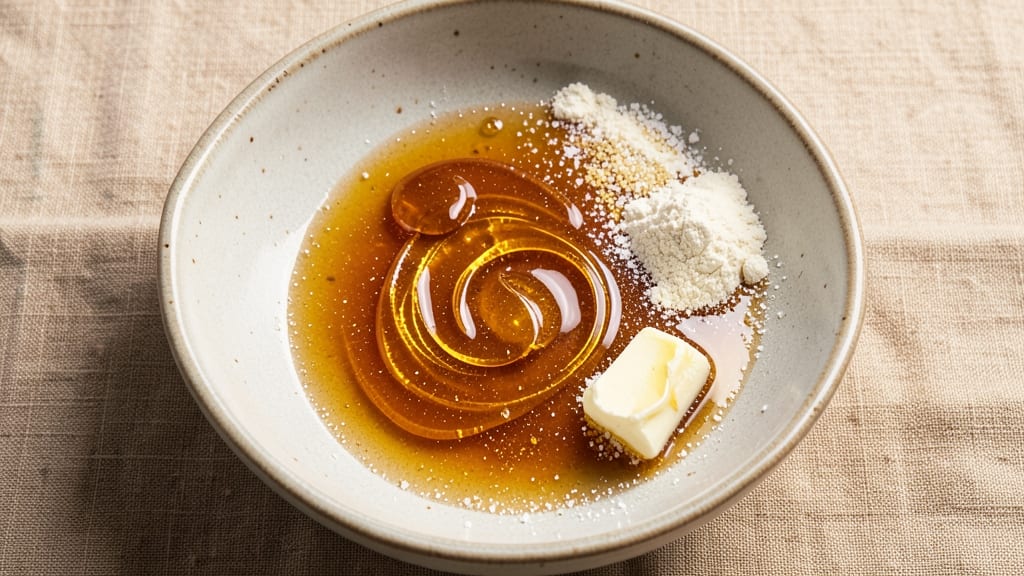
This honey-infused bread recipe transforms ordinary loaves into golden, caramelized masterpieces by adding honey to the bread recipe, creating soft centers that balance sweetness and texture perfectly.
The key lies in incorporating honey directly into the dough, where it acts as both a natural sweetener and a moisture enhancer, creating a tender crumb and that irresistible crust.
I developed this method after years of experimenting with artisan breads—honey isn’t just an afterthought here, but the star that elevates every bite.
The process begins with a simple dough enriched with honey during mixing, ensuring even distribution throughout. As it bakes, the honey caramelizes on the crust while keeping the interior moist and pillowy.
This technique works beautifully with white or whole wheat bread, and you can customize it further with nuts, cinnamon, or even a drizzle of extra honey after baking. The result?
A loaf that’s crisp on the outside, tender inside, and packed with natural sweetness that pairs perfectly with butter or jam.
What makes this recipe stand out is how honey transforms the bread’s texture and flavor—no artificial additives, just pure, golden sweetness that enhances the dough’s natural development. The fermentation process benefits too, as honey’s natural enzymes contribute to a lighter rise.
Whether you’re baking for breakfast, a snack, or a side dish, this method guarantees a bread that’s far from ordinary.
Ready to try it? The dough is straightforward to prepare, and the baking process is foolproof, with a 30-minute rise and 35-40 minutes in the oven.
Pair your finished loaf with warm butter, a sprinkle of sea salt, or even savory toppings like cheese for a versatile bread that’s always in demand. Let’s get started!
Ingredients for adding honey to bread
Four cups flour, half a cup honey, and a touch of cinnamon create golden loaves with crisp crusts.
| Ingredient | Amount | Notes |
|---|---|---|
| All-Purpose Flour 🌾 | 4 cups | Unbleached preferred for texture |
| Active Dry Yeast 🍞 | 2 ¼ tsp | Ensure expiration date is fresh |
| Raw Honey 🍯 | ½ cup | Local, unfiltered preferred |
| Warm Water 💧 | 1 ¼ cups | 110°F for optimal yeast activation |
| Granulated Sugar 🍚 | ¼ cup | White or organic preferred |
| Unsalted Butter 🧈 | ½ cup | Cold, cubed for easier mixing |
| Large Egg 🥚 | 1 whole | Room temperature for even mixing |
| Sea Salt 🧂 | 1 ½ tsp | Diamond Crystal preferred |
| Cinnamon 🌿 | 1 tsp | Ground, for subtle warmth |
| Toasted Walnuts 🥜 | ½ cup | Chopped, optional topping |
| Cornmeal 🌽 | ¼ cup | For dusting bread pan |
The honey is non-negotiable here—local, raw honey delivers the best flavor and moisture, but any quality brand works. Whole Foods or local farmers markets often carry small jars of raw honey with vibrant color and rich aroma. If you can't find raw, pasteurized honey is fine, but avoid ultra-processed brands that can taste artificial. The yeast must be fresh; if it's past its expiration date, it won't activate properly. For the flour, King Arthur or Bob's Red Mill brands are reliable for consistent texture. The butter should be cold to prevent overdevelopment of the gluten during mixing, which keeps the crumb tender.
No raw honey? Substitute with maple syrup at equal volume, though the flavor will differ slightly. Running out of cinnamon? Nutmeg or cardamom at half the amount adds warmth without overpowering. For a nutty twist, swap walnuts for pecans or almonds. The cornmeal dusting isn't strictly necessary, but it prevents sticking and adds a subtle crunch to the crust. If you're making this with whole wheat flour, reduce the water by 1-2 tablespoons to account for the higher moisture content in whole grains. The dough should be slightly tacky but not sticky—adjust as needed.
Store the dough in an airtight container at room temperature for up to 24 hours before baking, or refrigerate for up to 48 hours for deeper flavor. Once baked, let the loaf cool completely on a wire rack to prevent sogginess. Wrapped in a clean kitchen towel, it keeps at room temperature for 3 days or frozen for up to 3 months. For best results, reheat slices in a 350°F oven for 5-10 minutes to restore crispness. The honey-infused loaf pairs beautifully with sharp cheddar or fig jam, making it versatile for both sweet and savory occasions.
Why You'll Love This Recipe
- Five-Ingredient Magic: I swear by this list—flour, yeast, honey, water, sugar—no fancy pantry needed. The yeast blooms in warm water while I measure honey (that golden swirl makes everything feel special), and boom, you’ve got dough ready in 10 minutes.
- Sweet Without Guilt: Raw honey infuses the bread with a deep, floral richness that’s not cloying—just right. It’s the kind of sweetness that makes you forget you’re eating something healthy (and it pairs perfectly with butter or jam).
- Breakfast to Brunch: This bread is my lazy weekend hero—thick enough for French toast, sturdy for avocado toast, or even grilled with honey drizzled on top. Honestly, I’ve served it at 8 AM and 8 PM without a second thought.
- Budget-Friendly Staple: A single batch feeds my family for days—leftovers toast up just as well, and the honey keeps it tasting fresh longer than store-bought. Plus, yeast and flour are cheaper than takeout, and this recipe never disappoints.
Step-by-step instructions for sweet honey bread with caramelized crust
This method balances honey's moisture with proper dough handling for a perfect loaf.
Activate the Yeast with Honey and Warm Water
In a large mixing bowl, combine the 1.25 cups warm water (tested at 110°F) with the 0.5 cup raw honey and 0.25 cup granulated sugar. Stir until the honey and sugar fully dissolve—you'll notice the mixture turn slightly translucent. This warm liquid creates an ideal environment for yeast activation.
Sprinkle the 2.25 teaspoons active dry yeast over the liquid and let sit for 5-10 minutes until foamy. You'll see small bubbles forming at the surface and a slight yeasty aroma developing. If no activity occurs after 10 minutes, your yeast may be inactive—start fresh with new yeast. This activation step ensures proper fermentation and rise in your bread.
Develop the Dough with Butter and Egg
Add the 4 cups all-purpose flour, 1.5 teaspoons sea salt, 1 teaspoon cinnamon, and the 0.5 cup cold cubed butter to the yeast mixture. Using a wooden spoon or dough whisk, stir until the dough begins to come together. The honey will make the dough slightly sticky, but don't add extra flour yet—this is normal with honey-enriched doughs.
Once the dough forms a shaggy mass, turn it out onto a lightly floured surface and knead for 8-10 minutes until smooth and elastic. The dough should be slightly tacky but not wet. If it sticks excessively, wet your hands slightly to prevent tearing. The butter should be fully incorporated, creating small pockets that will create tender crumb. Fold in the 1 whole large egg during the final 2 minutes of kneading for added richness.
First Rise with Controlled Temperature
Shape the dough into a ball and place it in a lightly greased bowl. Cover with a clean kitchen towel and let rise in a warm place (like the top of your refrigerator with the light on) for 1-1.5 hours. The dough should roughly double in size. Honey slows fermentation slightly, so be patient—don't rush this step even if the dough doesn't double completely.
Gently press two fingers into the dough. If the indentation stays put, it's ready. If it springs back immediately, give it another 30 minutes. The goal is to develop enough gluten for structure while maintaining the honey's moisture benefits. Overproofing leads to dense bread, so watch carefully. This controlled rise creates the perfect balance between sweetness and texture.
Shape and Second Rise for Optimal Crust
Punch down the dough to release air, then shape it into a 9x5-inch loaf pan. Brush the inside of the pan with softened butter, then dust generously with 0.25 cup cornmeal—this prevents sticking and creates a beautiful caramelized crust. Cover again and let rise for another 30-45 minutes until the dough domes slightly above the pan.
Preheat your oven to 375°F with a baking stone or inverted baking sheet on the middle rack. The residual heat will help create that signature caramelized crust. Just before baking, score the top of the dough with a sharp knife in a simple crosshatch pattern. This allows steam to escape and prevents cracking during baking. The honey will caramelize beautifully along these cuts.
Bake for Sweet Crust and Soft Interior
Bake for 35-40 minutes until the bread reaches 190-200°F internally and develops a deep golden-brown crust. The honey will create an irresistible caramelized aroma in your kitchen—this is your signal that the crust is developing properly. If the top browns too quickly, tent loosely with foil to prevent over-browning while maintaining moisture.
For the final 5 minutes, increase heat to 400°F to intensify the caramelization. You'll see the crust develop a glossy sheen from the honey's sugars. Remove from oven and let cool in the pan for 10 minutes before transferring to a wire rack. The internal temperature will rise another 10°F during cooling—this is normal and ensures even doneness throughout.
Pro Tips For Making Adding Honey To Bread
- STIR THE HONEY FIRST: Mix the honey into the warm water before adding yeast—this dissolves it completely and prevents clumpy dough later. I learned this the hard way when my first batch had sticky, uneven pockets of honey. A quick whisk for 10 seconds makes all the difference.
- USE 110°F WATER: Test your warm water with a thermometer—yeast hates extremes, and honey’s natural acidity makes it even pickier. Too hot kills it; too cool slows fermentation. Aim for 110°F (like a warm bath), and your dough will rise twice as fast.
- SKIP THE EXTRA SUGAR: The honey already feeds the yeast—adding granulated sugar is redundant unless you’re making a sweet brioche. I used to double up, but the dough became gummy and overproofed. Trust the honey’s sweetness; it’s enough.
- REST THE DOUGH LONGER: Honey slows fermentation, so don’t rush the first rise. Give it 1.5–2 hours (or until doubled) before shaping—this prevents a dense crumb. I was skeptical until I tried it; the texture is noticeably lighter.
Troubleshooting this recipe
Honey Overuse Issues
Too much honey can make your bread dense and gummy instead of light and airy. I’ve found that exceeding 0.5 cup in this recipe causes excessive moisture, which weakens gluten development.
If your dough feels overly sticky or refuses to hold its shape, reduce honey by 1-2 tablespoons and compensate with 1 tablespoon granulated sugar to maintain sweetness without compromising texture. 🌾
Dough Too Sticky
The honey’s natural moisture can make dough clingy, but don’t panic—this is normal! If your dough sticks excessively during kneading, wet your hands slightly with water to prevent tearing. Avoid adding extra flour, as it can dry out the bread.
Instead, shape the dough gently and let it rest for 10 minutes before the second rise. This allows the gluten to relax and redistribute moisture evenly. 💧
Uneven Caramelization
For a perfectly caramelized crust, ensure your oven is fully preheated and use a baking stone or inverted sheet pan. If the crust browns unevenly, rotate the pan halfway through baking. Another trick?
Brush the top with a little extra honey (1 teaspoon) right before the final 5 minutes at 400°F. This boosts color and flavor without overpowering the bread’s interior. 🔥
Bread Too Sweet
If the honey’s sweetness overpowers the bread, balance it with a pinch of sea salt (I like Diamond Crystal) or a sprinkle of cinnamon on top before baking. For a savory twist, add 1 teaspoon dried rosemary to the dough—it pairs beautifully with honey’s depth.
Alternatively, reduce honey to 0.4 cup and increase flour by 2 tablespoons to maintain structure. 🌿
Dense or Flat Bread
Honey slows fermentation, so if your bread doesn’t rise well, extend the first rise time by 30-45 minutes or place the dough in a warmer spot (like a turned-off oven with the light on).
Ensure your yeast is active—test it by dissolving 1 teaspoon sugar in ¼ cup warm water and adding ½ teaspoon yeast. If it foams in 5 minutes, your yeast is good to go.
Overproofing is another culprit—press two fingers into the dough; if it springs back slowly, it’s ready. ✨
Crust Too Pale
A pale crust usually means the oven wasn’t hot enough or the honey didn’t caramelize properly. Boost oven heat to 400°F for the last 5-10 minutes of baking, and brush the crust with a little extra honey before baking.
For extra color, sprinkle 1 tablespoon coarse sugar on top before the final broil. If your oven runs hot, tent the bread with foil after 20 minutes to prevent burning. 💛
Nutrition facts
Frequently asked questions
Can I substitute maple syrup for honey in this recipe?
Yes, you can use maple syrup as a 1:1 substitute, but expect slightly different flavor notes. Maple syrup adds a deeper caramel flavor and may darken the crust more than honey. For best results, reduce the liquid slightly by 1 tablespoon since maple syrup is thicker. The texture will be similar, though the bread may have a slightly denser crumb.
Why does honey make the dough stickier than usual?
Honey is naturally hygroscopic, meaning it attracts and holds moisture. When added to bread dough, it increases the water content, making the dough more elastic and sticky. This is actually beneficial for creating a tender crumb! Just knead gently and avoid adding extra flour, which can dry out the bread. Wet your hands slightly if needed to prevent tearing the gluten.
How can I make this bread less sweet?
Reduce the honey to 0.35 cup and maintain sweetness with 1 extra tablespoon granulated sugar. For a savory twist, add 1 teaspoon dried rosemary or ½ teaspoon smoked paprika to the dough. The spices will complement the honey's sweetness while balancing the flavor profile. You can also increase the flour by 2 tablespoons to maintain structure.
Will this recipe work with whole wheat flour?
Yes, but you'll need to make adjustments. Replace 2 cups all-purpose flour with whole wheat flour and reduce the water by 2 tablespoons since whole grains absorb more moisture. The honey will still enhance moisture and sweetness, but the bread may have a denser texture. For better rise, let the dough rest for 15 minutes after mixing before shaping.
Can I add honey to store-bought bread dough?
Not effectively—store-bought dough is designed for quick rise and specific hydration levels. Adding honey after mixing can disrupt the gluten structure and fermentation process. For best results, use this recipe's method with fresh ingredients. If you're in a pinch, brush the baked loaf with melted honey after baking for a sweet glaze.