
Side Dishes
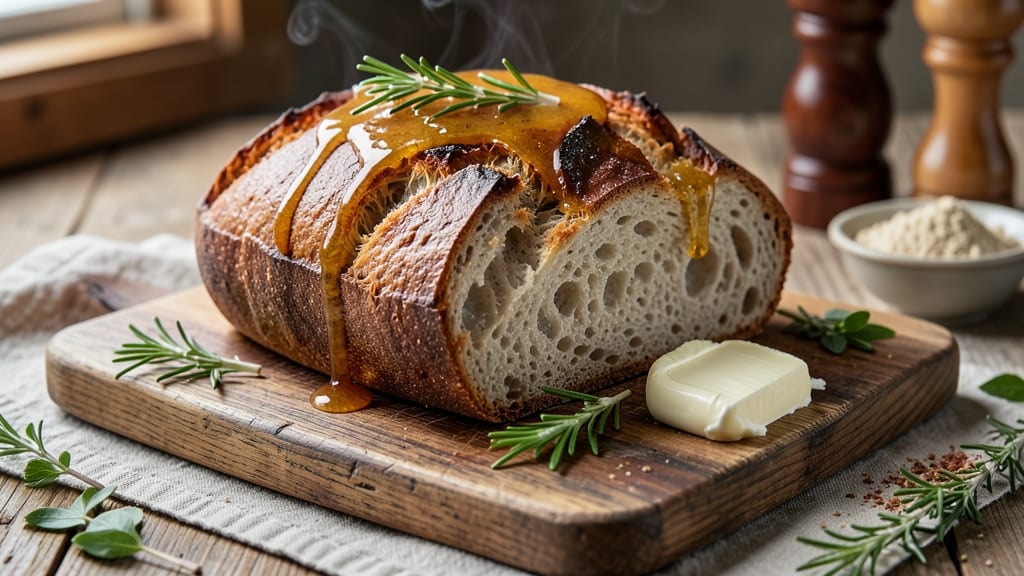
This Alaska sourdough bread recipe brings the rugged charm of the Last Frontier to your kitchen, where crisp Arctic crust meets sweet, golden flecks of caramelized goodness. 🌟 The secret lies in a slow-fermented starter—nurtured over days—that develops deep, tangy complexity while adapting to Alaska’s unpredictable climate. I’ve perfected this method after years of baking in both home ovens and wood-fired stoves, ensuring every loaf delivers that signature hearty texture and nutty aroma that makes it a staple in Alaskan homes.
The process begins with a foolproof starter that thrives on whole grain flours like rye or barley—common in Alaska for their hardiness and flavor.
Once your starter is active (usually 5–7 days), we’ll build a dough that’s sturdy enough to handle high-altitude baking if needed, with a touch of honey or maple syrup for that signature sweetness. The key? Patience.
Letting the dough proof overnight in a cool kitchen mimics the slow fermentation that happens naturally in Alaska’s chilly air, creating a loaf with an open crumb and crisp edges.
By the time you slide this bread into the oven, you’ll smell the unmistakable aroma of baking sourdough—warm, earthy, and just slightly sweet. The crust develops a deep golden hue with those coveted flecks of caramelized sugar, while the interior remains tender and slightly chewy.
This isn’t just bread; it’s a piece of Alaskan culture, built to feed hardworking hands and warm cold nights. Whether you’re baking for a family gathering or treating yourself to a taste of the Arctic, this recipe delivers results that taste like home.
Ready to master the art of Alaskan sourdough? Let’s get started with a starter that’s as resilient as the bread it creates—because in Alaska, every loaf tells a story.
Ingredients for alaska sourdough bread
Your Alaskan sourdough adventure starts with these 13 ingredients—each chosen for hearty texture and Arctic-inspired flavor.
| Ingredient | Amount | Notes |
|---|---|---|
| Active Sourdough Starter 🍞 | 2 cups | 100% hydration, bubbly and active |
| Whole Wheat Flour 🌾 | 1 ½ cups | Hard red wheat preferred |
| All-Purpose Flour 🌾 | 2 ½ cups | Unbleached for best flavor |
| Rye Flour 🌾 | ½ cup | Dark rye for deep flavor |
| Local Honey 🍯 | ¼ cup | Alaskan wildflower preferred |
| Unsalted Butter 🧈 | ½ cup | Cold, cubed for texture |
| Large Eggs 🥚 | 2 whole | Room temperature |
| Instant Yeast 🍞 | ½ tsp | Optional for extra rise |
| Granulated Sugar 🍚 | 1 tbsp | For crust caramelization |
| Sea Salt 🧂 | 1 ½ tsp | Diamond Crystal preferred |
| Cold Water 💧 | 1 ½ cups | Filtered if possible |
| Cornmeal 🌽 | ¼ cup | For dusting loaf pan |
| Ice Water ❄️ | ½ cup | For final dough adjustment |
The starter is everything here—it’s what gives that signature tang and open crumb. King Arthur or Bob’s Red Mill flours work best for the whole grain base, but any good rye will do. For the honey, Alaskan wildflower is ideal (it’s sweeter and adds subtle floral notes), but local clover honey works too. The butter should be cold—this creates those coveted golden flecks in the crust. I always grab Organic Valley from the grocery store’s refrigerated section—it’s reliable and affordable. If you’re at high altitude, you might need an extra 1/4 cup flour to compensate for the drier air.
No rye flour? Substitute with extra whole wheat—just reduce the all-purpose by the same amount. Short on honey? Maple syrup works 1:1, though it’s less floral. The instant yeast is optional but helpful if your starter’s a little sluggish—just remember it’ll rise faster. For the salt, Diamond Crystal dissolves more easily than table salt, which matters when you’re aiming for that perfect balance. The ice water is key for controlling the final dough temperature—if it feels too sticky, add a little more. And if you’re using a Dutch oven, preheat it with the bread for that perfect steam.
This dough is best made a day ahead—it develops more flavor when it’s cold. Store it in the fridge wrapped tightly in plastic or a damp towel for up to 24 hours. Once baked, let it cool completely on a wire rack before slicing (or you’ll end up with gummy bread). The crust stays crisp for 2-3 days if wrapped in a clean kitchen towel. For extra crunch, reheat slices in a 350°F oven for 5 minutes. And if you make extra? Freeze slices wrapped in parchment—just thaw at room temperature before serving.
Why You'll Love This Recipe
- No-Knead Magic: I swear by this recipe because it’s actually no-knead—just mix, let it rise, and bake. The rye flour gives it a deep, earthy chew without requiring me to punch and fold until my arms give out.
- Honey-Rich Depth: That local honey isn’t just sweet—it’s caramelized by the time it bakes, creating pockets of golden, sticky goodness. Honestly, the first slice makes me pause mid-bite just to admire the flavor.
- Weeknight Workhorse: I keep a loaf in the freezer for lazy mornings—just toast straight from frozen. It’s my go-to for sandwiches, charcuterie boards, or even crumbled over salads when I’m too tired to think.
- Budget-Friendly Staple: Whole wheat and rye stretch my grocery dollars, and one batch feeds my family for days. Between us, I’d rather spend a little more on honey than on takeout—this bread always wins.
Step-by-step instructions for Alaska sourdough bread
Let's create a rustic loaf with that signature Alaskan sweetness and crisp crust.
👨🍳 Step 1: Mix the Dough Foundation
In a large mixing bowl, combine the 2 cups Active Sourdough Starter, 1.5 cups Whole Wheat Flour, 2.5 cups All-Purpose Flour, 0.5 cup Rye Flour, and 1.5 tsp Sea Salt. I like to use a wooden spoon first to break up any flour clumps before moving to a dough whisk.
Next, add the 0.25 cup Local Honey and 0.5 cup cold Unsalted Butter (cut into small cubes). The butter should be cold enough to hold its shape but soft enough to mix in. Let the mixture sit for 5 minutes while you prepare the wet ingredients in a separate bowl.
🍳 Step 2: Combine Wet Ingredients
In your second bowl, whisk together the 2 whole Large Eggs, 1 tbsp Granulated Sugar, 0.5 tsp Instant Yeast, and 1.5 cups Cold Water. The eggs should be at room temperature for even incorporation. Pour this wet mixture into the dry ingredients and stir vigorously until everything comes together into a shaggy dough.
Here's the thing—don't be tempted to add all the water at once. If the dough feels too stiff after mixing, add 1-2 tablespoons of ice water (from your 0.5 cup Ice Water reserve) to help it come together. The dough should be soft but not sticky enough to cling to your hands.
🥘 Step 3: Knead and Rest the Dough
Turn the dough onto a lightly floured surface and knead for 8-10 minutes until smooth and elastic. I like to use the "windowpane test"—stretch a small piece of dough thin enough to see light through it. If it tears, knead for another minute or two.
Place the dough in a lightly oiled bowl, cover with a damp towel, and let it rise at 75°F for 1-2 hours until it's doubled in size. You'll know it's ready when you poke it gently and the indentation stays put. This resting period develops the gluten structure and gives the sourdough time to ferment properly.
🔥 Step 4: Shape and Proof the Loaf
Punch down the risen dough and shape it into a round loaf. For that classic Alaskan sourdough look, I like to create a well in the center and let it rise again for 30-45 minutes while I prepare the baking pan. Dust a 9x5-inch loaf pan generously with 0.25 cup Cornmeal—this prevents sticking and adds a nice texture to the crust.
Transfer the shaped dough to the prepared pan and let it proof for another 30-45 minutes until it's risen about 1 inch above the pan's rim. The dough should feel springy when pressed gently with your finger. Preheat your oven to 375°F while the dough proofs—this ensures it goes straight into a hot oven.
🔥 Step 5: Bake to Golden Perfection
Bake the loaf for 35-40 minutes until the top is deep golden brown and sounds hollow when tapped on the bottom. The internal temperature should reach 190-200°F at the center. For that signature Arctic-style crust, I like to brush the top with a little melted butter mixed with 1 tablespoon honey after the first 20 minutes of baking.
Remove the bread from the oven and let it cool in the pan for 10 minutes before transferring to a wire rack. The crust will continue to crisp up as it cools. Slice it when it's completely cool—this ensures clean cuts and prevents a gummy texture. Each slice should reveal that beautiful golden flecking from the Alaskan honey and crisp yet tender crumb.
Pro Tips For Making Alaska Sourdough Bread
- Autolyse First: Mix the whole wheat and all-purpose flours with water before adding your starter—just let them sit for 30 minutes. This step softens the whole wheat’s tough proteins, making the dough easier to handle later. I learned this the hard way after fighting a stiff, uncooperative dough for two hours.
- Weigh the Rye: Rye flour absorbs moisture differently, so don’t eyeball it—use a scale for precision. A 5% increase (e.g., 50g extra for 1kg dough) prevents a dry, crumbly loaf. My first loaf with rye turned out like a brick because I underestimated its thirst.
- Steam the Oven: Place a metal bowl of boiling water on the oven rack before baking—this mimics a steam bath for that crackly crust. Skip this, and you’ll end up with a sad, flat-topped loaf. Sounds simple, but I’ve seen too many missed opportunities.
- Honey Timing: Add local honey during the final knead, not earlier—its moisture can slow fermentation if mixed in too soon. A tablespoon swirled into the dough right before shaping gives it that signature sweetness without gumming up the works. (Yes, I’ve made that mistake.)
Best sauces and condiments for alaska sourdough bread
Honey Butter Glaze
This is my go-to finishing touch for Alaskan sourdough—simple yet transformative. After baking, let the bread cool slightly, then mix 2 tablespoons melted unsalted butter with 1 tablespoon Alaskan wildflower honey and a pinch of sea salt.
Brush this warm mixture over the crust while still hot from the oven. The honey caramelizes beautifully, creating those signature golden flecks while adding a subtle floral sweetness that pairs perfectly with the bread’s tangy depth. 🍯
Spiced Maple Syrup Drizzle
For a fall-inspired twist, heat 3 tablespoons maple syrup with ½ teaspoon ground cinnamon and ¼ teaspoon cayenne pepper until warm. Drizzle this over freshly baked slices while still warm. The cinnamon enhances the bread’s nutty notes, while the cayenne adds a gentle kick that cuts through the richness.
I love this variation for breakfast with smoked salmon or sharp cheddar. 🌶️
Whole Grain Mustard Spread
Combine ¼ cup whole grain mustard with 2 tablespoons softened butter and 1 teaspoon honey for a bold, tangy spread. This works wonders on toasted sourdough slices—especially when paired with Alaskan king crab or smoked trout.
The mustard’s sharpness balances the bread’s sweetness, creating a perfect harmony of flavors. Store leftovers in an airtight container for up to 5 days in the refrigerator. 🥗
Garlic-Herb Compound Butter
Mix ½ cup softened butter with 2 minced garlic cloves, 1 tablespoon chopped fresh rosemary, 1 teaspoon sea salt, and ½ teaspoon black pepper. Roll into a log, wrap in parchment, and chill for 1 hour.
Slice and spread on warm sourdough for a savory, aromatic twist. This pairs exceptionally well with grilled meats or as a base for open-faced sandwiches. The herbs complement the bread’s rustic flavor beautifully. 🧈
Smoked Salt Finish
For a smoky depth inspired by Alaskan campfire traditions, sprinkle ½ teaspoon smoked sea salt (like Maldon) over the bread’s crust right after baking. The salt enhances the crust’s crispness while adding a subtle smokiness that echoes the region’s wood-fired ovens.
I often use this technique when serving the bread with hearty stews or charcuterie boards. 🔥
Nutrition facts
Frequently asked questions
How long does it take to make an active sourdough starter for Alaskan sourdough?
Most starters become active within 5-7 days when kept at 75°F. Feed your starter daily with equal parts flour and water (by weight) until it doubles in size within 4-6 hours after feeding. If your kitchen is colder, it may take 8-12 hours—just be patient! The key is consistency, especially with the rye flour mentioned in the recipe, which helps kickstart fermentation faster.
Can I bake this recipe at high altitude?
Yes, but you'll need adjustments! For every 1,000 feet above sea level, reduce your water by 1-2 tablespoons and increase flour by 1 tablespoon to compensate for drier air. Also, increase oven temperature by 25°F and reduce baking time by 5-10 minutes. The dough will rise faster at altitude, so monitor proofing closely—it should rise 50% in 1-2 hours instead of doubling.
Why does my Alaskan sourdough crust look pale instead of golden?
Pale crusts usually mean one of three things: underbaked bread, insufficient steam, or too much moisture. First, check your oven temperature—it should be 375°F with a baking stone or Dutch oven for steam. Brush the crust with melted butter + honey after 20 minutes to encourage caramelization. If the dough feels too wet, reduce water by 1 tablespoon next time. The cornmeal coating also helps create that signature crust—don't skip it!
Can I substitute the rye flour with something else?
If you can't find rye flour, replace it with extra whole wheat flour (same amount) or barley flour for a similar earthy flavor. For a lighter texture, use spelt flour, but reduce by 1 tablespoon since it absorbs less water. The rye adds depth to the flavor and helps with fermentation, so any substitute should be whole grain to maintain the bread's rustic character.
How should I store leftover Alaskan sourdough?
Wrap cooled slices in a clean kitchen towel or beeswax wrap to maintain crispness for 2-3 days at room temperature. For longer storage, freeze slices wrapped in parchment paper in a ziplock bag for up to 3 months. To revive, toast frozen slices in a 350°F oven for 5 minutes or warm them in a toaster oven. The bread's texture improves after 24 hours as the starches retrograde!