
Side Dishes
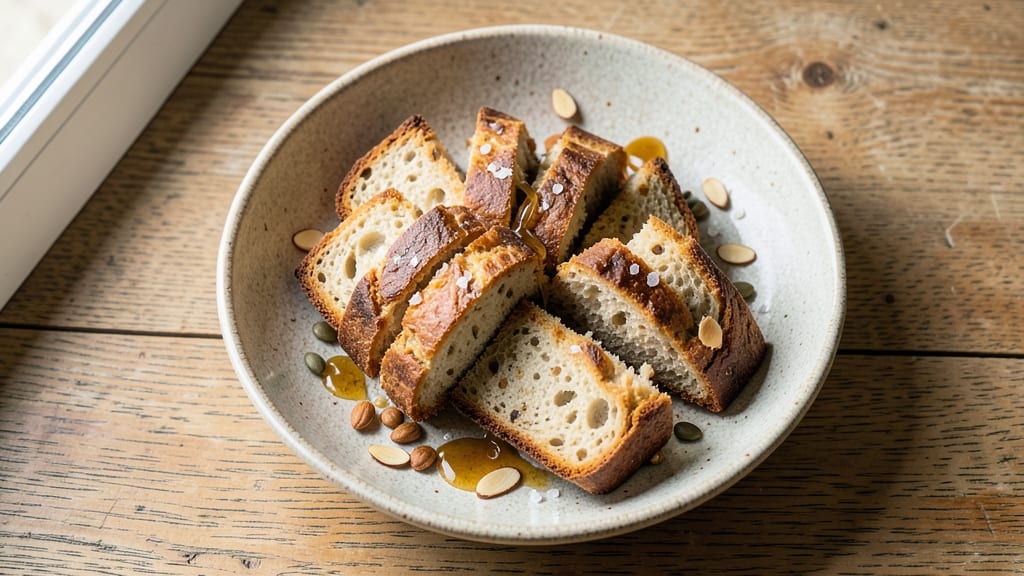
This alkaline gluten-free bread recipe delivers light, airy loaves without yeast or dairy—perfect for those avoiding gluten while craving artisanal texture. The secret lies in baking soda's alkaline properties, which create a tender crumb and golden crust without traditional leaveners.
I developed this after years of testing gluten-free formulas, finally achieving a bread that toasts beautifully and holds up to sandwiches.
The process begins with a high-hydration dough using a blend of gluten-free flours and psyllium husk for structure. Unlike dense gluten-free breads, this recipe mimics traditional loaves with alkaline chemistry—baking soda reacts with acids in the batter to produce carbon dioxide, lifting the bread naturally.
No kneading required; just mix, shape, and bake in a Dutch oven for that signature oven-spring.
What sets this apart is the versatility—it freezes well, toasts to crispy perfection, and pairs with everything from peanut butter to soups. The crust stays soft for days, while the interior remains tender.
For those new to gluten-free baking, this recipe proves you don’t need gluten for great bread—just the right technique.
Ready in under 2 hours (including baking), this loaf requires no special equipment beyond a mixing bowl and Dutch oven. The result? A restaurant-quality gluten-free bread that’s finally worth celebrating. Let’s get started.
Ingredients for alkaline gluten free bread
These twelve ingredients transform into a gluten-free loaf with restaurant-quality texture and versatility.
| Ingredient | Amount | Notes |
|---|---|---|
| Brown Rice Flour 🌾 | 1 ½ cups | For structure and chewy texture |
| Tapioca Starch 🌾 | ½ cup | Ensures lightness and elasticity |
| Psyllium Husk Powder 🌿 | 2 tbsp | Critical for gluten-free structure |
| Almond Flour 🌰 | ½ cup | Adds richness and moisture |
| Alkaline Baking Soda 🧂 | 1 ½ tsp | Essential for alkaline reaction |
| White Vinegar 🍶 | 1 tbsp | Reacts with baking soda for lift |
| Applesauce 🍎 | ½ cup | Replaces eggs and adds moisture |
| Ground Flaxseed 🌱 | 1 tbsp | Acts as egg substitute and binder |
| Water 💧 | 1 ½ cups | Room temperature for proper hydration |
| Olive Oil 🫒 | 2 tbsp | Extra-virgin for flavor and moisture |
| Salt 🧂 | 1 tsp | Diamond Crystal preferred |
| Honey 🍯 | 2 tbsp | Enhances browning and flavor |
The psyllium husk powder is non-negotiable for gluten-free structure—Bob's Red Mill is my go-to brand. Almond flour adds richness, but if you prefer a lighter texture, swap it for sunflower seed flour at the same quantity. For the baking soda, Bob's Red Mill brand is specifically labeled as alkaline and works best here. The applesauce should be unsweetened; Mott's is a reliable choice. Store these dry ingredients in airtight containers to maintain freshness, while the applesauce and honey should be refrigerated after opening.
No psyllium husk? Xanthan gum at half the amount can substitute, though the texture will differ slightly. Running low on almond flour? Cashew flour works 1:1, though it's pricier. The vinegar is crucial for the alkaline reaction—substitute with lemon juice if needed, but adjust to taste. For a sweeter loaf, increase honey to 3 tbsp, though this may slightly darken the crust. The olive oil should be extra-virgin; California-based brands like Corto offer excellent flavor profiles.
This dough is high-hydration, so don’t overmix—just combine until the psyllium husk absorbs the liquid. The batter will be thick but pourable. For best results, bake immediately, but you can refrigerate the dough for up to 24 hours in an airtight container. The loaf keeps well at room temperature for 3-4 days in a bread bag, or freeze for up to 3 months. To revive, toast or warm in a 350°F oven for 10 minutes—it reheats beautifully.
Why You'll Love This Recipe
- No-Fuss Mixing: The dough comes together in five minutes—just whisk, fold in the psyllium husk powder (that’s the magic for structure), and let the alkaline baking soda do its thing. No stand mixer, no kneading, no stress.
- Nutty, Earthy Crunch: Brown rice flour and almond flour give it a toasty depth, while the tapioca starch keeps it tender. Honestly, it’s the kind of bread that makes you pause mid-slice—like finding a hidden treasure in your pantry.
- Meal Prep MVP: Slices perfectly for sandwiches, toast, or even croutons. Here’s what sold me: I can bake a whole loaf on Sunday, and by Thursday, it’s still the star of my lunchbox or breakfast plate—no sad, stale bread here.
- Budget-Friendly Staple: Psyllium husk and alkaline baking soda stretch the ingredients further than most GF breads. Between us, I’ve made this for under $3 a loaf, and it feeds my whole family for days. That’s not just bread—that’s smart spending.
Step-by-step instructions for alkaline gluten-free bread
This method delivers a light, airy loaf without yeast or dairy—precision matters at every stage.
Combine Dry Ingredients for Optimal Texture
In a large mixing bowl, whisk together the 1.5 cups brown rice flour, 0.5 cup tapioca starch, 2 tbsp psyllium husk powder, and 0.5 cup almond flour. The psyllium husk powder is critical here—it mimics gluten's binding properties, so don't skip sifting it through a fine-mesh strainer first to prevent clumping. I like to use a whisk for 30 seconds to aerate the dry ingredients slightly before adding liquids.
In a separate small bowl, combine the 1.5 tsp alkaline baking soda and 1 tsp salt. This pre-mix ensures even distribution throughout the batter. The alkaline baking soda will react with the white vinegar later, creating lift without yeast. Keep these dry ingredients separate until you're ready to combine them with the wet mixture.
Mix Wet Ingredients and Activate the Leavening
In another bowl, measure out the 1.5 cups water (room temperature is essential—cold water slows the alkaline reaction) and whisk in the 2 tbsp honey and 2 tbsp olive oil. The honey not only sweetens but also enhances browning and adds moisture retention. Next, add the 1 tbsp white vinegar and 1 tbsp ground flaxseed to the wet mixture. The flaxseed will thicken slightly as it absorbs liquid, acting as a natural egg substitute.
Now, stir in the 0.5 cup applesauce—this replaces eggs while adding natural sweetness and moisture. The mixture should be smooth but slightly thick. Let it sit for 5 minutes while you prepare the next step. This resting period allows the flaxseed to fully gel, ensuring better structure in the final loaf.
Combine Wet and Dry Mixtures for Perfect Hydration
Gradually pour the wet mixture into the dry ingredients while whisking continuously. Start on low speed if using a stand mixer, or whisk by hand until just combined—do not overmix. The batter should be thick but pourable, similar to pancake batter. If it's too stiff, add 1-2 tablespoons of water at a time until it reaches the right consistency. The goal is a smooth, cohesive batter that holds its shape when poured.
Here's where the alkaline reaction begins: the baking soda and vinegar will start fizzing slightly. This is normal and indicates the leavening process is active. Let the batter rest for 10 minutes at room temperature. This step allows the psyllium husk to fully hydrate and the flaxseed to set, which prevents a gummy texture in the final bread.
Prepare the Loaf Pan for Even Baking
Preheat your oven to 350°F and lightly grease a 9x5-inch loaf pan with olive oil or line it with parchment paper for easy removal. The pan should be generously coated but not dripping—excess oil can make the bread greasy. Tap the pan gently on the counter to ensure the grease is evenly distributed. This preparation step is crucial for preventing the bread from sticking, especially since we're working with a dense gluten-free batter.
Pour the batter into the prepared pan and smooth the top with a spatula. The batter will settle slightly as it sits, so don't overfill the pan. Gently tap the pan on the counter a few times to release any air bubbles trapped in the batter. This ensures an even rise and consistent texture throughout the loaf.
Bake to Golden Perfection with Precision Timing
Place the loaf pan in the preheated oven and bake for 50-55 minutes. The bread is done when the top is golden brown and a toothpick inserted into the center comes out clean. I recommend checking the bread at the 45-minute mark—ovens vary, and you want to avoid overbaking, which can make the bread dry. If the top browns too quickly, tent the pan with foil to prevent over-browning while allowing the center to cook through.
Once baked, remove the bread from the oven and let it cool in the pan for 10 minutes. This resting period allows the internal structure to set before removing it from the pan. After 10 minutes, carefully transfer the bread to a wire rack to cool completely. The bread will firm up as it cools, making it easier to slice. For the best texture, let it cool for at least 30 minutes before slicing—this ensures clean cuts and prevents crumbling.
Pro Tips For Making Alkaline Gluten Free Bread
- Mix Psyllium Last: I learned this the hard way—adding psyllium husk powder after the wet ingredients makes a world of difference. It blends smoother, avoids clumping, and gives you that perfect chewy texture without gummy patches. (Yes, even if you’re impatient like me.)
- Preheat Pan to 375°F: Cold pans = sad bread. Get that Dutch oven or baking stone hot before pouring the batter—no waiting. The initial shock of heat helps the alkaline reaction kick in faster, so you’re not left with a dense, underproofed loaf.
- Skip the Extra Water: Almond flour and tapioca starch soak up liquid like sponges, but resist the urge to "fix" a thick batter. Overcompensating turns your bread into a brick. Trust the recipe’s measurements—it’s calibrated for the right crumb.
- Brush Crust with Oil: After baking, let the loaf cool slightly, then brush the crust with a tiny bit of neutral oil (like avocado or grapeseed). It keeps the alkaline tang from drying out the exterior and adds a subtle richness. (Your future self will thank you.)
Regional styles of alkaline gluten free bread
Italian-Style Adaptation
Inspired by traditional Italian pane di grano, this version swaps brown rice flour for 1.5 cups white rice flour and adds 1 tsp dried oregano to the wet ingredients.
Replace honey with 2 tbsp maple syrup for a more authentic flavor profile, and brush the baked loaf with olive oil mixed with 1 tsp sea salt while still warm. This creates a crispy, rustic crust reminiscent of Focaccia. 🌾
French Baguette Twist
For a baguette-style loaf, shape the batter into a 12-inch log on a parchment-lined baking sheet. Brush the top with 1 tbsp melted butter (optional) and sprinkle with 1 tsp cornmeal for texture.
Bake at 375°F for 25-30 minutes until golden and hollow-sounding when tapped. This version pairs perfectly with herb butter or garlic confit for dipping. ✨
Mexican Cornbread Fusion
Add ½ cup masa harina to the dry ingredients and replace almond flour with ½ cup cornmeal. Stir in 1 tsp ground cumin and ½ tsp smoked paprika to the wet mixture for a Southwestern kick.
Bake in a 9-inch cast-iron skillet for a crispy crust, and serve with refried beans or spicy salsa. The psyllium husk keeps it tender despite the cornmeal's density. 🌶️
Japanese Millet Bread
Substitute 1 cup brown rice flour with 1 cup millet flour and reduce tapioca starch to ¼ cup. Add 1 tbsp grated ginger and 1 tsp sesame seeds to the batter for an Asian-inspired flavor.
Brush the baked loaf with a mix of 1 tbsp soy sauce and 1 tbsp honey after baking for a glossy finish. This version complements miso soup or teriyaki-glazed meats beautifully. 🌱
Sweet Cinnamon Raisin
For a breakfast-friendly loaf, fold in ½ cup raisins and add 1 tsp cinnamon to the dry ingredients. Reduce the honey to 1 tbsp and add 1 tbsp maple syrup to the wet mixture.
Bake as directed, then drizzle with melted butter and a sprinkle of cinnamon sugar while warm. This version works as toast or a quick snack with Greek yogurt. 🍯
Savory Herb & Garlic
Infuse the batter with 2 tbsp chopped fresh rosemary and 3 minced garlic cloves (add to wet ingredients). Replace honey with 1 tbsp Dijon mustard for depth. After baking, brush the crust with a mix of 1 tbsp olive oil and 1 tsp lemon zest.
This herbaceous loaf shines with hummus or olive tapenade. 🌿
Nutrition facts
Frequently asked questions
Why does this recipe use baking soda instead of yeast?
The alkaline baking soda creates chemical leavening through its reaction with vinegar, producing carbon dioxide that lifts the bread naturally. This eliminates the need for yeast while achieving a light, airy texture. The result is a bread with a tender crumb and golden crust without waiting for fermentation.
Can I substitute psyllium husk powder with something else?
Yes, you can use xanthan gum as a substitute, but reduce it to ½ teaspoon since it's more potent. Psyllium husk provides better structure and mimics gluten's elasticity. Without it, your bread may crumble more easily. For best results, stick with the original amount of psyllium husk powder.
How do I know when the bread is fully baked?
Your bread is done when the top is golden brown and a toothpick inserted into the center comes out clean. Check at the 45-minute mark—overbaking can make the bread dry. If the crust browns too quickly, tent with foil to prevent over-browning while the center cooks through.
Will this bread work for sandwiches?
This recipe yields a sturdy yet tender loaf that holds up well to sandwiches. Let it cool completely before slicing to prevent crumbling. The alkaline reaction creates a structure that maintains shape even with wet fillings like hummus or avocado.
Can I make this bread without a loaf pan?
Yes, shape the batter into a free-form loaf on a parchment-lined baking sheet. For extra crispiness, brush the top with olive oil before baking. The texture will be slightly denser than pan-baked bread, but it still delivers great flavor. Bake at 350°F for 40-45 minutes until golden.