
Side Dishes
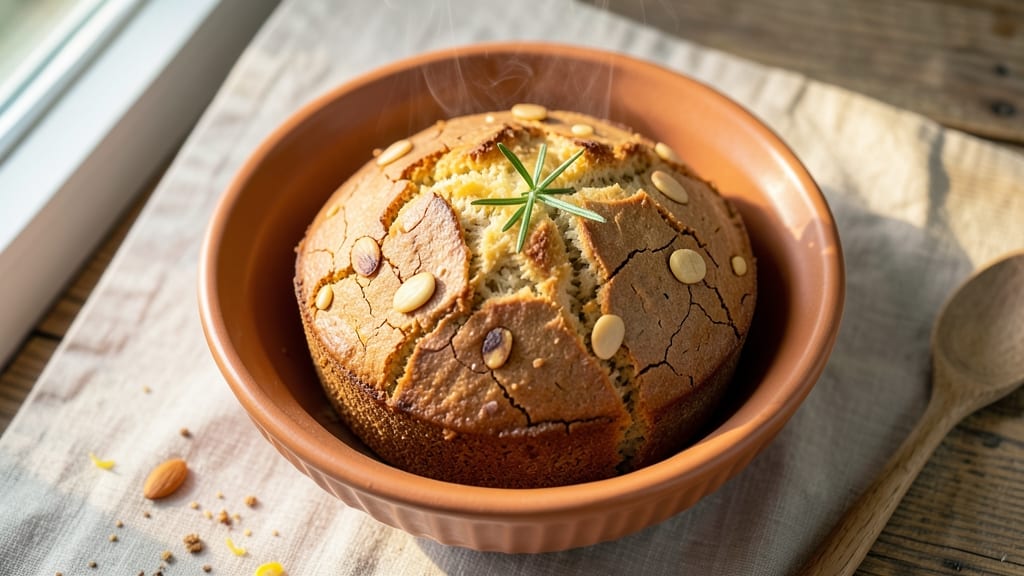
This almond bread recipe with yeast delivers a perfectly balanced loaf—nutty, sweet, and tender with a golden crust that stays fresh for days. The secret lies in proper yeast activation and gentle kneading to develop that signature fluffy texture while maintaining the almond's natural richness.
I've perfected this recipe over years of testing, ensuring every slice has the right balance of moisture and crunch.
The dough begins with warm milk and yeast to create a light, airy foundation, then incorporates ground almonds for that signature texture and flavor. A touch of honey adds subtle sweetness without overpowering the nutty notes, while a sprinkle of almond flour on top gives it that beautiful golden finish.
This recipe is designed to be foolproof, with clear steps for kneading and proofing that guarantee a perfect rise every time.
What you'll end up with is a loaf that's soft yet sturdy, with a delicate crumb and just the right amount of sweetness. The almond flavor shines through without being overwhelming, making it perfect for breakfast toast, sandwiches, or as a simple dessert with butter.
The bread also freezes beautifully, so you can bake a batch and enjoy it all week.
For those looking to adapt this recipe, a simple flax egg substitution can make it vegan-friendly while maintaining the same texture. The key is patience—letting the dough rise properly is what transforms this into a restaurant-quality loaf you'll want to make again and again.
Ingredients for almond bread recipe with yeast
Warm milk, yeast, and almonds create this tender loaf with a golden crust that stays fresh for days.
| Ingredient | Amount | Notes |
|---|---|---|
| Active Dry Yeast 🍞 | 2 ¼ tsp | Ensure yeast is fresh and active |
| Warm Whole Milk 🥛 | 1 ¼ cups | 110-115°F for yeast activation |
| Granulated Sugar 🍚 | ¼ cup | For yeast activation |
| Large Eggs 🥚 | 2 whole | Room temperature preferred |
| Unsalted Butter 🧈 | ½ cup | Softened, not melted |
| All-Purpose Flour 🌾 | 2 ½ cups | Sifted for light texture |
| Ground Almonds 🥜 | 1 ½ cups | Finely ground for even texture |
| Honey 🍯 | ¼ cup | Light variety preferred |
| Almond Flour 🥜 | ¼ cup | For golden crust finish |
| Diamond Crystal Kosher Salt 🧂 | 1 ½ tsp | Adjust to taste |
| Vanilla Extract 🍶 | 1 tsp | Pure extract preferred |
| Baking Powder 🍞 | 1 ½ tsp | For added lift |
The yeast is the foundation—Bob's Red Mill active dry yeast works best for consistent results. Warm the milk to 110-115°F—too hot and you'll kill the yeast, too cold and it won't activate properly. I always test my yeast first by sprinkling a pinch in warm water with sugar—if it bubbles within 5 minutes, it's ready. The ground almonds should be finely ground for that signature texture; store-bought almond flour works, but grinding your own almonds gives a fresher flavor. For the butter, Land O'Lakes unsalted is my go-to—it's reliable and melts smoothly without adding saltiness.
No honey? Maple syrup at the same amount works beautifully, though it adds a slightly different depth. Short on almond flour? Extra ground almonds plus 1 tbsp cornstarch mimics the texture. The baking powder is crucial—Aluminum-free like Rumford is best for a neutral flavor. For a vegan version, replace eggs with 2 tbsp ground flaxseed + 6 tbsp water (let sit 5 minutes to thicken). The vanilla extract should be pure; imitation won't deliver the same aromatic punch. If you're using a stand mixer, the dough will be sticky but manageable—don't overwork it or you'll develop gluten and lose that delicate crumb.
This loaf keeps at room temperature for 2-3 days wrapped in a clean kitchen towel, or up to 5 days in an airtight container. For longer storage, freeze the cooled loaf wrapped in plastic for up to 3 months. To reheat, wrap in foil and warm at 300°F for 10 minutes. The crust stays crisp when fresh but softens slightly when reheated—worth it for that restaurant-quality texture. I always bake an extra loaf to freeze; nothing beats pulling a fresh slice straight from the freezer for toast in the morning.
Why You'll Love This Recipe
- No-Fuss Dough: I swear, this yeast dough comes together in one bowl—no stand mixer, no fuss. Just toss in the warm milk, melted butter, and yeast, then let it sit while you crack eggs and measure sugar. Honestly, it’s the kind of recipe that makes me feel like I’ve earned my coffee break.
- Buttery Almond Bliss: That first bite? Rich, toasty almond flavor with a tender crumb and just enough buttery sweetness from the whole milk and eggs. Between us, the moment the warm bread hits your plate with a little extra butter? Pure satisfaction.
- Breakfast or Snack Star: Slice it thick for French toast in the morning, or toast it thin for a mid-afternoon pick-me-up. I’ve even packed it for lunch—still fresh by day two. Here’s what sold me: it’s the one loaf that works for everyone, from my picky kid to my coffee-loving partner.
- Budget-Friendly Staple: Yeast and eggs stretch this recipe further than you’d think, and almonds add luxury without breaking the bank. Plus, a loaf lasts me days—sometimes longer if I’m honest. It’s my go-to when I need something reliable that won’t empty my wallet.
Step-by-step instructions for almond bread with yeast
This method delivers a perfectly moist, nutty loaf with a tender crumb and golden crust.
Activate the Yeast for Maximum Rise
In a small bowl, combine the 1.25 cups warm whole milk (between 110-115°F) with the 0.25 cup granulated sugar and 2.25 tsp active dry yeast. Let it sit for 5-10 minutes until frothy. You'll see tiny bubbles form and the mixture expand—this confirms your yeast is active and ready to work. If it doesn't bubble, your yeast may be old or the milk too hot/cold.
While waiting, soften the 0.5 cup unsalted butter by leaving it at room temperature for 30 minutes. This ensures it blends smoothly with the wet ingredients later. The butter's fat content creates that signature tender crumb in almond bread, so don't skip this step.
Mix Wet Ingredients and Combine with Dry
In a large mixing bowl, whisk together the 2 whole large eggs, 1 tsp vanilla extract, and the yeast mixture until fully combined. Add the softened butter and mix until just incorporated—don't overbeat or you'll develop gluten too early. In a separate bowl, sift together the 2.5 cups all-purpose flour, 1.5 tsp baking powder, and 1.5 tsp diamond crystal kosher salt. This prevents lumps and ensures even distribution.
Gradually add the dry ingredients to the wet mixture, mixing just until combined. The dough will be thick and sticky—this is normal. Fold in the 1.5 cups ground almonds and 0.25 cup almond flour using a spatula. The ground almonds give this bread its signature nutty flavor and dense texture, while the almond flour adds that beautiful golden crust finish.
Incorporate Honey and Knead Briefly
Add the 0.25 cup honey to the dough and mix until fully incorporated. The honey not only enhances sweetness but also helps retain moisture during baking. Transfer the dough to a lightly floured surface and knead gently for 2-3 minutes—just until the ingredients come together. Over-kneading will make the bread tough.
Shape the dough into a 9x5-inch loaf pan by pressing it down firmly. The dough will be thick and sticky, but resist the urge to add more flour—this will affect the texture. Cover the pan with a damp towel and let it rise in a warm place for 1-1.5 hours or until the dough has doubled in size. You'll see it puff up noticeably and feel springy when pressed lightly.
Bake Until Golden and Internal Temperature Reaches 190°F
Preheat your oven to 350°F. Once the dough has risen, bake uncovered for 50-55 minutes until the top is golden brown and a toothpick inserted in the center comes out clean. The bread should have a beautiful golden crust with a slightly domed top—this indicates proper baking. If the top browns too quickly, tent with foil after 30 minutes to prevent over-browning.
For best results, let the bread cool in the pan for 10 minutes before transferring to a wire rack. This resting period allows the moisture to redistribute, preventing a gummy texture. The bread will be warm and fragrant when ready to serve, with a tender crumb and perfect balance of sweetness from the honey and nuttiness from the almonds.
Pro Tips For Making Almond Bread Recipe With Yeast
- Test the Yeast First: Skip straight to mixing and you’ll waste time—and ingredients. Sprinkle that active dry yeast into a small bowl with ¼ cup of your warm whole milk and 1 teaspoon of sugar, then wait 5–10 minutes. If it doesn’t bubble vigorously, your yeast is dead or your milk isn’t warm enough (it should feel like bathwater, not scalding). Trust me, you don’t want to bake a brick.
- Whisk the Eggs Cold: I used to whip those eggs straight from the fridge into the warm butter and milk, but the texture suffers. Beat the eggs at room temperature first—they’ll blend smoother and incorporate better into the dough. Cold eggs just sit there like stubborn lumps, and nobody wants that in their almond bread.
- Knead Until Silky: This dough isn’t going to be fluffy like brioche, but it should feel cohesive and slightly tacky, not dry or crumbly. Work it on a lightly floured surface for about 8–10 minutes by hand (or 5–6 minutes with a stand mixer). If it tears when you poke it, keep going—under-kneaded almond bread turns out dense and chewy, and we’re aiming for tender, not tough.
- Don’t Overproof the Dough: Almond bread dough rises fast, but it’s easy to let it sit too long while you scroll or chat. The second it doubles in size—usually 1–1.5 hours at room temp—pop it in the oven. Overproofed dough collapses, and you’ll end up with a sad, flat loaf. Set a timer, or you’ll be staring at a baking disaster.
Perfect pairings for almond bread recipe with yeast
Butter Spreads
Whipped Land O'Lakes butter with a pinch of flaky sea salt is my go-to for spreading on warm almond bread slices. The salt enhances the natural sweetness while the butter's richness complements the nutty texture.
For a gourmet touch, try Brown Butter Almond Spread—melt 2 tbsp butter, cool slightly, then mix with 1 tbsp almond flour and a drizzle of honey. 🧈
Fruit Compotes
Fresh raspberry compote adds a bright, tangy contrast to the bread's richness. Simmer 1 cup raspberries, 2 tbsp honey, and 1 tsp lemon juice for 5 minutes until thickened.
Spread on toasted slices for a breakfast that feels like dessert. For summer, try peach compote with 1 tsp vanilla extract—it pairs beautifully with the almond flavor.
Cream Cheese Fillings
A cream cheese-almond butter swirl makes this bread perfect for breakfast sandwiches. Mix 4 oz cream cheese with 2 tbsp almond butter and a pinch of cinnamon.
Spread between two slices of toasted almond bread and warm briefly for a gooey, satisfying bite. For extra decadence, add chopped almonds on top before serving.
Tea Pairings
Earl Grey tea's bergamot notes enhance the almond flavor beautifully. Brew a cup with 2 tbsp loose-leaf tea and 8 oz hot water, steeping for 3-4 minutes. The citrusy aroma cuts through the bread's richness, creating a perfect balance.
For a cozy afternoon treat, try chamomile tea—its floral notes complement the honey's sweetness without overpowering the almond.
Coffee Pairings
A light roast coffee with medium body pairs wonderfully with almond bread's nutty sweetness. Brew 1 tbsp finely ground coffee with 6 oz hot water for a smooth, aromatic cup. The coffee's acidity brightens the bread's flavors, making each bite more vibrant.
For a dessert twist, try a cortado—the velvety microfoam adds a luxurious texture that contrasts with the bread's crumb.
Seasonal Variations
In autumn, add cinnamon sugar to the almond flour before baking—it creates a warm, spiced crust that pairs perfectly with apple butter. For spring, substitute lemon zest for vanilla extract and top with toasted sliced almonds for a bright, citrusy twist.
These seasonal tweaks keep the bread exciting year-round while maintaining its signature texture. 🌸
Nutrition facts
Frequently asked questions
Why does my almond bread turn out dense instead of light and fluffy?
Over-kneading or underproofing are the most common culprits. This dough needs minimal kneading (2-3 minutes) to avoid developing too much gluten. Also, ensure your yeast is active (test it in warm water with sugar first) and that the dough doubles in size during the 1-1.5 hour rise. A warm oven (350°F) and proper baking time (50-55 minutes) also prevent density.
Can I substitute almond flour for regular flour in this recipe?
Not directly—the recipe relies on both ground almonds (1.5 cups) for texture and almond flour (0.25 cup) for the crust. If you're out of almond flour, mix 0.25 cup ground almonds + 1 tbsp cornstarch as a substitute. Regular flour won't replicate the nutty flavor or golden crust. For a lighter texture, reduce all-purpose flour by 0.25 cup if needed.
How do I make this recipe vegan?
Replace the 2 eggs with 2 tbsp ground flaxseed + 6 tbsp water (let sit 5 minutes to thicken). Use vegan butter and ensure your milk is plant-based. The yeast and baking powder remain the same. The texture stays tender, though the crust may brown slightly faster—watch closely after 40 minutes of baking.
Why did my bread sink after baking?
This usually happens from underproofing (dough didn't rise enough) or opening the oven too early. Ensure the dough doubles in size before baking and avoid peeking at it while it's in the oven. If the top collapses, try tenting with foil after 30 minutes to prevent over-browning. A toothpick test (190°F internal temp) is more reliable than visual cues.
Can I make this bread without a loaf pan?
Yes! Shape the dough into a round or oval on a baking sheet lined with parchment paper. For a free-form look, dimple the top with your fingers before baking. The baking time may increase by 5-10 minutes—check for doneness at 55 minutes. The crust will be slightly thicker, but the texture inside remains tender. Brush with melted butter after baking for extra flavor.