
Side Dishes
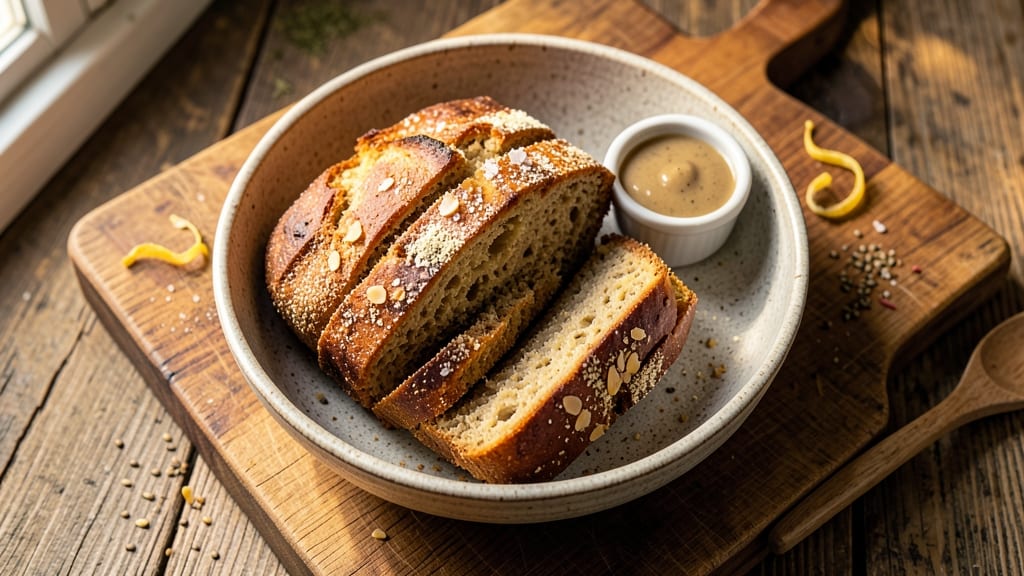
This almond flour bread recipe with psyllium husk delivers the perfect gluten-free loaf—light, airy, and with a crispy crust that rivals traditional bread. The secret lies in psyllium husk, which acts as a natural gluten substitute, binding the dough while creating that signature rise.
I developed this recipe after struggling to find a gluten-free bread that could hold its shape and deliver satisfying texture—until I discovered the magic of this simple ingredient.
The psyllium husk doesn’t just replace gluten; it transforms the baking process, ensuring your bread stays moist and sturdy without crumbling. With just 10 minutes of active prep and 50 minutes in the oven, you’ll have a loaf that’s ideal for sandwiches, toast, or serving alongside soups.
The key is proper hydration—almond flour absorbs moisture differently than wheat flour, so we balance it with psyllium for structure.
What sets this recipe apart is the crispy crust that forms during baking, thanks to a light egg wash and high-heat finish. Each slice delivers a satisfying crunch while maintaining a tender interior. Whether you’re gluten-free or simply craving a healthier bread option, this recipe delivers restaurant-quality results at home.
Best of all, this loaf keeps well for 3–4 days at room temperature or can be frozen for up to a month. Perfect for meal prep, gifting, or enjoying fresh from the oven. Let’s bake!
Ingredients for almond flour bread recipe with psyllium husk
The magic happens with almond flour and psyllium husk—nature's gluten-free binding duo for bread that rivals classic loaves.
| Ingredient | Amount | Notes |
|---|---|---|
| Fine Almond Flour 🌰 | 3 cups | Blanched, finely ground preferred |
| Psyllium Husk Powder 🌿 | ½ cup | Pure, unsweetened, food-grade |
| Ground Flaxseed 🌾 | ¼ cup | Freshly ground for best binding |
| Coconut Sugar 🍯 | ¼ cup | Or maple syrup for liquid sweetener |
| Baking Powder 🍞 | 2 tsp | Aluminum-free for best rise |
| Salt 🧂 | 1 ½ tsp | Fine sea salt preferred |
| Apple Cider Vinegar 🍎 | 1 tbsp | Activates psyllium for binding |
| Cold Water 💧 | 1 ¼ cups | Room temp water activates psyllium |
| Large Egg Substitute 🥚 | 2 whole | Flax eggs (1 tbsp ground flax + 3 tbsp water) |
| Extra-Virgin Olive Oil 🫒 | ¼ cup | For dough moisture and crust |
| Pure Vanilla Extract 🌸 | 1 tsp | Alcohol-free preferred |
| Sesame Seeds 🌻 | 2 tbsp | For golden crust texture |
Psyllium husk is non-negotiable here—it's the secret weapon that replaces gluten's elasticity. Bob's Red Mill or Now Foods brands are my go-tos for pure, unsweetened husk; avoid blends with additives. The almond flour? Bob's Red Mill or Anthony's Goods make the finest blanched varieties—anything finer than 200-mesh won't give that satisfying crumb. For the flaxseed, grind your own using a coffee grinder right before mixing to preserve those omega-3s. The coconut sugar adds subtle caramel notes while keeping the bread naturally sweetened—Trader Joe's has the best-priced organic version.
No psyllium husk? Chia seeds at double the amount work in a pinch, but texture will differ slightly. Swap coconut sugar for maple syrup (reduce other liquids by 1 tbsp) if you prefer liquid sweetener. The apple cider vinegar is crucial—it activates the psyllium for maximum binding, so don't skip it. For a nut-free version, replace almond flour with sunflower seed flour (though texture will vary). The flax eggs can be swapped for chia eggs (1 tbsp chia + 3 tbsp water) if you're out of flax. Sesame seeds are optional but give that gorgeous golden crust—black sesame adds depth if you're feeling adventurous.
This dough is sensitive—mix everything except water first, then add liquid gradually until just combined. The psyllium will gel immediately, so don't overmix. For a crispier crust, brush the top with extra olive oil before baking. Cool completely on a wire rack (at least 2 hours) to prevent sogginess. Wrap tightly in parchment and foil for 5 days of freshness, or freeze slices for 3 months. Toasting revives stale slices—350°F for 5 minutes works wonders. The crust gets even better the next day once fully set.
Why You'll Love This Recipe
- No-Fuss Mix-In: I swear by this—just toss almond flour, psyllium husk, and flaxseed into a bowl, add water, and stir. The psyllium does all the heavy lifting; no kneading, no waiting for dough to rise. Honestly, my first loaf turned out better than anything I’ve bought at a bakery.
- Nutty Sweet Crunch: That coconut sugar caramelizes just enough to give it a subtle toasted edge, while the almond flour keeps it rich but not heavy. Toast a slice and spread it with butter—it’s the kind of bread that makes you pause mid-bite.
- Meal Prep MVP: This bread stays fresh for days (yes, even without refrigeration) and freezes like a dream. I make two loaves on Sunday: one for toast in the morning, the other for croutons or French toast later. Zero waste, all flavor.
- Budget-Friendly Luxury: Almond flour’s pricey reputation fades fast when you realize how little you need—plus, psyllium husk stretches it further than most recipes. I’ve fed a houseful with one batch, and the leftovers? Perfect for sandwiches or charcuterie boards.
Step-by-step instructions for almond flour bread with psyllium husk
This method delivers a lofty, gluten-free rise with that coveted crispy crust—no special equipment needed.
Activate the Psyllium Husk for Maximum Binding
In a medium bowl, whisk together the 0.5 cup psyllium husk powder and the 1.25 cups cold water until you achieve a thick, gel-like consistency. You'll notice it thickens dramatically within 30-60 seconds—this is crucial for gluten-free structure. The mixture should resemble thick pudding with no visible dry spots. If it's too thin, add 1 tablespoon more psyllium husk powder; if too thick, add 1 tablespoon water. Set aside to hydrate fully for 5 minutes.
This activation step is where the magic happens—the psyllium husks absorb water and swell, creating a network that mimics gluten's binding properties. Don't rush this; proper hydration ensures your bread rises properly rather than collapsing. I like to press the mixture between my fingers to test—it should hold together without sticking.
Mix Wet and Dry Ingredients for Perfect Texture
In a large mixing bowl, combine the 3 cups fine almond flour, 0.25 cup ground flaxseed, 0.25 cup coconut sugar, 2 teaspoons baking powder, and 1.5 teaspoons salt. Whisk gently to distribute the dry ingredients evenly. In a separate small bowl, mix the 2 whole large egg substitutes (prepared as flax eggs), 0.25 cup extra-virgin olive oil, and 1 teaspoon pure vanilla extract until smooth.
Create a well in the center of your dry ingredients and pour in the wet ingredients along with the psyllium gel. Using a spatula, gently fold everything together until just combined—you should still see some almond flour streaks. Overmixing develops gluten-like properties in almond flour, which we want to avoid. The dough will be thick and sticky, similar to wet sand, but not runny. If it's too dry, add 1 tablespoon cold water; if too wet, add 1 tablespoon more almond flour.
Shape and Prepare for Proofing
Line a standard 9x5-inch loaf pan with parchment paper, leaving an overhang on both sides for easy removal. Transfer the dough to the prepared pan and spread it evenly, pressing down gently to fill all corners. Sprinkle the 2 tablespoons sesame seeds evenly over the top—they'll create that beautiful golden crust we're after. Cover the pan loosely with a damp kitchen towel and let it proof at room temperature for 30-45 minutes.
During proofing, the dough should rise noticeably by about 25-30%—it'll look puffy and slightly domed. You'll see small bubbles forming on the surface, indicating proper activation of the baking powder. Gently press your finger into the dough; it should spring back slowly but leave a slight indentation. This tells you it's ready for the oven without overproofing, which would cause collapse.
Bake for Gluten-Free Perfection
Preheat your oven to 350°F and place a small baking dish on the lower rack to catch any potential drips. Bake the bread for 45-50 minutes until the top is deep golden brown and a toothpick inserted in the center comes out clean. The crust should be crispy while the interior remains tender and moist—this balance is key for gluten-free baking.
Here's the thing—almond flour bread can dry out quickly, so don't open the oven door early. At the 35-minute mark, tent the pan with aluminum foil if the top is browning too quickly. The internal temperature should reach 205-210°F at the center. When you tap the bottom of the loaf, it should sound hollow, indicating proper doneness. Let it cool in the pan for 10 minutes before transferring to a wire rack.
Rest and Slice for Maximum Freshness
Once cooled, carefully remove the bread from the pan using the parchment overhang. Let it rest at room temperature for at least 1 hour before slicing—this allows the crumb to set properly. The bread should have a beautiful golden crust with a tender, slightly crumbly interior. For best results, store leftovers wrapped in a clean kitchen towel at room temperature for up to 3 days or freeze for 3 months.
Slice with a sharp serrated knife for clean cuts. Each slice should reveal that perfect balance of crispy crust and moist interior. The sesame seeds will add a delightful nutty crunch with every bite. This bread is ideal for breakfast toast, sandwiches, or simply enjoyed with butter and jam—proof that gluten-free can be just as satisfying as traditional bread.
Pro Tips For Making Almond Flour Bread Recipe With Psyllium Husk
- Mix the Psyllium First: Mix the psyllium husk powder with at least ¼ cup hot water (or warm broth) before adding anything else—it turns into a thick, gel-like binder that holds the bread together. I learned this the hard way when my first batch crumbled like dry sand because I skipped this step.
- Weigh Your Almond Flour: Scooping almond flour from the bag packs it down, giving you way more than you think. Use a kitchen scale for accuracy—this recipe is finicky about ratios, and too much flour makes the bread dense. (Yes, even if you’re impatient like me.)
- Don’t Overmix the Batter: Stir just until the psyllium gel is evenly distributed—overmixing develops gluten-like strands in almond flour, which ruins the light texture. Think "damp clumps disappear," not "smooth batter." Your future self will thank you.
- Bake at 350°F, Not Higher: Almond flour burns faster than regular flour, and psyllium husk can dry out if the oven’s too hot. Stick to 350°F and bake 5-10 minutes longer than the recipe says—the center should read 190°F (205°F for a denser texture). Sounds weird, but it works.
Perfect pairings for this dish
Butter & Jam Classics
There's nothing quite like this bread slathered with unsalted European-style butter—I recommend Plugrá or Kerrygold for that rich, creamy texture. Pair with strawberry jam or raspberry preserves for a breakfast that feels like a bakery treat.
For a savory twist, try olive tapenade or whipped feta with a drizzle of extra-virgin olive oil. 🍓
Avocado Toast Upgrade
Mash 1 ripe avocado with ½ lime juice, salt, and black pepper, then spread generously on toasted slices. Top with crumbled bacon (or mushrooms for vegan), sliced radishes, and a sprinkle of everything bagel seasoning.
The nutty almond flour pairs beautifully with avocado's creaminess, creating a restaurant-worthy dish at home.
Mediterranean Spreads
Combine hummus with chopped kalamata olives, sun-dried tomatoes, and a drizzle of lemon zest for a vibrant spread. Add sliced cucumbers and fresh mint for brightness. This bread's sturdy structure holds up perfectly to these bold flavors, making it ideal for brunch or light lunches.
The sesame seeds add an extra layer of Mediterranean flair.
Sweet & Salty Combinations
Spread with almond butter and top with sliced banana, crushed peanuts, and a sprinkle of cinnamon for a dessert-like breakfast. For a grown-up version, try fig jam with crumbled goat cheese and a sprinkle of flaky sea salt.
The psyllium husk's subtle earthiness balances these sweet and salty pairings beautifully.
Savory Sandwich Potential
Layer with sliced turkey, avocado, arugula, and a balsamic reduction for a gluten-free sandwich that holds together perfectly. For a veggie option, use roasted red peppers, hummus, and sprouts.
The crispy crust adds texture that regular sandwich bread can't match—ideal for meal prep or lunch on the go.
Dessert Applications
Drizzle with melted dark chocolate and crushed hazelnuts for a decadent dessert bread. The almond flour's natural sweetness pairs wonderfully with caramelized onions and blue cheese for a sweet-savory twist. For a festive touch, add powdered sugar and cinnamon after baking for a cinnamon roll-inspired treat.
Nutrition facts
Frequently asked questions
Why does this recipe use psyllium husk instead of xanthan gum?
Psyllium husk creates a more elastic, bread-like texture that holds up better to slicing and toasting. Unlike xanthan gum—which just mimics gluten's stretch—psyllium actually forms a gel network that traps moisture, preventing that crumbly texture common in almond flour breads. The result is a loaf with structure that rivals traditional bread.
Can I make this bread without eggs?
The recipe already includes flax eggs as the default egg substitute. For even more flexibility, you can use chia eggs (1 tbsp chia seeds + 3 tbsp water per egg) or aquafaba (3 tbsp per egg). Just ensure your substitute is fully thickened before mixing into the dough.
How do I prevent my bread from being too dense?
Proper psyllium activation is key—whisk it with water until it forms a thick gel (like pudding) before adding to other ingredients. Also, don't overmix after combining all ingredients—just fold until the dough comes together. The 30-45 minute proofing time is crucial too; skip this and your bread will be flat.
What's the best way to store leftovers?
Wrap the cooled loaf tightly in a clean kitchen towel, then place in an airtight container. This keeps it fresh for 3-4 days at room temperature. For longer storage, freeze slices (up to 3 months))—thaw overnight in the fridge or toast directly from frozen for 5-7 minutes at 350°F.
Can I add seeds or nuts to the dough?
Yes, but fold them in gently after mixing to avoid tearing the structure. Try 1-2 tbsp chopped walnuts or pumpkin seeds for extra crunch. For even distribution, sprinkle them on top before baking instead. The sesame seeds in the recipe already provide that perfect golden texture—don't exceed 3 tbsp total seeds/nuts or the dough may become too dry.