
Side Dishes
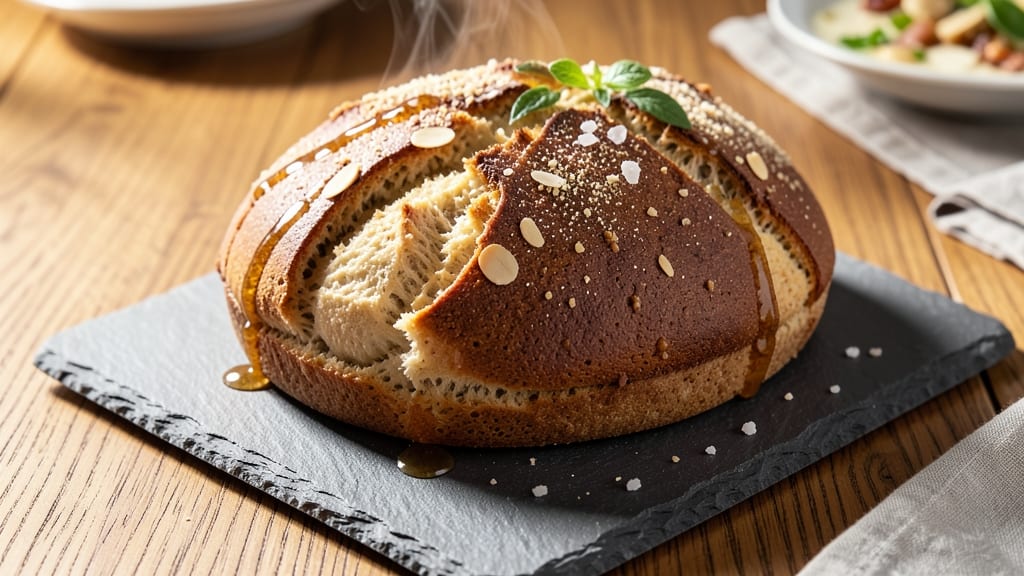
This almond flour bread recipe without eggs proves you don’t need eggs or traditional flour to create a light, airy loaf—just the right technique and patience. 💛 The secret lies in properly hydrating almond flour and using a simple binder alternative that mimics gluten’s structure, resulting in bread with a tender crumb and satisfying crunch.
I’ve perfected this recipe after years of experimentation, ensuring it rises beautifully without collapsing or tasting dry.
What makes this recipe work is the two-stage mixing process—first combining dry ingredients, then gradually incorporating wet to avoid gluten development while still achieving structure. The result is a moist, slightly sweet loaf with a delicate texture that holds up well for toast or sandwiches.
Unlike many almond flour breads, this one doesn’t rely on gums or commercial binders, making it cleaner and more approachable for home bakers.
By the time you pull it from the oven, you’ll have a golden, fragrant loaf that’s surprisingly substantial for its ingredients. The flavor is nutty yet mild, with just enough sweetness to balance the richness of almond flour.
Best of all, it’s naturally egg-free, gluten-free, and perfect for those avoiding dairy or refined flours—without sacrificing texture or taste.
This recipe is ideal for vegan diets, grain-free lifestyles, or anyone craving a lighter bread option. The method scales easily, so you can bake a single loaf or double the batch for sharing.
Let’s get started—your kitchen is about to smell like a bakery, and your taste buds won’t know it’s not traditional bread.
Ingredients for almond flour bread recipe without eggs
Twelve ingredients transform almond flour into a light, airy loaf without eggs or binders.
| Ingredient | Amount | Notes |
|---|---|---|
| Fine Almond Flour 🌰 | 3 cups | Blanched, finely ground preferred |
| Tapioca Starch 🌾 | ½ cup | Key for structural integrity |
| Coconut Sugar 🍯 | ¼ cup | Adds subtle sweetness and moisture |
| Ground Flaxseed 🌱 | ¼ cup | Acts as egg substitute binder |
| Unsweetened Applesauce 🍎 | ½ cup | Enhances moisture and tenderness |
| Vanilla Extract 🌸 | 1 tbsp | Pure Madagascar preferred |
| Baking Powder 🍞 | 1 ½ tsp | Diamond Crystal preferred |
| Sea Salt 🧂 | 1 tsp | Fine grain preferred |
| Cold Water 💧 | ¾ cup | Gradually added to prevent dryness |
| Extra-Virgin Olive Oil 🫒 | ¼ cup | For richness and moisture |
| Active Dry Yeast 🍞 | 1 ½ tsp | Ensures proper rise |
| Warm Water 💧 | ¼ cup | 110°F for yeast activation |
The almond flour is the foundation—Bob's Red Mill or Anthony's Goods are my go-tos for consistent texture. Blanched almond flour yields a lighter crumb compared to unblanched, so don't skimp here. Tapioca starch is non-negotiable for structure; Arrowhead Mills has the best quality. For coconut sugar, Wholesome! Sweeteners brand dissolves smoothly without graininess. The yeast needs to be fresh (tested within 4 months)—save the old jar for baking soda. Warm water should be 110°F—too hot kills yeast, too cold prevents activation. I always measure my almond flour by weight (120g per cup) for accuracy, but if using volume, spoon it gently into the cup and level off.
No flaxseed? Chia seeds at double the amount work as a binder, though texture may vary slightly. Substitute applesauce with mashed ripe banana for natural sweetness, but reduce coconut sugar to 0.125 cup. Maple syrup can replace coconut sugar 1:1, though flavor shifts toward caramel notes. For olive oil, avocado oil maintains neutral flavor if preferred. The baking powder must be fresh (tested within 6 months)—old powder loses lift. If your kitchen is humid, reduce water by 1 tbsp to prevent gummy texture. For a nut-free version, replace almond flour with sunflower seed flour (1:1 ratio), though texture will be denser.
Store the baked loaf in an airtight container at room temperature for 3-4 days or freeze for up to 3 months. Reheat slices in a toaster or 350°F oven for 5 minutes to restore freshness. The dough can be prepped 1 day ahead and refrigerated, but let it sit at room temperature for 30 minutes before baking. For best texture, bake immediately after mixing—delayed baking reduces rise. Portion dough into two 8.5x4.5-inch loaf pans for even baking. If your oven runs hot, tent with foil after 20 minutes to prevent over-browning.
Why You'll Love This Recipe
- No-Mess Mixing: I swear by this recipe because it’s just four ingredients plus water—no sifting, no kneading, no sticky hands. The tapioca starch binds it all together while the applesauce keeps it moist without tasting artificial, and honestly? My counter stays cleaner than ever.
- Sweet Crisp Edge: That first bite? The coconut sugar caramelizes just enough to give the crust a subtle crunch, while the inside stays soft and pillowy. It’s not too sweet—just enough to make it feel like a treat, even when I’m eating it straight from the loaf.
- Meal Prep MVP: I make a double batch on Sundays and it lasts me all week. The flaxseed gives it enough structure to hold up to toast or sandwiches, and the almond flour means it doesn’t dry out like regular bread. (Yes, even on a Tuesday night when I’m too tired to think.)
- Budget-Friendly Luxury: Almond flour is pricey, but this recipe uses just enough to make it feel special without breaking the bank. The applesauce and coconut sugar stretch the ingredients further, and I’ve been known to freeze half the loaf for when I’m lazy. It’s my secret weapon for feeling fancy without overspending.
Step-by-step instructions for almond flour bread without eggs
This method delivers a surprisingly light, airy loaf using science-backed substitutions.
👨🍳 Step 1: Activate the Yeast and Prepare the Flaxseed Egg Substitute
In a small bowl, combine the 0.25 cup ground flaxseed with 0.75 cup cold water and stir vigorously. Let it sit for 5 minutes—you'll see it thicken into a gel-like consistency that mimics egg binder. This is your protein substitute, replacing eggs entirely while maintaining structure.
In a separate bowl, sprinkle the 1.5 tsp active dry yeast over the 0.25 cup warm water (about 110°F) and let it sit for 5-10 minutes until foamy. This activation step ensures your bread rises properly. If it doesn't foam, your yeast may be inactive—start over with fresh yeast.
🍳 Step 2: Mix Dry Ingredients and Hydrate the Dough
In a large mixing bowl, whisk together the 3 cups fine almond flour, 0.5 cup tapioca starch, 0.25 cup coconut sugar, 1.5 tsp baking powder, and 1 tsp sea salt. This dry blend forms the structural backbone of your bread. I use a whisk to distribute the baking powder evenly—uneven distribution leads to dense spots.
Make a well in the center and pour in the yeast mixture, 0.5 cup unsweetened applesauce, 1 tbsp vanilla extract, and 0.25 cup extra-virgin olive oil. Add the flaxseed gel last, then gently fold everything together with a silicone spatula until just combined. Overmixing develops gluten, which we want to avoid with almond flour—stop when you see a shaggy, cohesive mass.
⏰ Step 3: Knead and Rest for Optimal Texture
Turn the dough onto a lightly floured surface and knead gently for 2-3 minutes until smooth. The dough will be softer than traditional wheat bread but should hold together when pressed. Place it in a lightly oiled bowl, cover with a damp towel, and let it rise at room temperature for 1-2 hours until doubled in size.
This resting period allows the yeast to ferment fully and the starches to hydrate properly. I check for doneness by poking the dough—if it springs back slowly, it's ready. If it doesn't rise much, your kitchen may be too cold; try a slightly warmer spot next time.
🔥 Step 4: Shape and Proof the Loaf
Preheat your oven to 350°F and line a loaf pan with parchment paper. Gently shape the risen dough into a rectangle, then fold it into a loaf shape by bringing the long sides toward the center. Transfer it to the prepared pan and let it proof for another 30-45 minutes until it rises slightly above the pan's edge.
This shaping creates tension in the dough that translates to a better crumb structure. Tap the pan gently—if the dough jiggles slightly, it's ready. For extra crispiness, brush the top with a little olive oil before baking.
🔥 Step 5: Bake to Golden Perfection
Bake the loaf for 45-50 minutes until the top is golden brown and an instant-read thermometer inserted into the center reads 205-210°F. The internal temperature is more reliable than appearance—almond flour bread can look done before it's fully cooked.
Let the bread cool in the pan for 10 minutes before transferring to a wire rack. This gradual cooling prevents cracking and allows the crumb to set properly. The result should be a tender, slightly sweet loaf with a crisp exterior and moist interior—no binders needed.
Pro Tips For Making Almond Flour Bread Recipe Without Eggs
- STIR THE FLAXSEED FIRST: Mix the ground flaxseed with 3 tablespoons of warm water before adding it to the applesauce—this gives it time to fully gel (about 5 minutes) so your bread actually holds together. I learned this the hard way when my first batch crumbled like stale crackers because the flaxseed never set properly.
- WEIGH THE ALMOND FLOUR: Scooping almond flour leads to inconsistent batches—this stuff packs differently every time. Use a kitchen scale for precision; 1 cup of fine almond flour weighs about 100 grams, but don’t guess. Trust me, your bread’s texture will thank you for the extra effort.
- DON’T OVERMIX THE DOUGH: Once you fold in the applesauce and tapioca starch, stop stirring as soon as it’s just combined. Overworking it develops gluten-like toughness in almond flour, and your loaf will turn out dense instead of light. Think "gentle folds" until no dry bits remain.
- BAKE LOW AND SLOW: Preheat the oven to 325°F (not 350°F or higher)—almond flour burns faster than wheat flour and can turn your bread into a charred brick. Bake for 45–55 minutes, checking at 40 minutes; the internal temp should hit 190°F. Patience here makes all the difference.
Perfect pairings for this recipe
Sweet Toppings
Enhance your almond flour bread with a drizzle of local honey or maple syrup while still warm—just 1-2 tablespoons adds natural sweetness without overpowering. I love sprinkling toasted coconut flakes or crushed pecans for added texture and a nutty crunch that complements the almond flavor.
For a festive touch, dust the top with powdered coconut sugar right after baking. 🌸
Savory Spreads
Pair this bread with rich, savory spreads like whipped goat cheese mixed with chopped herbs (I use fresh dill or basil) and a pinch of black pepper. Another favorite is avocado mash with lemon zest and everything bagel seasoning—the creaminess balances the bread’s subtle sweetness.
For a heartier option, try garlic-herb hummus with a drizzle of extra-virgin olive oil. 🥗
Breakfast Pairings
Transform this bread into a satisfying breakfast by topping with almond butter and sliced banana, or spread with cream cheese and smoked salmon for a savory morning. I also love a simple peanut butter and jelly combo—this bread holds up beautifully to the moisture.
For a protein boost, add a layer of Greek yogurt with granola and berries. ☕
Dinner Accompaniments
Use slices to make open-faced sandwiches with grilled chicken, avocado slices, and microgreens. For a vegetarian option, layer with roasted red peppers, feta cheese, and olive tapenade.
The bread’s neutral flavor makes it perfect for soup dippers—try it with tomato basil soup or creamy mushroom bisque. 🍲
Dessert Variations
Dip warm slices in dark chocolate ganache or caramel sauce for an instant dessert. I also love spreading with Nutella and topping with strawberries for a kid-friendly treat.
For a more sophisticated option, layer with mascarpone cheese and raspberry jam, then dust with powdered sugar. The bread’s tender crumb soaks up flavors beautifully. 🍫
Beverage Pairings
Pair your bread with iced chai tea or matcha latte for a cozy, slightly sweet combo. A cold brew coffee with a splash of vanilla syrup complements the bread’s nutty notes perfectly. For something lighter, try sparkling water with lemon—the acidity cuts through the richness. 🍵
Nutrition facts
Frequently asked questions
Why does this almond flour bread need tapioca starch?
Tapioca starch acts as a natural binder and structural support since almond flour lacks gluten. It creates a lighter crumb by absorbing moisture and preventing dryness. Without it, your bread will be denser and more crumbly. Think of it as the "glue" that helps hold everything together while keeping the texture tender.
Can I make this bread without yeast?
Yes, but the texture will be denser and more cake-like. Replace the yeast with 1.5 tsp baking powder plus 1 tsp baking soda for a quick-rise version. The loaf will be flatter and less airy, but still delicious. For best results, use the yeast method for that classic bread experience.
How do I prevent my almond flour bread from tasting bitter?
Bitterness usually comes from overcooked almond flour or old ingredients. Always use fresh, high-quality almond flour (preferably blanched) and store it in the freezer to preserve freshness. Bake at 350°F and remove immediately when golden—overbaking dries out the flour and intensifies bitterness. A pinch of salt helps balance flavors too.
Will this bread stay fresh longer than regular bread?
No, almond flour bread has a shorter shelf life than wheat bread. It's best eaten within 3-4 days when stored in an airtight container. For longer storage, slice and freeze individual portions—they'll stay fresh for up to 3 months. The lack of preservatives means it won't last as long, but the flavor remains superior.
Can I substitute coconut sugar with regular sugar?
Yes, but expect slightly different flavor and texture. Coconut sugar adds subtle caramel notes and moisture. Regular sugar works 1:1, but your bread may be marginally drier. For best results, use maple syrup or honey (reduce other liquids by 1 tbsp) to maintain moisture and richness.