
Side Dishes
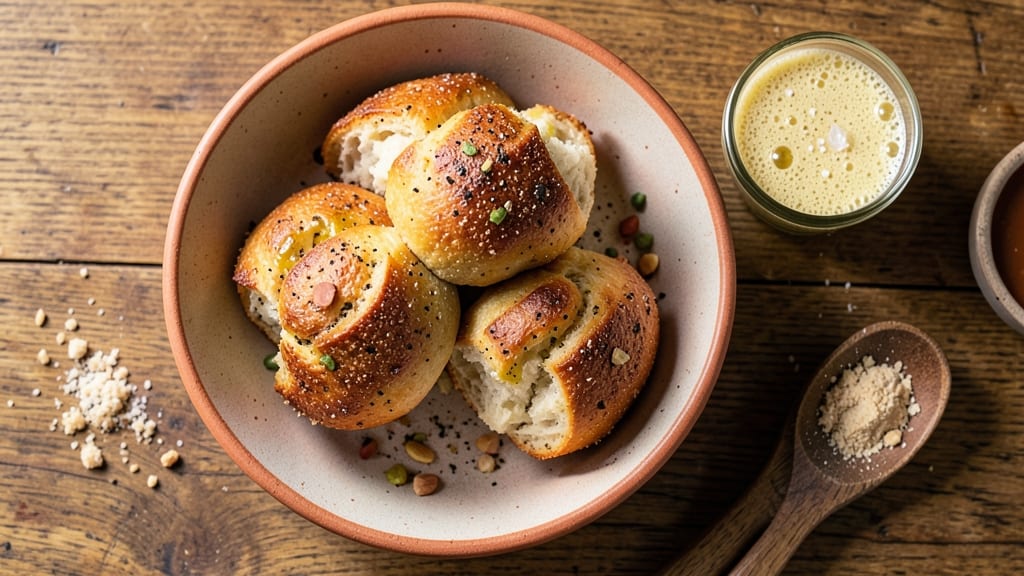
This almond flour bread rolls recipe delivers the perfect balance of nutty crunch and pillowy softness—ideal for plant-based diets. The secret lies in adjusting moisture levels and using a blend of almond flour with a bit of tapioca starch for structure.
I've tested this recipe countless times to ensure it rises beautifully and stays tender, even without dairy or eggs.
The dough comes together in just 10 minutes, but the magic happens during the proofing stage, where the rolls develop their signature texture. Almond flour absorbs moisture differently than wheat flour, so we'll incorporate aquafaba (chickpea brine) for binding and a splash of apple cider vinegar to enhance rise.
The result? Rolls with a delicate crumb and a satisfying nutty flavor in every bite.
Once baked, these rolls have a golden, crackly crust that gives way to a soft, airy interior—perfect for soaking up soups, dipping in olive oil, or serving alongside plant-based meals.
They freeze beautifully too, making them a great make-ahead option for busy weeks. The recipe yields about 12 rolls, so you'll have plenty for sharing or snacking.
For best results, let the dough rest after mixing and proof at room temperature rather than the fridge. This gentle approach yields the most consistent texture. Whether you're hosting a dinner or simply craving something comforting, these almond flour rolls elevate any meal with their unique flavor and texture.
Ingredients for almond flour bread rolls
Twelve ingredients, twelve golden rolls with nutty crunch and pillowy softness—vegan perfection in every bite.
| Ingredient | Amount | Notes |
|---|---|---|
| Almond Flour 🌰 | 3 cups | Finely ground, unsweetened preferred |
| Tapioca Starch 🍚 | ¼ cup | For structure and elasticity |
| Aquafaba 🌱 | ½ cup | Fresh chickpea brine, unsalted |
| Apple Cider Vinegar 🍏 | 1 tbsp | For rise enhancement |
| Cold Water 💧 | ⅓ cup | Adjust for dough consistency |
| Salt 🧂 | 1 tsp | Fine sea salt preferred |
| Olive Oil 🫒 | 1 tbsp | Extra-virgin for richness |
| Sugar 🍚 | 1 tbsp | White or coconut sugar |
| Active Dry Yeast 🍞 | 1 tsp | Vegan-certified preferred |
| Sesame Seeds 🌾 | 1 tbsp | For topping, optional |
| Poppy Seeds 🌻 | 1 tsp | For topping, optional |
| Cornstarch 🌽 | 1 tbsp | For dusting rolls |
Almond flour is the star here, so Bob’s Red Mill brand or Anthony’s Goods are my go-tos—they’re finely ground and consistent. Trader Joe’s usually has a great option too, but check the label for ‘blanched’ (no skins) if you want extra smoothness. The tapioca starch is non-negotiable for that signature texture—it’s what makes these rolls rise properly. For aquafaba, save the brine from a can of chickpeas (about 3 tbsp per can) and refrigerate it. The vinegar? Any kind works, but apple cider adds subtle sweetness that pairs perfectly with the almond flavor.
No aquafaba? Flax eggs (1 tbsp ground flax + 3 tbsp water) work in a pinch, but the texture won’t be quite as tender. Short on tapioca starch? Arrowroot powder at the same amount is a decent swap. The yeast must be vegan-certified—some brands use animal products in processing. For the topping, sesame seeds and poppy seeds are classic, but everything bagel seasoning would be amazing too. If you’re making these ahead, the dough keeps for 24 hours in the fridge—just let it come to room temp before shaping.
These rolls freeze like a dream. Shape them, proof, then bake as directed. Once cooled, wrap individually in parchment and freeze for up to 3 months. To reheat, bake at 350°F for 5-7 minutes until golden. For best freshness, store baked rolls in an airtight container with a paper towel to keep them soft. The crust gets crunchy within hours—perfect for dipping in olive oil or vegan butter. Make a double batch; they disappear fast!
Why You'll Love This Recipe
- No-Fuss Mixing: I swear by this recipe—just fold almond flour, tapioca starch, and aquafaba together with vinegar and water. No stand mixer, no over-kneading, just a bowl and a spatula. The tapioca starch gives them that perfect chewy bite without the fuss.
- Nutty Comfort: That almond flour isn’t just for flavor—it’s the star. Warm, buttery, and subtly sweet, it pairs perfectly with the slight tang from apple cider vinegar. (Yes, even my picky husband grabs seconds.)
- Weeknight Hero: Freeze half the batch before baking, then reheat straight from frozen—no thawing needed. Perfect for game days, last-minute dinner guests, or when you just can’t be bothered to bake from scratch.
- Budget-Friendly Luxe: Almond flour can feel pricey, but this recipe stretches it further than most. The aquafaba replaces eggs, and the vinegar adds depth without breaking the bank. Feels fancy, costs smart.
Step-by-step instructions for almond flour bread rolls
Here's how to craft these nutty, pillowy rolls that blend almond flour's richness with perfect rise and texture.
Activate the Yeast with Aquafaba
In a small bowl, whisk together the 0.5 cup aquafaba, 1 tablespoon apple cider vinegar, and 1 tablespoon sugar until the sugar dissolves completely. The vinegar helps activate the yeast while adding a subtle tang that complements the almond flavor. Add the 1 teaspoon active dry yeast and let the mixture sit for 5-10 minutes until it becomes frothy and doubles in volume.
This step is crucial because almond flour doesn't contain gluten, so we rely on the yeast's expansion to create that signature roll rise. If the mixture doesn't foam, your yeast might be inactive—start over with fresh yeast. Once it's bubbly, proceed immediately to keep the yeast lively.
Mix the Dough for Perfect Texture
In a large mixing bowl, combine the 3 cups almond flour and 0.25 cup tapioca starch. The tapioca starch acts as a binder and gives these rolls their signature chewiness. Make a well in the center and pour in the yeast mixture, then add the 1 tablespoon olive oil, 1 teaspoon salt, and 0.33 cup cold water.
Mix with a wooden spoon or dough scraper until just combined—you should have a shaggy dough that clumps together but doesn't form a smooth ball. Overmixing develops gluten, which we want to avoid since almond flour lacks natural gluten structure. The dough will be sticky, so don't be tempted to add more flour. This is normal and essential for that tender crumb.
Knead Gently for Structure
Lightly flour a clean surface with 1 tablespoon cornstarch (this prevents sticking and adds a nice finish). Turn out the dough and knead gently for 3-4 minutes, just until smooth and elastic. The cornstarch coating helps prevent the dough from becoming too sticky while working.
You're not looking for a traditional bread dough here—this should remain soft and slightly tacky. The almond flour makes the dough behave differently than wheat flour, so don't worry if it doesn't look like classic bread dough. Once smooth, shape the dough into a rectangle about 8x10 inches and wrap it tightly in plastic wrap. Let it rise at room temperature for 1 hour or until it has puffed up noticeably.
Shape and Proof the Rolls
Preheat your oven to 350°F and line a baking sheet with parchment paper. After the dough has risen, punch it down gently to release air bubbles. Divide the dough into 12 equal pieces (about 1.5 ounces each) and shape each into a smooth ball. For the best texture, roll each ball in a mix of 1 tablespoon sesame seeds and 1 teaspoon poppy seeds until fully coated.
Place the seeded rolls on the prepared baking sheet, spacing them about 1 inch apart since they won't spread much. Cover loosely with a clean kitchen towel and let them proof for another 30-45 minutes until they've puffed up about 50%. The rolls should look slightly domed and feel springy when pressed gently with a fingertip. This second rise is key to achieving that light, airy texture despite using almond flour.
Bake to Golden Perfection
Bake the rolls for 20-25 minutes until they're golden brown on top and the internal temperature reaches 190°F. The rolls should sound hollow when tapped on the bottom. For even baking, rotate the pan halfway through if your oven has hot spots.
Here's the thing about almond flour bread—it's delicate when hot. Remove the rolls immediately when done and let them cool on a wire rack for 10 minutes before serving. The exterior should be crisp with those beautiful seed toppings, while the interior remains tender and moist. These rolls pair beautifully with soups, stews, or even as a base for mini sandwiches. The nutty flavor shines through while maintaining that satisfying bread texture we all love.
Pro Tips For Making Almond Flour Bread Rolls
- WHISK AQUAFABA FIRST: Almond flour is stubborn—don’t just toss it in. Whip the aquafaba until stiff peaks form before mixing in anything else. I learned this after my first batch turned out dense; the air from properly whipped aquafaba is what makes these rolls light. (Yes, it takes 3-5 minutes, but skip this and you’ll regret it.)
- MEASURE ALMOND FLOUR BY WEIGHT: Scooping almond flour from the bag? Stop. It packs differently every time, and your rolls will either be gummy or dry. Use a kitchen scale—this recipe relies on the exact ratio of almond flour to tapioca starch. I used to eyeball it, and my rolls were hit-or-miss until I started weighing.
- LET THE DOUGH REST—REALLY: After mixing, let the dough sit covered for at least 20 minutes. The apple cider vinegar needs time to activate, and the almond flour softens slightly. I used to bake them right away, and they’d turn out tough. This short rest makes a real difference—no extra effort, just patience.
- STEAM THEM THE FIRST 10 MINUTES: Place a metal tray on the oven rack below your baking sheet. Pour hot water into it before baking, then close the oven door. The steam keeps the crust from drying out too fast, so your rolls stay soft inside. I skipped this once and ended up with dry, crackly rolls—now it’s non-negotiable.
Creative variations of almond flour bread rolls
Sweet Variations
Transform these savory rolls into sweet treats by adding 1 tablespoon cinnamon and 1 tablespoon coconut sugar to the dough. Roll the shaped balls in a mix of 1 tablespoon cinnamon and 2 tablespoons coconut sugar before baking.
They’re perfect for breakfast with a drizzle of maple syrup or paired with almond butter. 🍯
Herbed Twist
Infuse the dough with fresh herbs by mixing in 1 tablespoon finely chopped rosemary or thyme with the almond flour. Top the rolls with a sprinkle of flaky sea salt and black pepper before baking. This variation adds an earthy depth that pairs beautifully with roasted vegetables or hearty stews.
Cheesy Delight
For a cheesy twist, fold ½ cup shredded vegan mozzarella (like Miyoko’s) into the dough after mixing. Shape the rolls as usual, but bake for an extra 2-3 minutes to let the cheese melt slightly.
The result? A gooey, nutty-cheesy center that’s perfect for dipping in marinara or vegan pesto.
Everything Bagel Style
Give your rolls a savory crunch by rolling the shaped balls in a mix of 1 tablespoon sesame seeds, 1 teaspoon poppy seeds, 1 teaspoon dried garlic powder, and 1 teaspoon onion powder.
Bake as directed, and the rolls will have a crispy, everything-bagel-like topping that’s perfect for slathering with hummus or vegan cream cheese. ✨
Garlic & Herb
Add 1 minced garlic clove and 1 tablespoon chopped fresh parsley to the dough for a fragrant twist. Brush the baked rolls with a mix of 1 tablespoon olive oil and ½ teaspoon garlic powder while still warm.
This variation is ideal for serving alongside garlic butter or as a base for mini garlic bread sandwiches.
Dipped & Sauced
Serve these rolls with creative dips to elevate their flavor. Try vegan garlic aioli, smoky chipotle mayo, or a simple olive oil and balsamic glaze. For a sweet option, drizzle with dark chocolate sauce or peanut butter.
The nutty flavor of the rolls soaks up the sauces beautifully, making every bite even more satisfying. 💫
Nutrition facts
Frequently asked questions
Why does my almond flour dough feel so sticky?
Almond flour absorbs moisture differently than wheat flour, so the dough will naturally be stickier. This is normal and essential for that tender crumb! Use cornstarch on your surface when kneading, and avoid adding extra flour—it can make the rolls dense. The sticky texture actually helps create that signature pillowy softness.
Can I make these rolls without aquafaba?
Yes! If you don’t have aquafaba, use 1 flax egg (1 tbsp ground flax + 3 tbsp water) instead. Let it sit for 5 minutes to thicken before mixing. The texture won’t be exactly the same (they’ll be slightly denser), but it’ll still work beautifully. The key is keeping the dough moist—almond flour dries out quickly!
How do I fix rolls that didn’t rise?
If your rolls stayed flat, check these first:
- Yeast was inactive—test fresh yeast in warm water with sugar (it should foam in 5 minutes).
- Proofing time—almond flour dough needs 1 hour at room temp (not fridge).
- Overmixing—gluten development prevents rise. For next time, let the dough rest 20 minutes after mixing before shaping.
Can I bake these rolls in a Dutch oven?
Place the shaped rolls in a parchment-lined Dutch oven, cover with the lid, and bake at 350°F for 15 minutes. Then remove the lid and bake 5-10 more minutes until golden. This creates a steamy environment that helps the rolls rise higher and develop a crispier crust—perfect for that artisanal bread effect!
How long will these rolls stay fresh?
Baked rolls stay soft for 2 days in an airtight container with a paper towel. For longer storage, freeze them unbaked (shape, proof, then freeze on a tray). Bake straight from frozen at 375°F for 25-30 minutes. Reheating baked rolls at 350°F for 5 minutes restores their crispness.