
Side Dishes
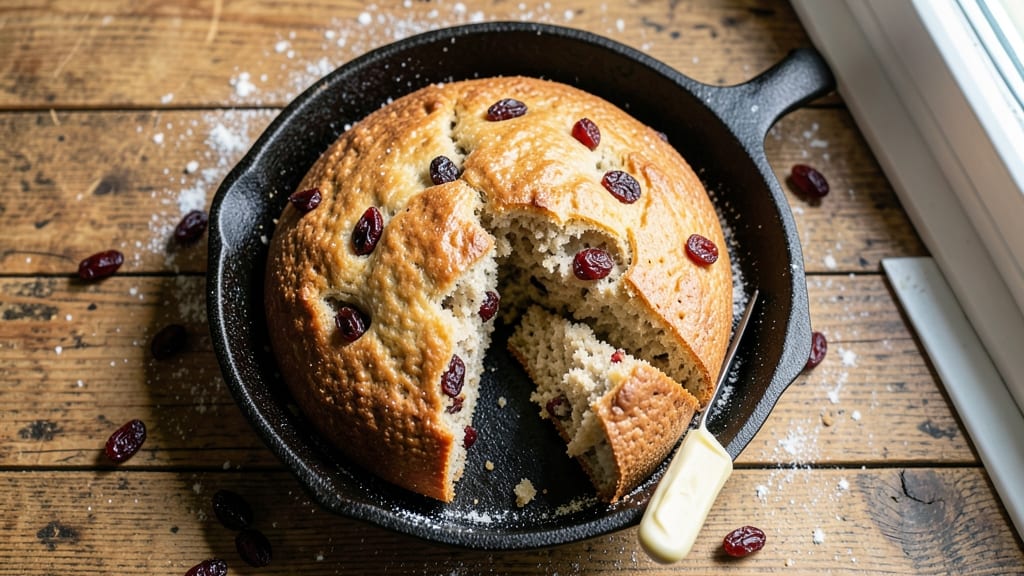
This American soda bread recipe delivers a rustic loaf with a crispy golden crust and tender crumb—perfect for pairing with soups, butter, or jam. The secret lies in buttermilk's tangy magic and the classic raisin swirl that adds natural sweetness.
I've perfected this version to rise beautifully without kneading, making it ideal for busy weeknights or cozy weekend breakfasts.
The dough comes together in just 10 minutes with simple pantry staples, then bakes at 425°F for a crispy exterior and soft interior. A light sprinkle of seeds or coarse sugar on top adds texture and crunch.
What makes this recipe special is how it balances tradition with modern convenience—no yeast, no fuss, just pure, comforting flavor.
By the time it emerges from the oven, you'll have a loaf with a crusty gold top and a tender crumb that's slightly dense yet satisfying. The raisin swirls melt into the dough, creating pockets of sweetness that complement the bread's mild tang.
This is the kind of bread that disappears quickly—perfect for slicing thick or serving warm with honey.
Serve alongside hearty soups, breakfast meats, or enjoy it plain with a pat of butter. The versatility of this soda bread makes it a staple for any meal. Let's get started on making yours—it's simpler than you think!
Ingredients for american soda bread
Simple pantry staples transform into rustic bread with a crispy crust and tender crumb.
| Ingredient | Amount | Notes |
|---|---|---|
| All-Purpose Flour 🌾 | 3 ½ cups | Unbleached preferred for texture |
| Buttermilk 🥛 | 1 ½ cups | Full-fat for best flavor |
| Granulated Sugar 🍚 | ¼ cup | White or brown sugar |
| Baking Soda 🧂 | 1 tsp | Freshly opened for potency |
| Salt 🧂 | 1 tsp | Kosher or sea salt |
| Raisins 🍇 | ½ cup | Plump, seedless preferred |
| Unsalted Butter 🧈 | ½ cup | Cold, cubed for swirl |
| Poppy Seeds 🌱 | 2 tbsp | Or sesame seeds for variation |
| Coarse Sugar 🍚 | 2 tbsp | For topping crust |
The flour is the foundation—King Arthur or Bob's Red Mill work best for that tender crumb. Buttermilk? Homemade is ideal (milk + vinegar), but the carton stuff works too. I grab mine from Whole Foods when I'm doing a big batch, but regular grocery store brands are fine. Raisins should be plump—soak them in warm water for 10 minutes if they're dry. The butter matters for that golden crust, so don't skimp on the cold, cubed version (the good stuff, not the pre-packaged tub).
No buttermilk? Milk plus vinegar or lemon juice does the trick. Raisins too pricey? Dried cranberries or chopped dates add sweetness too. The poppy seeds can be swapped for sesame or flaxseeds if you're feeling fancy. For a nutty twist, fold in chopped walnuts with the raisins. The coarse sugar topping? Turbinado or demerara gives the best crunch, but regular sugar works in a pinch.
This bread keeps beautifully—3-4 days at room temperature wrapped in a towel, or 1 week in the fridge. Freeze slices for up to 3 months—just toast straight from frozen. The raisin swirls soften over time, so it's perfect for toasting and serving warm. I always make a double batch—one for breakfast, one for sandwiches. Trust me, it disappears fast.
Why You'll Love This Recipe
- No Mixer Needed: Mixing this bread takes all of two minutes—just fold the buttermilk into the flour until it’s shaggy, then let the baking soda do its magic. No stand mixer, no food processor, just your hands and a bowl.
- Tangy-Sweet Magic: That buttermilk tang cuts through the sugar just enough to make every bite feel balanced—like a hug from your grandma’s kitchen. The crust stays crisp while the inside stays soft, and honestly? It’s the kind of bread that makes you reach for the butter before you even sit down.
- Weeknight & Picnic Hero: Slice it warm with jam for breakfast, pack it in lunchboxes for school or work, or tear it over a hearty soup when you’re too tired to cook. It freezes like a dream too, so you’re always covered—no sad, dry bread here.
- Pocketbook Perfection: Five ingredients, all pantry staples, and you’ve got a loaf that costs pennies to make. Between us, this is the bread that lets you splurge on fancy cheese or good wine without guilt—because the bread itself is already winning.
Step-by-step instructions for buttermilk-raisin soda bread
Here's how to bake a tender, swirled loaf with a crackly crust—no yeast, no fuss.
Mix the Wet and Dry Ingredients
In a large mixing bowl, combine the 1.5 cups buttermilk, 0.25 cup granulated sugar, 1 tsp baking soda, and 1 tsp salt. Stir gently until the baking soda dissolves completely—you'll see it fizz slightly as it activates. This reaction is what makes soda bread rise without yeast.
In a separate bowl, whisk together the 3.5 cups all-purpose flour. Then, gradually add the dry flour to the wet mixture, stirring just until combined. The dough will be sticky and shaggy—don't overmix, or you'll develop gluten and end up with a tough loaf. Use a wooden spoon or rubber spatula to scrape down the sides of the bowl and ensure everything is evenly incorporated.
Fold in Raisins and Prepare the Butter Swirl
Gently fold in the 0.5 cup raisins using your hands or a rubber spatula. You want them distributed evenly throughout the dough, but don't press too hard or they'll get crushed. Set aside 0.25 cup of the dough (about a third) in a small bowl for later.
Cut the 0.5 cup unsalted butter into small cubes and roll them into the remaining dough. Press the butter pieces into the dough until they're fully incorporated, creating small pockets of fat. This will give your bread that classic flaky texture. Then, flatten the dough into a rough rectangle about 1-inch thick on a lightly floured surface.
Create the Swirl and Shape the Loaf
Roll the reserved 0.25 cup dough into a long rope about 12-inches long. Place it diagonally across the center of the flattened dough. Using your hands, gently press the dough around the rope to create a swirl pattern. This is where the magic happens—the contrast of sweet raisins and buttery dough in every bite.
Shape the dough into a round loaf by pulling the edges toward the center and pinching gently to seal. Place it on a parchment-lined baking sheet, seam-side down. Sprinkle the 2 tbsp poppy seeds evenly over the top for a delightful crunch and visual appeal. Cover the loaf loosely with a clean kitchen towel and let it rest for 15 minutes at room temperature.
Preheat and Prepare for Baking
Preheat your oven to 375°F. While the oven heats, sprinkle the 2 tbsp coarse sugar evenly over the top of the loaf. This will caramelize during baking, creating that beautiful golden crust we all love. To ensure an even bake, place a small baking sheet or metal bowl on the lower rack of the oven. This creates steam, which helps the bread rise and develop a crispy crust.
Bake the loaf for 45-50 minutes, or until the top is deep golden brown and a toothpick inserted into the center comes out clean. The bread is done when it sounds hollow when tapped on the bottom. If the top browns too quickly, tent the loaf with aluminum foil to prevent over-browning while it finishes baking.
Cool and Serve
Remove the bread from the oven and transfer it to a wire rack to cool for at least 30 minutes. This resting time allows the moisture to redistribute, ensuring a tender crumb. Slice it while still slightly warm for the best texture—you'll love how the raisins stay plump and the butter swirls melt slightly with each bite.
Serve your buttermilk-raisin soda bread warm with a pat of butter or a drizzle of honey. The contrast of the crispy crust, tender crumb, and sweet raisins makes this loaf perfect for breakfast, snacks, or alongside soups and stews. Store any leftovers in an airtight container at room temperature for up to 3 days or freeze for up to 3 months.
Pro Tips For Making American Soda Bread
- STIR JUST UNTIL COMBINED: Mixing soda bread dough until it’s just smooth—no overworking—keeps the crumb tender. I learned this the hard way after kneading mine into a sad, dense brick; the gluten doesn’t need a workout here.
- CHILL THE DOUGH 10 MINUTES: Skip the rush and let the dough rest under a damp towel for 10 minutes before baking. This relaxes the flour’s structure, giving you a lighter loaf instead of a brick—trust me, your future self will notice the difference.
- MEASURE BUTTERMILK PRECISELY: Use a liquid measuring cup for the buttermilk—no eyeballing. Too little and your bread dries out; too much and it turns gummy. I used to wing it, but now I double-check, and the texture stays perfect every time.
- BAKE AT 425°F UNTIL GOLDEN: Crank the oven to 425°F and bake until the crust is deep golden, not just pale. I used to pull mine out too soon, thinking it was done, only to end up with a sad, pale loaf—now I wait for that rich color.
Troubleshooting perfect results
Dense, Flat Loaf
If your soda bread turns out dense instead of light and airy, you likely overmixed the dough. The moment baking soda hits buttermilk, it activates and creates air pockets—stir just until combined to preserve that lift. Also, check your baking soda: if it's old, it loses potency.
Test it by mixing 1 tsp baking soda with 1 tbsp vinegar—if it doesn’t fizz, replace it. A too-hot oven (425°F) can also cause dense bread, so preheat properly and use an oven thermometer to confirm accuracy. 🌡️
Pale, Underbaked Crust
A pale crust usually means the bread didn’t bake long enough or the oven wasn’t hot enough. Aim for a deep golden brown—if it’s still pale after 50 minutes, tent with foil and bake 5-10 minutes more.
For extra crispiness, sprinkle coarse sugar or poppy seeds on top before baking. If your oven runs hot, reduce the temperature to 350°F and bake for 55-60 minutes. A toothpick should come out clean, but don’t rely solely on that—tap the bottom for a hollow sound.
Butter Swirl Didn’t Melt
Cold butter cubes are key, but if they stay too firm after baking, your oven wasn’t hot enough or the butter wasn’t distributed properly. Cut the butter into small, even cubes and press them into the dough until fully incorporated.
For extra melt, place the shaped loaf in the fridge for 10 minutes before baking—this helps the butter soften slightly before the oven’s heat sets in. If your oven struggles with even heat, rotate the pan halfway through baking. 🔥
Cracked or Irregular Top
Uneven cracks or a misshapen top often happen when the dough isn’t shaped evenly or the oven isn’t preheated. Gently shape the loaf into a round, even dome before baking, and avoid pressing too hard.
For a smoother rise, place the dough on a parchment-lined baking sheet and let it rest 15 minutes before baking. If cracks form, they’re usually harmless—just brush with melted butter after baking for extra flavor.
A small baking sheet on the lower rack creates steam, which helps the bread rise uniformly.
Dough Too Sticky
Sticky dough is normal, but if it’s unbearably gluey, you might’ve added too much buttermilk or flour. The ratio in this recipe is precise: 1.5 cups buttermilk to 3.5 cups flour—don’t substitute with yogurt or milk, as the acidity levels differ.
If the dough is too wet, add 1-2 tbsp more flour, but don’t overdo it or the bread will toughen. Wet hands or a lightly floured surface make handling easier. For extra insurance, chill the dough 10 minutes before shaping to firm it up slightly. ✨
Nutrition facts
Frequently asked questions
Can I make this soda bread without raisins?
The raisins add sweetness, but you can omit them for a classic version. For extra flavor, try adding 1 tsp cinnamon or ½ cup chopped nuts (walnuts or pecans work well). The buttermilk and butter will still create that signature tender crumb and crispy crust.
Why does my dough get sticky?
Sticky dough is normal—it’s part of soda bread’s charm! The buttermilk and baking soda create a wetter batter than yeast breads. Wet hands or a lightly floured surface help with shaping. If it’s unbearably sticky, add 1-2 tbsp flour gradually, but don’t overdo it or the texture will toughen. Chilling the dough 10 minutes before shaping also helps.
How do I store leftover soda bread?
Wrap cooled slices in a clean kitchen towel or store in an airtight container at room temperature for up to 3 days. For longer storage, freeze slices (unwrapped) on a tray for 1 hour, then transfer to a bag for up to 3 months. Toast straight from frozen for freshness—no thawing needed!
Can I substitute buttermilk?
Yes! Mix 1 cup milk (any kind) with 1 tbsp vinegar or lemon juice, then let sit 5 minutes until thickened. This mimics buttermilk’s acidity, which activates the baking soda for rise. Avoid yogurt—it’s too thick and changes the texture.
What’s the best way to reheat sliced bread?
For crispy crust and soft interior, wrap slices in foil and warm at 350°F for 5-7 minutes. Or toast in a dry skillet over medium heat for 2 minutes per side until golden. Microwaving works in a pinch, but it can make the bread gummy.