
Breakfast & Brunch
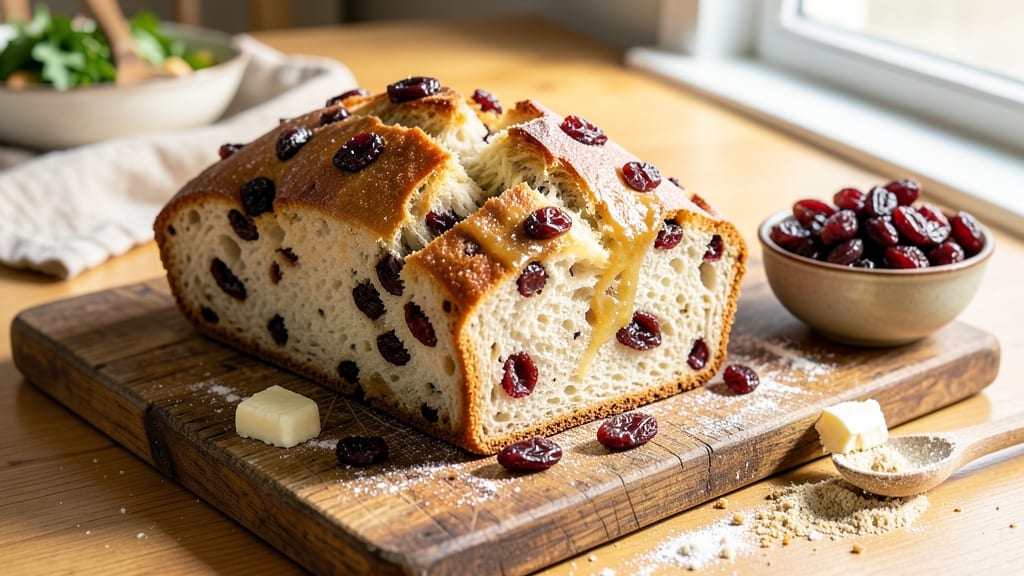
This Amish raisin bread recipe brings the comforting aroma of warm cinnamon and sweet raisins straight from Pennsylvania farmhouses to your kitchen. 💛 The secret lies in hand-kneaded dough infused with vanilla and nutmeg, swirled with plump raisins that bake into tender, golden perfection.
Unlike store-bought versions, this recipe delivers a soft, slightly sweet loaf with a crisp crust—just like Grandma used to make.
The traditional method starts with a simple dough that relies on natural yeast for slow fermentation, developing deep flavor as it rises. While some recipes call for electric mixers, I find hand-kneading creates a tighter gluten structure, resulting in a bread that holds its shape beautifully.
The raisins are soaked in warm water to plump them up, ensuring they burst with juicy sweetness in every bite.
What makes this recipe special is the steam trick during baking—just place a tray of boiling water in the oven for the first 10 minutes. This creates that signature golden-brown crust while keeping the interior soft and moist.
The warm spices (cinnamon and nutmeg) complement the raisins perfectly, creating a harmonious balance of sweet and aromatic flavors.
Perfect for breakfast with butter or jam, or as a sweet treat alongside dinner, this bread freezes beautifully for up to 3 months. The recipe also works well with chopped pecans or walnuts if you prefer extra crunch. Let's get started on this timeless family favorite!
Ingredients for amish raisin bread
Six simple ingredients transform into a loaf of homemade Amish raisin bread with golden crust and spiced sweetness.
| Ingredient | Amount | Notes |
|---|---|---|
| All-Purpose Flour 🌾 | 5 ½ cups | Sifted for even texture |
| Natural Yeast 🍞 | 2 ¼ tsp | Active dry or instant |
| Granulated Sugar 🍚 | ½ cup | Light brown preferred |
| Unsalted Butter 🧈 | ½ cup | Cold, cubed for easier mixing |
| Whole Milk 🥛 | ¾ cup | Room temperature |
| Large Eggs 🥚 | 1 whole | Room temperature |
| Pure Vanilla Extract 🌿 | 1 tbsp | High-quality preferred |
| Ground Cinnamon 🌶️ | 1 ½ tsp | Freshly ground ideal |
| Ground Nutmeg 🌿 | ½ tsp | Freshly grated preferred |
| Sea Salt 🧂 | 1 tsp | Fine grain preferred |
| Raisins 🍇 | 1 ½ cups | Plump, seedless preferred |
| Warm Water 💧 | ¼ cup | For soaking raisins |
The flour is the foundation—King Arthur or Gold Medal brands yield the best texture for this recipe. Natural yeast is key here; it develops deeper flavor during the slow rise. I always grab mine from Whole Foods or the bulk section at Wegmans—freshness matters. The raisins should be plump, not dried out, so check the package date. Sun-Maid or Thompson brand raisins work perfectly, but any seedless variety will do. For the spices, Penzeys or McCormick ground cinnamon and nutmeg ensure consistent flavor—pre-ground is fine, but freshly ground adds that extra warmth.
No vanilla extract? Vanilla bean paste works just as well, or even vanilla sugar (reduce granulated sugar by 1 tbsp). For a nutty twist, swap half the raisins with chopped pecans or walnuts. The milk can be any kind—whole, 2%, or even oat milk if you prefer dairy-free. If your yeast is old, test it first: sprinkle a pinch in warm water with sugar—if it bubbles in 5-10 minutes, it's active. The butter should be cold and cubed; Land O'Lakes or Plugrá brands work perfectly for this recipe. For a richer flavor, consider adding 1 tsp lemon zest to the dough.
This dough keeps beautifully for 24 hours in the fridge, covered, if you want to let it rise overnight. The baked loaf stays fresh for 3-4 days at room temperature, wrapped in a towel. For longer storage, freeze slices wrapped in parchment paper—they toast up like fresh-baked. The steam trick during baking is non-negotiable for that signature crust; never skip it—place a tray of boiling water in the oven for the first 10 minutes. The bread freezes well for up to 3 months—just thaw at room temperature before serving.
Why You'll Love This Recipe
- No-Knead Magic: I swear by this dough—just mix, let it rise, and bake. The yeast does all the work while I sip coffee, and that warm, pillowy loaf? Worth every minute of waiting.
- Sweet-Savory Surprise: Here’s what sold me—the raisins burst with caramelized sweetness against the tender crumb, while the butter and milk make it rich without tasting heavy. Honestly, the first slice had me questioning my life choices.
- Breakfast to Brunch: This bread is my lazy weekend hero: toast it for breakfast, tear it into crostini for charcuterie, or serve it with jam for a no-fuss brunch. The milk and sugar keep it soft enough to eat all day.
- Budget-Friendly Staple: Five ingredients, zero guilt. The butter and milk add richness without breaking the bank, and a single loaf lasts me days—perfect for sandwiches, toast, or feeding a crowd when I’m short on time. (Yes, even on a Tuesday night.)
Step-by-step instructions for Amish raisin bread
Here's the method for rich, spiced raisin bread with a perfect swirl and tender crumb.
👨🍳 Step 1: Activate the Yeast and Soak the Raisins
In a small bowl, combine the 0.25 cup warm water with 2.25 tsp natural yeast and 0.5 cup granulated sugar. Let this sit for 5-10 minutes until it becomes foamy—this confirms your yeast is active. While waiting, pour 0.25 cup warm water over the 1.5 cups raisins in a separate bowl and let them soak for 15 minutes. This plumps them up and infuses them with subtle sweetness.
I always double-check the yeast foam before proceeding—no bubbles means starting over with fresh yeast. The raisins should look slightly puffed and glossy after soaking, ready to distribute evenly through the dough.
🍳 Step 2: Mix the Dough Base and Incorporate Wet Ingredients
In a large mixing bowl, whisk together the 5.5 cups all-purpose flour, 1.5 tsp ground cinnamon, 0.5 tsp ground nutmeg, and 1 tsp sea salt. This dry blend ensures even spice distribution throughout the bread. Make a well in the center and add the yeast mixture, 0.75 cup whole milk, 1 whole large egg, 1 tbsp pure vanilla extract, and the drained raisins.
Using a wooden spoon or dough whisk, gently mix just until the ingredients come together—don't overwork the dough at this stage. The mixture should look shaggy but cohesive. If it seems too dry, add 1 tablespoon whole milk at a time until it forms a soft, pliable dough.
🥘 Step 3: Knead Until Smooth and Elastic
Turn the dough onto a lightly floured surface and knead for 8-10 minutes by hand, or use a stand mixer with a dough hook attachment for 5-6 minutes on medium speed. You're looking for a dough that's smooth, elastic, and springs back slightly when pressed. Add 1 tablespoon flour at a time if it's too sticky to handle.
This kneading develops gluten, which gives the bread its structure. I press my finger into the dough—if it leaves a clean indentation that slowly fills back in, it's ready. Place the dough in a lightly greased bowl, cover with a damp towel, and let it rise in a warm place for 1-1.5 hours or until it doubles in size.
🔥 Step 4: Shape and Second Rise for Perfect Swirls
Once the dough has risen, punch it down to release air, then divide it into two equal portions. On a floured surface, roll each portion into a 12x8-inch rectangle about ½-inch thick. Spread 0.25 cup softened unsalted butter over each rectangle, then sprinkle with remaining raisins and any reserved soaking liquid. Roll each up tightly from the long side to form logs.
Place the logs seam-side down in a 9x5-inch loaf pan, cover with a damp towel, and let them rise for another 30-45 minutes until they've puffed noticeably above the pan. Preheat your oven to 350°F during this final rise—hot dough goes straight into a hot oven for even baking.
⏰ Step 5: Bake to Golden Perfection
Bake the bread for 45-50 minutes until the top is deep golden brown and a toothpick inserted in the center comes out clean. If the top browns too quickly, tent the pan with foil to prevent over-browning while ensuring the center cooks through.
For that classic Amish finish, brush the warm bread with a simple glaze made by mixing 2 tablespoons whole milk with 1 tablespoon granulated sugar. Let the bread cool in the pan for 10 minutes, then transfer to a wire rack. The swirls should be visible through the crust, and each slice should reveal moist, spiced crumb with plump raisins throughout.
Pro Tips For Making Amish Raisin Bread
- Warm the Milk First: Pour whole milk into a saucepan and heat it to about 110°F (43°C)—just until it’s steaming but not boiling. Cold milk kills yeast faster than you’d think, and this tiny step guarantees your dough rises smoothly. (Yes, even if you’re impatient like me.)
- Soften Butter Properly: Don’t melt the butter—cut it into small cubes and let them sit at room temperature for 30–45 minutes until they’re soft but still hold shape. Melted butter makes the dough greasy and weakens the gluten, which is the thing that matters most for that classic Amish texture.
- Skip Overproofing: The dough is ready when it springs back slowly when poked—about 1–1.5 hours at 75°F (24°C). Overproofing happens fast in warm kitchens, and you’ll end up with a dense, flat loaf. If your kitchen’s hot, move the dough to a cooler spot.
- Use a Thermometer: Bake the bread at 350°F (175°C), but actually check your oven’s temperature—many run 25°F (14°C) hotter or colder than set. Underbaked bread stays gummy; overbaked bread turns dry. A $10 thermometer saves you from throwing out a loaf.
Flavor customization for this amish raisin bread
Sweet vs. Savory
Traditional Amish raisin bread leans sweet, but you can balance flavors by reducing sugar to 0.35 cup and adding 1 tsp lemon zest for brightness.
For a savory twist, swap raisins for ½ cup dried cranberries and ½ cup chopped pecans, then add ½ tsp black pepper to the dough. 🌶️
Spice Variations
Swap cinnamon for 1 tsp pumpkin pie spice or ½ tsp cardamom for Middle Eastern-inspired warmth. For a citrus kick, add 1 tbsp orange zest to the dough and fold in ¼ cup candied orange peel with the raisins.
I love this combo for holiday baking—it’s like a cross between raisin bread and orange cake!
Nutty Additions
For crunch, fold in ½ cup chopped walnuts or pecans with the raisins. Toast the nuts first in a dry pan for 3-4 minutes until fragrant—this enhances their flavor. If you prefer a smoother texture, blend ¼ cup almond flour into the dry ingredients for subtle nuttiness without chunks. 🌰
Fruit Swaps
Experiment with ½ cup dried cherries or ½ cup chopped dried apricots for tartness. For a tropical twist, use ½ cup chopped dried pineapple and add ½ tsp ginger to the dough. Always soak dried fruits for 15 minutes to restore juiciness before mixing.
Gluten-Free Option
Replace flour with a 1:1 gluten-free baking blend (like Bob’s Red Mill) and add 1 tbsp xanthan gum. Reduce milk to ½ cup to prevent stickiness, and let the dough rest 10 minutes after mixing. Expect a denser texture, but it’s still delicious with a buttery spread. 💪
Nutrition facts
Frequently asked questions
Why does Amish raisin bread need two rises?
The first rise activates the yeast and develops flavor, while the second rise after shaping creates those signature swirls. The second rise also ensures the bread bakes up light and airy—not dense. Skipping either can result in a flat loaf or weak swirl pattern. Think of it like a dance: the first rise builds the foundation, and the second rise adds the elegant movement!
Can I make this bread without a stand mixer?
This recipe is designed for hand-kneading. Use a wooden spoon to mix initially, then knead by hand on a floured surface for 8-10 minutes. The extra effort develops gluten naturally, giving you a bread with excellent structure. Just be patient—your arms will thank you for the warm kitchen workout!
What if my raisins stay hard after baking?
Soak the raisins for 15 minutes in warm water before adding them to the dough. If they're still tough after baking, try soaking them in ¼ cup warm water + 1 tbsp honey for 30 minutes to plump them up. Avoid overbaking—the bread should be golden brown but still soft inside. A toothpick test (clean when pulled out) is your best guide!
How do I store leftovers to keep them fresh?
Wrap cooled slices in plastic wrap or aluminum foil and store at room temperature for 3-4 days. For longer storage, freeze individual slices wrapped in parchment paper for up to 3 months. To revive, toast frozen slices in a 350°F oven for 5-7 minutes—they'll taste almost fresh-baked!
Can I use dried cranberries instead of raisins?
Yes! Swap raisins for dried cranberries, but reduce the amount to 1 cup (they're smaller). Soak them first to prevent dryness. For extra flavor, add ½ tsp black pepper to the dough—it balances their tartness beautifully. The texture will be slightly different but equally delicious for breakfast or holiday gatherings!