
Side Dishes
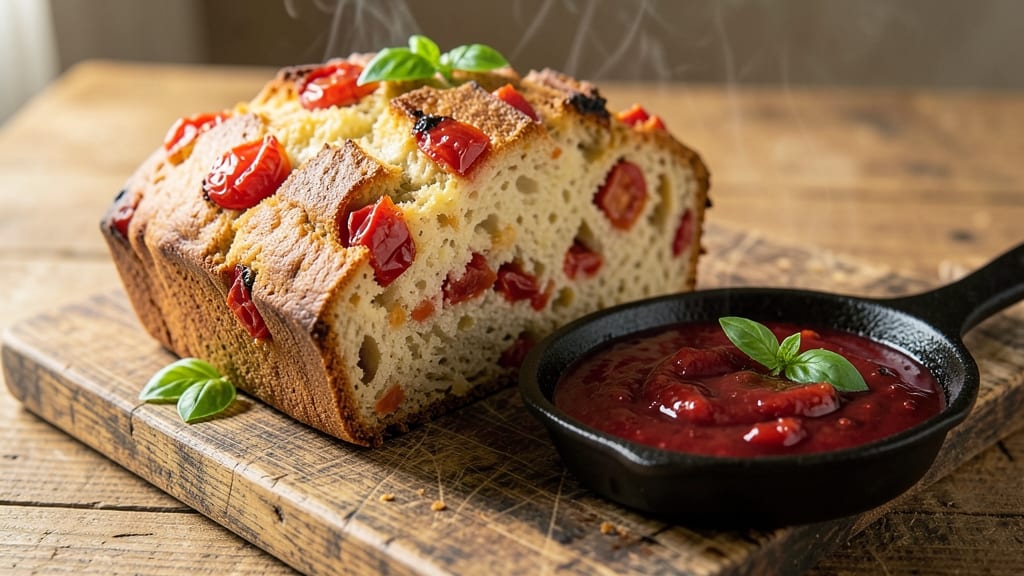
This Amish tomato bread recipe delivers a rustic loaf with sweet-tangy tomato flavor baked right into the dough, crowned with an aromatic herbed crust.
The traditional method relies on slow fermentation for deep flavor development, though I’ve adapted it for modern kitchens with a foolproof 2-hour timeline—perfect for home bakers. The secret lies in balancing sweetness from tomatoes with savory herbs like rosemary and thyme, creating a loaf that’s both comforting and impressive.
The dough begins with a simple mix of flour, yeast, and sugar, where canned or fresh tomatoes (drained and puréed) infuse the batter with natural sweetness and moisture.
A generous sprinkle of herbs on the crust adds complexity, while scoring the loaf before baking ensures an even rise and crispy edges. This recipe preserves the Amish tradition of hand-kneaded dough but simplifies the process with a one-rise method—no overnight proofing required.
What you’ll end up with is a golden, fragrant loaf with a tender crumb and a crust that crackles with herbaceous notes. The tomato flavor shines through in every slice, making it a standout side for soups, stews, or holiday tables.
The best part? It keeps well for 3-4 days at room temperature, or you can freeze slices for quick toast.
For variations, try adding a sprinkle of cinnamon for warmth or crumbled feta for a savory twist. Serve warm with butter or as part of a charcuterie board. Let’s get baking!
Ingredients for amish tomato bread
Four cups flour kickstarts this rustic loaf, where tomato purée and herbs blend for a sweet-tangy crust.
| Ingredient | Amount | Notes |
|---|---|---|
| All-Purpose Flour 🌾 | 4 cups | Spooned and leveled for accuracy |
| Active Dry Yeast 🍞 | 2 ¼ tsp | One packet, warmed with water |
| Granulated Sugar 🍚 | 1 tbsp | For yeast activation |
| Large Eggs 🥚 | 1 whole | Room temperature for best mixing |
| Unsalted Butter 🧈 | ½ cup | Softened but not melted |
| Canned Tomatoes 🍅 | 1 can | 14.5 oz, puréed and drained |
| Fresh Rosemary 🌿 | 1 tbsp | Chopped finely for crust |
| Fresh Thyme 🌿 | 1 tbsp | Leaves only, chopped |
| Coarse Sea Salt 🧂 | 1 ½ tsp | For dough and crust |
| Milk 🥛 | ¼ cup | Warm for yeast activation |
| Olive Oil 🫒 | 1 tbsp | Plus extra for greasing |
| Cornmeal 🌽 | ¼ cup | For dusting bread pan |
The tomatoes make this bread special. San Marzano canned tomatoes are ideal—they’re sweeter and less acidic, but any good-quality canned tomatoes work. Purée them first, then drain the excess liquid to avoid a soggy dough. For fresh tomatoes, roast them first to concentrate the flavor. The herbs? Fresh rosemary and thyme from the grocery store’s produce section are best—they’re vibrant and aromatic. If you’re using dried herbs, halve the amount. Store-bought butter is fine, but unsalted gives you better control over the final flavor. Kirkland brand is my go-to for quality at a reasonable price.
No fresh herbs? Dried rosemary and thyme at half the amount will work, though the flavor won’t be as bright. Out of tomatoes? Tomato paste or even a splash of tomato juice can substitute, but reduce the liquid elsewhere to keep the dough from getting too wet. For the yeast, make sure it’s active dry yeast, not instant. Warm the milk and sugar together to activate it—it should foam slightly in about 5 minutes. If it doesn’t, your yeast might be dead, and you’ll need to start over. The olive oil should be extra-virgin for the best flavor, but regular olive oil works in a pinch.
This dough is best made fresh, but you can prep it up to 2 hours ahead and let it rise in the fridge overnight for deeper flavor. Once baked, the loaf stays fresh for 3-4 days at room temperature, wrapped in a clean kitchen towel. For longer storage, freeze slices wrapped in plastic wrap—they’ll toast up like fresh-baked. The crust gets crispier as it cools, so resist the urge to slice it warm. If you’re making this ahead for a gathering, bake it the day before and reheat slices in the oven for 5 minutes at 350°F to restore that fresh-from-the-oven crunch.
Why You'll Love This Recipe
- No-Knead Magic: I swear by this dough—just mix, let it rise, and fold once. That butter and sugar combo makes it tender without a lick of effort, and the yeast does all the work while you sip your coffee.
- Sweet-Savory Crust: The sugar caramelizes just enough to give that golden crust a subtle sweetness, but the bread itself stays soft and buttery. Honestly, it’s the kind of flavor that makes you want to eat it straight from the pan.
- Weeknight Hero: Toss a few slices in the freezer for quick toast later, or serve it warm with jam for breakfast. It’s my go-to when I’m too tired for fancy bread—yet somehow still feels special.
- Pantry Staple: Uses basic ingredients you already have, and a loaf lasts me days. Between us, I’ve fed a crowd with this and still had leftovers for sandwiches—zero waste, all flavor.
Step-by-step instructions for Amish tomato bread
This rustic loaf combines sweet-tangy tomato flavor with a fragrant herbed crust—here's how to bake it perfectly.
Prepare the Tomato Filling and Activate the Yeast
In a small saucepan, combine the 1 can canned tomatoes (puréed and drained) with 1 tablespoon granulated sugar and 1 tablespoon olive oil over medium-low heat. Simmer for 5-7 minutes until the mixture thickens slightly and the sugar dissolves completely. You're aiming for a consistency similar to thick tomato sauce—it should coat the back of a spoon but still be pourable.
While the tomatoes simmer, warm the 0.25 cup milk to about 110°F (just warm to the touch) in a separate small bowl. Sprinkle the 2.25 teaspoons active dry yeast over the warm milk and let it sit for 5-7 minutes until it becomes frothy. This activation step ensures your dough rises properly. If the yeast doesn't foam, it's dead—start over with fresh yeast.
Mix the Dough and Knead Until Elastic
In the bowl of a stand mixer fitted with the dough hook attachment, combine the 4 cups all-purpose flour, 1.5 teaspoons coarse sea salt, and the 1 whole large egg (room temperature). Mix on low speed for 1 minute to distribute the ingredients. Add the yeast mixture and mix again for 1 minute until a shaggy dough forms.
Gradually add the 0.5 cup softened unsalted butter, mixing on low speed until incorporated. With the mixer running on medium speed, slowly pour in the tomato mixture down the side of the bowl. Knead the dough for 5-7 minutes until it becomes smooth, elastic, and pulls away from the sides of the bowl. The dough should be slightly tacky but not sticky—if it sticks to your fingers, add 1 tablespoon flour at a time until it reaches the right consistency.
First Rise and Shape the Loaf
Lightly grease a large mixing bowl with 1 tablespoon olive oil and place the dough inside. Cover the bowl with a clean kitchen towel and let it rise in a warm place for 1 to 1.5 hours, or until the dough has doubled in size. The dough should feel light and springy when pressed gently with a finger—this indicates it's ready for shaping.
Punch down the dough to release air, then transfer it to a lightly floured surface. Divide the dough into 4 equal portions (about 1 pound each) and shape each into a 12-inch log. For each log, roll it gently from one end to the other to create a smooth, tapered shape. Place the shaped logs seam-side down in a 9x5-inch loaf pan that's been lightly greased with olive oil and dusted with 0.25 cup cornmeal. Cover with a towel and let rise for another 30-45 minutes until puffy.
Create the Herbed Crust and Bake
Preheat your oven to 375°F. In a small bowl, combine the 1 tablespoon finely chopped fresh rosemary and 1 tablespoon finely chopped fresh thyme with 1 teaspoon coarse sea salt. Brush the risen dough in the loaf pan with 1 tablespoon olive oil, then sprinkle the herb mixture evenly over the top, pressing gently so it adheres. This step creates that signature fragrant crust.
Bake the bread for 30-35 minutes until the top is deep golden brown and the internal temperature reaches 190°F. Tap the loaf gently—the bread should sound hollow when done. If the top browns too quickly, tent it loosely with aluminum foil after 20 minutes to prevent over-browning while allowing the bread to cook through.
Cool and Slice for Maximum Flavor
Remove the bread from the oven and transfer it to a wire rack to cool for 10 minutes. This brief cooling period allows the bread to set slightly, making it easier to slice without falling apart. For the best texture and flavor, slice the bread 1 hour after baking—this gives the tomato filling time to fully meld with the crust.
The finished loaf should have a crusty exterior with visible herb flecks and a moist, slightly sweet interior infused with tomato flavor. Each slice should reveal a tangy tomato center surrounded by soft, herbed bread. Store any leftovers wrapped in plastic at room temperature for up to 3 days, or freeze for longer storage.
Pro Tips For Making Amish Tomato Bread
- Proof at Room Temp: Skip the fridge—let your yeast activate in a warm spot (like a turned-off oven with the light on) for 10 minutes before mixing. Cold yeast wakes up slower, and you’ll end up kneading longer than necessary. I learned this the hard way after making dough that took three rounds of kneading to come together.
- Butter Should Be Soft: Take your unsalted butter out 30 minutes before mixing—it should dent when pressed but not be greasy. Overly soft butter makes the dough sticky and hard to shape, while cold butter creates tough pockets. (Yes, even if you’re impatient like me.)
- Don’t Overmix Tomatoes: Rough-chop the tomatoes instead of pureeing them—you want texture, not a soup. When I blend them smooth, the bread turns dense and gummy instead of tender. Keep those little tomato bursts for that classic Amish flavor.
- Shape Loaves Tight: Press the dough firmly into the loaf pans, leaving just a half-inch gap at the top. Loose dough spreads unevenly and collapses when baking. My grandmother swore by this, and she was right: tight shaping = a sturdy, even crumb.
Pro cooking tips for this recipe
Tomato Purée Perfection
Start with a thick, flavorful tomato base—simmer 1 can San Marzano tomatoes with 1 tbsp sugar and 1 tbsp olive oil until reduced to a paste-like consistency. This step concentrates the natural sweetness and prevents a soggy dough.
I like to strain out any seeds for a smoother texture, but leave them in for extra rustic character. 🍅
Yeast Activation Test
Always test your yeast first! Warm ¼ cup milk to 110°F (just warm to the touch) and sprinkle in 2¼ tsp active dry yeast. It should foam within 5-7 minutes.
If it doesn’t bubble, your yeast is dead—replace it immediately. I keep a backup packet in my fridge for emergencies. This simple test saves hours of frustration later.
Dough Consistency Secrets
The dough should be tacky but not sticky—add 1 tbsp flour at a time if it clings to your fingers. Overworking the dough (beyond 5-7 minutes kneading) develops gluten too much, making the bread dense.
Use a stand mixer with dough hook for even kneading, or knead by hand for 8-10 minutes if you prefer a more rustic texture. A well-kneaded dough springs back slowly when pressed.
Herb Crust Technique
For an aromatic crust, mix 1 tbsp chopped rosemary and 1 tbsp thyme with 1 tsp salt before sprinkling. Press the herbs gently into the dough so they adhere—this ensures every bite has that fragrant punch.
I like to use a fine-mesh sieve to evenly distribute the herbs without clumping. A light brush of olive oil before baking enhances browning and flavor.
Baking Time Hacks
Bake at 375°F for 30-35 minutes, but check at 20 minutes—if the top browns too quickly, tent with foil to prevent burning while the center cooks. The internal temperature should reach 190°F.
I tap the loaf with my knuckles for a hollow sound—this confirms doneness. For extra crispiness, bake 5 minutes longer after removing from the oven.
Cooling for Crispiness
Let the bread cool on a wire rack for 10 minutes before slicing, but wait 1 hour for full flavor development. The crust firms up as it cools, creating that perfect crunch. Slice against the grain for cleaner cuts.
Store leftovers in an airtight container at room temperature for up to 3 days—reheat slices in a 350°F oven for 5 minutes to restore freshness. 💫
Nutrition facts
Frequently asked questions
Can I substitute fresh tomatoes for canned in this recipe?
Yes, but you'll need to prepare them first. Use 2 cups fresh tomatoes (about 3 medium), roasted at 400°F for 20 minutes until soft, then puréed and strained. Fresh tomatoes have more water content, so you may need to reduce the dough's milk by 2 tablespoons to maintain proper consistency.
Why does my dough smell like tomatoes but taste bland?
This usually happens when the tomato mixture isn't properly reduced or lacks seasoning. Always simmer the tomatoes with 1 tbsp sugar and 1 tbsp olive oil until thickened. For extra flavor, add ½ tsp garlic powder or ¼ tsp onion powder to the tomato mixture before mixing into the dough. The herbs on top should also be fresh and finely chopped for maximum aroma.
Can I make this bread without a stand mixer?
Knead the dough by hand on a lightly floured surface for 8-10 minutes until smooth and elastic. Work in a well-floured bowl if the dough sticks, but avoid adding too much extra flour as it can make the bread dry. The key is consistent pressure—press, fold, and turn the dough for even gluten development.
How do I fix a dense or gummy loaf?
Dense bread often results from over-kneading or under-proofing. For future batches, knead only until the dough is smooth (5-7 minutes in mixer) and let it rise until it clearly doubles in size. If your loaf turns out gummy, it likely had too much liquid—reduce the milk by 2 tbsp next time. Always check yeast activation first, as dead yeast causes poor rise.
What's the best way to reheat stale slices?
Wrap slices in foil and warm at 350°F for 5-7 minutes until crispy again. For extra flavor, brush with melted butter before reheating. You can also revive stale bread by toasting it in a 400°F oven for 3-4 minutes—this restores the crust while keeping the interior moist. Never microwave tomato bread, as it makes the texture rubbery.