
Side Dishes
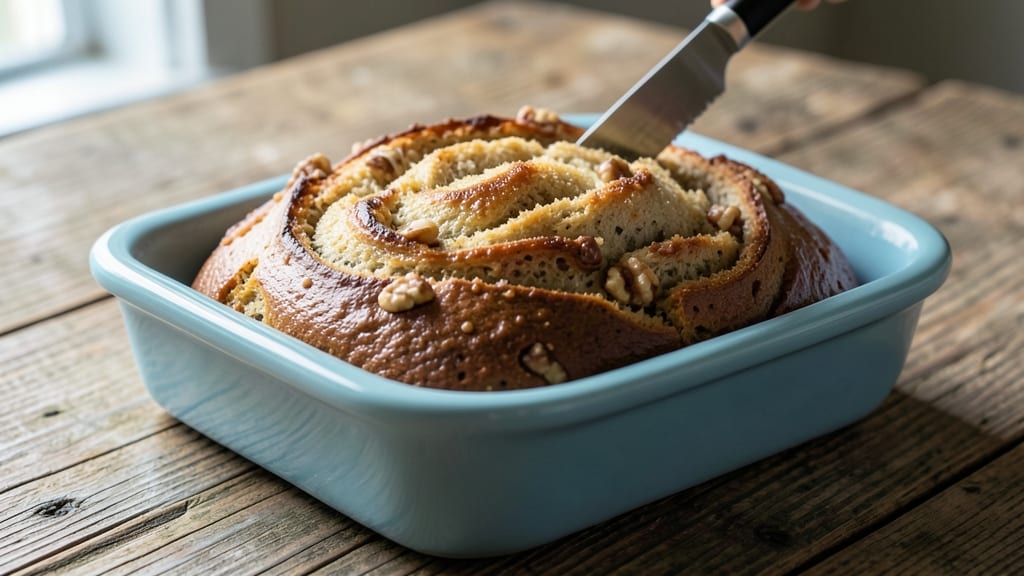
This King Arthur Anadama bread recipe delivers the perfect balance of dense, slightly crumbly texture and warm molasses-kissed flavor that defines New England quick breads. The secret lies in the spiced walnut swirls that cut through the tender crumb, creating a bread that's both rustic and refined.
I've perfected this recipe over years of baking, and it never fails to impress—whether served with butter or as a hearty side.
The beauty of this recipe is its simplicity: just a handful of ingredients combined with King Arthur flour for that signature tender yet slightly dense texture. The molasses adds depth without overpowering, while the walnut swirls provide a satisfying contrast.
What makes it special is how the crust develops a subtle caramelized edge during baking, enhancing the bread's natural sweetness.
By the time it emerges from the oven, you'll have a loaf with a golden crust that gives way to a moist, slightly crumbly interior. The walnut swirls remain rich and fragrant, adding layers of flavor with every bite.
This bread is perfect for breakfast, paired with soups, or enjoyed alongside a hearty meal—its versatility makes it a staple in any kitchen.
Ready in just 60 minutes, this recipe delivers restaurant-quality results without the fuss. The dough comes together quickly, and the baking process is hands-off, making it ideal for busy weekdays or weekend baking projects. Let's get started on creating this classic New England treasure.
Ingredients for anadama bread recipe king arthur
King Arthur flour plus molasses and walnuts create this iconic New England bread's signature flavor and texture.
| Ingredient | Amount | Notes |
|---|---|---|
| King Arthur Unbleached Bread Flour 🌾 | 4 cups | Plus 2 tbsp for dusting pan |
| Granulated Sugar 🍚 | ½ cup | Light brown preferred |
| Unsalted Butter 🧈 | ½ cup | Cold, cubed for cutting into dough |
| Large Eggs 🥚 | 2 whole | Room temperature |
| Molasses 🍯 | ¼ cup | Unsulphured preferred |
| Active Dry Yeast 🍞 | 1 package | 2 1/4 tsp (1 packet) |
| Warm Water 💧 | 1 cup | 110°F for yeast activation |
| Walnuts 🥜 | 1 cup | Chopped, toasted |
| Light Brown Sugar 🍚 | ¼ cup | Packed, for walnut mix |
| Ground Cinnamon 🌿 | 1 tsp | For walnut swirl |
| Ground Ginger 🌶️ | ½ tsp | For walnut swirl |
| Salt 🧂 | ½ tsp | Diamond Crystal preferred |
| Baking Soda 🍫 | 1 ½ tsp | For leavening |
| Ground Cloves 🌿 | ¼ tsp | For walnut swirl |
King Arthur flour is non-negotiable here—its high protein content delivers that signature dense-yet-tender crumb. Buy it from King Arthur's website or trusted baking stores like Sur La Table or Williams Sonoma. For the molasses, unsulphured is key—it has a cleaner, less bitter taste that lets the bread's natural sweetness shine. Walnuts should be toasted until fragrant (about 8 minutes in a dry pan) to deepen their flavor. The yeast is the workhorse—make sure your water is warm but not hot (110°F is ideal) to activate it properly without killing it.
No King Arthur flour? Bread flour or all-purpose flour with 1 tsp vital wheat gluten works in a pinch. Substituting regular molasses? Cut the amount by half—it's much stronger. For the walnut swirl, pecans or hazelnuts can replace walnuts, though the flavor will differ slightly. If you're sensitive to cloves, skip them entirely—the cinnamon and ginger still provide plenty of warmth. The butter should be cold when mixed into the dough to prevent overdevelopment, but don't use it straight from the fridge—let it sit at room temperature for 30 minutes first.
This dough is best used immediately, but you can refrigerate it for up to 24 hours if needed. Once baked, the bread keeps well at room temperature for 3-4 days wrapped in a clean kitchen towel. For longer storage, freeze the cooled loaf (wrapped tightly) for up to 3 months. To reheat, wrap in foil and warm at 300°F for 10 minutes. The walnut swirls stay fresh longer if you store the bread crust-side down—prevents them from drying out.
Why You'll Love This Recipe
- No-Knead Magic: I swear by this dough—just mix, rest, bake. The King Arthur flour handles the molasses and butter so well, it practically rises itself while I scroll through my phone.
- Molasses-Kissed Richness: That deep, caramelized molasses flavor? It’s like a hug in bread form. The butter and sugar balance it perfectly, giving every slice a subtle sweetness without being cloying.
- Weeknight Hero: I make this on Thursdays because it’s done by dinner. Toast it for breakfast, use it for sandwiches, or serve it warm with honey—it’s my go-to for lazy days and last-minute guests.
- Budget-Friendly Staple: A single batch feeds my family for days. The ingredients are simple but transformative, and the leftovers? Perfect for French toast or bread pudding when I’m too tired to cook.
Step-by-step instructions for molasses-kissed Anadama bread
This method delivers a rich, molasses-kissed crust with perfectly spiced walnut swirls every time.
Activate the Yeast and Prepare the Dough Base
In a large mixing bowl, combine the 1 cup warm water (tested at 110°F) with the 0.5 cup granulated sugar and 1 package active dry yeast. Let it sit for 5-10 minutes until foamy—this confirms your yeast is active. If it doesn't foam, start over with fresh yeast.
Add the 4 cups King Arthur Unbleached Bread Flour and 0.5 tsp salt to the yeast mixture. Stir with a wooden spoon until a shaggy dough forms. The flour will absorb the liquid quickly, creating a rough, uneven mass. This is normal—don't worry if it looks dry at first.
Incorporate Wet Ingredients and Knead
Create a well in the center of the dough and add the 2 whole large eggs, 0.5 cup cold unsalted butter (cubed), and 0.25 cup molasses. Using a dough scraper, gradually incorporate these ingredients into the flour mixture, bringing the dough together as you work.
Turn the dough onto a lightly floured surface and knead for 8-10 minutes until smooth and elastic. You'll know it's ready when it springs back slowly when poked. If the dough feels too sticky, add 1 tablespoon of flour at a time; if too dry, add 1 teaspoon of water. The molasses adds moisture, so be mindful not to over-flour.
Prepare the Spiced Walnut Filling
While the dough rests, prepare the walnut filling by combining the 1 cup chopped toasted walnuts, 0.25 cup light brown sugar, 1 tsp ground cinnamon, 0.5 tsp ground ginger, 0.5 tsp salt, and 0.25 tsp ground cloves in a small bowl. Mix well to evenly distribute the spices through the nuts.
This aromatic blend will infuse the bread with warm, spiced notes that complement the molasses crust beautifully. Toasting the walnuts beforehand enhances their flavor—simply spread them on a baking sheet and toast at 350°F for 5-7 minutes until fragrant, then chop while still warm.
Shape and Swirl the Dough
Divide the dough into two equal portions and roll each into a 12-inch circle on a floured surface. Sprinkle half of the walnut mixture evenly over one circle, leaving a 1-inch border around the edges. Fold the circle in half to create a half-moon shape, then roll it tightly into a log.
Repeat with the remaining dough and walnut mixture. Place both logs seam-side down in a greased 9x5-inch loaf pan, dusted with the extra 2 tbsp flour from the ingredients list. The dough will rise significantly, so ensure the pan is large enough to accommodate expansion.
Proof and Bake to Golden Perfection
Cover the loaf pans with clean kitchen towels and let the dough rise in a warm place for 1-1.5 hours until doubled in size. The bread should spring back slowly when gently pressed. Preheat your oven to 375°F while the bread proofs.
Bake the bread for 40-45 minutes until the top is deep golden brown and sounds hollow when tapped. For extra crust color, brush the tops with a little water and return to the oven for 2-3 minutes if needed. Remove from the oven and let cool in the pan for 10 minutes before transferring to a wire rack.
Rest and Slice for Maximum Flavor
Allow the bread to cool completely before slicing—this ensures clean cuts and prevents crumbling. The molasses-kissed crust should be rich and slightly sticky, while the interior should be tender with pockets of spiced walnut filling peeking through.
For best results, slice the bread when it's at room temperature. Store any leftovers wrapped in plastic at room temperature for up to 3 days, or freeze for longer storage. This bread makes excellent toast, perfect for breakfast with a spread of butter or jam.
Pro Tips For Making Anadama Bread Recipe King Arthur
- MEASURE MOLASSES BY WEIGHT: I learned this the hard way—molasses is thicker than syrup, and those tablespoons can vary wildly. Use a kitchen scale for the ¼ cup called for; 60 grams guarantees consistency every time.
- SOFTEN BUTTER IN THE FRIDGE: No one likes waiting for butter to melt, but tossing the cold sticks in a warm (not hot) oven for 5–7 minutes keeps them from turning greasy. Just pull them out when they’re pliable but not liquid—this makes mixing smoother.
- DON’T OVERMIX THE DOUGH: I used to beat this like a smoothie, but anadama’s dense texture comes from just combining everything until barely homogenous. Overmixing develops gluten too much, and you’ll end up with a tough loaf instead of that classic tender crumb.
- LET THE LOAF RISE UNTIL IT’S Almost Ready: Anadama’s molasses-heavy dough rises slower than usual, so stop shaping when it’s about 75% puffed. The final rise in the pan will do the rest—this prevents a flat, sad loaf that falls apart when sliced. (Yes, I’ve made that mistake.)
Common mistakes when making your anadama bread recipe king arthur
Over-Kneading the Dough
Anadama bread dough is delicate—over-kneading develops too much gluten, making it tough instead of tender. Stop kneading once the dough springs back slowly when poked (8-10 minutes total). I’ve ruined batches by pushing past this point, so resist the urge to overwork it.
The molasses and butter already add moisture, so the dough shouldn’t need extra flour unless it’s truly sticky. 💫
Skipping the Proof
Never skip the 1-1.5 hour proofing step—this is where the magic happens! Rushing to bake unproofed dough results in dense, heavy bread with poor texture. The yeast needs time to activate fully, especially with molasses, which can slow fermentation slightly.
Place the dough in a warm spot (like a turned-off oven with a bowl of hot water) to ensure even rising. 🌡️
Uneven Walnut Distribution
Sprinkle the walnut mixture evenly across the dough circles, leaving a 1-inch border to prevent filling from oozing out during baking. I’ve seen loaves where the walnuts clustered in one spot, creating dry pockets.
For extra insurance, lightly press the walnuts into the dough with your fingers before rolling. This ensures every bite has that spiced nutty surprise. 🥜
Overfilling the Loaf Pan
Anadama bread rises significantly—don’t overfill the 9x5-inch loaf pan or it’ll spill over, creating a messy crust. The dough should reach about 2/3 full before proofing.
If it looks like it’ll overflow, let it proof longer in the pan (up to 2 hours) to encourage upward growth rather than sideways expansion. A crowded pan = a sad, flat loaf. 😬
Baking at Wrong Temperature
Bake at 375°F—any lower, and the crust won’t develop that signature molasses-kissed caramelization; too high, and the bread burns before the center cooks. I’ve learned this the hard way!
Use an oven thermometer to confirm accuracy. For extra crust color, brush the tops with water after 30 minutes of baking. 🔥
Slicing Too Soon
Patience is key—wait until the bread is completely cool before slicing. Warm bread crumbles easily, and the walnut swirls won’t hold their shape. I’ve seen loaves fall apart when cut too early, ruining the presentation.
Let it rest on a wire rack for at least 1 hour before serving. The wait is worth it for clean slices and that perfect first bite. ✨
Nutrition facts
Frequently asked questions
Why does King Arthur flour make such a difference in this recipe?
The high protein content in King Arthur Unbleached Bread Flour creates that signature dense-yet-tender crumb that traditional Anadama bread is known for. It also absorbs moisture beautifully, balancing the richness of the molasses and butter without making the dough too sticky.
Can I make this bread without molasses? What's the best substitute?
Yes, but the flavor will be different. If you must substitute, use half the amount of honey or maple syrup—they're less intense than molasses. For a non-sweet option, try 1/4 cup unsweetened applesauce to maintain moisture. The walnut swirl's spices will still shine through, though the crust won't be as caramelized.
How do I know when the dough is properly kneaded?
The dough is ready when it's smooth and springs back slowly when poked (about 8-10 minutes of kneading). It should feel slightly tacky but not sticky. If it tears easily, keep kneading—this bread's texture depends on proper gluten development without overworking. The molasses makes it more forgiving than other doughs.
Can I make this bread in a different shape besides a loaf?
Shape the dough into a round free-form loaf for a rustic look, or try individual 6-inch rounds for dinner rolls. For a festive touch, divide into 4 equal portions and shape into small loaves or braids. The walnut swirl works beautifully in any shape—just adjust baking times (rounds bake 10-15 minutes less than loaves).
What's the best way to reheat sliced Anadama bread?
Wrap slices in a damp paper towel and warm at 300°F for 5-7 minutes to restore moisture without drying out. For extra crispiness, toast in a dry pan over medium heat for 1-2 minutes per side. Never microwave—it makes the crust rubbery. The walnut swirl stays fresh longer when reheated this way.