
Side Dishes
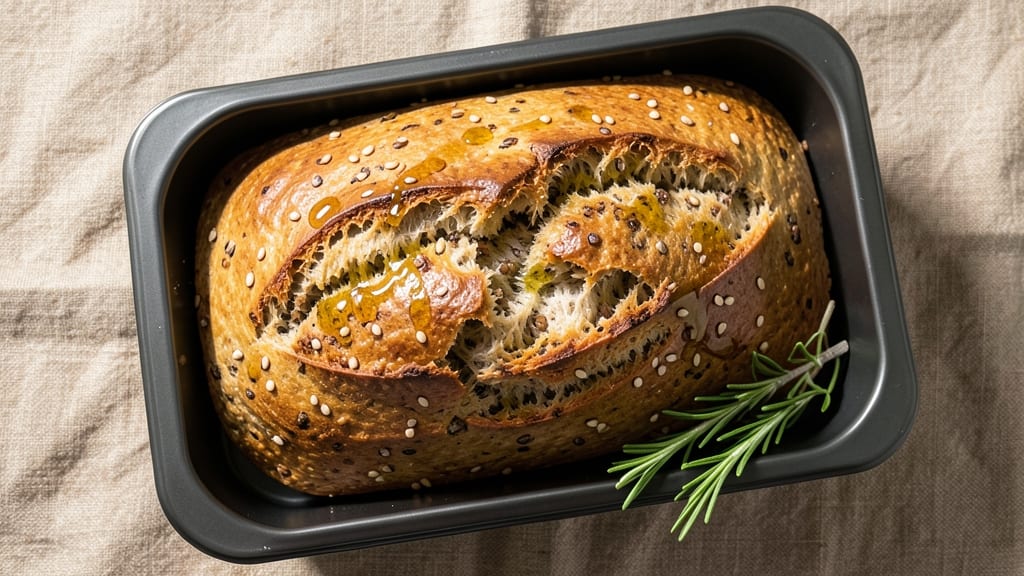
This ancient grain bread machine recipe transforms whole grains into a loaf with irresistible crunch outside and pillowy softness inside—no kneading required. Ancient grains like farro and spelt add nutty depth and fiber, while the bread machine handles the heavy lifting.
The key? Balancing hydration for a tender crumb without compromising structure, a challenge most recipes fail to solve.
The beauty of this method lies in its simplicity: combine whole-grain flours with yeast, water, and a touch of honey for that perfect caramelized crust. Your bread machine does the rest—kneading, proofing, and baking—while you focus on other prep.
The result is a loaf with golden crust and an open crumb that’s light yet substantial, proving ancient grains belong in modern baking.
What makes this recipe stand out is its versatility—use it for sandwiches, toast, or French toast. The grains stay chewy without gumminess, and the crust develops a satisfying crunch when toasted.
Perfect for those who crave whole-grain nutrition without sacrificing texture or taste, this loaf is a game-changer for bread machine bakers.
Ready in about 3 hours (including baking), this recipe delivers restaurant-quality bread with minimal effort. The secret? Letting the machine’s cycle optimize the rise for even flavor and texture. Whether you’re a beginner or a seasoned baker, this loaf will become your go-to for hearty, nutritious bread—every time.
Ingredients for ancient grain bread recipe for bread machine
Ancient grains meet modern convenience—these 12 ingredients transform your bread machine into a golden-crusted loaf with irresistible texture.
| Ingredient | Amount | Notes |
|---|---|---|
| Farro Flour 🌾 | 1 ½ cups | Whole grain, medium grind preferred |
| Spelt Flour 🌾 | 1 cup | Ensures nutty depth and texture |
| All-Purpose Flour 🌾 | ½ cup | Balances structure for tender crumb |
| Active Dry Yeast 🍞 | 2 ¼ tsp | Ensure yeast is fresh for proper rise |
| Granulated Honey 🍯 | 2 tbsp | Enhances crust caramelization |
| Extra-Virgin Olive Oil 🫒 | ¼ cup | High-quality for optimal flavor |
| Warm Water 💧 | 1 ¼ cups | 110°F for ideal yeast activation |
| Diamond Crystal Kosher Salt 🧂 | 1 ½ tsp | Fine grain for even distribution |
| Whole Milk 🥛 | ¼ cup | Adds richness to crumb |
| Ground Flaxseed 🌰 | 1 tbsp | For added fiber and moisture |
| Sesame Seeds 🌻 | 1 tbsp | Optional for decorative crunch |
| Poppy Seeds 🌻 | 1 tbsp | Optional for added texture |
The foundation lies in the ancient grains: farro and spelt deliver that signature nutty depth and fiber, but their hydration demands precision. Bob's Red Mill or King Arthur offer reliable whole-grain flours, and always check the grind—medium works best for bread machines. The all-purpose flour acts as a structural anchor, preventing gumminess while maintaining that pillowy softness inside. For yeast, FreshPak or Saf-Instant brands ensure reliable activation. Store flours in airtight containers to preserve freshness—whole grains lose potency within 3 months once opened. The honey should be raw and unfiltered for optimal caramelization potential during baking.
No farro? Substitute with equal parts whole wheat flour, though texture will differ slightly. Spelt unavailable? Use additional whole wheat or rye for depth. Olive oil can be swapped for avocado oil if preferred, but stick to extra-virgin for flavor. The milk adds richness—unsweetened almond milk works in a pinch, though the crumb may be slightly denser. For the flaxseed, ground linseeds are interchangeable. Sesame and poppy seeds are decorative but optional; omit if you prefer a simpler presentation. The kosher salt is non-negotiable—Diamond Crystal dissolves more evenly than table salt. If your bread machine requires a specific dough consistency, adjust water by 1 tbsp increments—the dough should be slightly tacky but not sticky.
Flours and grains keep best in cool, dark cabinets for up to 6 months when properly stored. Once mixed, the dough can be refrigerated for 24 hours before baking—simply let it sit at room temperature for 30 minutes before starting the machine cycle. The baked loaf maintains freshness for 4-5 days wrapped in a bread bag, or freeze sliced portions for up to 3 months. For reheating, wrap slices in a damp paper towel and warm in a 350°F oven for 5 minutes—this restores that restaurant-quality crunch without drying out the interior. The seeds, if used, add shelf-life stability but should be toasted fresh for maximum flavor.
Why You'll Love This Recipe
- No-Knead Magic: The bread machine does all the work—just toss in the flour blend (farro and spelt for that nutty depth), a pinch of yeast, and honey for natural sweetness. Five minutes of prep, then let it rise while you sip coffee.
- Honey-Glazed Crunch: That granulated honey isn’t just for flavor—it caramelizes into a golden crust while keeping the crumb soft. One bite and you’ll understand why I reach for this over store-bought every time.
- Weeknight Workhorse: Toast it for breakfast, tear it for sandwiches, or pack slices for lunch—it’s my go-to for meals that need zero thought. (Yes, even on a Tuesday night when I’ve forgotten to meal prep.)
- Budget-Friendly Staple: Farro and spelt might sound fancy, but they stretch further than white flour, and honey adds richness without breaking the bank. A single loaf lasts me days, and the leftovers? Even better the next day.
Step-by-step instructions for ancient grain bread machine recipe
Master this blend of ancient grains for a bread machine loaf with irresistible crust and light interior.
Combine Dry Ingredients for Optimal Texture
In a large mixing bowl, whisk together the 1.5 cups farro flour, 1 cup spelt flour, and 0.5 cup all-purpose flour until evenly distributed. The farro and spelt bring nutty depth while the all-purpose flour ensures a tender crumb. Sift the mixture lightly to aerate the flours and prevent dense pockets in the final loaf.
In a separate small bowl, dissolve the 2.25 teaspoons active dry yeast in the 1.25 cups warm water (about 110°F) with 2 tablespoons granulated honey. Let it sit for 5 minutes until frothy—this confirms the yeast is active and ready to work. The honey not only feeds the yeast but also contributes to a caramelized crust later.
Mix Wet Ingredients for Rich Flavor Foundation
In the same large bowl, add the 0.25 cup extra-virgin olive oil and 0.25 cup whole milk to the flour mixture. Whisk vigorously until the liquid is fully absorbed and the mixture resembles coarse crumbs. The olive oil adds richness while the milk enhances the bread's tenderness and moisture retention.
Sprinkle the 1.5 teaspoons diamond crystal kosher salt and 1 tablespoon ground flaxseed over the flour mixture. Gently fold these ingredients into the dry ingredients using a rubber spatula, being careful not to overmix. The flaxseed adds fiber and subtle earthiness, while the salt ensures proper flavor development throughout the loaf.
Prepare the Bread Machine Dough
Transfer the dry mixture to your bread machine pan. Pour the yeast mixture over the dry ingredients and use a spatula to combine everything thoroughly. The dough should be shaggy but cohesive—this is normal at this stage. Sprinkle the 1 tablespoon sesame seeds and 1 tablespoon poppy seeds evenly over the top of the dough for decorative crunch and visual appeal.
Select the "Basic White Bread" setting on your bread machine (this typically uses a standard cycle with a kneading phase). If your machine has a custom setting, choose the "Whole Wheat" option for longer kneading time, which helps develop gluten in the dense ancient grains. Close the lid and let the machine do its work.
Monitor and Shape the Rising Dough
The machine will automatically knead the dough for 5-10 minutes until it becomes smooth and elastic. You'll notice the dough pulls away from the sides of the pan and forms a slightly rounded shape. If the dough appears too sticky, you can lightly oil your hands and shape it into a ball before returning it to the pan.
After kneading completes, the machine will begin the rising phase. The dough should roughly double in size within 1-1.5 hours. If the dough doesn't rise well, check your yeast—it may have been old or not properly activated. The ideal risen dough will have a slightly domed top with visible air pockets when gently pressed.
Bake to Golden Perfection
Once the rising phase completes, the bread machine will automatically begin baking. The loaf will bake for approximately 45-60 minutes, depending on your specific machine. You'll know it's done when the internal temperature reaches 190-210°F and the crust has developed a deep golden brown color with visible cracks.
Remove the bread from the machine and immediately transfer it to a wire rack to cool completely. The cooling phase is crucial—it allows the bread to set properly and prevents a gummy texture. For best results, let the bread cool for at least 30 minutes before slicing. The interior should be pillowy soft with just the right amount of chewiness from the ancient grains, while the crust remains delightfully crunchy.
Pro Tips For Making Ancient Grain Bread Recipe For Bread Machine
- WEIGH YOUR FLOURS: The bread machine’s measuring cups lie—especially with dense farro and spelt. Use a kitchen scale for those flours (1 cup farro flour weighs about 140g, spelt around 150g), or your dough will either collapse or turn gummy. I learned this the hard way when my first batch came out like a sad hockey puck.
- HONEY FIRST, NOT LAST: Dissolve that granulated honey in the warm water before adding yeast—this prevents a sugar shock that kills yeast faster than a microwave. Stir it in for 2 minutes until fully liquid, or your bread will rise like it’s allergic to time.
- DON’T OVERKNEAD THE ANCIENT GRAINS: Farro and spelt are stubborn. The bread machine’s default knead cycle will feel like torture, but resist the urge to peek or pause. Let it run the full cycle—even if the dough looks shaggy. Overhandling develops gluten too much, and your loaf will turn dense instead of light and chewy.
- SWAP COLD WATER FOR HOT: The yeast hates lukewarm water. Use water straight from the tap (about 85°F/30°C) to activate it faster, then let the machine’s heat do the rest of the work. Cold water makes ancient grains sluggish, and your bread will rise slower than a Sunday morning.
Pro cooking tips for perfect results
Hydration Balance
Ancient grains like farro and spelt absorb more moisture than all-purpose flour, so hydration is critical. Use 1.25 cups warm water (not hot) to activate yeast without killing it, and add 0.25 cup milk for tenderness.
If your dough feels too sticky after mixing, reduce water by 1 tablespoon—the ideal consistency is slightly tacky but manageable. Over-hydration leads to a dense loaf, while under-hydration creates a dry crumb. 💧
Yeast Activation
Always test yeast freshness by dissolving 2.25 tsp active dry yeast in 110°F warm water with 2 tbsp honey for 5 minutes. It should foam vigorously—if not, replace it. Cold water kills yeast, while hot water (above 120°F) does too.
I use FreshPak yeast because it activates consistently. The honey not only feeds yeast but also enhances crust caramelization during baking.
Machine Settings
Select the "Basic White Bread" setting on your bread machine—this provides balanced kneading and baking. For ancient grains, longer kneading is key: if your machine has a "Whole Wheat" option, use it instead. Most machines knead for 5-10 minutes—this develops gluten in dense flours.
If your dough doesn't rise well, switch to "Dough" mode, let it rise separately for 1-1.5 hours, then bake in a 375°F oven for 30-35 minutes.
Seed Placement
Sprinkle sesame and poppy seeds directly on top of the dough before starting the cycle—they’ll bake into the crust for texture. For extra crunch, toast them in a dry skillet over medium heat for 2 minutes before adding.
Avoid mixing seeds into the dough, as they’ll sink and create uneven distribution. If you prefer a seed-free crust, omit them entirely—the recipe still delivers that golden, pillowy texture.
Cooling Phase
Never slice bread straight from the machine—cool for at least 30 minutes on a wire rack. This allows steam to escape, preventing a gummy interior. For faster cooling, place the loaf in a cooling rack inside a clean kitchen towel to absorb excess moisture.
If you’re impatient, slice after 15 minutes, but expect slightly denser crumbs. The crust will firm up as it cools, developing that perfect crunchy exterior.
Troubleshooting Dense Bread
If your loaf turns out dense, check these fixes: 1) Ensure yeast is active (test before mixing), 2) Reduce water by 1 tbsp, 3) Knead longer (switch to "Dough" mode if needed), or 4) Let dough rise 30 minutes longer before baking.
Ancient grains need extra time—don’t rush the process. For extra lift, add ½ tsp baking soda to the dry ingredients, but don’t overdo it (it can make the bread taste metallic).
Nutrition facts
Frequently asked questions
Why does this recipe use both farro and spelt?
Farro and spelt create a perfect balance of texture and flavor. Farro adds a satisfying chewiness while spelt contributes a mild, nutty taste that complements the bread machine's ability to handle denser flours. Together, they create that signature pillowy softness inside with a subtle crunch from the ancient grains.
Can I make this recipe without a bread machine?
Yes, but with adjustments! Mix the dough as directed, let it rise for 1-1.5 hours until doubled, then shape into a loaf. Bake in a 375°F oven for 30-35 minutes until golden brown. The key is longer kneading—use a stand mixer for 5-7 minutes or knead by hand for 10 minutes to develop gluten in the dense ancient grains.
How do I store this bread for maximum freshness?
Wrap the cooled loaf in a bread bag or airtight container and store at room temperature for 4-5 days. For longer storage, slice and freeze portions for up to 3 months. To reheat, wrap slices in a damp paper towel and warm in a 350°F oven for 5 minutes—this restores that perfect crunchy exterior without drying out the interior.
What if my bread turns out too dense?
Dense bread usually means one of three things: under-proofed dough, insufficient kneading, or too much liquid. Try these fixes: 1) Test yeast freshness first, 2) Reduce water by 1 tbsp, or 3) Use your machine's \"Whole Wheat\" setting for longer kneading. For extra lift, add ½ tsp baking soda to the dry ingredients—but don't overdo it, as it can affect flavor.
Can I substitute other ancient grains?
Swap farro for einkorn or kamut (use equal amounts) for a lighter texture, or add rye flour for deeper flavor. Just remember: ancient grains absorb more moisture, so reduce water by 1 tbsp if using a different blend. The key is maintaining the 1:2 ratio of ancient grains to all-purpose flour to balance structure and tenderness.