
Desserts
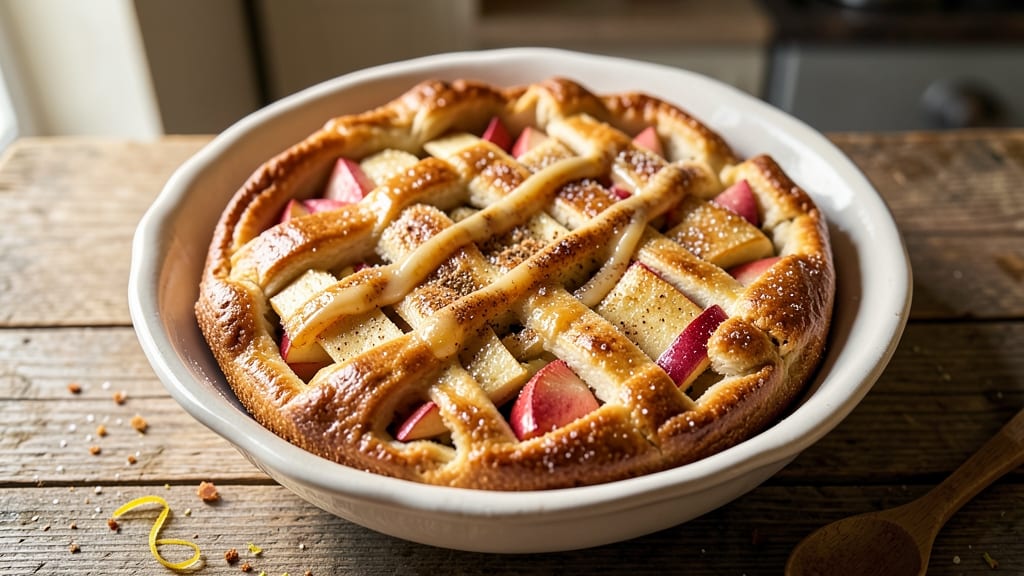
This apple pie sourdough bread recipe transforms your favorite dessert into a textured, golden loaf with swirls of spiced apple filling throughout every bite. The marriage of tangy sourdough crust and sweet apple compote creates a dessert that's as satisfying to bake as it is to eat—no pie dish required.
What makes this recipe special is how the sourdough's natural fermentation enhances the apple's flavors while adding a subtle complexity that store-bought crusts can't match.
The process begins with a simple sourdough starter that develops depth over 24 hours, then incorporates a quick-spiced apple filling made from just four ingredients. The dough wraps around the filling in a classic spiral, creating those iconic apple swirls while maintaining a crispy, crackly crust.
Unlike traditional apple pie, this version delivers the same comforting flavors in a portable, shareable loaf that's perfect for breakfast or dessert.
By the time it emerges from the oven, you'll have a fragrant, golden loaf with caramelized apple filling peeking through the crust in tantalizing swirls. Each slice offers the perfect balance of crispy sourdough and tender, spiced apple—no fork required.
The aroma alone will have everyone asking for seconds, and the texture contrasts make every bite unforgettable.
This recipe works equally well as a weekend project or a holiday centerpiece, scaling easily for gifts or gatherings. The sourdough starter can be prepped ahead, and the dough proofed overnight, making it ideal for busy schedules.
Here's how to create this unique dessert that blends the best of two classics into one extraordinary loaf.
Ingredients for apple pie sourdough bread
Six ingredients transform your kitchen into a bakery of golden apple-scented magic—no pie dish needed.
| Ingredient | Amount | Notes |
|---|---|---|
| Active Sourdough Starter 🍞 | 1 cup | Unfed, bubbly starter (100% hydration) |
| All-Purpose Flour 🌾 | 5 cups | Bread flour preferred for structure |
| Granulated Sugar 🍚 | ¼ cup | For dough and filling sweetness |
| Unsalted Butter 🧈 | ½ cup | Cold, cubed for dough enrichment |
| Instant Yeast 🍞 | ½ tsp | Boosts sourdough fermentation |
| Salt 🧂 | 1 ½ tsp | Diamond Crystal preferred |
| Granny Smith Apples 🍎 | 2 lb | Peeled, finely diced (about 4 cups) |
| Cinnamon 🌿 | 1 ½ tsp | Ground, for warm apple flavor |
| Ground Ginger 🌶️ | ½ tsp | Freshly grated preferred |
| Lemon Juice 🍋 | 1 tbsp | Freshly squeezed for brightness |
| Milk 🥛 | ¼ cup | Warmed for dough tenderness |
| Large Egg 🥚 | 1 whole | For egg wash enrichment |
| Cornmeal 🌽 | ½ cup | For dusting bread pan |
The sourdough starter is where the magic begins—this isn't your basic discard starter. King Arthur or Bob's Red Mill bread flour gives that perfect chew, but all-purpose works in a pinch. For the apples, Granny Smiths are non-negotiable—their tartness cuts through the sweetness beautifully. I always grab mine at Whole Foods when they're in season, but any crisp apple will work. The cinnamon and ginger? Penzeys spices are my go-to for that extra depth, but your grocery store's bulk section works too. Pro tip: Toast your spices for 30 seconds in a dry pan to wake up those flavors.
No sourdough starter? Use 1 tsp active dry yeast plus 1 cup warm milk as a backup, but the flavor won't be quite the same. Short on butter? Coconut oil works in a bind, though it won't give the same rich flavor. The apples can be prepped ahead—toss them with lemon juice to prevent browning. For the dough, bread flour is ideal but all-purpose is fine if that's what you've got. Want more caramelization? Add 1 tbsp brown sugar to the filling. The egg wash? Whole milk plus 1 tbsp melted butter makes it even richer.
This loaf keeps beautifully—3 days at room temperature wrapped in a clean kitchen towel, or 1 week refrigerated in an airtight container. For longer storage, freeze slices wrapped individually—they toast up like fresh-baked. The filling actually improves overnight as the flavors meld. I always bake two loaves—one for breakfast, one for gifts. The aroma while baking? Worth every minute of the 24-hour process.
Why You'll Love This Recipe
- No-Fuss Mix-In: I swear by this recipe because it’s the only time I’ve ever used my sourdough starter and not stress over timing. Just toss in the sugar and butter, let the starter do its magic, and you’ve got a dough that’s forgiving enough for even my "I-forgot-to-measure" moments.
- Sweet & Tangy Magic: That caramelized sugar and butter combo? It’s like biting into warm apple pie crust—just without the fuss of a lattice top. The sourdough’s tang cuts through the sweetness, making every slice taste like a little dessert.
- Breakfast or Snack Hero: Honestly, this bread is my go-to for lazy mornings or after-school snacks. Toast it with peanut butter for a quick lunch, or slather it with butter and jam for a coffee break. It’s the one loaf that does double duty without feeling like a chore.
- Leftovers That Last: Between us, I’ve had this bread for five days straight—still fresh, still delicious. The butter keeps it soft, and the sugar prevents it from drying out. Plus, it’s cheaper than buying pre-packaged bread, so my wallet thanks me too.
Step-by-step instructions for apple pie sourdough bread
Here's how to create a golden, swirled loaf with tender crumb and spiced apple bursts.
Prepare the Apple Filling
In a medium bowl, combine the 2 lb Granny Smith Apples (peeled and finely diced), 0.25 cup Granulated Sugar, 1.5 tsp Cinnamon, 0.5 tsp Ground Ginger, and 1 tbsp Lemon Juice. Stir gently to coat the apples evenly. The acidity from the lemon juice helps preserve the apples' color while enhancing their natural tartness.
Let the mixture sit for 10 minutes while you prepare the dough. This brief resting period allows the apples to soften slightly and release some of their juices, which will contribute to a moist filling. You'll notice the mixture will look slightly glossy and aromatic—this is exactly what you want for that perfect apple pie flavor in every bite.
Mix the Dough
In a large mixing bowl, combine the 1 cup Active Sourdough Starter, 5 cups All-Purpose Flour, 0.5 tsp Instant Yeast, and 1.5 tsp Salt. Mix until just combined, then add the 0.5 cup Unsalted Butter (cold and cubed) and work it into the dough using your hands or a dough hook attachment on low speed.
Once the butter is incorporated, add the 0.25 cup Milk and the 1 whole Large Egg. Knead the dough for 5-7 minutes by hand or 3-4 minutes with a mixer until it becomes smooth and elastic. The dough should be slightly tacky but not sticky—this indicates proper hydration. If it feels too dry, add 1-2 teaspoons of water; if too sticky, add 1 tablespoon of flour. The goal is a dough that springs back slowly when poked.
Incorporate the Apple Filling
Turn the dough out onto a lightly floured surface and gently flatten it into a rectangle about 12 inches long and 8 inches wide. Spread the prepared apple filling evenly over the dough, leaving a 1-inch border around the edges. This border ensures the filling stays contained during baking.
Roll the dough tightly into a log, starting from the long side. Seal the seam by pinching the dough firmly together. Here's the thing—don't worry if it looks messy. The magic happens when you shape it into a loaf. Place the sealed log seam-side down in a greased 9x5-inch loaf pan (or a similar size). Cover the pan loosely with a damp towel and let the dough rise in a warm place for 1-2 hours, or until it has nearly doubled in size. You'll know it's ready when the dough feels light and springs back slowly when gently pressed.
Shape and Proof the Bread
Once the dough has risen, turn it out onto a lightly floured surface and gently shape it into a round or oval loaf. This step is crucial for creating that beautiful, rustic shape. Place the shaped dough into a 9-inch round cake pan or a similar-sized pan dusted with 0.5 cup Cornmeal to prevent sticking.
Cover the pan with a damp towel and let the dough proof for another 1-2 hours, or until it has risen significantly and looks puffy. The edges should be slightly rounded, and the dough should feel firm yet springy to the touch. Preheat your oven to 375°F while the dough proofs. This ensures your oven is ready to go and will help the bread bake evenly.
Bake to Golden Perfection
Brush the top of the dough with a beaten egg (use the 1 whole Large Egg you have left) mixed with a splash of water for a glossy finish. Bake in the preheated oven for 40-45 minutes, until the bread is golden brown and sounds hollow when tapped on the bottom. If the top browns too quickly, tent the pan with foil to prevent over-browning.
Remove the bread from the oven and let it cool in the pan for 10 minutes, then transfer it to a wire rack to cool completely. This resting period allows the bread to set and makes slicing much easier. Once cooled, slice into thick pieces to reveal those beautiful apple swirls throughout the crumb. The contrast of the tender, spiced apple filling with the crispy, golden crust is what makes this bread truly special.
Pro Tips For Making Apple Pie Sourdough Bread
- STRETCH THE DOUGH: Let that final bulk fermentation run until it’s almost too much—your dough should spring back slowly when poked (like 10 seconds, not instant). I learned this the hard way when my first batch collapsed in the oven because I rushed it. The flavor and texture are worth the wait.
- SALT THE BUTTER: Mix the salt directly into the softened butter before cutting it into the dough—it dissolves better and distributes evenly. I used to add it later, and the crust would taste unevenly seasoned. Trust me, this small tweak makes the whole loaf taste pro.
- DON’T SKIP THE COLD PROOF: Chill the shaped loaf for at least 2 hours (or overnight) before baking—this lets the gluten relax and prevents a dense, gummy crumb. I was skeptical until I tried it; now, my bread has that perfect open crumb and crisp crust every time.
- WEIGH THE SUGAR: Use a kitchen scale for the granulated sugar—packed cups can add 10-15% extra, throwing off the balance of sweetness and fermentation. I used to eyeball it, and the bread would either taste cloyingly sweet or bland. Precision here keeps the apple flavor shining.
Troubleshooting great apple pie sourdough bread
Dough Too Sticky
If your dough feels overly sticky during mixing, resist the urge to add too much flour—this can make the bread dense. Instead, try adding 1 tablespoon of cold butter at a time while kneading.
The fat helps balance hydration. I’ve also had success dusting my work surface with semolina flour instead of all-purpose, as it absorbs excess moisture better. Remember, slightly tacky dough is normal for sourdough! 💡
Filling Too Watery
If your apple filling releases too much liquid during baking, strain it through a fine-mesh sieve after cooking to remove excess juice. For extra insurance, add 1 tablespoon of cornstarch to the filling before baking—it thickens beautifully.
I’ve also found that using slightly underripe Granny Smith apples (just firm) yields less juice than overripe ones. 🍎
Uneven Baking
For a more even bake, rotate your loaf pan halfway through baking (after 20-25 minutes) to prevent hot spots. If the top browns too quickly, tent with foil and lower the oven temperature by 25°F for the remaining time.
A dark baking sheet under the pan can also help distribute heat more evenly. 🔥
Apple Filling Not Swirling
To ensure those gorgeous apple swirls, roll your dough very tightly when shaping the log. Seal the seam with a bit of egg wash to prevent filling from leaking out.
If the filling still doesn’t swirl during baking, try shaping the dough into a round loaf instead of a log—this often creates more dramatic spirals. 🌟
Dense Crumb Texture
A dense crumb usually means over-kneading or insufficient proofing. Knead just until the dough is smooth (about 5-7 minutes by hand), and ensure your starter is active with visible bubbles. If the dough didn’t rise enough, let it proof longer—sometimes 3 hours is needed in cooler kitchens.
A warm oven (preheated to 375°F) also helps create a lighter crumb. ✨
Starter Not Active Enough
If your sourdough starter isn’t bubbly, feed it 1:1:1 (starter:flour:water) ratio 4-6 hours before using. For example, feed ½ cup starter with ½ cup flour and ½ cup water, then let it sit at room temperature until it doubles (usually 4-6 hours).
A well-fed starter is the secret to that perfect tangy flavor. 💪
Nutrition facts
Frequently asked questions
Can I use a different type of apple for this recipe?
Granny Smith apples are ideal because their tartness balances the sweetness perfectly, but you can use other varieties like Honeycrisp or Braeburn. Avoid overly soft apples like Red Delicious—they release too much juice and won't hold their shape during baking. If using sweeter apples, reduce the granulated sugar in the filling by 1 tablespoon to maintain balance.
How do I know when my sourdough starter is ready?
Your starter should have visible bubbles, a slightly domed top, and a light, airy texture when poked. It should also smell pleasantly tangy (like yogurt or vinegar), not harsh or alcoholic. For this recipe, use an unfed starter that's at its peak—typically 4-6 hours after feeding when it's doubled in size. If it's sluggish, feed it again with equal parts flour and water and wait another 2-4 hours.
Can I make this ahead of time?
The dough can be shaped and refrigerated overnight for easier morning baking. Let it sit at room temperature for 1 hour before proofing to wake up the yeast. The filling can also be prepped 24 hours ahead—just store it in an airtight container with plastic wrap pressed directly on the surface to prevent browning. The flavors actually improve when made ahead!
Why does my loaf look dense instead of light and airy?
Dense bread usually results from over-kneading, underproofed dough, or an inactive starter. Knead just until smooth (5-7 minutes by hand), and ensure your starter has plenty of bubbles. If your kitchen is cool, extend proofing time to 3 hours. Also check your yeast—if it's old, replace it with fresh. A warm oven (375°F) and proper shaping help create that signature light texture.
Can I substitute the sourdough starter with regular yeast?
Yes, but the flavor won't be the same. Replace the 1 cup sourdough starter with 1 tsp active dry yeast plus 1 cup warm milk (mixed into the dough). The bread will be sweeter and less tangy, but still delicious. For best results, let the yeast mixture sit for 5 minutes until foamy before adding to the flour. The sourdough's natural fermentation adds depth that regular yeast can't replicate.