
Side Dishes
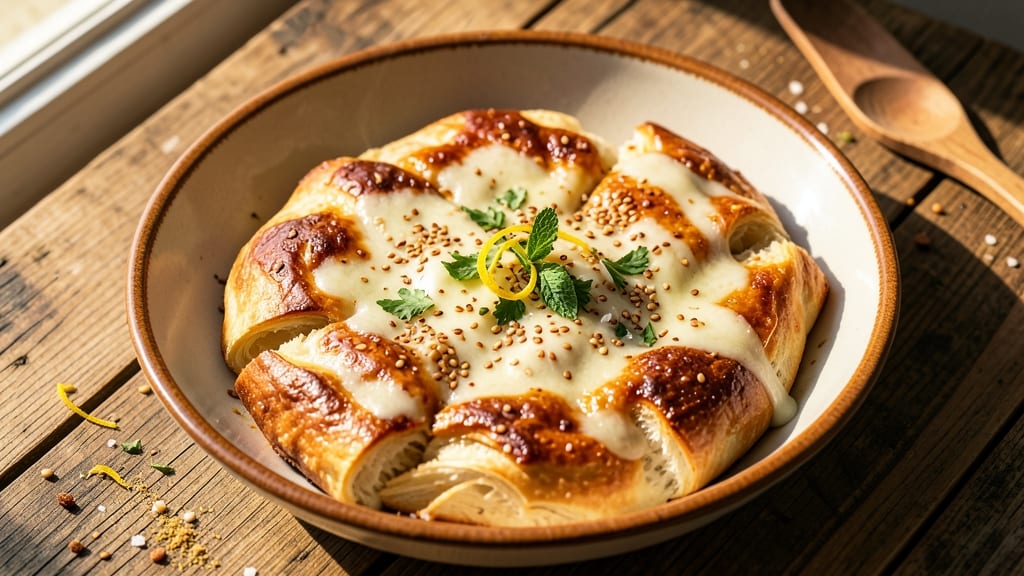
Arabic cheese bread transforms ordinary meals into celebrations with its flaky, za'atar-kissed crust and layers of melted feta that stretch like golden silk. This recipe captures the soul of Middle Eastern baking—where every bite balances crispy, chewy, and creamy textures. The secret lies in a simple dough that puffs dramatically when baked, while the cheese filling creates pockets of melt-in-your-mouth richness. Perfect for holidays or weeknight dinners, this dish proves you don’t need complexity to achieve restaurant-quality results at home.
The dough starts with basic ingredients—flour, yeast, and olive oil—but the magic happens in the folding technique, which develops gluten for that signature flaky texture.
While the dough rests, you’ll prepare the filling: a mix of crumbled feta (or akkawi cheese for authenticity) and herbs, seasoned just enough to let the cheese shine. The za'atar-spiced crust adds an aromatic depth that pairs beautifully with the salty, tangy cheese.
This recipe serves as both a side dish and a main course, making it incredibly versatile for any table.
What makes this bread truly special is its ability to elevate simple meals into something extraordinary. The moment it emerges from the oven, you’ll be greeted by a golden, crackling crust that gives way to tender layers of dough and gooey cheese.
The aroma alone—warm, buttery, and herbaceous—will have everyone at the table reaching for seconds. Whether served with hummus, grilled meats, or fresh salads, this cheese bread is a crowd-pleaser that feels like a hug in every bite.
For those looking to customize, you can adjust the cheese blend or add toppings like sesame seeds or chili flakes before baking. The dough can also be made ahead and refrigerated for up to 24 hours, giving you flexibility for meal prep.
This recipe isn’t just about the end result—it’s about the experience of creating something that tastes like home, no matter where you are.
Ingredients for arabic cheese bread
Basic pantry staples plus a few Middle Eastern treasures for golden, flaky layers.
| Ingredient | Amount | Notes |
|---|---|---|
| All-Purpose Flour 🌾 | 4 cups | Spooned and leveled for accuracy |
| Instant Yeast 🍞 | ¼ tsp | Active dry works too |
| Granulated Sugar 🍚 | 1 tbsp | Helps yeast activate faster |
| Extra-Virgin Olive Oil 🫒 | ½ cup | For richness and flavor |
| Warm Water 💧 | 1 ¼ cups | 110°F ideal for yeast |
| Salt 🧂 | 1 tsp | Kosher or sea salt |
| Feta Cheese 🧀 | 1 ½ cups | Crumbled, block preferred |
| Za'atar Spice Blend 🌿 | 2 tbsp | For authentic Middle Eastern flavor |
| Fresh Parsley 🌿 | ¼ cup | Chopped finely for filling |
| Garlic Cloves 🧄 | 2 cloves | Minced for filling |
| Sesame Seeds 🌰 | 2 tbsp | For topping before baking |
| Melted Butter 🧈 | 2 tbsp | For brushing dough layers |
| Coarse Sea Salt 🧂 | 1 tsp | For sprinkling on crust |
The flour is non-negotiable—King Arthur or Gold Medal work best for that tender crumb. Za'atar is the secret weapon; grab it at Middle Eastern markets or the international aisle at Whole Foods. For the feta, block cheese melts better than pre-crumbled—just crumble it yourself. Fresh parsley and garlic make all the difference in the filling, so don't skip them. If you can't find za'atar, mix 1 tbsp sesame seeds, 1 tsp dried thyme, and 1/2 tsp sumac as a substitute.
No za'atar? Mix 1 tbsp sesame seeds, 1 tsp dried thyme, and 1/2 tsp sumac for a close approximation. Pre-crumbled feta? Pack it tightly to get the same amount. The dough needs to rest at least 1 hour—don't rush it. For extra flakiness, fold the dough 3-4 times during the resting period. The melted butter should be just warm to touch—not hot. And if you're feeling fancy, add a pinch of smoked paprika to the za'atar mix for depth.
The dough keeps 24 hours refrigerated in an airtight container, wrapped in plastic. For best results, let it sit at room temperature 30 minutes before shaping. The finished bread reheats beautifully—5 minutes at 350°F restores that crispy crust. Store leftovers in a paper bag to keep it fresh for 2-3 days. Freeze dough balls for up to 3 months—just bake straight from frozen, adding 5-10 minutes to the time.
Why You'll Love This Recipe
- No-Knead Magic: I swear by this dough—just flour, yeast, sugar, and olive oil mixed with warm water. No stand mixer, no fuss, and the slow rise makes it ridiculously tender. Honestly, my lazy Sundays thank me every time.
- Cheesy Crispy Perfection: That first bite? The golden crust shatters while the inside stays soft and packed with melted cheese. I’ll be real: it’s the kind of thing that disappears faster than my willpower when I’m hungry.
- Weeknight Wonder: Dinner guests? No problem. Meal prep? Even better. The dough keeps for days, and I’ve turned it into breakfast toast, lunch sandwiches, or even a quick flatbread. Versatile enough for any day, but special enough for company.
- Budget-Friendly Staple: Five ingredients, zero waste. That olive oil adds richness without breaking the bank, and the dough stretches to feed a crowd—or just me, three times over. Leftovers? Toast them up—trust me, they’re just as good the second day.
Step-by-step instructions for Arabic cheese bread
Let's create this fragrant, cheesy delight with a crispy za'atar crust and gooey feta layers.
Mix the Dough and Let It Rise
In a large bowl, combine the 4 cups all-purpose flour, 0.25 tsp instant yeast, 1 tbsp granulated sugar, and 1 tsp salt. Mix well to distribute the yeast evenly. Then add the 0.5 cup extra-virgin olive oil and 1.25 cups warm water (about 110°F). Stir with a wooden spoon until a shaggy dough forms.
Turn the dough onto a lightly floured surface and knead for about 5-7 minutes until smooth and elastic. The dough should feel slightly tacky but not sticky. Place it back in the bowl, cover with a damp towel, and let it rise in a warm place for 1-1.5 hours, or until it has doubled in size. You'll know it's ready when you poke it gently and the indentation stays put.
Prepare the Feta Filling
While the dough rises, mix together the 1.5 cups feta cheese, 0.25 cup finely chopped fresh parsley, and 2 minced garlic cloves in a small bowl. This filling will give your bread its signature creamy, savory center. Set it aside until you're ready to assemble the bread.
In a separate small bowl, combine 2 tbsp za'atar spice blend with 1 tsp coarse sea salt. This aromatic mix will flavor the crust beautifully. Keep this mixture nearby for the next step.
Shape and Assemble the Bread
Once the dough has risen, punch it down to release any air bubbles. Divide it into 6 equal portions (about 6 ounces each) and roll each portion into a 12-inch long log on a floured surface. Keep them covered with a damp towel to prevent drying.
Preheat your oven to 375°F. Line a baking sheet with parchment paper. Take one dough log and spread about 2 tablespoons of the feta mixture down the center, leaving a 1-inch border at both ends. Fold the sides inward to create a pocket, then roll it gently to seal. Repeat with the remaining dough and filling.
Add Toppings and Bake
Place each assembled bread log seam-side down on the prepared baking sheet. Brush the tops with 2 tbsp melted butter, then sprinkle generously with the za'atar mixture and 2 tbsp sesame seeds. The sesame seeds will add a delightful nutty crunch to the crust.
Bake for 20-25 minutes until the bread is golden brown and sounds hollow when tapped on the bottom. The cheese inside should be melted and bubbly. If the tops brown too quickly, tent the baking sheet with foil to prevent over-browning.
Rest and Serve Warm
Remove the bread from the oven and let it cool on the baking sheet for 5 minutes. This resting period allows the bread to set slightly and makes it easier to slice. Serve warm, straight from the oven, for the best texture and flavor.
Slice each loaf diagonally into ½-inch thick pieces and serve immediately. The contrast of the crispy, za'atar-spiced crust with the creamy feta filling is what makes this bread truly special. Enjoy with a simple salad or as a side to grilled meats for a complete meal.
Pro Tips For Making Arabic Cheese Bread
- Mix Until Glossy: The dough should pull away cleanly from the bowl—no dry crumbs clinging. I learned this the hard way when my first batch turned out dense; olive oil is the star here, so work it in until the dough shines like a fresh coin. That’s how you know it’s ready for the next rise.
- Use Room-Temp Olive Oil: Cold oil from the fridge won’t emulsify properly, and your bread will taste flat. Let that bottle sit out for 10 minutes before measuring—just enough to make the dough silky. Trust me, the difference in texture is night and day.
- Skip the Over-Kneading: This dough doesn’t need a workout—just 2-3 minutes by hand until smooth. I once kneaded mine into submission (yes, I overdid it), and the bread turned out tough. Gentle hands win here.
- Proof in a Warm Spot: The oven with the light on works, but a bowl over a pot of barely simmering water is foolproof. The dough should double in 45-60 minutes—if it’s slow, your kitchen’s too cold. No guessing games.
Health benefits of these flavors
Protein-Packed Perfection
This Arabic cheese bread is a protein powerhouse, thanks to the feta cheese and whole wheat flour (if substituted). A single serving delivers about 12-15 grams of protein, making it a satisfying side or even a light main course.
The feta isn't just for flavor—it's packed with calcium and phosphorus, essential for bone health. 💪
Calcium Boost
With 1.5 cups of feta cheese in the recipe, you're getting a serious calcium boost—about 30% of your daily value per serving. Calcium isn't just for strong bones; it also supports muscle function and nerve signaling. The za'atar-spiced crust adds a flavorful twist without compromising the nutritional benefits.
Healthy Fats
The extra-virgin olive oil in the dough provides heart-healthy monounsaturated fats, which help lower bad cholesterol levels. A 0.5 cup of olive oil contributes about 120 calories and supports brain function.
These fats also enhance the absorption of fat-soluble vitamins like vitamin E, which acts as an antioxidant in your body.
Fiber-Rich Option
For a fiber boost, swap 1 cup of the all-purpose flour for whole wheat flour. This increases the fiber content significantly, aiding digestion and helping you feel fuller longer.
Fiber also supports gut health by promoting beneficial bacteria growth. The za'atar and sesame seeds add extra fiber too—about 2-3 grams per serving.
Low-Carb Adaptation
Looking for a lower-carb option? You can reduce the flour to 3 cups and add ½ cup almond flour for a lighter texture while keeping the protein and fat content high.
This adaptation cuts carbs by about 20% per serving while maintaining the dish's rich, cheesy goodness. Perfect for those watching their carb intake!
Gluten-Free Alternative
For a gluten-free version, use a 1:1 gluten-free flour blend like Bob's Red Mill or King Arthur. The dough will be slightly denser, but the flavor remains authentic.
Pair it with a gluten-free za'atar blend to ensure all components are safe for those with gluten sensitivities. Always check labels to avoid cross-contamination.
Nutrition facts
Frequently asked questions about Arabic cheese bread
Can I make this bread without za'atar?
While za'atar gives it that signature Middle Eastern flavor, you can substitute with 2 tbsp sesame seeds + 1 tsp dried oregano + ½ tsp garlic powder. For extra depth, add a pinch of sumac or smoked paprika. The bread will still taste delicious—just with a slightly different aromatic profile.
What's the best cheese to use besides feta?
For authenticity, try akkawi cheese (a Middle Eastern white cheese) or halloumi for a firmer texture that holds up better when baked. Mozzarella works too—just drain it well to avoid excess moisture. Avoid pre-shredded cheeses (they contain anti-caking agents that prevent melting properly).
Why did my bread turn out dense instead of flaky? Dense bread usually means one of two things: either the dough didn't rise enough (check your yeast—it might be expired) or you didn't fold the dough properly during assembly. For flakiness,
- Let the dough rise until doubled in size
- Roll logs tightly but gently
- Use cold butter for brushing (not hot)
Can I make this bread ahead of time?
Yes! Shape the dough logs and fill them, then refrigerate for up to 24 hours before baking. For even better results, let them sit at room temperature for 30 minutes before baking. You can also freeze the assembled (unbaked) bread for 3 months—just bake from frozen, adding 5-10 extra minutes covered with foil.
How should I store leftover cheese bread?
Keep it warm and fresh by storing in a paper bag at room temperature for 2-3 days. For longer storage, wrap slices in foil and freeze for up to 1 month. To reheat, warm in a 350°F oven for 5-7 minutes or 20 seconds in a microwave (though oven reheating preserves the crispy crust better).