
Desserts
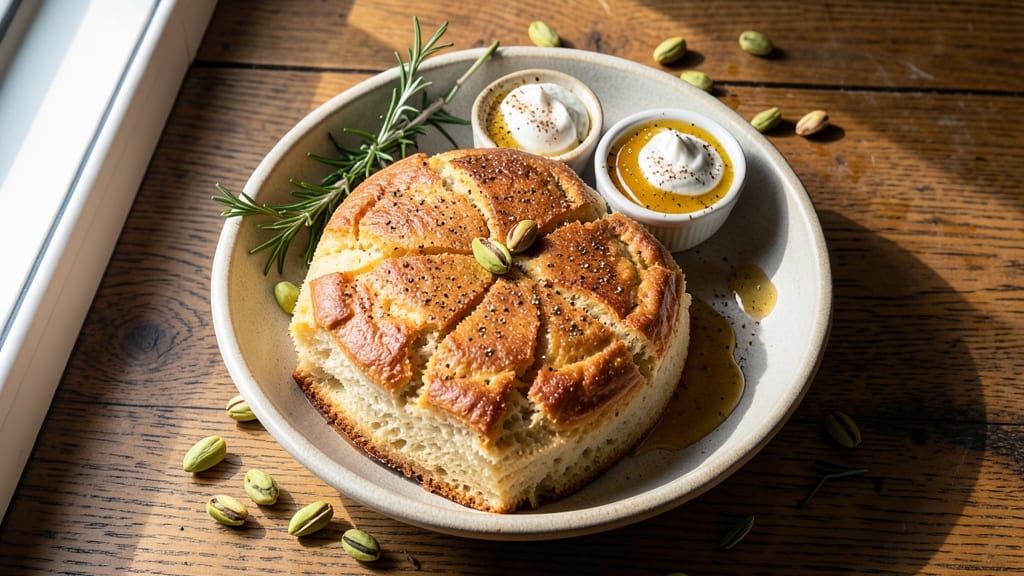
This Armenian sweet bread gata recipe brings a taste of tradition to your kitchen with its signature za'atar-spiced crust and honeyed pillowy softness. The delicate balance of warm spices and sweet honey creates a dessert that's both comforting and elegant—a staple in Armenian celebrations.
I've perfected this recipe to achieve that signature texture: tender, melt-in-your-mouth layers with a lightly crisp crust that holds up beautifully.
The magic happens in the dough, where butter and sugar create a light, airy crumb while za'atar adds an earthy, aromatic depth. Unlike many sweet breads, gata requires patience—allowing the dough to rise slowly develops its signature flavor and texture.
The result is a loaf that's both impressive and approachable, perfect for special occasions or a Sunday treat.
What makes this recipe special is how it captures the essence of Armenian baking traditions while being accessible for home cooks. The honey glaze adds a beautiful sheen and subtle sweetness that complements the spiced crust.
Each slice reveals layers of buttery richness and tender crumb, making it a dessert that's as satisfying to make as it is to eat.
Serve warm with a dusting of powdered sugar or a drizzle of honey for the full experience. This recipe yields a loaf that's perfect for sharing—ideal for family gatherings or when you want to bring a piece of Armenian heritage to your table.
Let's get started on creating this timeless sweet bread.
Ingredients for armenian sweet bread gata
Eight simple ingredients transform into a fragrant, melt-in-your-mouth Armenian sweet bread.
| Ingredient | Amount | Notes |
|---|---|---|
| All-Purpose Flour 🌾 | 4 cups | Sifted for light texture |
| Unsalted Butter 🧈 | 1 cup | Cold, cubed for dough |
| Granulated Sugar 🍚 | ¾ cup | Superfine preferred for smoothness |
| Za'atar Spice Blend 🌿 | 2 tbsp | Authentic Armenian blend |
| Large Eggs 🥚 | 2 whole | Room temperature for blending |
| Milk 🥛 | ½ cup | Warm for dough activation |
| Active Dry Yeast 🍞 | ¼ oz | 1 packet, dissolved first |
| Honey 🍯 | ½ cup | For glaze and dough enrichment |
| Vanilla Extract 🌸 | 1 tsp | Pure vanilla for depth |
| Salt 🧂 | ½ tsp | Fine sea salt preferred |
| Powdered Sugar 🍚 | ½ cup | For final dusting |
| Sesame Seeds 🌰 | 2 tbsp | Toasted for crust crunch |
Za'atar is the soul of this recipe—look for authentic blends at Middle Eastern markets or make your own with sumac, sesame, and oregano. Trader Joe's carries a decent version if you're in a pinch, but nothing beats the real deal. The butter needs to be cold when you start, or the dough gets too soft. I always use Plugrá brand for its high fat content—it makes the crust extra crisp. For the yeast, make sure it's fresh (test it in warm water—it should foam in 5-10 minutes).
No za'atar? Mix 1 tbsp each sumac, sesame seeds, and dried oregano as a substitute. Running low on honey? Maple syrup works in a pinch, though it has a different flavor profile. The dough is very forgiving—if it feels too sticky, add 1 tbsp more flour. For extra richness, some bakers add 1 tbsp sour cream to the dough. The sesame seeds can be swapped for poppy seeds if you prefer, but toast them first for that nutty crunch.
This dough needs time—let it rise overnight in the fridge for maximum flavor. The finished loaf keeps well wrapped at room temperature for 3 days or frozen for 3 months. I like to slice it fresh and warm it in the oven for 5 minutes before serving. The honey glaze sets quickly, so work fast when applying it. For special occasions, brush the crust with melted butter after baking for extra shine.
Why You'll Love This Recipe
- No-Knead Magic: I swear by this dough—just mix, rest, and roll. The butter and sugar dissolve into something so tender, you’ll forget you didn’t slave over it for hours. (Between us, I’ve burned a loaf of bread in my life. This one won’t judge.)
- Za’atar Kiss: That earthy, nutty za’atar blend? It’s the secret weapon. A pinch in the dough gives it this warm, herby depth that pairs perfectly with the buttery richness—like a hug in bread form. Honestly, I’d eat it plain just for the flavor.
- Breakfast to Dessert: Serve it toasted with jam for a lazy morning, or drizzle with honey and nuts for an after-dinner treat. The same dough works for both—no fancy swaps, just one recipe doing double duty. (Yes, even on a Tuesday night.)
- Budget-Friendly Staples: Flour, butter, sugar, eggs—these are pantry basics that won’t break the bank. A single batch stretches for days, and the leftovers? Perfect for quick toast or French toast. My wallet and I thank you.
Step-by-step instructions for Armenian sweet bread gata
Here's how to craft this iconic Armenian treat with a fragrant za'atar crust and melt-in-your-mouth center.
Activate the Yeast and Prepare the Dough Base
In a small bowl, combine the 0.5 cup warm milk with the 0.25 oz active dry yeast and 0.25 cup granulated sugar (half of the total). Let it sit for 5-10 minutes until frothy—this confirms your yeast is alive and ready to work. If it doesn't bubble, start over with fresh yeast.
In a large mixing bowl, whisk together the 4 cups all-purpose flour, 2 tbsp za'atar spice blend, 0.5 tsp salt, and the remaining 0.5 cup granulated sugar. Make a well in the center and pour in the yeast mixture along with the 2 whole eggs and 1 tsp vanilla extract. Mix with a wooden spoon until just combined—don't overwork the dough yet.
Incorporate Butter and Knead the Dough
Cut the 1 cup cold unsalted butter into small cubes and add them to the flour mixture. Use your hands to work the butter into the dough until it resembles coarse crumbs with pea-sized butter pieces. This cold butter creates the signature flaky layers.
Gradually add 0.5 cup milk (from the remaining amount) as needed to bring the dough together. Once it forms a shaggy mass, turn it out onto a lightly floured surface and knead gently for 3-4 minutes until smooth and elastic. The dough should be soft but not sticky—add more flour if needed. Shape into a ball, cover with plastic wrap, and let it rest at room temperature for 30 minutes.
First Rise and Layering Preparation
After the rest, divide the dough into 8 equal portions (about 4 oz each) and roll each into a 12-inch circle on a floured surface. For each circle, place 1 tablespoon honey in the center, then fold the edges toward the center to create a half-moon shape, sealing the honey inside. This creates the signature honey pocket.
Place the shaped dough pieces on a parchment-lined baking sheet, cover with a clean kitchen towel, and let them rise in a warm place for 1-1.5 hours until puffy. The dough should nearly double in size and have a slight spring when pressed gently.
Shape and Second Rise
Preheat your oven to 350°F. For each risen dough piece, gently press down to release air, then roll it into a 12-inch circle again. Brush the top generously with 0.25 cup honey (reserving a little for glaze later) and sprinkle with 1 tablespoon sesame seeds (half of the total). Fold the edges toward the center once more to seal, creating a neat half-moon shape.
Place the shaped gatas back on the baking sheet, cover with a towel, and let them rise for another 30-45 minutes until they've puffed slightly. The edges should look slightly rounded and the honey glaze should be bubbling at the edges—this is your cue they're ready for the oven.
Bake to Golden Perfection
Bake the gatas for 25-30 minutes until they're deep golden brown on top and the edges are set. For extra browning, you can broil for 1-2 minutes at the end—just watch them closely to prevent burning. The internal temperature should reach 190°F when checked with an instant-read thermometer.
Remove from the oven and immediately brush the tops with the remaining 0.25 cup honey mixed with 0.5 cup powdered sugar for a glossy finish. Let them cool on the baking sheet for 10 minutes before transferring to a wire rack. Serve warm with a dusting of powdered sugar—the contrast of the warm, pillowy interior with the nutty za'atar crust is pure magic.
Pro Tips For Making Armenian Sweet Bread Gata
- CHILL THE DOUGH: I learned this the hard way—skipping the 1-hour fridge rest makes the butter too soft when baking, and your gata will spread like a pancake instead of rising properly. Even if you're impatient (yes, even if), give it that hour—your bread will thank you with a proper crumb.
- USE COLD BUTTER: This isn’t the prettiest method, but it’s the tastiest: cut that unsalted butter into tiny cubes and toss it into the flour before adding wet ingredients. The cold butter creates pockets that melt into flaky layers—skip this, and you’ll end up with dense, greasy bread. (Your future self will thank you.)
- DON’T OVERMIX: After burning three batches, I finally figured out: once the dough comes together, stop mixing the second it holds. Overworking it develops gluten, and your gata will turn out tough instead of tender. Just press it into the pan once, then let the butter do its magic.
- PRESS THE DOUGH FIRMLY: Sounds weird, but it works: pack the dough into the pan with your hands, pressing down hard to eliminate air gaps. This ensures even baking and prevents pockets where the bread might stay undercooked. (I know, I know—it’s not the most elegant step, but it’s non-negotiable for that perfect texture.)
Regional styles of these flavors
Eastern Armenian Style
In Eastern Armenia, gata often includes a touch of cardamom (½ tsp per loaf) alongside za'atar for a floral depth that complements the honey.
The dough is traditionally shaped into a single large loaf rather than individual pieces, baked in a clay pot (tavuk) for an extra rustic texture. Look for Ararat brand honey from Armenia—its subtle floral notes elevate the flavor. 🌿
Western Armenian Tradition
Western Armenian gata, common in regions like Van, features poppy seeds instead of sesame for the crust, adding a nutty bite. The dough incorporates 1 tbsp sour cream for extra tenderness, and the honey glaze is often thickened with 1 tbsp cornstarch for a glossy finish.
Serve warm with clotted cream (mas) for a luxurious touch.
Syrian-Inspired Adaptation
For a Middle Eastern twist, replace za'atar with baharat spice blend (2 tbsp) and add 1 tbsp orange blossom water to the dough. The crust gets a crunchy pine nut topping (2 tbsp toasted), and the honey glaze includes 1 tsp rose water for a fragrant aroma.
This version pairs beautifully with mint tea. 🌸
Modern Armenian-American Fusion
Many Armenian-American bakers simplify the process by using store-bought puff pastry as the crust, spreading the honey-sweetened dough inside. Add 1 tsp cinnamon to the dough for warmth and top with chopped pistachios before baking. This version is perfect for busy weeknights but still delivers that signature honeyed softness.
Lebanese Gata Variation
In Lebanon, gata is often baked in individual ramekins, creating mini loaves with a caramelized sugar crust. The dough includes 1 tbsp lemon zest for brightness, and the honey glaze is thickened with 1 tbsp tahini for a nutty richness.
Serve with whipped yogurt for dipping—a popular street food in Beirut.
Turkish-Inspired Gata
Turkish gata, known as kaymaklı kurabiye, replaces honey with clotted cream (kaymak) folded into the dough, giving it a velvety texture. The crust is sprinkled with crushed pistachios and baked until golden.
This version is less sweet and more buttery, often served with black tea during afternoon breaks. 🍵
Nutrition facts
Frequently asked questions
Can I make gata without za'atar?
If you can't find za'atar, create your own blend with 1 tbsp sumac, 1 tbsp sesame seeds, and 1 tsp dried oregano. For a sweeter alternative, try 1 tsp cinnamon mixed with 1 tsp cardamom—this works beautifully in the crust. The key is balancing earthy and sweet notes to complement the honey.
How do I store leftover gata?
Wrap cooled gata tightly in plastic wrap or place in an airtight container to preserve freshness. It stays delicious at room temperature for 3 days. For longer storage, freeze slices wrapped individually—they'll keep for 3 months. To revive, warm frozen slices in the oven at 300°F for 5-7 minutes until soft.
Why did my gata turn out dense instead of fluffy? Dense gata usually means the dough overworked or didn't rise enough.
Can I bake gata in a home oven instead of a tavuk?
Yes! Home ovens work perfectly. For best results, bake on the middle rack at 350°F for 25-30 minutes until golden brown. Place the baking sheet on a lower rack if your oven runs hot. For extra crispness, brush the crust with melted butter after baking. The honey glaze should be applied immediately after removing from the oven for that signature shine.
What's the best way to serve gata?
Serve warm with a dusting of powdered sugar or a drizzle of extra honey. For a traditional touch, pair with Armenian clotted cream (mas) or a cup of spiced tea. The contrast of warm gata with cool cream creates a magical experience. You can also slice it into triangles for easy sharing at gatherings.