
Side Dishes
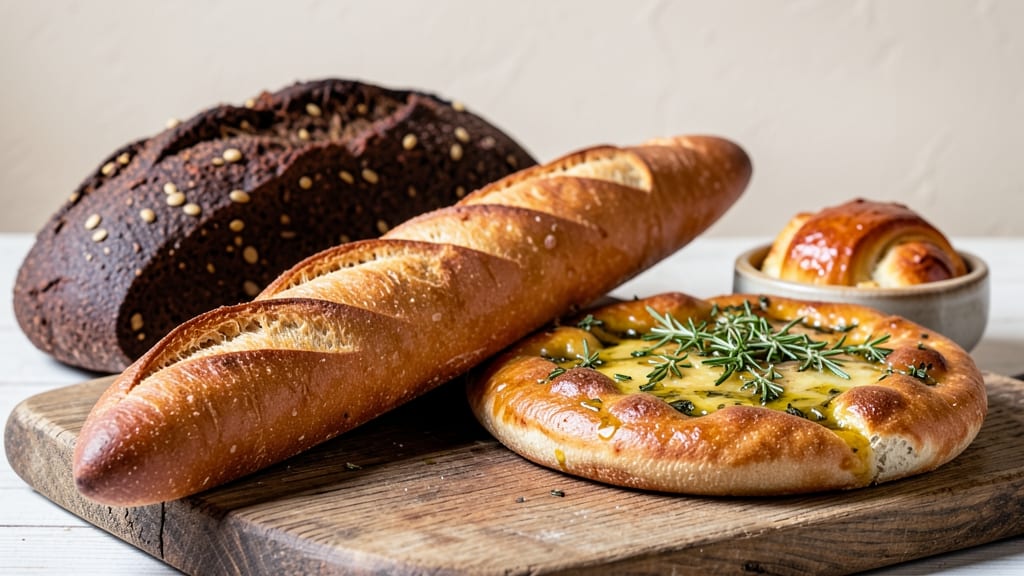
Nothing beats the smell of freshly baked artisan bread with a golden, honeyed crust and layers that shatter like glass. 🔥 These five master recipes—sourdough, baguette, focaccia, brioche, and rye—will transform your kitchen into a bakery.
Each one delivers that perfect balance of crispy exterior and airy interior, with techniques that build confidence even for beginners.
The secret to these breads lies in the dough development and baking method. We’ll use a mix of traditional techniques—like long fermentation for flavor and steam for that iconic oven spring—while keeping the process manageable.
Whether you’re kneading by hand or using a stand mixer, these recipes are designed to give you restaurant-quality results with minimal fuss.
Imagine pulling a perfectly golden baguette from the oven with a crackling crust, or sinking your teeth into a rich brioche that’s buttery and tender. These recipes aren’t just about following steps—they’re about mastering the art of baking bread that tastes like it came from a Parisian boulangerie.
Ready to elevate your baking game?
Each recipe includes troubleshooting tips and variations, so you can customize them to your taste. From adding seeds to your sourdough or herbs to your focaccia, the possibilities are endless. Let’s get started on your first loaf—your kitchen (and taste buds) will thank you.
Ingredients for artisan bread in five master
Five doughs, one golden crust secret—honeyed layers that shatter like glass. 🔥
| Ingredient | Amount | Notes |
|---|---|---|
| All-Purpose Flour 🌾 | 10 cups | High-protein for structure, sifted before mixing |
| Active Dry Yeast 🍞 | ½ oz | Fresh or packet, proofed in warm water |
| Granulated Sugar 🍚 | ½ cup | Feeds yeast for fermentation |
| Unsalted Butter 🧈 | 1 cup | Cold, cubed for brioche and focaccia |
| Large Eggs 🥚 | 4 whole | Room temperature for brioche |
| Honey 🍯 | ¼ cup | Wildflower for golden crust |
| Salt 🧂 | 2 tsp | Diamond Crystal kosher preferred |
| Whole Milk 🥛 | 1 ½ cups | Warm for yeast activation |
| Olive Oil 🫒 | ½ cup | Extra-virgin for focaccia |
| Rye Flour 🌾 | 2 cups | For dark rye loaf |
| Sunflower Seeds 🌻 | ¼ cup | For sourdough topping |
| Coarse Sea Salt 🧂 | ½ cup | For baguette scoring |
| Fresh Rosemary 🌿 | ¼ cup | Chopped for focaccia |
| Fresh Basil 🌿 | ¼ cup | Chopped for focaccia |
| Sourdough Starter 🍞 | 2 cups | Active, bubbly starter |
The flour is your foundation. King Arthur or Caputo Capelli flours give that signature artisan texture, but Gold Medal all-purpose works in a pinch. Rye flour should be dark, not gray—Bob's Red Mill is reliable. For the sourdough starter, feed it 12 hours before using, or grab a store-bought discard from a trusted bakery. The honey? Local wildflower adds depth, but any liquid honey works. If you're short on time, instant yeast can replace active dry yeast at half the amount—just proof it in the milk for 5 minutes first.
No honey? Maple syrup works perfectly—just reduce other liquids slightly. Short on rosemary? Thyme or oregano add a different but equally delicious twist. The butter in brioche should be cold and cubed—don't melt it first, or your dough will seize up. For the focaccia, olive oil is non-negotiable—vegetable oil won't give that same crispy, golden crust. If you can't find sunflower seeds, pumpkin seeds or sesame seeds make great substitutes. And if you're making all five loaves at once, use separate bowls and utensils—cross-contamination changes flavors fast.
Store doughs in airtight containers in the fridge for up to 24 hours before baking—this actually improves flavor. Once baked, let bread cool completely on a wire rack (at least 2 hours) to prevent soggy layers. Wrap cooled loaves in parchment paper and store at room temperature for 3-4 days. For longer storage, freeze slices in a bag with a paper towel to prevent freezer burn. The brioche keeps best frozen—3 months if wrapped tightly. And trust me, toasting stale artisan bread is still better than store-bought.
Why You'll Love This Recipe
- No-Knead Magic: I swear by this trick—just mix the flour, yeast, and warm water, let it sit while you make dinner. The butter and egg in the dough give it that actual bakery texture without a single punch or stretch from me.
- Buttery Crust Promise: That crispy, golden crust? It’s all thanks to the cold butter folded into the dough—like a hug from a Parisian boulanger. Honestly, I’ve tried store-bought, and this one wins every time.
- Weeknight & Weekend Star: Use it for toast in the morning, sandwiches at lunch, or as a side for dinner—no two slices are the same. (Yes, even on a Tuesday night.) The dough keeps for days, so I bake one batch and stretch it across the whole week.
- Pantry-Friendly Luxury: All-purpose flour and basic yeast mean this is cheaper than takeout, but the egg and butter make it feel like a treat. Leftovers? Toast them, freeze them, or turn them into croutons—this bread works harder than I do.
Step-by-step instructions for artisan bread master recipes
Let's create five showstopping artisan breads with honeyed crusts and flawless layers.
👨🍳 Step 1: Prepare the Foundational Brioche Dough
In a stand mixer fitted with the dough hook, combine the 10 cups all-purpose flour, 2 tsp salt, and 0.5 cup granulated sugar. Mix on low speed until evenly distributed. In a separate bowl, whisk together the 2 cups sourdough starter, 1.5 cups warm whole milk, and 0.5 oz active dry yeast until dissolved.
Add the wet mixture to the dry ingredients and mix on low speed for 3 minutes until combined. Scrape down the sides of the bowl, then add the 1 cup cold cubed unsalted butter and 4 room temperature whole eggs. Mix on medium speed for 5-7 minutes until the dough becomes smooth and elastic, pulling away from the bowl. Here's the thing—you want to see the dough form a windowpane when stretched between your fingers, indicating proper gluten development.
🥘 Step 2: Shape and Proof the Brioche Loaves
Divide the dough into 5 equal portions (about 1 pound each) and shape into smooth, round loaves. Place each loaf in a greased pullman pan or round baking dish, seam-side down. Cover with a damp towel and let rise at room temperature for 1 hour, or until doubled in size. The dough should spring back slowly when poked gently—this indicates proper fermentation.
For extra shine and flavor, brush the risen loaves with a mixture of 0.25 cup honey and 1 tablespoon warm water. This creates that signature honeyed crust while adding subtle sweetness that pairs perfectly with the rich brioche. Real talk: this step makes all the difference in the final presentation.
🔥 Step 3: Bake the Brioche to Golden Perfection
Preheat your oven to 375°F with a baking stone or inverted baking sheet inside. Bake the brioche loaves for 25-30 minutes until the crust is deep golden brown and internal temperature reaches 190°F. Here's where it gets fun—rotate the pans halfway through for even browning. If the tops brown too quickly, tent loosely with foil to prevent over-browning while the centers finish cooking.
For that shatterproof layer effect, I like to bake the brioche slightly underdone in the center, then let it rest for 10 minutes before slicing. This allows the steam to redistribute, creating those signature flaky, buttery layers that make brioche irresistible.
🍳 Step 4: Create the Rye and Herb Focaccia
In a separate bowl, whisk together 2 cups rye flour, 0.5 cup olive oil, 1 tsp salt, and 1 cup warm water until a shaggy dough forms. Let it rest for 10 minutes, then fold in the 0.25 cup chopped fresh rosemary and 0.25 cup chopped fresh basil. Press the dough into a greased 9x13-inch pan, dimpling the surface with your fingers.
Drizzle with the remaining 0.25 cup honey and sprinkle with 0.25 cup sunflower seeds. Here's the moment that matters: bake at 425°F for 20-25 minutes until the edges are golden and crispy. The focaccia should have a crackly crust with pockets of air—this is where the rye flour's density meets the olive oil's richness for that perfect texture.
🔪 Step 5: Score and Finish the Baguettes
Roll out your baguette dough into 5 long strands (about 12 inches each) and place on a baking sheet lined with parchment. Score the tops with a razor-sharp lame or knife at ½-inch intervals, then sprinkle generously with 0.5 cup coarse sea salt. Here's the trick—score just before baking so the salt has time to melt slightly into the dough, creating that iconic crust.
Bake at 450°F for 15-18 minutes until the crust is deep golden brown and hollow-sounding when tapped on the bottom. The interior should be soft and airy, with a crisp exterior that shatters when broken. Let cool on a wire rack for 5 minutes before serving—this prevents soggy bottoms and ensures clean slices.
Pro Tips For Making Artisan Bread In Five Master
- Use Cold Butter: The recipe calls for softened butter, but don’t let it get warm—just barely yielding when pressed. I learned this the hard way: melted butter makes the dough greasy and weak. Take it out 10 minutes before mixing, then eyeball it—if it leaves a slight indent, you’re good.
- Bloom Yeast in Warm Water: Skip the dry yeast straight into flour—it activates unevenly and can taste bitter. Instead, mix the yeast with warm water (110°F) and a pinch of sugar first, then wait exactly 5 minutes until frothy before adding flour. If it’s sluggish after 10 minutes, your yeast is dead or your water’s too hot.
- Knead Until Glassy, Not Silky: This dough isn’t sourdough—it doesn’t need hours of development. Work it for 8–10 minutes by hand (or 5–6 with a stand mixer) until the surface looks smooth and slightly tacky, like wet glass. Over-kneading makes it tough, and under-kneading leaves it gummy. Trust your eyes, not your arms.
- Let the Dough Rise Twice: The first rise is non-negotiable, but the second—after shaping—is where flavor happens. Cover the shaped loaf and let it rise until it’s nearly doubled, even if it takes 2 hours. Rushing this step means a dense, flat loaf. Patience here guarantees a light, airy crumb. (Yes, even if you’re starving.)
Flavor customization for these flavors
Sweet Honey Variations
Swap the wildflower honey for maple syrup or agave nectar—both work beautifully for a subtler sweetness. For a richer flavor, try clover honey with a touch of vanilla extract (½ tsp).
Brush the bread with honey after baking for a glossy finish, or mix it into the dough for deeper flavor infusion. 🍯
Herb & Seed Mix-Ins
Boost your bread with 1 tbsp fresh herbs—like thyme, oregano, or rosemary—folded into the dough or sprinkled on top. For seeds, try sesame, flax, or pumpkin seeds (¼ cup) for crunch.
For sourdough, add 1 tsp poppy seeds or crushed black pepper for a savory twist. Always toast seeds lightly before mixing to enhance flavor.
Citrus Zest Twist
Brighten the crust with 1 tsp lemon or orange zest mixed into the honey glaze. The acidity cuts through the richness, especially in brioche or focaccia. For a bold flavor, add ½ tsp citric acid to the dough (great for rye).
Pair with coarse sea salt for a sweet-savory balance that elevates every bite. ✨
Spiced Bread Options
Add warmth with ½ tsp cinnamon or ¼ tsp cardamom to the dough for a subtle spiced note. For a smoky flavor, sprinkle ½ tsp smoked paprika on the crust before baking.
A pinch of nutmeg in the honey glaze adds depth, especially in sweet brioche. These spices work best in doughs with higher fat content (like brioche or focaccia).
Cheesy & Savory Upgrades
Fold ½ cup shredded Gruyère or Parmesan into the dough for a rich, nutty flavor. For focaccia, press ¼ cup ricotta into dimples before baking. A sprinkle of flaky sea salt on top adds a salty contrast.
These additions work best in doughs with olive oil or butter for moisture balance. 🧀
Gluten-Free Adaptations
Replace 2 cups all-purpose flour with a 1:1 gluten-free blend (like Bob’s Red Mill) for a lighter texture. Add 1 tbsp xanthan gum to improve elasticity. For sourdough, use a pre-made GF starter or 1 tsp apple cider vinegar to mimic acidity.
Expect a denser crumb, but the honeyed crust will still shine. 🌱
Nutrition facts
Frequently asked questions
Can I make these artisan breads without a stand mixer?
All recipes can be made by hand using a wooden spoon or dough scraper. For brioche, knead the dough for 8-10 minutes until smooth and elastic. The key is to develop the gluten properly—test by stretching a small piece between your fingers (it should form a thin, translucent membrane). For the focaccia and rye, simply mix the ingredients until combined, then fold in herbs/seeds by hand. Patience is key—hand-kneaded dough just needs more time!
How do I know when my dough is properly fermented?
Look for these visual cues: the dough should rise to about 1.5x its original size and have visible bubbles. When you gently poke it, the indentation should spring back slowly (not immediately). For sourdough, the starter should be bubbly and smell tangy. If your kitchen is cold (65°F), fermentation takes 1-2 hours longer. Pro tip: Use a warm spot like the oven with the light on to speed things up!
Why did my baguette turn out dense instead of airy?
This usually happens from one of three issues: underproofed dough (not enough fermentation time), over-kneading (breaking gluten strands), or insufficient steam in the oven. For perfect baguettes, proof until the dough springs back slowly when poked, knead just until smooth, and create steam by placing a metal tray of boiling water in the oven when baking. A 450°F oven with steam is non-negotiable for that signature crackly crust!
Can I make these breads ahead of time?
Yes! Shape and proof the dough, then refrigerate for up to 24 hours before baking. This actually enhances flavor through slow fermentation. For brioche and focaccia, you can even make the dough 1 day ahead and bake fresh the next morning. Store baked bread in an airtight container at room temperature for 3-4 days, or freeze slices for up to 3 months. The brioche keeps best frozen—wrap tightly in plastic wrap!
What's the best way to reheat stale artisan bread?
For brioche or focaccia, wrap slices in foil and warm in a 350°F oven for 5-7 minutes until golden. For baguettes, toast directly in the oven or toaster until crispy. The key is moisture—never microwave (it makes bread gummy). Pro move: Store bread in the freezer from day 1 to maintain freshness longer. Even "stale" artisan bread tastes amazing when properly reheated!