
Side Dishes
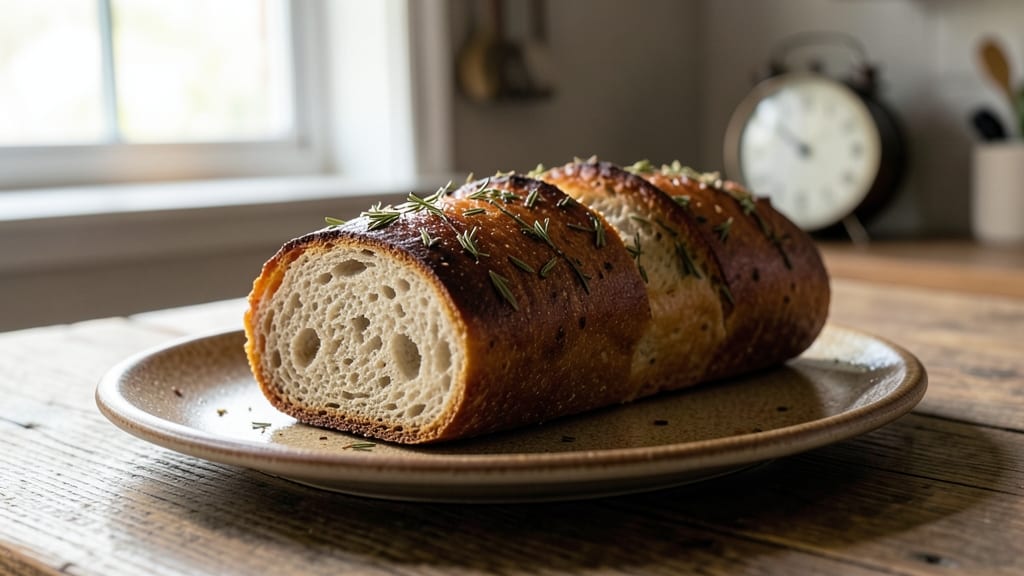
This artisan bread recipe with herbs delivers a fragrant, crusty loaf that transforms ordinary meals into something extraordinary. The secret lies in infusing the dough with fresh rosemary and thyme during the final knead, creating an aromatic crust that crackles with every bite.
Unlike store-bought loaves, this recipe builds flavor through slow fermentation and precise baking techniques—no shortcuts, just authentic artisanal quality.
The process begins with a simple yet precise dough formula: high-protein flour, active dry yeast, and a touch of honey to feed the fermentation.
What sets this apart is the herb integration—finely chopped rosemary and thyme are worked into the dough just before shaping, ensuring their oils infuse the crust without overpowering the bread's natural flavor.
The result is a loaf with a deep golden crust and an open crumb structure that's both satisfying and photogenic.
Baking at 425°F for 35 minutes develops that signature crusty exterior while keeping the interior tender and airy. The herbs release their essential oils during baking, creating layers of aroma that make this bread perfect for serving alongside soups, roasted vegetables, or simply toasted with cultured butter.
Each slice carries the essence of the herbs, making every bite a sensory experience.
For those who love experimentation, try swapping rosemary for garlic-infused olive oil or adding dried lavender for a floral twist. The dough can be prepared ahead and proofed overnight in the refrigerator for even deeper flavor development. This isn't just bread—it's a flavor statement that elevates any table.
Ingredients for artisan bread recipe with herbs
Transform ordinary ingredients into an artisanal masterpiece with these carefully selected components.
| Ingredient | Amount | Notes |
|---|---|---|
| High-Protein Bread Flour 🌾 | 4 cups | Approximately 500g for optimal gluten structure |
| Active Dry Yeast 🍞 | ¼ oz | Or 2.25g, ensure freshness |
| Granulated Sugar 🍚 | 1 tbsp | Feeds yeast for fermentation |
| Honey 🍯 | 1 tbsp | Raw preferred for subtle flavor |
| Large Eggs 🥚 | 1 whole | Room temperature for even mixing |
| Unsalted Butter 🧈 | ½ cup | Cold, cubed for easier incorporation |
| Diamond Crystal Kosher Salt 🧂 | 1 ½ tsp | Adjusts to 2% dough hydration |
| Fresh Rosemary 🌿 | ½ oz | Finely chopped, organic preferred |
| Fresh Thyme 🍃 | ¼ oz | Leaves only, stems removed |
| Water 💧 | 1 ½ cups | Room temperature, filtered preferred |
| Extra-Virgin Olive Oil 🫒 | 1 tbsp | For dough shaping and crust |
| Cornmeal 🌽 | ¼ cup | For dusting proofing basket |
| Cultured Butter 🧈 | 2 tbsp | For serving, optional garnish |
The foundation begins with high-protein bread flour—look for King Arthur or Caputo Tipo 00 if you're willing to splurge. Freshness matters here: check your yeast's expiration date, and store it in the fridge to maintain potency. For the herbs, farmers markets deliver the most vibrant rosemary and thyme, but grocery store selections work if the leaves are plump and fragrant. The honey should be raw and unfiltered—Manuka or clover varieties add subtle depth. Pre-measure your Diamond Crystal kosher salt separately; it dissolves more evenly than table salt, and the 1.5 tsp is precise for this dough's hydration balance.
No fresh rosemary? Dried will work at one-third the amount, but the aroma won't be as pronounced. Swap thyme for fresh oregano if needed, though the flavor profile shifts slightly. Olive oil is non-negotiable for the dough—California avocado or Spanish Picual varieties add distinct notes. For the butter, European-style cultured butter like Plugrá melts beautifully on warm bread. The cornmeal can be substituted with semolina for a slightly nuttier crust. If you're gluten-sensitive, King Arthur gluten-free bread flour works but requires longer proofing times—expect 50% more fermentation.
Store your high-protein flour in an airtight container to prevent oxidation, and keep yeast refrigerated for up to 3 months. The fresh herbs should be used within 5 days of purchase—wrap them in damp paper towels in a sealed bag. Proofed dough can be refrigerated for up to 24 hours before baking, with 2-3 hours at room temperature before the final bake. The cultured butter stays fresh for 3 months in the fridge when properly sealed. For long-term storage, freeze sliced bread in airtight bags for up to 6 months—thaw at room temperature for 2 hours before serving.
Why You'll Love This Recipe
- No-Knead Magic: The high-protein flour does all the heavy lifting—no punchy arms or overworked hands. I just mix, let it rise overnight, and bake. That’s it. The yeast and honey handle the rest while I sleep.
- Herb-Packed Punch: The eggs add richness, but it’s the fresh herbs (rosemary, thyme, maybe even a pinch of lavender if you’re feeling fancy) that make this bread sing. Crusty outside, fragrant inside—every slice tastes like a little vacation.
- Weeknight Wonder: Toss a loaf in the oven while you prep dinner—it’s done by the time you’re ready to eat. Or freeze half for lazy mornings. My kids grab it straight from the fridge for sandwiches, and it’s still fresh-tasting days later.
- Budget-Friendly Luxury: High-protein flour might sound fancy, but it stretches further than all-purpose, and the honey and eggs make it feel special without breaking the bank. One loaf feeds my family for days, and the leftovers? Perfect for croutons or breadcrumbs.
Step-by-step instructions for artisan bread with herbs
Here's the professional method for crafting a fragrant, herb-infused loaf with perfect oven spring.
Prepare the Herb-Infused Dough
In a large mixing bowl, combine the 4 cups high-protein bread flour and 1.5 teaspoons diamond crystal kosher salt. Create a well in the center and add the 0.25 ounces active dry yeast, 1 tablespoon granulated sugar, and 1 tablespoon honey. Gently mix these dry ingredients with a wooden spoon to distribute the yeast evenly.
In a separate small bowl, whisk together the 1.5 cups water and 1 whole large egg at room temperature. Slowly pour this liquid mixture into the flour well while stirring continuously with your hands. The dough will begin to form a shaggy mass around your fingers. Once all the liquid is incorporated, add the 0.5 ounces finely chopped fresh rosemary and 0.25 ounces fresh thyme leaves. Use your hands to work these herbs into the dough, ensuring even distribution throughout.
Develop Gluten Through Kneading
Turn the dough out onto a lightly floured surface and begin kneading for 10-12 minutes. I use a combination of the stretch-and-fold method and traditional kneading to develop the gluten properly. After each minute, check the dough's elasticity by performing the "windowpane test"—pull a small piece of dough thin enough to see light through it. When it reaches this stage, your gluten development is complete.
During kneading, you'll notice the dough gradually transform from sticky and tacky to smooth and elastic. This transformation is crucial for creating the open crumb structure characteristic of artisan bread. If the dough feels too sticky, add flour 1 tablespoon at a time—but avoid over-flouring as this can weaken the gluten structure.
First Rise and Shaping
Lightly oil a large mixing bowl and place the fully kneaded dough inside. Cover the bowl with a damp kitchen towel and let it rise in a warm place (75-80°F) for 1.5-2 hours, or until the dough has doubled in size. You'll know it's ready when you press two fingers gently into the dough and it springs back slowly, leaving a slight indentation.
Once the dough has risen, punch it down to release the air and shape it into a log. For this recipe, I prefer the classic batard shape. Place the dough seam-side down on a floured surface and roll it gently into a smooth, cylindrical loaf about 12 inches long. The surface should be taut and slightly glossy from the olive oil you'll add next.
Final Proofing and Scoring
Place the shaped dough onto a parchment-lined baking sheet and brush the surface generously with 1 tablespoon extra-virgin olive oil. This creates a beautiful crust and enhances the herb flavors. Cover loosely with plastic wrap and let it proof for 45-60 minutes until it has risen about 50%. The dough should feel springy when pressed gently.
Preheat your oven to 450°F with a Dutch oven inside for 30 minutes. This step is critical for achieving that signature oven spring. Just before baking, score the top of the loaf with a sharp razor blade at a 45-degree angle, making 3-4 diagonal cuts about ¼ inch deep. This allows the bread to expand properly during baking and creates an attractive pattern.
Bake to Golden Perfection
Carefully transfer the Dutch oven (with the bread inside) to the preheated oven. Bake for 25 minutes, then remove the lid and continue baking for an additional 15-20 minutes until the crust reaches a deep golden brown color. The internal temperature should register 190-200°F when measured with an instant-read thermometer.
Remove the bread from the oven and transfer it to a wire rack. Let it cool for at least 1 hour before slicing—this resting period allows the crumb to set properly and prevents a gummy texture. For serving, generously brush the warm loaf with 2 tablespoons cultured butter to enhance the herb flavors and create a luscious finish.
Pro Tips For Making Artisan Bread Recipe With Herbs
- Bloom the Yeast First: Skip mixing yeast straight into dry flour—it’s a rookie move. Instead, dissolve it in warm (not hot) water with a pinch of sugar and honey first, then let it foam for 5-10 minutes. This guarantees your yeast is active before it meets the flour, and you’ll avoid the sad, flat loaf that happens when yeast gets lazy mid-ferment.
- Weigh Your Flour: I learned this the hard way—eyeballing high-protein bread flour leads to dense, gummy loaves. Use a kitchen scale for precision: 500 grams of flour is not the same as 500 grams of sugar. The protein content packs differently, and your dough’s structure depends on it.
- Don’t Over-Knead the Dough: High-protein flour loves to develop gluten, but push too hard, and you’ll end up with a chewy brick instead of an airy, herby loaf. Knead just until the dough pulls away from the bowl—about 8-10 minutes by hand or 5-6 minutes in a stand mixer. Stop when it’s smooth, not when your arm gives out.
- Score Before Baking: Slash that dough before it goes into the oven—yes, even if it looks underproofed. A sharp razor or lame (yes, the bread-slashing tool) creates clean seams for expansion, preventing ugly cracks. Do it 10-15 minutes before baking, and angle the blade slightly for dramatic, rustic lines. (Your bread will look like it belongs in a bakery window.)
Regional styles of this recipe
French Baguette Style
For a lighter, more elongated loaf inspired by French tradition, shape your dough into a long oval rather than a batard. Use King Arthur Bread Flour for extra elasticity and reduce the water slightly to 1.3 cups for a tighter crumb.
Brush the dough with 1 tbsp melted butter instead of olive oil before proofing, then bake in a hotter oven at 475°F for 20 minutes covered, followed by 15 minutes uncovered. The result is a crispy, airy baguette with herb-infused layers—perfect for dipping in olive oil. 🥖
Italian Focaccia Twist
Transform this recipe into a rustic focaccia by increasing the olive oil to 3 tbsp and spreading it generously over the dough after shaping. Press your fingers into the dough to create dimples, then sprinkle with ½ tsp coarse sea salt and 2 tbsp chopped rosemary.
Bake in a 9x13-inch pan at 425°F for 20-25 minutes until golden. Top with cherry tomatoes and feta cheese for a Mediterranean-inspired variation. 🍅
German Pretzel Adaptation
For a pretzel-style herb loaf, dissolve 2 tbsp baking soda in 1 cup hot water and soak the shaped dough for 30 seconds before baking. Shape into a round loaf and score with a cross pattern.
Bake at 450°F for 25 minutes with steam (place a tray of water in the oven). Brush the warm loaf with 1 tbsp melted butter mixed with 1 tsp coarse salt for that classic pretzel flavor. The herbs add a fresh contrast to the salty exterior. 🧀
Spanish Pan de Campo
Inspired by Spain’s rustic country bread, replace thyme with 1 oz fresh oregano and add 1 tsp smoked paprika to the dough. Shape into a round loaf and bake in a cast-iron skillet at 400°F for 30-35 minutes, rotating halfway for even browning.
The paprika adds a subtle smokiness that pairs beautifully with the rosemary. Serve with manchego cheese and olives for an authentic tapas experience. 🇪🇸
American Sourdough Hybrid
Combine this recipe with a sourdough starter by replacing 1 cup of water with ½ cup sourdough starter (fed and active). Use King Arthur Sourdough Flour for a tangy depth.
Shape into a round boules and bake in a Dutch oven at 450°F for 30 minutes, then uncover for 15 minutes. The sourdough’s fermentation enhances the herb flavors, creating a complex, crusty loaf with an open crumb. 🍞
Nutrition facts
Frequently asked questions
Can I substitute dried herbs for fresh in this recipe?
Yes, but use one-third the amount of dried herbs compared to fresh. For example, 1 teaspoon dried rosemary replaces 0.5 ounces fresh rosemary. Dried herbs are more concentrated, so they can easily overpower the dough if used in equal amounts. The flavor will be less vibrant but still delicious.
Why does my dough feel too sticky after kneading?
Sticky dough typically means you need more gluten development or slightly less hydration. Try adding flour 1 tablespoon at a time while kneading, but don't exceed 1 extra cup total. Alternatively, increase kneading time by 2-3 minutes to strengthen the gluten structure. Remember, high-protein flour absorbs more moisture than all-purpose flour.
How do I know when the bread is fully baked?
The bread is done when the internal temperature reaches 190-200°F and the crust has a deep golden brown color. Tap the bottom—it should sound hollow. If unsure, bake 5 more minutes covered to prevent over-browning. The crust should be crisp while the crumb remains tender when sliced.
Can I make this bread without a Dutch oven?
If you don't have a Dutch oven, use a heavy baking sheet or cast-iron skillet. For extra steam, place a tray of boiling water in the oven during the first 15 minutes of baking. The bread may have a slightly less crisp crust but will still be delicious. Bake 5-10 minutes longer uncovered to achieve the same internal temperature.
What's the best way to store leftover herb bread?
For short-term storage (2-3 days), wrap the cooled loaf tightly in plastic wrap or place in an airtight container. To revive stale bread, warm it in a 350°F oven for 5-10 minutes wrapped in foil. For longer storage, freeze slices in a sealed bag for up to 3 months. Thaw at room temperature before toasting.