
Side Dishes
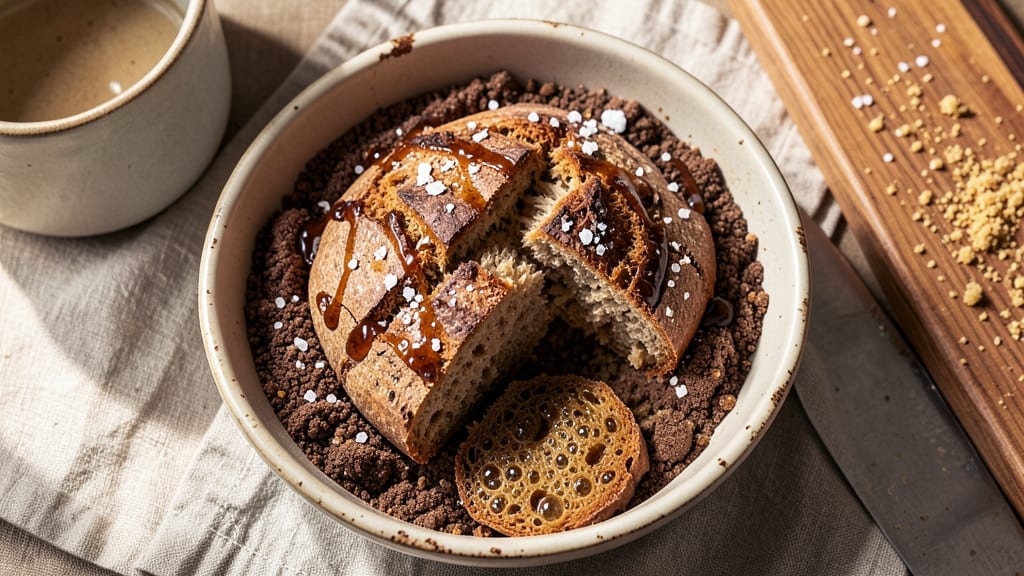
This artisan sourdough rye bread recipe delivers a deep molasses crust with a tangy, open crumb that rivals any bakery loaf. The secret lies in balancing rye's natural density with a lively sourdough starter, creating a loaf that's both hearty and airy—perfect for sandwiches or toast.
I've perfected this method over years of baking, ensuring every slice delivers that signature rye flavor with a satisfying chew.
The process begins with cultivating a robust sourdough starter, which adds complexity and depth to the rye's earthy notes. From there, we incorporate a pre-fermented dough that develops flavor while remaining manageable, followed by a cold proof for better texture.
Precision in shaping and scoring ensures an even bake with that coveted crackly crust. This isn't just bread—it's a labor of love that transforms simple ingredients into something extraordinary.
What sets this recipe apart is the molasses crust, which adds a subtle sweetness that contrasts beautifully with the tangy crumb. The dough's long fermentation creates a light yet dense structure, while the rye flour contributes a rich, malty flavor.
Whether you're a seasoned baker or trying sourdough for the first time, this method is designed to deliver restaurant-quality results at home.
Ready in about 24 hours (including fermentation), this loaf rewards patience with a crust that's crisp enough to stand up to butter and a crumb that's tender yet substantial.
The aroma alone as it emerges from the oven will have everyone gathered around your table. Let's get started on creating your perfect loaf.
Ingredients for artisan sourdough rye bread
Sixteen ingredients, twenty-four hours, one extraordinary loaf with a crust that crackles like autumn leaves.
| Ingredient | Amount | Notes |
|---|---|---|
| Active Sourdough Starter 🍞 | ½ cup | 100% hydration, bubbly and active |
| Rye Flour 🌾 | 3 cups | Dark or medium rye preferred |
| All-Purpose Flour 🌾 | 1 ½ cups | For structure and lift |
| Unbleached Bread Flour 🌾 | 1 cup | Enhances oven spring |
| Light Molasses 🍯 | ¼ cup | For deep crust flavor |
| Granulated Sugar 🍚 | 1 tbsp | Feeds yeast and browning |
| Sea Salt 🧂 | 1 ½ tsp | Diamond Crystal preferred |
| Instant Yeast 🍄 | ½ tsp | For reliable fermentation |
| Warm Water 💧 | 2 ½ cups | 95-100°F for ideal yeast activity |
| Honey 🍯 | 1 tsp | Balances molasses sweetness |
| Cornmeal 🌽 | ¼ cup | For dusting parchment |
| Ice Water ❄️ | ½ cup | For final dough temperature |
The rye flour is non-negotiable here—King Arthur or Bob's Red Mill are my go-tos, but any quality dark rye will do. That molasses? Grocery store brands work fine, but if you're splurging, grab fancy molasses from a specialty store—it makes a noticeable difference in crust depth. The sourdough starter needs to be fully active (look for bubbles at the surface and a slightly tangy aroma) or your loaf will lack that signature tang. If you're new to sourdough, King Arthur's starter kit is foolproof for beginners. And that ice water? Don't skip it—it's what keeps your dough from overheating during the final mix.
No rye flour? Substitute with whole wheat, though the flavor will be less complex. Short on molasses? Maple syrup at half the amount works in a pinch, but it won't give you that same deep, caramelized crust. The honey can be swapped for agave nectar if you're avoiding it, though I find honey's floral notes complement the molasses beautifully. For the flours, if you're missing bread flour, all-purpose plus 1 tsp vital wheat gluten mimics the structure. And if your yeast is old or inactive, proof it in warm water with a pinch of sugar for 5 minutes before adding to the dough—it'll wake up faster.
This dough is a patient's game. Once mixed, it needs 8-12 hours at room temp for bulk fermentation, followed by a 12-hour cold proof—set a timer so you don't forget. The shaped loaf keeps 3 days wrapped at room temp, but it's best sliced fresh. For freezing, wrap tightly in plastic and freeze the whole loaf—it'll stay fresh for up to 3 months. When reheating, 5 minutes at 350°F wrapped in foil restores that bakery-fresh crunch. And if anyone asks, yes, the smell alone is worth the wait.
Why You'll Love This Recipe
- Minimal Mixing Needed: I swear by this—just fold the rye flour and starter together twice, then let the dough do the work. No punchy kneading, no stress, just hands-off rising while you sip tea or scroll through your phone. The molasses adds depth without extra effort, and honestly? That’s my kind of baking.
- Earthy, Sticky Goodness: The rye flour gives it a deep, almost coffee-like richness, while the molasses caramelizes into a subtle sweetness that lingers. Toast it, and that crust turns into a crispy, molasses-kissed blanket—no butter needed. My husband steals slices straight from the loaf before breakfast.
- Weeknight Meal MVP: This bread doubles as a side, sandwich base, or even a crouton for soups. I keep a loaf in the freezer for lazy mornings—just toast it straight from frozen. It’s the kind of bread that makes your lunch feel special without trying too hard.
- Budget-Friendly Staple: Rye flour might seem fancy, but it stretches further than you’d think, and the starter is free once you’ve got it going. A single batch feeds my family for days—sandwiches, toast, or even crumbled into oatmeal. That’s 10 meals from one afternoon’s work.
Step-by-step instructions for artisan sourdough rye bread
Here's how to craft a rye loaf with a deep molasses crust and that signature tangy crumb.
Mix the Sourdough Starter and Hydrate the Flours
In a large mixing bowl, combine the 0.5 cup active sourdough starter, 2.5 cups warm water, 1 tbsp granulated sugar, and 1 tsp honey. Stir until the sugar and honey dissolve completely—this helps activate the yeast and balances the molasses' intensity. The starter should look slightly effervescent, with small bubbles forming along the edges.
Next, add 3 cups rye flour, 1.5 cups all-purpose flour, and 1 cup unbleached bread flour to the bowl. The rye flour will give your bread its signature dark color and deep flavor, while the bread flour adds structure. Mix everything together with a wooden spoon or dough whisk until you have a shaggy, sticky dough. The molasses will add a rich, almost caramel-like depth to the crust, so don't worry if the dough feels unusually wet at this stage.
Knead and Develop Gluten
Transfer the dough to a lightly floured surface and knead for about 5-7 minutes until it becomes smooth and elastic. You're aiming for a dough that's firm but still slightly tacky—rye dough is naturally denser than wheat-based doughs, so it won't be as light or airy. If the dough feels too sticky, wet your hands slightly as you knead to prevent it from sticking.
Here's the thing—rye dough doesn't rise as dramatically as wheat dough, but it still needs time to develop gluten for structure. After kneading, place the dough back in the mixing bowl, cover it with a damp towel, and let it rest for 30 minutes at room temperature. This resting period allows the gluten to relax and the dough to absorb more of the liquid, which is crucial for that perfect tangy crumb.
Autolyse and Add Salt and Yeast
After the 30-minute rest, return the dough to the floured surface and add the 1.5 tsp sea salt and 0.5 tsp instant yeast. The salt enhances the molasses flavor and controls yeast activity, while the instant yeast ensures reliable fermentation. Mix these in gently, just until combined—overworking the dough now can make it tough later.
Shape the dough into a loose round and place it back in the bowl. Cover with the damp towel again and let it ferment at room temperature for 1-2 hours, or until it has roughly doubled in size. You'll know it's ready when the dough feels light and springs back slowly when poked. This step is where the magic happens—the yeast and starter work together to create that signature tangy flavor and open crumb structure.
Shape and Cold Proof
Once the dough has fermented, turn it out onto a lightly floured surface and shape it into a round loaf. For a classic rye shape, fold the dough over itself a few times to tighten the surface and create tension. Place the shaped dough seam-side up in a lightly greased bowl, cover it, and refrigerate for 12-18 hours. This cold proofing step slows down fermentation, allowing the flavors to develop more deeply and the dough to become more manageable.
Here's where the molasses really shines—the longer cold fermentation enhances its caramel-like notes and balances the rye's natural sourness. The dough will rise slightly in the fridge, but it won't double like it would at room temperature. This controlled rise is key to preventing a dense crumb.
Score and Bake for a Deep Crust
Preheat your oven to 425°F with a Dutch oven inside for at least 45 minutes. This high heat is essential for creating that deep, molasses-rich crust. Once preheated, carefully remove the Dutch oven from the oven and transfer the cold dough to it, seam-side up. Dust the top of the dough with 0.25 cup cornmeal—this creates a crispy, golden crust and prevents sticking.
Score the dough with a sharp razor or lame in a decorative pattern—this allows the bread to expand properly and creates those beautiful, crispy crust edges. Bake the bread, covered, for 30 minutes, then remove the lid and bake for another 15-20 minutes until the crust is deep brown and almost black in spots. The molasses will caramelize beautifully, giving the crust that rich, almost candy-like flavor.
Let the bread cool on a wire rack for at least 1 hour before slicing. This resting period allows the crumb to set and the flavors to fully develop. The result? A loaf with a deep, molasses-infused crust and a tangy, open crumb that's perfect for sandwiches or enjoying on its own.
Pro Tips For Making Artisan Sourdough Rye Bread
- Hydrate the Rye First: Mix your rye flour with water before adding it to the dough—this prevents clumping and ensures even distribution. I learned this after scrapping a batch where the rye turned into a gluey mess; pre-hydrating keeps the texture consistent and the flavor balanced.
- Skip the Overproofing: Rye dough rises slower—don’t let it sit past the "poke test" (dent stays but doesn’t spring back). Overproofing turns your loaf dense and gummy, and no amount of baking fixes that. Trust your hands, not the clock.
- Use Molasses Sparingly: Light molasses adds depth, but too much makes the dough sticky and the crust bitter. Start with 1 tablespoon per pound of flour, then taste the dough before final kneading. You can always add more, but you can’t take it out.
- Steam the Oven: Place a metal tray on the oven floor before preheating, then add 1 cup of boiling water when loading the dough. The steam mimics a professional bake, giving you a crisp crust and an open crumb—no fancy equipment needed. (Yes, even if you’re impatient like me.)
Perfect pairings for this dish
Classic Pairings
This rye bread shines with smoked salmon and cream cheese—the tangy crumb cuts through the richness while the molasses crust adds a subtle sweetness. I love pairing it with lox and capers for a brunch spread that feels like a New York deli.
For a heartier option, try corned beef and mustard—the rye's density holds up perfectly to the juicy meat. 🥪
Cheese Boards
Use this bread as a base for aged cheddar, brie, and sharp gouda—the molasses crust adds a caramelized contrast to the creamy textures. I like to include dried apricots and walnuts for sweetness and crunch.
For a simpler board, just butter, honey, and sea salt highlight the bread's natural flavors without competition. 🧀
Breakfast Pairings
Toast thick slices and top with scrambled eggs, crispy bacon, and hot sauce for a breakfast sandwich that's anything but basic. The rye's chewiness balances the eggs perfectly. For something lighter, try avocado, radishes, and everything bagel seasoning—it's like a mini bagel but with deeper flavor. 🍳
Beverage Matches
A dark roast coffee with notes of chocolate and spice complements the molasses crust beautifully. I also love rye whiskey—the caramel and vanilla in the whiskey mirror the bread's flavors. For something lighter, sparkling apple cider cleanses the palate between bites. ☕
Sweet Applications
Slice the bread into thick rounds, toast lightly, and top with whipped cream, jam, and cinnamon for a dessert that feels indulgent but isn't. The molasses crust adds depth to peanut butter and banana toast, too. For a savory-sweet twist, try fig jam and prosciutto—it's a flavor bomb. 🍯
Meal Prep Uses
Pack slices with turkey, hummus, and pickles for a lunch that stays fresh for days. The rye's density keeps sandwiches from getting soggy. For dinner, use it as a grilled cheese base with sharp cheddar and caramelized onions—it's a game-changer. 🥪
Nutrition facts
Frequently asked questions
How do I know when my sourdough rye starter is ready?
Your starter should have visible bubbles along the surface and sides, and it should float in water when dropped in. It should also smell slightly tangy and sweet, not overly sour or alcoholic. For this recipe, use it when it's at its peak—usually after 4-6 hours of active feeding. If it's sluggish, feed it again with equal parts flour and water and wait another 2 hours.
Can I make this rye bread without a Dutch oven?
Yes, but you'll need to bake it differently. Preheat your oven to 450°F and place a baking stone or steel on the lowest rack. Bake the loaf on parchment paper for 20 minutes, then transfer to a wire rack and bake another 20-25 minutes until deeply browned. The crust won't be as crispy, but it'll still be flavorful. For extra steam, spray the oven walls with water during the first 10 minutes.
Why did my rye bread turn out dense instead of open?
Dense rye bread usually means the dough didn't ferment long enough or the gluten didn't develop properly. Try extending the bulk fermentation to 10-12 hours at room temperature, or increase the cold proof to 24 hours in the fridge. Also, ensure your starter is active—weak starter can't create enough gas. If the dough feels too sticky, add 1-2 tbsp extra flour during mixing.
How can I store this bread to keep it fresh longer?
Wrap the cooled loaf tightly in plastic wrap or place it in an airtight container with a slice of apple or lemon to absorb moisture. Store at room temperature for 3-4 days or freeze for up to 3 months. To revive frozen bread, thaw at room temperature for 1-2 hours or warm in a 350°F oven for 5 minutes wrapped in foil. The crust stays crispy when stored properly!
Can I substitute pumpernickel rye flour for regular rye?
Yes, but expect a slightly different flavor profile. Pumpernickel has a deeper, more intense rye taste due to its longer fermentation and molasses content. Use it in a 1:1 ratio, but reduce the added molasses to 1-2 tablespoons since pumpernickel already contains some. The crust will be darker and more robust, but the crumb may be denser. For best results, combine 2 cups pumpernickel with 1 cup regular rye flour.