
Side Dishes
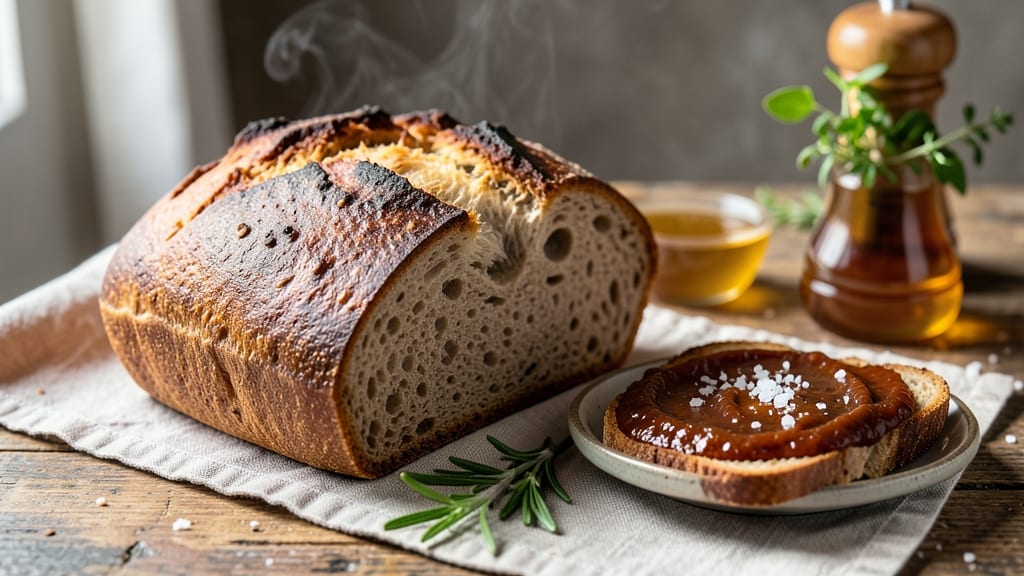
This Australia bread recipe transforms simple flour into a golden, crusty loaf with a Vegemite-infused twist that captures the essence of Aussie comfort food. 🌟 The secret lies in a slow fermentation process that develops deep flavor, while a crispy exterior gives way to a tender crumb—perfect for toast or sandwiches.
What makes this bread special is its ability to balance tradition with a modern twist, using pantry staples to create something truly memorable.
The recipe starts with a basic dough of flour, water, yeast, and a touch of sugar to activate fermentation. The real magic happens when you incorporate Vegemite into the dough, adding a savory depth that’s uniquely Australian.
Proofing the dough overnight allows the flavors to meld, resulting in a loaf that’s rich, aromatic, and impossible to resist. This method ensures a crusty crunch on the outside while keeping the inside soft and pillowy.
Baking at 375°F for 30-35 minutes delivers a loaf with a caramelized crust and a golden-brown hue that’s hard to resist. The Vegemite flavor is subtle but unmistakable, giving every slice a hint of umami that pairs perfectly with butter, jam, or even as a side to grilled meats.
Whether you're a bread enthusiast or just looking to try something new, this recipe delivers restaurant-quality results with minimal effort.
For added texture, consider sprinkling sesame seeds or poppy seeds on top before baking. This bread also freezes beautifully, making it an ideal make-ahead option for busy weeks. Ready to bake a loaf that tastes like a piece of Australia? Let’s get started!
Ingredients for australia bread
Simple flour, yeast, and Vegemite create Australia's iconic crusty bread with tender crumb inside.
| Ingredient | Amount | Notes |
|---|---|---|
| All-Purpose Flour 🌾 | 5 cups | Plus extra for dusting |
| Active Dry Yeast 🍞 | 2 ¼ tsp | Or 1 packet (2.25 tsp) |
| Granulated Sugar 🍚 | 1 tbsp | Activates yeast fermentation |
| Warm Water 💧 | 1 ½ cups | 110°F for yeast activation |
| Salt 🧂 | 1 ½ tsp | Diamond Crystal preferred |
| Vegemite 🍞 | 1 tbsp | Classic Aussie umami kick |
| Unsalted Butter 🧈 | ½ cup | Cold, cubed for texture |
| Sesame Seeds 🌰 | 2 tbsp | For golden crust finish |
| Poppy Seeds 🌱 | 1 tbsp | Optional decorative topping |
| Cornmeal 🌽 | ¼ cup | Prevents sticking on baking sheet |
| Olive Oil 🫒 | 1 tbsp | For dough handling |
The flour makes all the difference. King Arthur or Caputo Tipo 00 give the best texture—high protein for that crispy crust. Yeast is non-negotiable; Fresh yeast works too (use 1 oz instead of active dry). Vegemite is the soul of this bread—authentic Aussie brands like Kraft Original are best, but any good-quality Vegemite will do. The butter should be cold; European-style has higher fat content for better flavor. For the seeds, Trader Joe's has great sesame seeds in bulk bins—cheaper and fresher than individual packages.
No Vegemite? Miso paste at half the amount gives a similar umami depth, though the flavor won't be identical. Running short on butter? Olive oil at the same quantity works in a pinch, though texture will differ slightly. For the seeds, sunflower seeds make a nice crunchy alternative. The cornmeal is key—don't skip it. If you're using a dark baking sheet, line with parchment for easy removal. The dough will be sticky; wet your hands when handling it to prevent sticking.
This dough ferments best overnight, but up to 24 hours works too. Shape it into a round boule for classic texture or a batard for easier slicing. Store baked bread in a paper bag at room temperature for up to 5 days—it keeps best this way. For freezing, slice first and wrap tightly; toast directly from frozen for crispy results. The crust stays crispy for about 2 days if stored properly, but the interior stays soft for 5 days.
Why You'll Love This Recipe
- Pantry Staples Only: I swear by this recipe because it uses what’s already in my cupboard—no fancy imports or hard-to-find items. Just flour, yeast, sugar, water, and salt. That’s it. No last-minute grocery runs, no stress.
- Golden Crust Magic: The secret’s in the sugar and salt balance—it gives that perfect caramelized crust you’d pay extra for at a bakery. Honestly, the first time I pulled it out of the oven, my whole kitchen smelled like a warm bakery, and I nearly cried.
- Weeknight Workhorse: This bread is my go-to for sandwiches, toast, or even a quick side for dinner. It’s sturdy enough to handle thick fillings but soft enough to eat plain with butter. (Yes, even on a Tuesday night when I’m too tired to think.)
- Budget-Friendly Bulk: A single batch feeds my family for days—leftovers last because it doesn’t dry out. I make two loaves on Sunday, freeze one, and boom: fresh bread anytime. My wallet and my taste buds win.
Step-by-step instructions for Australia bread recipe
Here's how to craft this iconic Aussie bread with its signature Vegemite flavor and irresistible crunchy interior.
👨🍳 Step 1: Mix the Dough Base
In a large mixing bowl, combine the 5 cups all-purpose flour and 1.5 tsp salt. Make a well in the center and add the 2.25 tsp active dry yeast, 1 tbsp granulated sugar, and 1 tbsp Vegemite. The sugar activates the yeast while the Vegemite adds that distinctive umami flavor right from the start.
Pour in the 1.5 cups warm water (about 110°F—test by dropping a bit on your wrist, it should feel warm but not hot) and the 1 tbsp olive oil. Mix with a wooden spoon until a shaggy dough forms. The dough will be sticky, but that's normal—this is a wet dough that creates that signature open crumb.
🥘 Step 2: Knead and Incorporate Butter
Transfer the dough to a lightly floured surface and knead for about 5 minutes until smooth and elastic. I like to use my hands for this—press down, fold over, and turn the dough as you go. The dough should feel soft but not sticky when you're done.
Cut the 0.5 cup cold unsalted butter into small cubes and work them into the dough one piece at a time. Press each cube into the dough and knead until fully incorporated. The butter adds richness and creates those delicious pockets of flavor. Wrap the dough in plastic wrap and let it rest for 1 hour at room temperature. This resting period allows the gluten to relax and makes the next steps easier.
🔥 Step 3: Shape and Proof the Dough
After the dough has rested, punch it down to release any air bubbles. Divide the dough into 8 equal pieces (about 6 ounces each) and shape each into a ball. Arrange them in a single layer on a baking sheet lined with parchment paper, leaving about 2 inches between each ball. This gives them room to rise and expand during baking.
Cover the baking sheet loosely with a clean kitchen towel and let the dough proof for 1 to 1.5 hours until it has nearly doubled in size. You'll know it's ready when the dough feels light and springs back slowly when pressed gently with a finger. This proofing step is crucial for achieving that airy, open crumb structure that's so characteristic of this bread.
🍳 Step 4: Prepare for Baking
Preheat your oven to 375°F. Sprinkle the 0.25 cup cornmeal evenly over the baking sheet—this prevents the bread from sticking and adds a subtle flavor. Brush the tops of each dough ball with a little water to help the seeds adhere better.
Sprinkle 2 tbsp sesame seeds and 1 tbsp poppy seeds evenly over the dough balls. Press them gently into the surface so they stick. The sesame seeds add a nutty flavor and a beautiful golden finish, while the poppy seeds add a touch of sweetness and visual appeal. Bake for 25 to 30 minutes until the bread is golden brown and sounds hollow when tapped on the bottom.
⏰ Step 5: Cool and Serve
Remove the bread from the oven and let it cool on the baking sheet for 10 minutes. This allows the bread to set slightly and makes it easier to handle. Transfer to a wire rack to cool completely.
Serve the bread warm or at room temperature. The interior should be soft and slightly chewy, with a crispy crust that gives way to a tender crumb. The Vegemite flavor will be subtle but unmistakable, and the seeds will add a delightful crunch with every bite. Store any leftovers in an airtight container for up to 3 days, or freeze for up to 3 months for freshness.
Pro Tips For Making Australia Bread
- TEST YOUR YEAST FIRST: Skip the guesswork—mix 1 packet yeast with ¼ cup warm water and 1 tsp sugar. If it bubbles within 5 minutes, your yeast is alive. I learned this the hard way after baking a flat loaf because mine was old and dormant. (Yes, even if you’re impatient like me, wait.)
- WEIGH YOUR FLOUR: Scooping flour from the bag packs in air—use a kitchen scale for accuracy. Australia bread relies on tight dough structure, and even a 10-gram difference affects rise and texture. I was skeptical until I tried it; now I never go back.
- KNEAD UNTIL GLUTEN RELAXES: Stop when the dough springs back slowly (not instantly) when poked. Over-kneading makes gluten tough; under-kneading means a dense loaf. My grandmother swore by this, and she was right: the dough should feel like a soft, smooth pillow, not a rubber band.
- PROOF IN A WARM DRAWER: Skip the oven light—place the dough in a turned-off oven with a bowl of hot water for a consistent 85°F (29°C) environment. This cuts proofing time by 30% and guarantees a reliable rise. (Your future self will thank you for not eyeballing the kitchen counter.)
Regional styles of these flavors
Classic Damper
This traditional Australian bush bread dates back to the 1800s when gold miners relied on it for sustenance. Unlike our Vegemite twist, classic Damper uses just flour, water, milk, and salt, baked in campfire ashes or a Dutch oven.
The result is a dense, hearty loaf with a crispy exterior and soft interior—perfect for dipping in golden syrup or butter. 🌟
Sourdough Twist
For a tangy, artisanal version, replace the yeast with a sourdough starter (about ½ cup). Mix it into the dough base along with the Vegemite for a complex flavor profile. Proof the dough for 12-18 hours in the fridge for deeper fermentation.
This method mimics the slow-rise techniques of Australian artisan bakeries, delivering a crusty, open-crumb loaf with a subtle tang.
Anzac Biscuits
While not a bread, Anzac biscuits are a beloved Aussie treat with a similar cultural significance. For a hybrid version, add ½ cup golden syrup and ½ cup desiccated coconut to the dough.
Shape into small rounds and bake at 350°F for 12-15 minutes until golden. These biscuits were originally sent to soldiers during World War I—now they’re a staple at Aussie BBQs. 🍪
Pikelets (Australian Pancakes)
For a quick, savory side, turn this dough into pikelets—small, thick pancakes that are a breakfast staple in Australia. Divide the dough into 8 small balls, flatten slightly, and bake at 375°F for 10-12 minutes until golden.
Serve with Vegemite and butter or avocado and smoked salmon for a modern Aussie brunch. 🥞
Regional Seed Variations
In Western Australia, swap sesame seeds for linseed (flaxseeds) for a nuttier crunch. In Queensland, try sunflower seeds for a sweeter, toastier flavor.
For a Victorian touch, add crushed coriander seeds to the dough before baking—this adds a fragrant, citrusy note that pairs beautifully with the Vegemite. 🌱
Modern Fusion Breads
Get creative with global influences! Add 1 tbsp miso paste for an Asian-inspired umami boost, or 1 tsp smoked paprika for a Spanish twist. For a Mediterranean flair, mix in dried oregano and olive oil into the dough.
These variations keep the Aussie soul intact while adding exciting new layers of flavor. 🌎
Nutrition facts
Frequently asked questions
Why does this Australian bread recipe use Vegemite?
Vegemite is the heart of this recipe—it adds that signature umami-rich, savory depth that defines Aussie flavors. The small amount used (just 1 tbsp) infuses the dough without overpowering, creating a subtle but unmistakable taste that pairs perfectly with butter or jam. Think of it as Australia's answer to Marmite!
Can I make this bread without sesame seeds?
The sesame seeds add texture and flavor, but they're optional. Try poppy seeds, sunflower seeds, or even crushed coriander seeds for a different twist. For a seed-free version, simply skip them—the bread will still be delicious with just the Vegemite flavor.
How do I know when the dough is properly proofed?
The dough is ready when it has nearly doubled in size and springs back slowly when pressed gently with a finger. If it springs back quickly, it needs more time. Proofing at room temperature should take about 1-1.5 hours—don't rush it! Proper proofing is key for that signature open crumb.
What's the best way to store leftover Australian bread?
Store in a paper bag at room temperature for up to 5 days to keep the crust crispy. For longer storage, slice and freeze—this bread toasts beautifully straight from frozen! Wrap tightly in plastic or aluminum foil to prevent drying out.
Can I make this bread in a Dutch oven?
Yes! Shape the dough into a round boule and bake in a preheated Dutch oven at 425°F for 30 minutes, then remove the lid and bake 10 more minutes for a crispier crust. The Dutch oven creates steam that develops that iconic crusty exterior while keeping the interior tender.