
Side Dishes
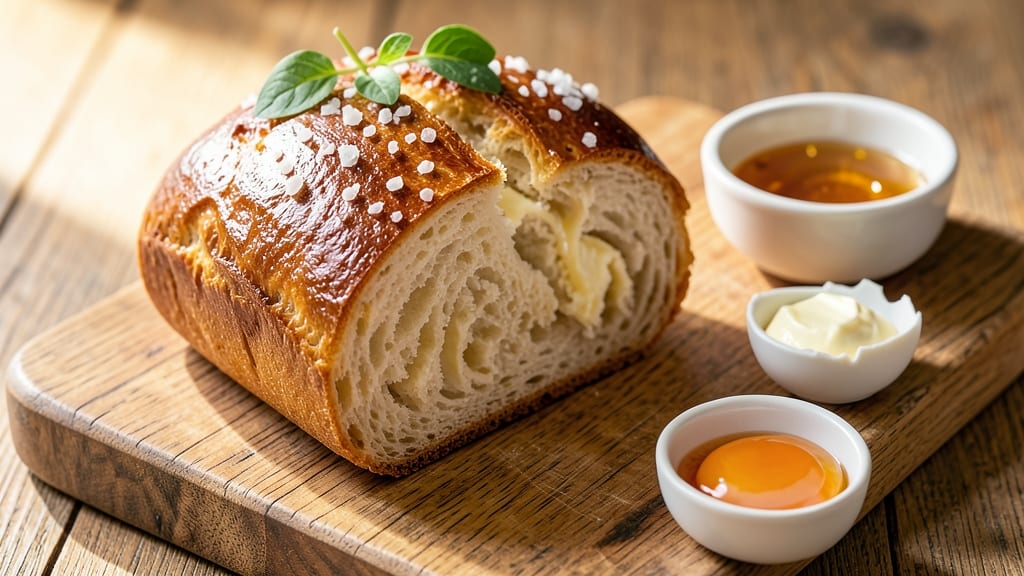
This authentic brioche bread recipe transforms simple ingredients into a luxurious loaf with layers of buttery richness and a golden, crackly crust. 🌟 The secret lies in the dough's high-fat content—eggs, butter, and flour working together to create that signature tender crumb and irresistible aroma.
Unlike lighter breads, brioche relies on precise technique: laminating cold butter into the dough and allowing it to proof slowly for maximum rise and flavor development.
What sets this recipe apart is its attention to traditional methods, inspired by French bakeries where brioche originated as a celebration bread. The dough begins with a simple mix of flour, milk, yeast, and sugar, but it's the addition of eggs and cold butter that elevates it to something extraordinary.
Each fold during kneading distributes the butter evenly, creating those coveted pockets of melt-in-your-mouth richness.
By the time it emerges from the oven, your brioche will boast a golden, crackly crust that gives way to a soft, pillowy interior with visible layers of butter. The scent alone—warm, buttery, and slightly sweet—will have everyone gathering around the table.
This isn't just bread; it's a centerpiece worthy of holidays, brunches, or simply indulging in a slice of toasted perfection.
Perfect for French toast, sandwiches, or serving alongside soups, this brioche delivers restaurant-quality results at home. The key to success? Patience—allowing the dough to proof properly ensures a light, airy texture rather than a dense loaf. Let's get started on creating your own artisanal masterpiece.
Ingredients for authentic brioche bread
Nine essential ingredients create a luxurious brioche loaf with signature buttery layers and golden crust.
| Ingredient | Amount | Notes |
|---|---|---|
| All-Purpose Flour 🌾 | 3 ½ cups | High-protein preferred for structure |
| Unsalted Butter 🧈 | 1 cup | Cold and cubed for laminating |
| Large Eggs 🥚 | 4 whole | Room temperature for even mixing |
| Whole Milk 🥛 | ¾ cup | Warmed to 100°F for yeast activation |
| Granulated Sugar 🍚 | ¼ cup | Fine grain for smooth texture |
| Active Dry Yeast 🍞 | 0.03 oz | 1 packet (2¼ tsp) for freshness |
| Diamond Crystal Kosher Salt 🧂 | ½ tsp | Fine grain for even distribution |
| Large Egg Yolks 🥚 | 2 whole | Reserved for dough enrichment |
| Granulated Sugar 🍚 | ¼ cup | For dough sweetness and crust |
| Cornmeal 🌽 | ¼ cup | For dusting proofing basket |
| Large Egg 🥚 | 1 whole | For egg wash finish |
| Coarse Sugar 🍚 | ⅛ cup | For decorative crust sprinkle |
The butter is non-negotiable—use European-style unsalted with at least 82% fat content for authentic richness. Plugrá or President brands excel, but any high-fat butter works. Keep it cold until the final fold to prevent melting during kneading. The flour should be high-protein (11-12%)—King Arthur or Gold Medal are reliable choices. Yeast freshness matters: if your packet's expiration is within 3 months, use it; otherwise, purchase a new one. For the milk, warming it to 100°F activates the yeast faster than room-temperature milk.
No unsalted butter? European-style salted butter works in a pinch, but reduce the salt to ¼ tsp in the dough. Substituting margarine is not recommended—the flavor and texture will suffer. Running short on eggs? Aquafaba (¼ cup per missing egg) mimics the fat content, though texture may vary slightly. For the sugar, turbinado or demerara can replace coarse sugar for the crust sprinkle, adding a caramelized depth. The cornmeal is optional but prevents sticking—semolina works equally well if preferred. Always proof yeast in warm milk (105-110°F) for 5-10 minutes before mixing to ensure it's active.
Store shaped brioche in an airtight container at room temperature for 2-3 days, covered with a clean kitchen towel to maintain moisture. For longer storage, wrap tightly in plastic wrap and refrigerate for up to 5 days, or freeze unbaked dough for 3 months—thaw overnight in the fridge before baking. The egg wash keeps best when refrigerated and used within 2 days. For maximum freshness, bake immediately after shaping. Leftovers toast beautifully—butter the toasted slices for that authentic French bistro experience.
Why You'll Love This Recipe
- Butter-Perfect Richness: I’ll admit—I was skeptical about brioche’s reputation for being finicky. But that first bite? The eggs and whole milk create this unreal tenderness, while the cold butter pockets melt into pure, buttery bliss. It’s the kind of bread that makes you pause mid-slice just to savor it.
- No-Knead Magic: Between us, kneading brioche used to stress me out. This method? Just mix, rest, shape—no punishing arm work. The dough comes together in minutes, and the slow rise does all the heavy lifting while you sip coffee or scroll. Honestly, it’s the kind of recipe that makes baking feel like a treat, not a chore.
- Breakfast to Brunch: Toast it with jam for a lazy weekend morning. Tear it into French toast. Use it to soak up gravy at Sunday dinner. That rich, custardy texture holds up everywhere—no dry, sad bread here. I’ve even turned leftover slices into croutons that taste like a luxury.
- Leftovers That Last: Brioche freezes like a dream, so I bake a loaf on Sunday and pull out slices all week. The butter stays fresh, the crumb stays soft—no sad, stale bread here. And because it’s budget-friendly (that butter goes a long way when cubed into the dough), you’ll actually want to use it up before it disappears.
Step-by-step instructions for authentic brioche bread
Mastering brioche means understanding its delicate balance—rich dough, precise technique, and patience.
👨🍳 Step 1: Activate the Yeast and Prepare the Dough Base
In a small bowl, combine the 0.75 cup warm whole milk (between 100-110°F) with the 0.25 cup granulated sugar and 0.025 oz active dry yeast. Let it sit for 5-10 minutes until frothy—this confirms the yeast is alive and ready to work. The mixture should bubble gently and smell slightly sweet.
In a stand mixer fitted with the dough hook attachment, combine the 3.5 cups all-purpose flour and 0.5 tsp diamond crystal kosher salt. Add the yeast mixture and mix on low speed for 2 minutes until just combined. This creates a rough dough that's ready for the butter.
🍳 Step 2: Incorporate Cold Butter for Laminated Layers
Add the 1 cup cold cubed unsalted butter to the mixer and increase speed to medium. Mix for 4-5 minutes until the butter is fully incorporated and the dough becomes smooth and elastic. The butter should be evenly distributed throughout without any visible chunks.
This is where brioche gets its signature richness—the cold butter creates those beautiful layers when folded. If the dough feels too sticky, add 1 tablespoon flour at a time until it pulls away from the bowl but remains slightly tacky.
👨🍳 Step 3: Add Eggs and Develop the Dough
Add the 4 whole large eggs one at a time, mixing well after each addition. Then add the 2 whole large egg yolks and mix for another 2 minutes until the dough becomes silky and slightly sticky. The dough should be smooth, elastic, and just slightly tacky to the touch.
Here's the thing—brioche dough is richer than most bread doughs, so it requires more development. Increase the mixer speed to medium-high and knead for 8-10 minutes until the dough reaches 75°F internally and pulls away cleanly from the bowl. The dough should be soft, slightly sticky, and very elastic.
⏰ Step 4: First Rise and Folding Technique
Shape the dough into a ball, place it in a lightly greased bowl, and cover with a damp towel. Let it rise in a warm place (78-80°F) for 1-2 hours or until doubled in size. The dough should feel light and springy when pressed gently with a finger.
This is where authentic brioche technique shines. After the first rise, punch down the dough and divide it into 4 equal pieces. Roll each piece into a log and fold them like letters (seal the edges). Place back in the bowl, cover, and let rise again for 30-45 minutes until puffy. These folds create the signature layers.
🔥 Step 5: Shape, Proof, and Bake for Perfect Crust
Preheat your oven to 350°F. Shape each piece into a round loaf, placing them in a greased pullman pan or directly on a baking sheet. Brush the tops with a beaten 1 whole large egg and sprinkle generously with 0.125 cup coarse sugar for that signature caramelized crust.
Let the shaped brioche proof for 30-45 minutes until puffy and nearly doubled in size. Bake for 25-30 minutes until golden brown and internal temperature reaches 190°F. The bread should sound hollow when tapped on the bottom.
Pro Tips For Making Authentic Brioche Bread
- SOFTEN BUTTER FIRST: Take your unsalted butter out of the fridge at least 2 hours before mixing—I learned this the hard way when my dough turned out greasy and sluggish. Cold butter won’t emulsify properly, and you’ll end up with dense brioche instead of that tender, buttery crumb. If you’re in a rush, microwave it in 10-second bursts until just pliable (not melted).
- SALT THE MILK: Add a pinch of salt (about ¼ teaspoon) directly to the warm milk before mixing it into the dough. This isn’t just about flavor—it helps control fermentation by balancing the yeast’s activity. I skipped this for years until I noticed my brioche rose too fast and collapsed. Trust me, it’s worth the extra second.
- DON’T OVERMIX THE DOUGH: Once the butter and eggs are fully incorporated, stop mixing as soon as the dough pulls away from the bowl. Overworking it develops gluten too much, and your brioche will turn out tough instead of pillowy. I used to think more mixing = better texture, but now I count to 10 after the last flour addition and call it done.
- LET IT REST BEFORE SHAPING: Give the dough a full 30 minutes in the fridge after the first rise—even if it’s not fully doubled. This chills the butter just enough to handle without melting, so shaping stays clean. I used to skip this and ended up with sticky, messy loaves that lost their shape in the oven. Patience here makes all the difference.
Regional styles of this recipe
French Classic Brioche
This is the original version you’ll find in Parisian bakeries, where brioche began as a celebration bread for holidays. The key difference? A longer fermentation—up to 4 hours at room temperature—to develop deeper flavor. Use whole milk and less sugar (¼ cup total) to keep it subtle.
Shape into a boule (round loaf) and bake in a pullman pan for that iconic domed top. The crust should be deep golden, almost amber, with a crackly texture that gives way to a tender crumb. 🥖
American-Style Brioche
American versions often prioritize sweetness and richness, using ½ cup sugar and sometimes adding vanilla extract or citrus zest. The dough is typically kneaded less aggressively, resulting in a slightly denser but ultra-moist texture.
Shape into brioche buns or French toast loaves—perfect for cinnamon rolls or French toast. Bake at 325°F for 35-40 minutes to prevent over-browning. The crust will be lighter golden than French brioche but equally buttery.
German Butterkuchen
In Germany, brioche transforms into Butterkuchen, a sweet, braided loaf often flavored with rum or raisins. Replace ¼ cup milk with rum-soaked raisins and fold them into the dough after the first rise. Shape into a long braid or round loaf with a cross on top (symbolizing protection).
Brush with egg wash and sprinkle with pearl sugar before baking at 350°F for 40 minutes. The result is a caramelized, spiced loaf with a chewy texture—ideal for breakfast with jam. 🍯
Italian Brioche Dolce
Italian bakeries sweeten brioche with orange zest and anise, creating Brioche Dolce—a fragrant, citrus-kissed loaf. Add 1 tsp orange zest and ½ tsp anise seeds to the dough, then shape into a round loaf with a decorative lattice top.
Bake at 375°F for 20 minutes, then reduce to 325°F for 25 more minutes to ensure even cooking. The crust will be crisp and aromatic, while the interior stays soft and fragrant. Serve with espresso and Nutella for an authentic Italian café experience. ☕
Japanese Melon Pan Brioche
For a hybrid twist, combine brioche with melon pan (a sweet, cake-like bread with a melon-slice crust). Replace ½ cup flour with cake flour and add 1 tbsp honey to the dough. Shape into a round loaf with a melon-slice mold pressed into the top.
Bake at 350°F for 30 minutes, then brush with egg wash and sprinkle with coarse sugar for a glazed, crackly crust. The interior will be light and cakey, while the exterior mimics the iconic melon pan pattern. 🍈
Pro Tips for Regional Success
For French-style brioche, proof the dough in a proofing box (or oven with a bowl of boiling water) to maintain consistent 78°F temperatures.
For German Butterkuchen, chill the dough 30 minutes before shaping to prevent sticking. Italian Brioche Dolce benefits from a second egg wash after baking for extra shine. Japanese melon pan requires cake flour for the right texture—don’t substitute!
Adjust oven temps by 25°F if your kitchen runs hot or cold. 🌡️
Nutrition facts
Frequently asked questions
Why does brioche dough need cold butter?
The cold butter creates those signature layers when folded into the dough. If it melts too soon, you'll lose the beautiful laminated texture that makes brioche special. Keep the butter cubed and chilled until the final fold during kneading.
Can I make brioche without a stand mixer?
Yes! You'll need to work the dough by hand for about 15-20 minutes until it becomes smooth and elastic. The key is patience—knead until the dough reaches 75°F internally. For better control, use a dough scraper to help fold and stretch the dough.
What's the best way to tell if brioche is fully proofed?
Gently press two fingers into the dough—if it springs back slowly (not immediately) and leaves a slight indentation, it's ready. The dough should also feel light and airy, nearly doubled in size, and have a slightly domed top when shaped.
Why did my brioche turn out dense instead of light?
Dense brioche usually means the dough didn't proof long enough or the yeast wasn't active. Always check your yeast is fresh, use warm (100-110°F) milk, and let the dough rise until doubled in size. Also ensure your kitchen is warm enough (78-80°F)—cold environments slow yeast activity.
How can I store leftover brioche?
Wrap cooled brioche tightly in plastic wrap and store at room temperature for 2-3 days. For longer storage, refrigerate for up to 5 days or freeze unbaked dough for 3 months. To revive, let it sit at room temperature for 1 hour before serving.