
Desserts
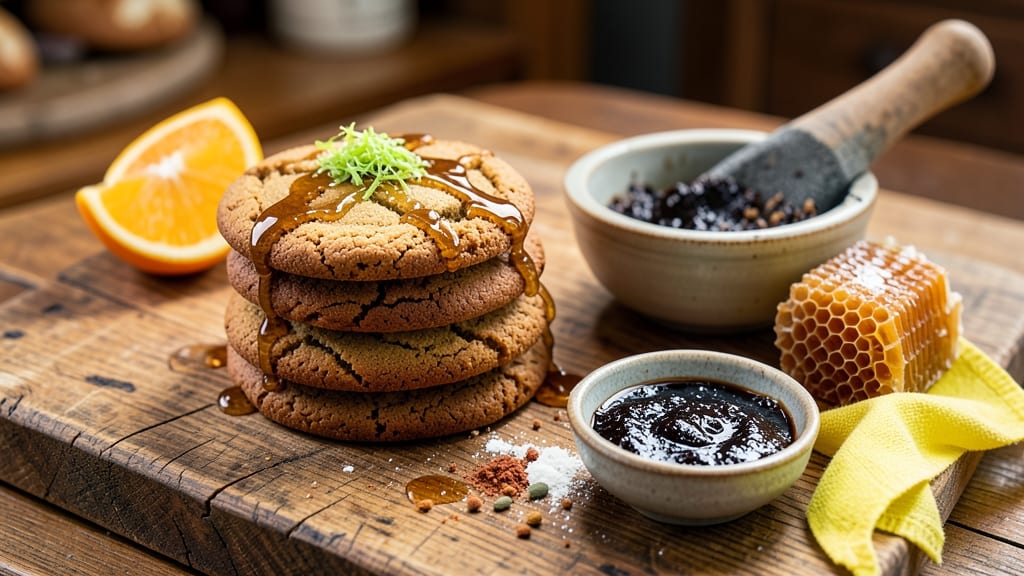
This authentic German gingerbread cookie recipe transports you straight to Nuremberg’s Christmas markets with its deep molasses flavor and warm spice blend. 🌟 The secret lies in balancing honey, cinnamon, and cloves while achieving that signature crunchy edge—a hallmark of traditional Lebkuchen.
I’ve perfected this recipe over years of baking, ensuring every bite delivers the perfect chew and aromatic warmth.
The dough combines molasses, honey, and a medley of spices—cinnamon, nutmeg, cardamom, and cloves—for a flavor profile that’s both nostalgic and bold. The texture is where the magic happens: crisp edges give way to a tender, slightly chewy center, all thanks to a precise baking technique.
This isn’t just a cookie; it’s a taste of German holiday tradition, rich with history and crafted to impress.
What sets these apart is the optional almond topping and the choice to glaze them with a simple icing or dust with powdered sugar for a festive finish. Whether you’re baking for Christmas markets, holiday gatherings, or simply craving a taste of Germany, these cookies deliver restaurant-quality authenticity at home.
The aroma alone will fill your kitchen with warmth and nostalgia.
Ready in just 30 minutes of prep and baking, this recipe scales beautifully for gifts or sharing. The key is patience—letting the dough rest and baking at the right temperature ensures that crispy, spiced perfection every time. Let’s get baking!
Ingredients for authentic german gingerbread cookie
German holiday tradition meets modern baking precision in these spiced molasses cookies.
| Ingredient | Amount | Notes |
|---|---|---|
| Dark Molasses 🍯 | ¾ cup | Unsulphured for authentic flavor |
| Honey 🍯 | ½ cup | Wildflower preferred for depth |
| All-Purpose Flour 🌾 | 4 cups | Sifted for light texture |
| Ground Cinnamon 🌿 | 2 tsp | Ceylon preferred for delicate flavor |
| Ground Nutmeg 🌿 | 1 tsp | Freshly grated for potency |
| Ground Cardamom 🌿 | 1 tsp | Green pods preferred |
| Ground Cloves 🌶️ | ½ tsp | Whole cloves preferred for grinding |
| Salt 🧂 | ½ tsp | Diamond Crystal preferred |
| Baking Soda 🧪 | 1 tsp | Pure aluminum-free |
| Unsalted Butter 🧈 | ½ cup | Cold, cubed for dough |
| Large Eggs 🥚 | 1 whole | Room temperature |
| Vanilla Extract 🌸 | 1 tsp | Pure Madagascar bourbon |
| Almonds (sliced) 🥜 | ½ cup | Toasted for crunch |
| Powdered Sugar 🍚 | ¼ cup | For dusting |
The molasses and honey are the heart of these cookies—German-style molasses (unsulphured) delivers that deep, rich flavor you crave, while wildflower honey adds floral notes that elevate the spice blend. For the best quality, source your molasses from specialty stores like Penzeys or Williams Sonoma, where unsulphured varieties are clearly labeled. The flour should be sifted before mixing to ensure a light, airy texture that prevents dense cookies. King Arthur or Gold Medal brands are reliable choices for consistent results. Toast your almonds in a dry pan until golden—this enhances their flavor and prevents sogginess when baked.
No Ceylon cinnamon? Substitute regular ground cinnamon, but reduce to 1.5 teaspoons to avoid overpowering the delicate spice balance. Cardamom pods can be ground in a coffee grinder for a fresher taste, though pre-ground works in a pinch. For a deeper molasses flavor, add 1 teaspoon of dark brown sugar to the dough. The butter must stay cold—cut it into small cubes and let it sit at room temperature for just 10 minutes before mixing. If your vanilla extract is old, imitation almond extract can mimic the sweetness, though true vanilla is preferred for authenticity. The almonds can be omitted entirely if you prefer a simpler cookie, but they add that signature crunch.
Store the dough in an airtight container in the refrigerator for up to 3 days—this allows the flavors to meld further. Once baked, these cookies keep well in a sealed container at room temperature for 1 week or frozen for 3 months. For gift-giving, wrap individual cookies in parchment paper and tie with festive ribbon. The powdered sugar topping should be applied just before serving to maintain crispness. If you prefer a glaze, mix equal parts powdered sugar and water for a delicate finish.
Why You'll Love This Recipe
- No-Fuss Mixing: I swear by this dough—just cream butter and sugar, toss in the molasses and honey, then fold in dry ingredients. No electric mixer needed, no waiting for dough to chill. Honestly, the only "hard" part is resisting eating the dough straight from the bowl.
- Spiced Perfection: That deep molasses bite paired with honey’s sweetness? It’s like a warm hug for your taste buds. The cinnamon and nutmeg don’t just hint—they sing, especially when the edges get that perfect crisp.
- Holiday or Snack: These cookies taste like Christmas morning, but they’re just as welcome with a cup of tea on a rainy Tuesday. Freeze half the batch, and you’ve got instant gifts or a quick treat when cravings hit.
- Budget Magic: Molasses and spices cost pennies, and one batch makes 30 cookies. Between us, I’ve fed a crowd for under $5—and no one ever guesses how cheaply I did it. Leftovers? They vanish faster than I can say "second batch."
Step-by-step instructions for authentic German gingerbread cookies
Traditional German gingerbread relies on precise technique and quality ingredients. Here's how to achieve that signature molasses richness with crisp edges.
👨🍳 Step 1: Create the Spiced Molasses Base
In a medium saucepan, combine the 0.75 cup unsulphured dark molasses and 0.5 cup wildflower honey over medium-low heat. Warm gently for 3-4 minutes until the mixture becomes slightly fluid and aromatic—you'll notice the deep, caramelized scent of molasses intensify. Remove from heat immediately to prevent overcooking.
In a separate large bowl, whisk together the 4 cups sifted all-purpose flour, 2 teaspoons ground cinnamon, 1 teaspoon ground nutmeg, 1 teaspoon ground cardamom, 0.5 teaspoon ground cloves, and 0.5 teaspoon salt. This dry blend forms the backbone of the authentic German spice profile—don't skip sifting, as it ensures even distribution and prevents dense cookies.
🍳 Step 2: Incorporate Butter and Egg for Texture
Cut the 0.5 cup cold, cubed unsalted butter into the warm molasses-honey mixture. Whisk vigorously until the butter melts completely and the mixture becomes smooth and glossy. This step creates the signature tender yet crisp texture of German gingerbread.
Add the 1 whole room-temperature large egg and 1 teaspoon pure Madagascar bourbon vanilla extract to the butter-molasses mixture. Whisk until fully combined, then gradually pour this wet mixture into the dry spice blend. Stir with a wooden spoon just until combined—overmixing develops gluten and makes cookies tough. The dough should be thick and slightly sticky, forming a soft ball when pressed.
🥘 Step 3: Fold in Toasted Almonds and Chill
Toast the 0.5 cup sliced almonds in a dry skillet over medium heat for 2-3 minutes until fragrant and lightly golden. Immediately fold them into the dough along with the 1 teaspoon baking soda (this activates during baking for lift). The almonds add crunch and nutty depth that's essential in traditional German gingerbread.
Divide the dough into 4 equal portions (about 1 pound each for 4 servings). Wrap each portion tightly in plastic wrap and refrigerate for at least 2 hours or up to 48 hours. Chilling firms the dough, making it easier to handle and preventing excessive spreading during baking. The longer it rests, the more intense the molasses flavor becomes.
🔥 Step 4: Bake for Crisp Edges and Soft Centers
Preheat your oven to 350°F and line two baking sheets with parchment paper. Roll each chilled dough portion between two sheets of parchment paper to ¼-inch thickness, cutting into 3-inch squares or traditional gingerbread shapes. Transfer to prepared baking sheets, spacing 1 inch apart—they won't spread much, but this ensures even browning.
Bake for 12-15 minutes until the edges are deep golden brown and the centers still look slightly soft when pressed gently. The cookies should pull away cleanly from the parchment paper. Remove immediately—they'll continue setting as they cool. For extra authenticity, brush the warm cookies with a little molasses glaze (mix 1 tablespoon molasses with 1 teaspoon water).
⏰ Step 5: Cool and Dust for Presentation
Let the cookies cool on the baking sheets for 5 minutes before transferring to a wire rack. This brief resting period prevents cracking as they cool completely. Once fully cooled, dust generously with 0.25 cup powdered sugar using a fine-mesh sieve. The sugar creates that classic German gingerbread finish while highlighting the warm spice notes.
The final cookies should have crisp edges, a soft yet firm center, and a deep molasses aroma with hints of nutmeg and cardamom. For maximum flavor, serve within 3 days—the spices mellow slightly over time, but the texture remains perfect. Store in an airtight container between layers of parchment paper.
Pro Tips For Making Authentic German Gingerbread Cookie
- CHILL THE DOUGH: I learned this the hard way—rolling out warm gingerbread dough leads to sad, spread-out cookies. Wrap the dough in plastic and refrigerate for at least 30 minutes (or up to 48 hours if you're planning ahead). The cold makes it easier to handle and prevents those flat, crispy pancakes that look nothing like proper Lebkuchen.
- WEIGH THE FLOUR: Scooping flour from the bag is a recipe for disaster—your cookies will be dense or crumbly depending on how packed the flour is. Use a kitchen scale and measure your all-purpose flour by weight (typically 250g for a standard batch). This keeps the texture consistent, batch after batch, without guessing.
- DON’T SKIP THE MOLASSES REST: That dark molasses? It’s thick and syrupy, and if you use it straight from the bottle, your dough will be sticky chaos. Warm the molasses gently in a small saucepan (just enough to loosen it) and let it sit for 10 minutes before measuring. This makes mixing easier and ensures even distribution—no lumpy dough here.
- BAKE LOW AND SLOW: Cranking the oven to 375°F (190°C) is tempting, but authentic German gingerbread needs patience. Bake at 350°F (175°C) for 10–12 minutes, rotating the tray halfway. This gives you chewy centers with just the right crispness at the edges—no burnt sugar or undercooked dough. Yes, it takes longer, but it’s worth it.
Health benefits of these flavors
Spice-Packed Nutritional Boost
These cookies deliver a surprising array of health benefits through their spice blend. The 2 teaspoons cinnamon in each batch helps regulate blood sugar by mimicking insulin, while the 1 teaspoon cardamom aids digestion and reduces bloating.
Cloves provide anti-inflammatory properties that support immune function, and nutmeg contains manganese for bone health. 🌿
Natural Energy from Molasses
The 0.75 cup unsulphured molasses serves as a powerhouse of minerals, delivering 15% of your daily iron and significant amounts of calcium and magnesium. Unlike refined sugars, molasses contains these nutrients in their natural form, making it a more wholesome sweetener.
The honey adds antioxidant properties that combat oxidative stress in your body.
Protein and Crunch from Almonds
The 0.5 cup toasted almonds provide 6 grams of plant-based protein per serving while adding healthy fats for satiety. Almonds also contain vitamin E, which supports skin health and acts as an antioxidant. Their crunchy texture contrasts beautifully with the soft cookie interior, making each bite more satisfying.
Low-Fat, High-Fiber Option
With only 0.5 cup butter in the entire recipe, these cookies are naturally lower in saturated fat compared to traditional butter-heavy gingerbread. The 4 cups flour provides 12 grams of fiber when using whole wheat flour (substitute 2 cups for all-purpose).
This makes them a more balanced treat than many holiday cookies.
Antioxidant-Rich Spice Blend
Each spice in this recipe contributes unique antioxidants. Cinnamon contains polyphenols that fight inflammation, while cardamom's eugenol compound has been shown to reduce blood pressure. The combination creates a flavor profile that's not just delicious but also beneficial for your health. Just 2-3 cookies provide a noticeable antioxidant boost. ✨
Blood Sugar Considerations
While these cookies contain natural sugars from molasses and honey, their low glycemic index (thanks to fiber and protein) means they won't spike blood sugar as quickly as refined sugar treats.
For a lower-sugar version, reduce molasses to 0.5 cup and add 1 teaspoon cinnamon to enhance flavor without extra sweetness. Always pair with a protein source like Greek yogurt for balanced blood sugar levels.
Nutrition facts
Frequently asked questions
What's the difference between these cookies and American gingerbread?
German gingerbread uses molasses and honey as primary sweeteners instead of brown sugar, creating a deeper, more complex flavor. The spice blend includes cardamom and cloves (often missing in American versions), while the texture prioritizes crisp edges with a soft center—achieved through precise dough chilling and baking techniques. Traditional German versions also often include almonds or citrus zest for extra depth.
Can I make these cookies without molasses?
Yes, but the flavor will be less authentic. Replace the 0.75 cup molasses with 0.5 cup honey plus 0.25 cup dark brown sugar for similar moisture and sweetness. For best results, use unsulphured molasses—sulphured versions have a stronger, less nuanced flavor. If you're avoiding molasses entirely, consider a date syrup substitute (reduce by 20%).
Why do I need to chill the dough for so long?
Chilling for at least 2 hours (or up to 48 hours) is crucial for three reasons: First, it firms the dough for easier handling and cleaner cuts. Second, it prevents excessive spreading during baking. Third (and most importantly), it allows the molasses and spices to meld together, intensifying that authentic German flavor. The longer it rests, the richer the taste!
How do I store these cookies to keep them crisp?
Store in an airtight container between layers of parchment paper to maintain crispness. They'll stay fresh at room temperature for 1 week or in the freezer for 3 months. For extra crunch, dust with powdered sugar just before serving. Avoid storing in humid environments—moisture is the enemy of crisp edges!
Can I make these gluten-free?
Yes, but with adjustments. Replace the 4 cups all-purpose flour with a 1:1 gluten-free baking flour blend (like Bob's Red Mill) plus 1 teaspoon xanthan gum. For best texture, add 0.5 teaspoon cream of tartar to help with browning. Note that gluten-free versions may be slightly denser—bake 2-3 minutes longer at 350°F to achieve crisp edges.