
Side Dishes
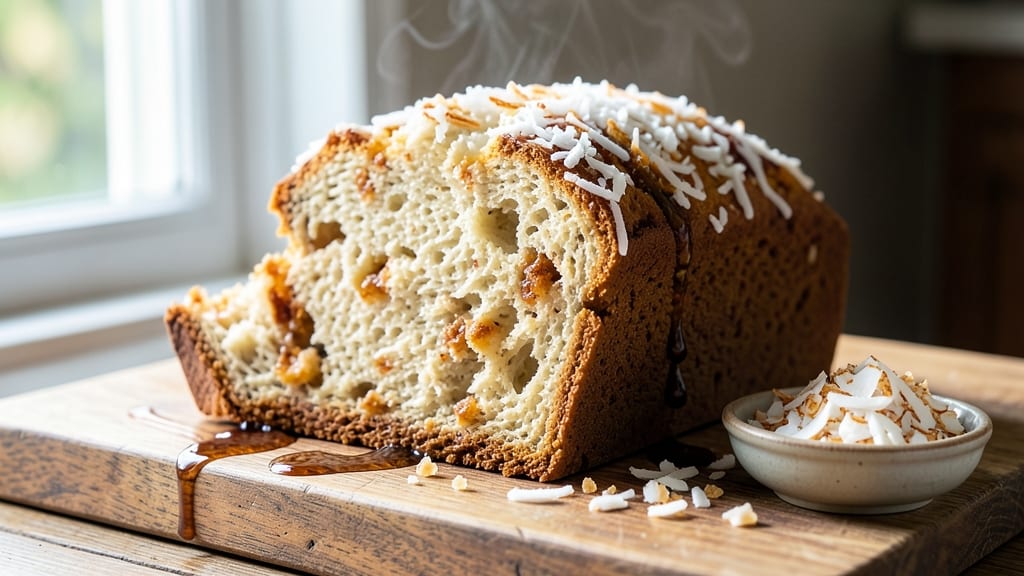
This authentic Jamaican coco bread brings the warm, spiced aroma of Jamaica straight to your kitchen—moist, fragrant loaves infused with rum and coconut that taste like a Caribbean hug. 🌴 The secret lies in the blend of brown sugar, shredded coconut, and a splash of spiced rum that creates that signature tender crumb and rich flavor.
Unlike lighter breads, this version stays moist for days, making it perfect for breakfast or as a sweet side with coffee.
What sets this recipe apart is its authentic texture—soft yet slightly dense, with just the right amount of chewiness from the coconut. Traditional Jamaican coco bread often includes spices like nutmeg and cinnamon, which add warmth without overpowering.
The rum infusion isn’t just for flavor; it also helps tenderize the bread, ensuring every slice is perfectly moist. This isn’t your average sweet bread—it’s a cultural staple that pairs beautifully with tea or even as a dessert on its own.
The baking process is straightforward but requires patience—allowing the dough to rise properly gives that signature open crumb structure. Once baked, the loaf will have a golden-brown crust with a tender interior, and the coconut will be evenly distributed throughout.
The aroma alone will fill your home with nostalgia, transporting you to a Jamaican kitchen where this bread is a beloved tradition.
Serve it warm with a pat of butter, or pair it with a cup of Jamaican coffee or tea for the full experience. The versatility of this bread makes it perfect for breakfast, brunch, or even as a sweet treat.
Here’s how to make it—step by step—for that authentic, moist loaf every time.
Ingredients for authentic jamaican coco bread
Eight simple ingredients create that signature Jamaican coco bread aroma and moist crumb.
| Ingredient | Amount | Notes |
|---|---|---|
| All-Purpose Flour 🌾 | 4 cups | Unbleached preferred for authentic texture |
| Light Brown Sugar 🍯 | 1 cup | Packed firmly for moisture |
| Unsalted Butter 🧈 | ½ cup | Softened but not melted |
| Shredded Unsweetened Coconut 🥥 | 1 cup | Freshly grated for texture |
| Large Eggs 🥚 | 2 whole | Room temperature for even mixing |
| Spiced Rum 🍹 | ¼ cup | Dark rum for authentic flavor |
| Milk 🥛 | ½ cup | Whole milk for richness |
| Ground Cinnamon 🌿 | 1 ½ tsp | Freshly ground for warmth |
| Ground Nutmeg 🌿 | ½ tsp | Freshly grated preferred |
| Baking Powder 🧪 | 1 ½ tsp | Double-acting for lift |
| Salt 🧂 | ½ tsp | Fine sea salt preferred |
| Vanilla Extract 🌸 | 1 tsp | Pure vanilla for depth |
| Granulated Sugar 🍚 | ½ cup | For topping before baking |
The rum is non-negotiable here—it’s what gives this bread its signature richness and moisture. Appleton Estate or Hampden Estate rums are the gold standard, but any dark Jamaican rum will work. If you can’t find spiced rum, regular dark rum plus a pinch of cinnamon and nutmeg gets you close. The coconut should be freshly grated (the pre-shredded kind lacks texture), so grab a box at Trader Joe's or Whole Foods if you’re not up for grating yourself. For the flour, King Arthur unbleached is my go-to—it bakes up lighter than all-purpose, but regular AP flour works fine too. Just don’t skip the brown sugar; it’s what keeps this bread moist for days.
No spiced rum? Substitute with 2 tbsp molasses plus 1 tsp cinnamon—it’s not identical, but it’ll give you that caramel depth. Short on coconut? Toasted pecans or walnuts add a nice crunch, though they’ll change the flavor profile. The vanilla extract can be swapped for 1 tsp vanilla bean paste if you’re feeling fancy. For the milk, coconut milk works beautifully—just use the full-fat canned kind, not the carton stuff. And if you’re baking in a high-altitude area, add 0.25 tsp more baking powder to prevent a dense loaf. The spices? Pre-ground is fine, but if you’ve got whole nutmeg, toast and grind it fresh—game changer.
This dough keeps for 2 days in the fridge if you’re prepping ahead—just let it come to room temp before baking. The baked loaf stays moist for 3-4 days wrapped in foil, or you can freeze slices for up to 3 months. To reheat, wrap a slice in foil and warm for 10 seconds in the microwave—it’ll taste almost as good as fresh. Pro tip: Brush the warm loaf with a little extra rum for serving. Trust me, it’s worth the extra minute.
Why You'll Love This Recipe
- No-Fuss Mixing: I swear by this dough—just toss the flour, sugar, and butter until it crumbles like sand, then fold in the coconut. No stand mixer, no stress. The eggs come in last, and suddenly, you’re holding a dough that’s almost too easy to resist shaping.
- Caramelized Coconut Magic: That brown sugar and butter combo? It turns the shredded coconut into little pockets of buttery sweetness while baking. One bite and you’ll understand why Jamaican coco bread tastes like a hug from your abuela—warm, rich, and just a little bit indulgent.
- Breakfast or Snack Hero: Serve it toasted with butter for breakfast, or pack slices in lunchboxes for kids (or adults, no judgment). It’s the kind of bread that works just as well with jam as it does with a sprinkle of cinnamon sugar—versatile enough for lazy mornings or picnic spread.
- Budget-Friendly Staple: I make a double batch and freeze half. A loaf costs pennies to bake, reheats in seconds, and disappears faster than my willpower around chocolate. Honestly? It’s the kind of treat that feels fancy but won’t break the bank—or your diet.
Step-by-step instructions for Jamaican coco bread
Here's how to craft that signature Jamaican aroma and tender crumb—rum-infused and perfectly moist.
👨🍳 Step 1: Mix Wet Ingredients for Maximum Moisture
In a large mixing bowl, combine the 0.5 cup unsalted butter and 1 cup light brown sugar until smooth and creamy. I use a hand mixer here for about 2-3 minutes—this ensures the butter incorporates fully and creates a light texture. The brown sugar adds that caramel depth that makes Jamaican bread so special.
Next, add the 2 whole large eggs, 0.25 cup spiced rum, 0.5 cup milk, 1 tsp vanilla extract, and mix until fully combined. The rum might make you pause, but trust me—it evaporates during baking and leaves behind that warm, spiced aroma. If you're avoiding alcohol, substitute with extra milk and a dash of cinnamon.
👨🍳 Step 2: Combine Dry Ingredients for Perfect Texture
In a separate bowl, whisk together the 4 cups all-purpose flour, 1.5 tsp baking powder, 1.5 tsp ground cinnamon, 0.5 tsp ground nutmeg, and 0.5 tsp salt. Sift the dry ingredients if you have a sifter—this prevents lumps and ensures even distribution. The nutmeg and cinnamon are what give this bread its signature warm, spiced flavor.
Gently fold the dry ingredients into the wet mixture using a spatula, mixing just until combined. Overmixing develops gluten, which can make the bread dense. You're looking for a thick, sticky batter that comes together smoothly. If it seems too thick, add 1-2 tablespoons of milk to loosen it.
🥘 Step 3: Fold in Coconut for Authentic Texture
Stir in the 1 cup shredded unsweetened coconut by hand until evenly distributed. Here's the thing—freshly grated coconut makes all the difference. The texture should be slightly coarse, not powdery. If you're using pre-shredded coconut, give it a quick pulse in a food processor to restore some texture.
Let the batter rest for 10 minutes at room temperature. This allows the flour to fully hydrate and the coconut to absorb some of the liquid. Don't skip this step—it guarantees a tender crumb instead of a dry one. While it rests, preheat your oven to 350°F and grease a 9x5-inch loaf pan generously with butter or oil.
🔥 Step 4: Bake with Sugar Topping for Crispy Crust
Pour the batter into the prepared loaf pan and smooth the top with a spatula. Sprinkle the 0.5 cup granulated sugar evenly over the top—this creates that signature caramelized crust. Bake for 50-55 minutes until a toothpick inserted in the center comes out clean and the top is golden brown.
I like to tent the pan with foil after 30 minutes to prevent over-browning if your oven runs hot. The sugar topping should be crispy on top but still moist underneath. If the edges brown too quickly, cover them with foil earlier. Let the bread cool in the pan for 10 minutes before transferring to a wire rack.
⏰ Step 5: Rest and Slice for Perfect Crumb
Allow the bread to cool completely before slicing—this ensures clean cuts and prevents crumbling. The bread should be tender with a slightly dense but moist crumb, and those warm spices should be noticeable with every bite. If you're serving it warm, slice it while still slightly warm from the oven for the best texture.
For extra authenticity, serve with a pat of butter or jam. The rum infusion gives it a subtle warmth that pairs perfectly with the coconut's tropical notes. Store any leftovers wrapped in foil at room temperature for up to 3 days, or freeze for up to 3 months.
Pro Tips For Making Authentic Jamaican Coco Bread
- Melt Butter Fully: Don’t just soften the butter—melt it completely and let it cool slightly before mixing. I used to add it cold, and the dough would fight me every time, making it hard to fold in the coconut. Warm butter blends smoother and keeps the texture tender.
- Toast the Coconut: Lightly toast the shredded coconut in a dry pan over medium heat for 2-3 minutes until fragrant. This step deepens the flavor and prevents the bread from tasting raw or overly sweet. Skip it, and you’ll miss that toasty, caramelized note Jamaican coco bread needs.
- Don’t Overmix the Dough: Once you’ve combined the wet and dry ingredients, mix just until the flour is incorporated—about 10-12 strokes. Overworking the dough makes the bread dense and tough. I learned this after making a brick instead of a tender loaf.
- Bake Until Golden: Pull the bread out when the top is deep golden brown, not just pale. Use the back of a spoon to test—it should spring back slowly, not bounce. Underbaking leaves it gummy inside, and overbaking turns it dry. Aim for 30-35 minutes at 350°F (175°C), but watch closely.
Essential equipment for this recipe
Jamaican Loaf Pan
The heart of authentic coco bread is a 9x5-inch loaf pan—traditional Jamaican versions use these dimensions for that signature height-to-width ratio. I recommend a light-colored metal pan (like Wilton) for even baking, but avoid dark pans that can over-brown the edges.
Grease it generously with unsalted butter or coconut oil—this prevents sticking and gives the crust that golden sheen. If you don’t have a loaf pan, a 9x9-inch square pan works, but the shape will differ slightly. 🥖
Stand Mixer or Hand Mixer
A hand mixer or stand mixer (like KitchenAid) is ideal for creaming the butter and sugar—this step is critical for achieving that tender crumb. If you’re mixing by hand, use a sturdy wooden spoon and be prepared for some elbow grease.
The goal is to incorporate air into the butter mixture, which lightens the final texture. For the coconut, I find a spatula works best to fold it in gently without overmixing. 💫
Measuring Cups & Spoons
Precision matters with this recipe! Use dry measuring cups for the flour and liquid measuring cups for the milk, rum, and butter. A medicine dropper comes in handy for the vanilla extract—every drop counts for that authentic depth of flavor.
For the spices, a 1/4 teaspoon measure ensures you don’t overdo the nutmeg or cinnamon, which can easily overpower the bread. I keep my measuring tools in a small drawer organizer for easy access. ✨
Baking Tools
A toothpick is essential for testing doneness—insert it into the center of the loaf, and it should come out clean with just a few moist crumbs. For the sugar topping, a fine-mesh sieve helps distribute it evenly.
If you’re short on time, a pastry brush can help spread any extra rum or butter over the loaf after baking for added moisture. Don’t forget a cooling rack—letting the bread cool properly prevents a soggy bottom. 🔥
Optional Extras
For extra authenticity, a small bowl for mixing the rum and spices ahead of time lets the flavors meld before adding to the batter. A microplane is perfect for grating fresh nutmeg if you’re feeling fancy—it makes a world of difference compared to pre-ground spices.
If you’re freezing leftovers, quart-sized freezer bags with the air squeezed out keep slices fresh for months. And for serving, a serrated bread knife gives clean slices without crushing the crumb. 🥥
Nutrition facts
Frequently asked questions
Why does Jamaican coco bread need rum?
The rum isn't just for flavor—it's essential for that signature moist texture. The alcohol evaporates during baking, leaving behind warm, spiced notes and preventing dryness. Traditional recipes use it because it tenderizes the crumb and adds depth. For a non-alcoholic version, substitute with 2 tbsp molasses plus 1 tsp cinnamon.
Can I make this bread without a loaf pan?
Yes, but the shape will differ. A 9x9-inch square pan works well for a shorter, wider loaf. For extra authenticity, try shaping it into a round free-form loaf on a parchment-lined baking sheet. The texture stays the same, but the presentation changes. Just reduce baking time by 5-10 minutes.
How do I know when the bread is fully baked?
Insert a toothpick into the center—it should come out clean or with just a few moist crumbs. The top should also be golden brown and firm to the touch. If the edges brown too quickly, tent with foil after 30 minutes. Overbaking makes the bread dry, so pull it out when it's just done.
Why does my coco bread turn out dry?
Overmixing develops gluten, making bread dense and dry. Mix just until combined, and don't skip the 10-minute rest before baking—this lets the flour hydrate properly. Also, check your oven temperature; if it runs hot, reduce to 325°F. Finally, ensure your coconut isn't too fine—pre-shredded lacks texture and absorbs more liquid.
Can I add raisins or chocolate chips?
While traditional coco bread doesn't include them, you can add ½ cup raisins or chocolate chips for a twist. Fold them in with the coconut, but don't overdo it—too many can make the bread sink in the center. For best results, use dark chocolate chips (70% cocoa or higher) to complement the rum and spices.