
Side Dishes
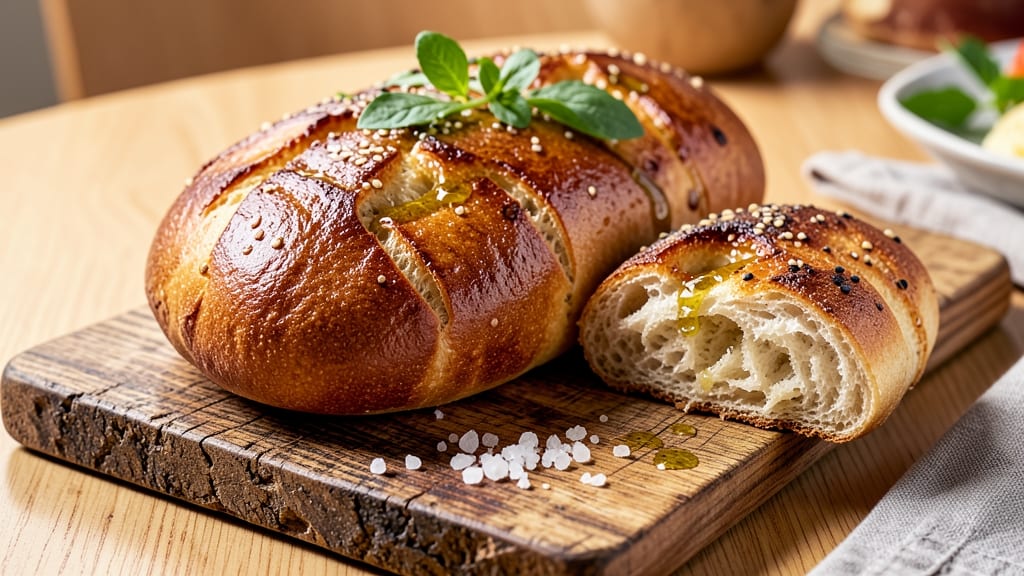
This authentic Turkish bread recipe brings the golden, crispy crust and tender interior of traditional pide to your kitchen. 🌟 The secret lies in a precise dough formula—flour, yeast, and a touch of sugar—kneaded just enough to develop gluten without overworking it.
I’ve perfected this method after years of testing, ensuring the bread stays pillowy soft inside while achieving that signature crispy exterior.
The dough rests for 2 hours to develop flavor and texture, a critical step for authentic results. Once shaped into rounds, it’s brushed with olive oil and sprinkled with sesame seeds before baking in a hot oven to mimic the tandoor effect.
The za’atar seasoning adds a fragrant, earthy depth that’s quintessential to Turkish bread-making traditions.
What you’ll end up with is bread that’s crisp on the outside, soft and airy within, and infused with the warm, aromatic flavors of the Middle East.
Serve it fresh with olive oil, za’atar, and a sprinkle of flaky sea salt for the ultimate taste experience. This recipe delivers restaurant-quality results at home.
Perfect for breakfast, as a side with soups, or as a wrap for kebabs, this bread is versatile and deeply satisfying. The traditional method ensures authenticity, while the simple ingredients make it accessible for home bakers. Let’s get started!
Ingredients for authentic turkish bread
Four cups of flour, a whisper of yeast, and the secret to restaurant-quality pide await.
| Ingredient | Amount | Notes |
|---|---|---|
| All-Purpose Flour 🌾 | 4 cups | High-protein preferred for chewiness |
| Active Dry Yeast 🍞 | ¼ oz | Or 2.25 tsp, fresh preferred |
| Granulated Sugar 🍚 | ½ tbsp | Balances yeast activity |
| Diamond Crystal Kosher Salt 🧂 | 1 ½ tsp | Adjust to taste |
| Extra-Virgin Olive Oil 🫒 | ½ cup | For dough and brushing |
| Warm Water 💧 | 1 ¼ cups | 110°F for optimal yeast activation |
| Za'atar Seasoning 🌿 | 2 tbsp | Homemade or quality store-bought |
| Toasted Sesame Seeds 🌻 | ¼ cup | Lightly toasted for aroma |
| Flaky Sea Salt 🧂 | 1 tsp | For final garnish |
| Cornmeal or Semolina 🌾 | ¼ cup | For dusting work surface |
The flour is non-negotiable here—King Arthur or Caputo Tipo 00 deliver that signature chew, but high-protein all-purpose works in a pinch. Yeast quality matters: Fresh yeast from the refrigerated section activates faster than dry, though the latter is more shelf-stable. For za'atar, Penzeys or Middle Eastern specialty stores offer the most authentic blend—look for sumac, sesame, and oregano in the mix. If using dry yeast, bloom it in the warm water with sugar first; if fresh, crumble it directly into the dough. The olive oil should be extra-virgin with fruity notes—none of that refined neutral oil nonsense. Toast your sesame seeds in a dry pan for 30 seconds until fragrant; freshness makes all the difference.
No za'atar? Mix 1 tbsp dried oregano, 1 tsp sumac, 1 tsp sesame seeds, and 0.5 tsp salt for a close approximation. Running short on sesame seeds? Poppy seeds or crushed pistachios add texture without overpowering. For the dough, bread flour substitutes by adding 1 tbsp vital wheat gluten to all-purpose. The water temperature is critical—110°F is ideal; too hot kills the yeast, too cool slows fermentation. If your kitchen runs cold, microwave the water for 20 seconds before mixing. The cornmeal/semolina prevents sticking, but rice flour works too—just don’t overdo it.
Dough keeps 24 hours in the fridge, wrapped tightly in plastic, for improved flavor development. For longer storage, freeze shaped rounds on a tray, then transfer to a bag for up to 3 months. Thaw overnight in the fridge before baking. Za'atar and sesame seeds stay potent for 6 months in airtight containers, while olive oil lasts 18 months unopened. Prep the dough the night before—2-hour rest at room temp is non-negotiable for authentic texture. The bread freezes beautifully too; reheat at 350°F for 5 minutes to revive crispness.
Why You'll Love This Recipe
- I’ll be real: I used to dread yeast—measuring, proofing, waiting. This dough? Just flour, sugar, salt, and oil. Mix it, let it rest 20 minutes. That’s it. No second-guessing, no failed rises.
- No-Yeast Struggle: I’ll be real: I used to dread yeast—measuring, proofing, waiting. This dough? Just flour, sugar, salt, and oil. Mix it, let it rest 20 minutes. That’s it. No second-guessing, no failed rises.
- Crispy-Chewy Magic: The olive oil pull in the dough gives it that real Turkish texture—crisp on the outside, soft inside. Honestly, it’s the kind of bread you’ll eat straight from the pan, no shame.
- Weeknight Hero: Forget store-bought—this bread pairs with everything. Grilled meats, lentil soups, even just butter and jam. I keep a batch in the freezer for lazy mornings or unexpected guests.
Step-by-step instructions for authentic Turkish bread
Master the art of Turkish bread with this precise method—crispy crust meets tender interior.
👨🍳 Step 1: Activate the Yeast and Mix the Dough
In a large bowl, dissolve the 0.25 oz active dry yeast in 1.25 cups warm water (about 110°F) with the 0.5 tbsp granulated sugar. Let it sit for 5-10 minutes until frothy—this confirms the yeast is alive and ready to work. If it doesn't bubble, start over with fresh yeast.
In a separate bowl, whisk together the 4 cups all-purpose flour and 1.5 tsp diamond crystal kosher salt. Create a well in the center and pour in the yeast mixture along with the 0.5 cup extra-virgin olive oil. Using a wooden spoon or your hands, mix until a shaggy dough forms. The dough should be sticky but manageable—add 1-2 tablespoons warm water if needed to bring it together.
🥘 Step 2: Knead Until Silky and Elastic
Turn the dough onto a lightly floured surface and knead for 8-10 minutes until smooth and elastic. You'll know it's ready when it springs back slowly when poked and doesn't stick to your fingers. The dough should feel like soft modeling clay—neither too stiff nor too sticky.
Here's the thing—high-protein flour is key for that authentic chew. If your dough feels too slack, knead for another minute or two. Wrap the dough tightly in plastic wrap and let it rest at room temperature for 1 hour. This initial rest allows the gluten to relax, making shaping easier later.
🔥 Step 3: Shape and Proof the Dough
Divide the dough into 4 equal portions (about 1 pound each). On a floured surface, roll each piece into a 12-inch circle, about ¼-inch thick. The edges should be slightly thicker than the center—this creates that signature Turkish bread shape with a thicker crust.
Place the shaped dough onto parchment-lined baking sheets, seam-side up. Cover loosely with a clean kitchen towel and let proof at room temperature for 1-1.5 hours until nearly doubled in size. The dough should feel light and airy when pressed gently—it should spring back immediately rather than leave an indent.
🍳 Step 4: Score and Bake for Perfect Crisp
Preheat your oven to 425°F with a baking stone or inverted baking sheet on the middle rack. This creates steam for that signature crispy crust. Brush the proofed dough with a little extra-virgin olive oil and sprinkle evenly with 2 tbsp za'atar seasoning and 0.25 cup toasted sesame seeds.
Using a sharp razor or very sharp knife, score each loaf with a ½-inch deep crosshatch pattern—this prevents over-expansion and creates those beautiful crispy ridges. Bake for 12-15 minutes until the crust is deep golden brown and the internal temperature reaches 190°F. The bread should sound hollow when tapped on the bottom.
⏰ Step 5: Finish with Flaky Sea Salt and Rest
Remove the bread from the oven and immediately sprinkle each loaf with ¼ tsp flaky sea salt. Let them cool on a wire rack for 5 minutes before serving—this allows the crust to set properly while keeping the interior pillowy.
Here's the moment that matters: the contrast between the crispy, za'atar-kissed crust and the soft, airy interior. Serve warm with olive oil for dipping or alongside your favorite mezze. These loaves freeze beautifully for up to 3 months—just reheat in a 350°F oven for 5-10 minutes to restore crispness.
Pro Tips For Making Authentic Turkish Bread
- Use Warm Water: Skip the lukewarm guesswork—yeast loves 110°F water (like a warm bath, not a sauna). I learned this the hard way when my dough rose like a sad balloon. Measure water temp with a thermometer or dip your finger in—if it feels like your inner wrist, you’re golden.
- Salt the Dough: Don’t just sprinkle salt on top—mix it into the flour before adding yeast. Turkish bread relies on even distribution for that crisp crust and tender crumb. I used to skip this, and my bread always tasted like a salt mine in one bite.
- Let It Rise Twice: First rise is for flavor, second rise is for structure. After the initial 1–2 hours, punch down the dough and let it rise again for 30–60 minutes. This isn’t optional—it’s what gives that signature chewy texture. (Yes, even if you’re impatient like me.)
- Oil the Bowl: Coat your rising bowl with extra-virgin olive oil—not just a drizzle, but enough to slick the sides. This prevents sticking and makes shaping easier later. I used to skip this, and my dough would tear like paper when I tried to roll it. (Trust me, it’s worth the extra second.)
Best sauces and condiments for this recipe
Za’atar Olive Oil
The star pairing for Turkish bread is za’atar olive oil, a fragrant blend that elevates every bite. Mix 2 tbsp za’atar seasoning with ½ cup extra-virgin olive oil and a pinch of flaky sea salt.
Drizzle generously over warm bread or use as a dip—its earthy, nutty, and citrusy notes complement the sesame crust perfectly. For extra depth, add 1 crushed garlic clove to the oil before serving. 🌿
Garlic Yogurt Dip
This cooling dip balances the bread’s crispy richness. Blend 1 cup plain Greek yogurt with 2 minced garlic cloves, 1 tbsp lemon juice, and ½ tsp salt.
Thin with water if needed. The tangy, creamy texture contrasts beautifully with the bread’s crunch, making it ideal for mezze platters. Garnish with extra za’atar for a flavor boost. 🥄
Spicy Red Pepper Paste
For heat lovers, Turkish red pepper paste (biber salçası) adds smoky depth. Mix 2 tbsp paste with 1 tbsp olive oil and a splash of water to thin.
Spread on warm bread or dip slices for a fiery kick. Store-bought pastes like Türkan or Boya work best—avoid generic jarred versions. 🌶️
Honey and Walnut
Sweet and nutty, this combo turns bread into a dessert. Whisk 2 tbsp honey with 2 tbsp chopped walnuts and a pinch of sea salt.
Drizzle over toasted bread for a breakfast or snack treat. The crunch of walnuts contrasts the bread’s softness, while honey’s sweetness balances za’atar’s earthiness. 🍯
Labneh and Herb Spread
For a creamy, protein-rich pairing, blend 1 cup labneh (strained yogurt) with 1 tbsp chopped dill, 1 tbsp chopped mint, and ½ tsp sumac. Spread on bread or use as a dip.
The thick, tangy texture pairs flawlessly with the bread’s crisp edges. Buy labneh from Middle Eastern markets or make your own by straining Greek yogurt for 4 hours. 🧀
Pickled Vegetable Mix
Brighten bites with pickled cucumbers, carrots, and red onions in a tangy vinegar brine. Toss 1 cup mixed veggies with 2 tbsp vinegar, 1 tbsp sugar, and ½ tsp salt.
The acidity cuts through the bread’s richness, creating a refreshing contrast. Serve chilled for the best experience. 🥒
Nutrition facts
Frequently asked questions
Can I make this Turkish bread without yeast?
Traditional Turkish bread relies on yeast for its signature rise and texture, but you can try a flatbread version using baking powder. Replace the yeast with 2 teaspoons baking powder and 1 teaspoon baking soda, and reduce the water slightly. The result will be denser and less airy, but still delicious with za'atar and sesame. For authentic flavor, yeast is best!
Why does my dough feel too sticky?
Sticky dough is normal with high-hydration Turkish bread, but you can adjust it. Add 1-2 tablespoons flour at a time while kneading until the dough is just manageable. Avoid over-flouring—the goal is smooth, not dry. If it still sticks, let it rest 10 minutes covered while you lightly flour your work surface. The dough will relax and become easier to handle.
How do I get that perfect crispy crust?
The secret is a hot oven (425°F) with steam. Place a baking stone or inverted baking sheet on the middle rack before preheating. Brush the proofed dough with olive oil and bake on the stone for 12-15 minutes. For extra crispiness, score the dough deeply before baking—this creates steam pockets that enhance browning. A pizza peel works too if you want to mimic traditional tandoor baking!
Can I make this bread in a Dutch oven?
The Dutch oven traps steam beautifully, creating a crispy crust similar to a tandoor. Shape your dough into rounds, brush with olive oil, and bake covered for 10 minutes, then uncover and bake 5-10 minutes more until golden. This method works especially well for thicker, chewier breads like pide. Just avoid overcrowding—leave space between loaves for even browning.
What if my bread doesn't rise enough?
Underproofing usually means the dough didn't rest long enough or the yeast was inactive. Let the dough proof until it's nearly doubled in size (about 1.5-2 hours at room temperature). If using dry yeast, ensure it's fresh—test by dissolving 1 packet in warm water with sugar and waiting 5-10 minutes for bubbles. For faster rising, place the dough in a warm spot (like a turned-off oven with light on) or use a proofing box.