
Breakfast & Brunch
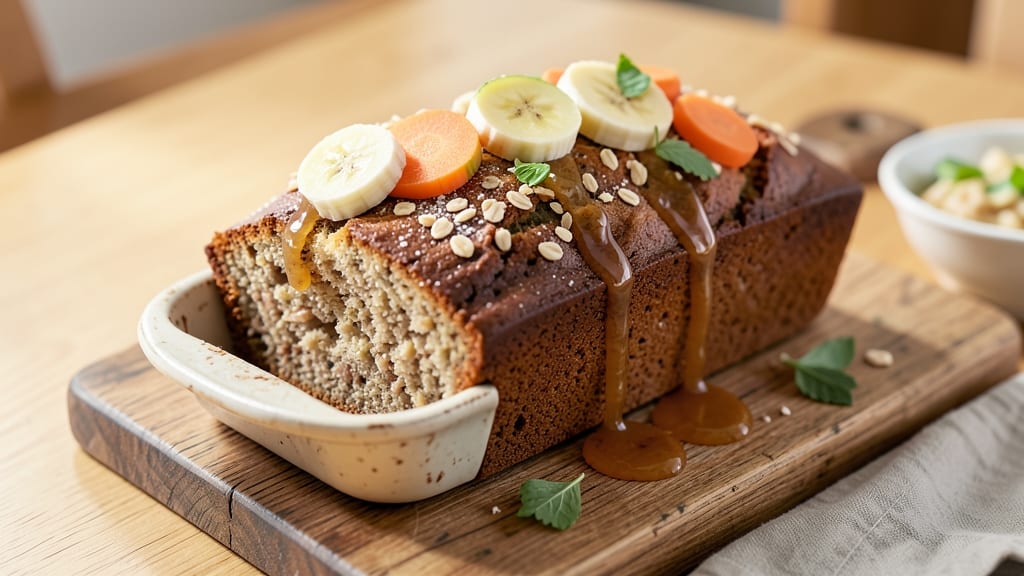
This baby-friendly banana bread recipe transforms simple ingredients into a soft, moist loaf packed with natural sweetness and hidden veggie nutrition—perfect for introducing solids to little ones. 💛 The secret lies in blending ripe bananas with steamed carrots and zucchini, creating a texture babies can easily mash while sneaking in extra nutrients without added sugar or honey.
What makes this recipe stand out is its gentle approach to baking for tiny eaters: no sharp edges, no choking hazards, and a crumb so tender it practically melts in your baby’s mouth.
The recipe uses whole-grain oats for fiber, a touch of coconut oil for healthy fats, and just enough egg to bind—all while keeping allergens in mind with easy substitutions for dairy or eggs if needed.
By the time it emerges from the oven, you’ll have a loaf with a golden crust and a soft, cake-like crumb that’s ideal for first bites. The hidden veggies blend seamlessly, so your little one gets the benefits without the fuss.
Store it in the fridge for up to 5 days or freeze for longer shelf life—making it a convenient option for busy parents.
Serve it mashed for babies starting solids or lightly toasted for toddlers, and watch as even the pickiest eaters reach for seconds. This isn’t just banana bread—it’s a nutritious, baby-approved treat that grows with your child’s tastes.
Ingredients for baby friendly banana bread
Simple, wholesome ingredients for a tender loaf packed with veggie nutrition and natural sweetness.
| Ingredient | Amount | Notes |
|---|---|---|
| Ripe Bananas 🍌 | 2 cups | Mashed, about 3 medium bananas |
| Steamed Carrots 🥕 | 1 cup | Finely grated or puréed |
| Steamed Zucchini 🥒 | 1 cup | Finely grated or puréed |
| Whole-Grain Oats 🌾 | 1 cup | Blended into fine flour |
| Unsweetened Applesauce 🍎 | ½ cup | Natural sweetener replacement |
| Coconut Oil 🥥 | ½ cup | Melted, for healthy fats |
| Large Eggs 🥚 | 2 whole | Room temperature for binding |
| Pure Vanilla Extract 🍃 | 1 tbsp | For subtle sweetness |
| Baking Soda 🧂 | 1 tsp | For gentle leavening |
| Ground Cinnamon 🌿 | 1 tsp | Warm, comforting flavor |
| Ground Nutmeg 🌶️ | ¼ tsp | Pinch for depth |
| Sea Salt 🧂 | ¼ tsp | Enhances natural sweetness |
| Almond Milk 🥛 | ¼ cup | Dairy-free option if needed |
The bananas are the heart of this recipe—use overripe ones for maximum sweetness and mash them until completely smooth. For the veggies, steam the carrots and zucchini until tender, then grate or purée them finely so they blend seamlessly. Whole-grain oats add fiber and a nutty depth, while the coconut oil ensures a moist crumb without dairy. If you're avoiding eggs, replace them with 2 tbsp ground flaxseed mixed with 6 tbsp water—let it sit for 5 minutes to thicken. For the best flavor, toast your oats lightly before blending into flour to enhance their nuttiness.
No applesauce? Mashed ripe pear or mashed sweet potato works just as well for natural sweetness. Swap coconut oil for avocado oil or melted butter if preferred, though coconut adds a subtle tropical note. The vanilla extract can be replaced with vanilla bean paste for extra richness, or even 1 tsp vanilla sugar if you're avoiding liquids. For a nut-free option, omit the nutmeg or use a pinch of cardamom instead. The almond milk is purely for moisture—any unsweetened plant milk will do, and it can be omitted entirely if the batter seems too wet.
This loaf keeps beautifully in an airtight container in the fridge for 5 days or frozen for 3 months. For serving to babies, cut into thick slices or mash into a paste—it’s soft enough to eat straight from the pan. Store extra portions in ice cube trays for easy single-serving freezer packs. The texture improves slightly after baking, so if it seems too dense right out of the oven, let it cool completely before slicing. Leftovers reheat well in the microwave for 10-15 seconds to restore freshness.
Why You'll Love This Recipe
- Uses Pantry Staples: I swear by this recipe because it turns overripe bananas and veggies I’d normally toss into something actually useful. No fancy ingredients—just what’s already lurking in your fridge or pantry, steamed carrots and all.
- Naturally Sweetened Magic: The applesauce keeps it moist without syrup overload, while the oats add a subtle crunch. Honestly, the first bite makes me think, "Wait, is this even healthy?"—but then I remember the baby’s in the house, and I relax.
- Makes Leftovers Work: Slice it up and freeze portions for breakfast or snacks—no one’s complaining when you pull out warm, soft bread straight from the toaster. (Yes, even on a Tuesday night.)
- Toddler-Tested Approval: Between us, my 18-month-old picks out the zucchini bits but still gobbles the rest. It’s the kind of recipe where everyone wins—you get a nutritious treat, the baby gets veggies, and no one’s fighting over it.
Step-by-step instructions for baby friendly banana bread
Here's how to create a soft, moist loaf with hidden veggies and natural sweetness perfect for little ones.
👨🍳 Step 1: Prep All Ingredients for Smooth Mixing
Start by mashing the 2 cups ripe bananas until completely smooth—no lumps should remain. I like to use a fork first, then press through a fine-mesh sieve if needed. Next, blend the 1 cup whole-grain oats into a fine flour using a high-speed blender or food processor. This creates a lighter texture that's easier for babies to digest.
While the oats blend, finely grate or purée the 1 cup steamed carrots and 1 cup steamed zucchini until completely smooth. The veggies should be nearly invisible in the final bread. Melt the 0.5 cup coconut oil in a microwave-safe bowl for 30 seconds or until completely liquid. Let all ingredients come to room temperature before mixing—the eggs in particular should be at room temperature for proper binding.
🍳 Step 2: Combine Wet and Dry Ingredients Separately
In a large mixing bowl, whisk together the mashed bananas, melted coconut oil, 0.5 cup unsweetened applesauce, 2 whole large eggs, 1 tbsp pure vanilla extract, and 0.25 cup almond milk. Mix until completely smooth—this is your wet base. In a separate bowl, combine the blended oat flour, grated carrots, grated zucchini, 1 tsp baking soda, 1 tsp ground cinnamon, 0.25 tsp ground nutmeg, and 0.25 tsp sea salt. Whisk this dry mixture until evenly distributed.
Here's the thing—don't overmix the dry ingredients. Just combine until there are no more visible streaks of flour. The baking soda will react with the bananas' acidity, so we want to preserve its full leavening power. Keep both bowls nearby as we'll combine them in the next step.
🥘 Step 3: Mix and Bake for Perfect Texture
Gradually pour the dry ingredients into the wet mixture while stirring gently with a spatula. Mix just until combined—you should see a thick, smooth batter that holds its shape when you lift the spatula. The batter will be quite thick, almost like cookie dough, which is perfect for creating that tender crumb babies love.
Preheat your oven to 350°F and lightly grease a standard 9x5-inch loaf pan. Pour the batter into the prepared pan and smooth the top with a spatula. Bake for 50-55 minutes until a toothpick inserted in the center comes out clean and the top springs back when gently pressed. The bread should have a golden brown top but still look moist underneath—this indicates perfect doneness for baby-friendly texture.
⏰ Step 4: Cool and Serve for Baby's First Bites
Remove the bread from the oven and let it cool in the pan for 10 minutes. Then transfer it to a wire rack to cool completely. This cooling time is crucial—it allows the bread to set properly while maintaining its soft texture. For babies, I recommend serving small pieces when the bread has cooled to room temperature to prevent any risk of burns.
The final loaf should be tender with a slightly moist crumb and a delicate banana-veggie flavor. The hidden carrots and zucchini add natural sweetness and essential vitamins without altering the familiar banana bread taste. Store any leftovers wrapped tightly in the refrigerator for up to 5 days or freeze for longer storage. When reheating, warm in the microwave for 10-15 seconds to restore freshness.
Pro Tips For Making Baby Friendly Banana Bread
- Mash Those Carrots: I learned this the hard way—grating steamed carrots into this bread makes it gummy. Instead, mash them with a fork until they’re smooth but still hold a little texture. Think of it like hummus: you want it to blend into the batter without turning it into glue.
- Preheat the Pan: This isn’t just about the oven—your loaf pan should be hot when the batter goes in. I used to skip this, and the bread would sink in the middle like a sad deflated soufflé. Pop the pan in the oven for 5 minutes before pouring the batter, and it’ll rise straight up.
- Don’t Overmix the Oats: Whole-grain oats are your texture anchor, but if you pulse them in a food processor, you’ll end up with dense, dry bread. Just toast them lightly in a dry pan for 3-4 minutes until fragrant, then roughly chop them with a knife. The bits stay chewy, not chalky.
- Use Cold Applesauce: Sounds weird, but it works: chill the unsweetened applesauce for at least 30 minutes before mixing it in. Warm applesauce makes the batter too loose, and your bread turns out cakey instead of bread-like. Cold applesauce keeps the structure tight—trust the science, even if you’re impatient like me.
Troubleshooting great baby friendly banana bread
Dense Batter Issues
If your batter seems too thick to work with, try adding 1-2 tbsp more almond milk (up to ¼ cup total) to loosen it. The oat flour absorbs moisture quickly, so don't over-blend—just mix until combined.
For extra insurance, whisk in the wet ingredients first, then gradually incorporate the dry mixture to maintain proper consistency. 🥛
Underbaked Center
An underbaked center usually means the oven wasn't hot enough or the bread needed more time. Increase your baking time by 5-10 minutes and check doneness with a toothpick—it should come out clean with just a few moist crumbs.
If your oven runs hot, try baking at 325°F instead for even cooking. Cover the loaf pan with aluminum foil during the first 30 minutes to help steam the bread and improve moisture distribution.
Dry or Crumbly Texture
Overmixing or using too much oat flour can create a dry texture. To fix this, reduce the oat flour by 2 tbsp and add 1 tbsp extra applesauce for moisture. Store-bought oat flour often contains more bran than homemade blends, so blending your own oats creates a lighter texture.
For extra tenderness, brush the cooled loaf with a little melted coconut oil before serving.
Sunken Middle
A sunken center often indicates the baking soda lost its potency or the oven temperature fluctuated. Use fresh baking soda (it loses effectiveness after 6 months) and place a baking sheet under your loaf pan to reflect heat upward.
For future bakes, consider adding ½ tsp cream of tartar to stabilize the baking soda's reaction. Also, avoid opening the oven door during the first 45 minutes of baking to maintain consistent heat.
Vegetable Visible
If the carrots or zucchini show through, blend them even more thoroughly with the wet ingredients before mixing. For extra insurance, steam the veggies until completely soft, then purée with 1-2 tbsp of the banana mixture to help camouflage their color.
You can also add ½ tsp turmeric to enhance the golden color naturally—it's safe for babies and adds a subtle earthy note that complements the flavors.
Sticky Crust
A sticky crust happens when the bread doesn't set properly during cooling. Let the bread cool in the pan for the full 10 minutes before transferring, then place it on a wire rack.
If it's still sticky after cooling, slice it while warm and store it in an airtight container with a paper towel on top to absorb excess moisture. For next time, try brushing the top with a little melted coconut oil before baking to create a subtle barrier.
Nutrition facts
Frequently asked questions
Can I make this banana bread without eggs?
Yes! Replace the 2 eggs with 2 tbsp ground flaxseed mixed with 6 tbsp water. Let it sit for 5 minutes to thicken before using. This flax "egg" works perfectly for binding while keeping the recipe nutritious and baby-friendly. The texture will be slightly denser but still tender.
How do I know when my baby is ready for banana bread?
Most babies can start solids around 6 months, but introduce this bread when they can sit with support and show interest in food. Start with 1-2 teaspoons of mashed bread to test for allergies or digestive reactions. Always consult your pediatrician first, especially if your baby has food allergies or digestive sensitivities.
Why does your recipe use steamed veggies instead of raw?
Steaming softens the veggies completely, making them easier to digest and nearly invisible in the bread. Raw veggies can be harder for babies to process and may alter the bread's texture. Plus, steaming preserves more nutrients while removing any potential bitterness that might affect the flavor.
Can I add nuts or seeds to this recipe?
For baby safety, avoid nuts and seeds until your child is at least 1 year old due to choking hazards. If you want added nutrition, try finely ground chia seeds (mixed into wet ingredients) or sunflower seed butter (thinned with milk) for older toddlers. Always introduce new foods one at a time.
How should I store banana bread for baby?
Wrap slices in plastic wrap or store in an airtight container in the fridge for up to 5 days. For longer storage, freeze individual portions in ice cube trays or wrapped tightly. Thaw overnight in the fridge and reheat for 10-15 seconds to restore freshness. Never serve cold bread straight from the fridge.