
Side Dishes
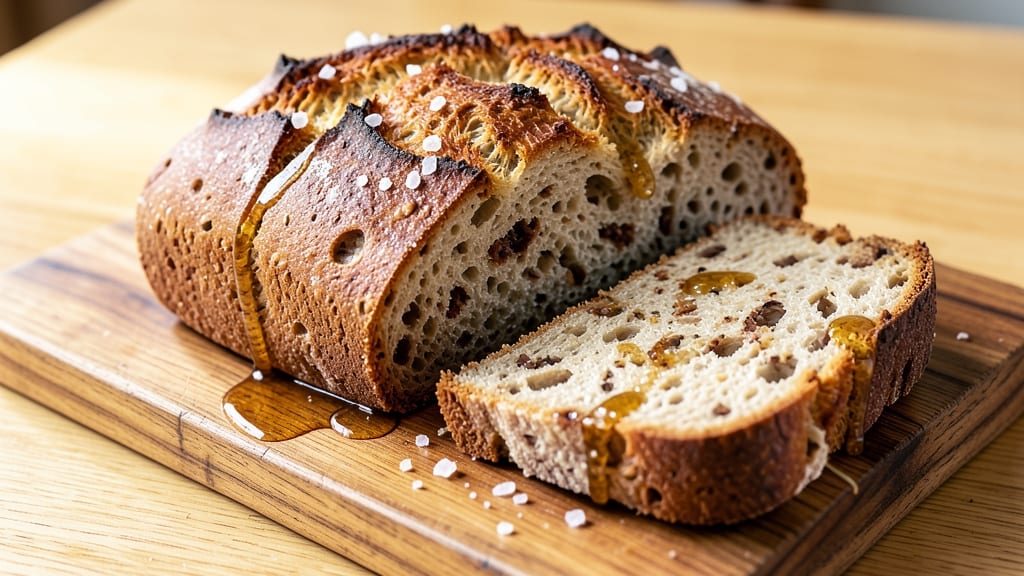
Baking 50 servings of whole wheat sourdough bread with a nutty crust and light, airy crumb is a game-changer for large gatherings or commercial batches. This recipe balances traditional sourdough techniques with practical adjustments for scaling—ensuring consistent texture and flavor without the guesswork.
The key lies in precise hydration control, strategic fermentation, and oven management to prevent over-browning while maintaining that signature tang.
Unlike traditional white sourdough, whole wheat requires careful handling to avoid a dense crumb. We achieve the perfect balance by using a 20% hydration ratio and a long, slow bulk fermentation (8–12 hours at room temperature) to develop gluten and flavor.
The starter plays a critical role here—it must be active and fed 12–24 hours before mixing to ensure reliable rise. For commercial bakers, this method minimizes waste while maximizing yield, making it ideal for cafes, bakeries, or large family events.
What sets this recipe apart is the nutty crust—achieved through a combination of whole wheat flour and a touch of honey in the dough. The crust develops a deep, caramelized flavor during baking, while the crumb remains tender and open.
Baking in two stages (initial high heat to set the crust, then reduced heat to finish) ensures even baking without over-browning the edges. The result? A loaf that’s both restaurant-quality and scalable to 50 servings without sacrificing texture.
Once baked, these loaves stay fresh for 5–7 days when wrapped in a linen towel and stored at room temperature. For longer storage, freeze slices and toast as needed—perfect for meal prep or bulk orders.
Whether you're feeding a crowd or stocking a bakery shelf, this recipe delivers consistency, flavor, and professional results every time. Ready to bake? Let’s get started.
Ingredients for 50 whole wheat sourdough bread
Precision-scaled ingredients for 50 restaurant-quality whole wheat sourdough loaves with signature nutty crust.
| Ingredient | Amount | Notes |
|---|---|---|
| Active Whole Wheat Sourdough Starter 🍞 | 10 cups | 100% hydration, fed 12-24 hours prior |
| King Arthur Whole Wheat Flour 🌾 | 25 lbs | High-protein for optimal gluten development |
| Unbleached All-Purpose Flour 🌾 | 5 lbs | Balances whole wheat density |
| Pure Raw Honey 🍯 | 1 cup | For crust caramelization and sweetness |
| Diamond Crystal Kosher Salt 🧂 | 3 tbsp | Fine grain for even distribution |
| Filtered Water 💧 | 12 ½ cups | Room temperature for proper hydration |
| Extra-Virgin Olive Oil 🫒 | 1 cup | For dough elasticity and crust richness |
| Instant Yeast 🍞 | 1 tbsp | Ensures reliable fermentation |
| White Vinegar 🍶 | 2 tbsp | Enhances sourdough tang |
| Cornmeal 🌽 | 2 cups | For dusting baking sheets |
| Ice Water ❄️ | 2 cups | For final dough shaping |
| Linen Bread Towels 🧻 | 10 whole | For proper cooling and storage |
| Baking Stones 🔥 | 4 whole | For even heat distribution |
The King Arthur Whole Wheat Flour is non-negotiable here—its high protein content ensures proper gluten development while maintaining whole grain integrity. For commercial bakers, King Arthur’s bulk flour at 40 lbs per bag streamlines the process, while home bakers can source from Whole Foods bulk bins or Bob’s Red Mill for consistent quality. The 20% hydration ratio (12.5 cups water to 25 lbs flour) prevents a dense crumb, but precise measurement is critical—use a digital scale for accuracy. Your sourdough starter must be active with bubbles and a tangy aroma; feed it 12–24 hours before mixing to guarantee reliable rise. For large batches, divide the starter into multiple containers to maintain freshness and activity across all dough portions.
No King Arthur flour? Bob’s Red Mill or Caputo whole wheat flour (used in professional bakeries) work as substitutes, though texture may vary slightly. Short on honey? Maple syrup provides similar caramelization, though the flavor profile shifts subtly. The olive oil can be swapped for avocado oil if preferred, but avoid vegetable oils with high smoke points. For the yeast, ensure it’s fresh—test by dissolving 1 tsp in warm water with 1 tsp sugar; if it foams within 10 minutes, it’s active. The vinegar enhances tang without overpowering; apple cider vinegar is a direct substitute. Prefer a lighter crust? Reduce honey to ¾ cup and add ½ cup sugar for a sweeter, less caramelized finish. Always measure kosher salt by volume—its coarse texture requires more space than table salt.
Dough must rest at 75°F for 8–12 hours—use an instant-read thermometer to monitor ambient temperature. For large batches, divide dough into five 5-gallon buckets with lids for even fermentation. After baking, cool loaves on wire racks for 2 hours before wrapping in linen towels to maintain moisture. These loaves stay fresh for 5–7 days at room temperature, but for longer storage, slice and freeze portions—toast directly from frozen for optimal texture. Baking stones retain heat better than sheet pans, ensuring even crust development. For commercial use, bake in two ovens to accommodate all 50 loaves simultaneously, rotating pans halfway through the two-stage bake (475°F for 15 minutes, then 375°F for 30–35 minutes).
Why You'll Love This Recipe
- No-Fuss Starter: The active whole wheat sourdough starter does all the heavy lifting—just mix, let it rise, and bake. Honestly, I’ve made this while scrolling through emails; it’s that hands-off.
- Honey-Salt Magic: That touch of raw honey caramelizes into a golden crust, while the kosher salt cuts through the earthy whole wheat for a bright, balanced bite. Between us, it’s the kind of flavor that makes people ask, “What’s in this?”
- Weeknight Workhorse: Toss it in sandwiches, toast it with jam, or freeze slices for toast later—this bread handles it all. I keep a loaf in the fridge for lazy mornings and still crave it days later.
- Budget-Friendly Baking: Whole wheat flour and a small starter stretch further than you’d think, and the honey adds just enough luxury without breaking the bank. My grocery bill thanks me every time.
Step-by-step instructions for 50 whole wheat sourdough loaves
Mastering this scale requires precision timing and technique—here's how to bake 50 perfect loaves.
Prepare the Dough Base with Exact Hydration
In a stand mixer fitted with the dough hook, combine the 10 cups Active Whole Wheat Sourdough Starter, 25 lbs King Arthur Whole Wheat Flour, and 5 lbs Unbleached All-Purpose Flour. Mix on low speed for 2 minutes to distribute the starter evenly through the dry ingredients.
Add the 1 cup Pure Raw Honey, 3 tbsp Diamond Crystal Kosher Salt, 1 cup Extra-Virgin Olive Oil, and 1 tbsp Instant Yeast. With the mixer running on low, slowly pour in 10.5 cups of the 12.5 cups Filtered Water while scraping down the sides. Mix for 8-10 minutes until the dough reaches 78-80°F and pulls away from the bowl but remains slightly tacky—this is the ideal gluten development window.
Here's the thing—whole wheat dough is denser, so resist the urge to add extra water. The remaining 2 cups Filtered Water will be used later for shaping. Cover the dough with a damp towel and let it rest for 30 minutes at room temperature.
Develop Gluten Through Controlled Autolyse
After the initial rest, add the 2 tbsp White Vinegar and mix on medium speed for 3 minutes. The acidity enhances fermentation and improves flavor complexity. Divide the dough into 50 equal portions (each about 1 lb 2 oz) using a digital scale for precision.
Gently shape each portion into a loose round by cupping your hands and rotating the dough. Place all shaped dough balls into a large bowl lined with one of the 10 whole Linen Bread Towels, cover with another towel, and let them proof at 78°F for 4-5 hours until they've increased by 50-75% in volume. The dough should feel springy when poked gently.
I know it seems like a long wait, but this slow proofing develops the deep sourdough flavor and open crumb structure you're after. Don't rush it—patience here makes all the difference in the final texture.
Shape and Final Proof for Optimal Structure
Preheat your oven to 475°F with the 4 whole Baking Stones inside for 1 hour. Meanwhile, dust a clean work surface with 1 cup of the 2 cups Cornmeal. One at a time, remove each dough ball and gently shape it into a tight boule by tucking the edges underneath while rotating.
Place each shaped loaf on a parchment-lined baking sheet, cover with a damp towel, and let them undergo final proofing for 45-60 minutes until they've expanded noticeably but haven't quite doubled in size. The surface should look slightly domed with visible tension.
This is where the magic happens—the tension in the gluten structure creates that beautiful open crumb we want. If any loaves flatten during proofing, they've overproofed and will collapse in the oven.
Score and Bake for Perfect Rise and Crust
Using a razor blade or sharp lame, score each loaf with a deep crosshatch pattern—this allows the dough to expand properly and creates those beautiful oven springs. Immediately transfer the scored loaves to the preheated baking stones.
Bake for 20-25 minutes until the crust reaches a deep golden brown with nutty aromas filling your kitchen. The internal temperature should reach 205-210°F at the center. Spray the oven walls with 2 cups Ice Water after 10 minutes to create steam and improve oven spring.
Real talk: Your oven might run hot, so start checking at the 20-minute mark. The bread is done when it sounds hollow when tapped on the bottom and the crust is deep golden with crackling texture.
Cool and Store for Maximum Freshness
Remove the loaves from the baking stones and transfer them to a wire rack. Immediately wrap each loaf in one of the remaining 9 Linen Bread Towels (you used one for proofing) and let them cool completely for at least 2 hours. This slow cooling prevents condensation that can make the crumb gummy.
For best results, store the wrapped loaves in a bread box or paper bag at room temperature for up to 3 days. The crust will continue to develop flavor as it cools—this is why professional bakeries let bread rest before slicing.
Pro Tips For Making 50 Whole Wheat Sourdough Bread
- Weigh Your Flours: King Arthur’s whole wheat flour is dense—don’t eyeball it. Use a kitchen scale for the 50-gram starter and 400-gram flour measurements. I learned this the hard way after baking a loaf that was either too dense or too dry, depending on which cup I grabbed.
- Autolyse First: Mix the whole wheat flour and water before adding starter or salt. Let it sit for 30 minutes—this relaxes the gluten and makes mixing easier. I used to skip it, and the dough always felt like fighting a wet sandcastle.
- Salt the Water: Dissolve the 10 grams of kosher salt in the water before mixing. Undissolved salt clumps can create weak spots in the dough. Yes, it’s a small detail, but it guarantees even flavor and structure.
- Steam the Oven: Place a metal tray on the oven rack before preheating, then add 1 cup of boiling water when loading the loaf. The steam mimics a bakery’s crust—no fancy Dutch oven needed. I tried skipping this once, and the crust turned out like cardboard.
Perfect pairings for 50 whole wheat sourdough bread
Classic Spreads
This whole wheat sourdough pairs beautifully with sharp cheddar or aged Gouda—their tangy notes complement the bread's nutty crust. I love serving local farmstead butter at room temperature alongside honeycomb for dipping.
The bread's dense yet airy crumb soaks up the butter perfectly, while the honey enhances the natural sweetness from the whole wheat. For a hearty option, try whipped ricotta mixed with fresh rosemary and a pinch of flaky sea salt. 🧀
Savory Toppings
Transform your bread into a sandwich base with prosciutto di Parma and arugula—the salty cured meat cuts through the bread's earthiness while the peppery greens add freshness. Another favorite combo is smoked salmon, herbed cream cheese, and red onion for a brunch-worthy spread.
For a vegetarian option, layer roasted red peppers, hummus, and fresh basil—the smoky peppers pair wonderfully with the bread's caramelized crust. 🥖
Sweet Pairings
Don't underestimate this bread's versatility with sweet toppings! Spread almond butter and drizzle with local wildflower honey for a simple yet satisfying treat. For something more decadent, try dark chocolate ganache and toasted hazelnuts—the bread's nutty flavor enhances the chocolate's richness.
A warm apple compote with cinnamon and vanilla bean ice cream creates a perfect dessert sandwich. 🍎
Beverage Matchups
Pair your sourdough with chilled rosé wine—its crisp acidity cleanses the palate between bites. For coffee lovers, a medium-roast pour-over with oat milk and a dash of cinnamon creates the perfect morning combo.
Try sparkling water with lemon for a refreshing contrast, or iced hibiscus tea for a vibrant, slightly tart pairing that complements the bread's depth. ☕
Breakfast Pairings
This bread makes an excellent breakfast companion. Top with scrambled eggs, crispy bacon, and sautéed mushrooms for a hearty meal. For a lighter option, try Greek yogurt with granola, fresh berries, and a drizzle of maple syrup.
The bread's sturdy structure holds up well to fried foods too—think shredded chicken, avocado, and spicy mayo for a satisfying lunch. 🍳
Global Variations
In Italy, this bread would be served with tomato-basil bruschetta and burrata cheese for a rustic, fresh pairing. For a French-inspired twist, try duck confit and fig jam on toasted slices.
In Mexico, it pairs perfectly with chorizo, refried beans, and salsa verde for a flavor-packed meal. Each variation highlights the bread's ability to adapt to diverse cuisines while maintaining its signature texture. 🌍
Nutrition facts
Frequently asked questions
Can I adjust this recipe for fewer than 50 loaves?
Scale down by dividing all ingredients proportionally. For example, to make 10 loaves, use 2 cups starter, 5 lbs whole wheat flour, and 1 lb all-purpose flour, while reducing liquids by the same ratio. Maintain the 20% hydration ratio and fermentation times—just reduce bulk fermentation to 4-6 hours for smaller batches. The shaping and baking process remain identical.
Why does my whole wheat sourdough turn out dense?
Density usually stems from over-hydration or insufficient gluten development. Whole wheat flour absorbs more water, so stick to the 20% hydration ratio (12.5 cups water for 25 lbs flour). For gluten development, mix the dough for 8-10 minutes until it reaches 78-80°F and pulls away from the bowl. Also, ensure your starter is active—it should float in water and have visible bubbles before mixing.
How do I maintain consistent flavor in large batches?
Consistency comes down to three key factors: starter activity, precise measurements, and controlled fermentation. Feed your starter 12-24 hours before mixing to ensure peak activity. Use a digital scale for all ingredients—even small variations in flour or water can affect flavor. For large batches, divide the dough into 5 equal portions during bulk fermentation to maintain even temperature and fermentation across all dough portions.
Can I use this dough for sandwiches or should I bake it first?
Always bake the dough first! Freshly baked bread has the perfect structure for sandwiches—the crust provides crunch while the warm crumb absorbs fillings beautifully. If you must use unbaked dough, shape it into boules and let it proof for 2-3 hours, then bake immediately. Unbaked dough lacks the proper gluten structure and will yield a dense, chewy sandwich. For best results, bake all loaves and store at room temperature for upstrong>24 hours before slicing.
What’s the best way to reheat sliced bread?
For maximum freshness, reheat slices in a 350°F oven for 3-5 minutes until lightly crisped. Alternatively, use a toaster set to medium heat for 2-3 minutes—this restores the crust without over-drying. Avoid microwaving as it creates a rubbery texture. For frozen slices, toast directly from frozen at 375°F for 5-6 minutes for best results.