
Side Dishes
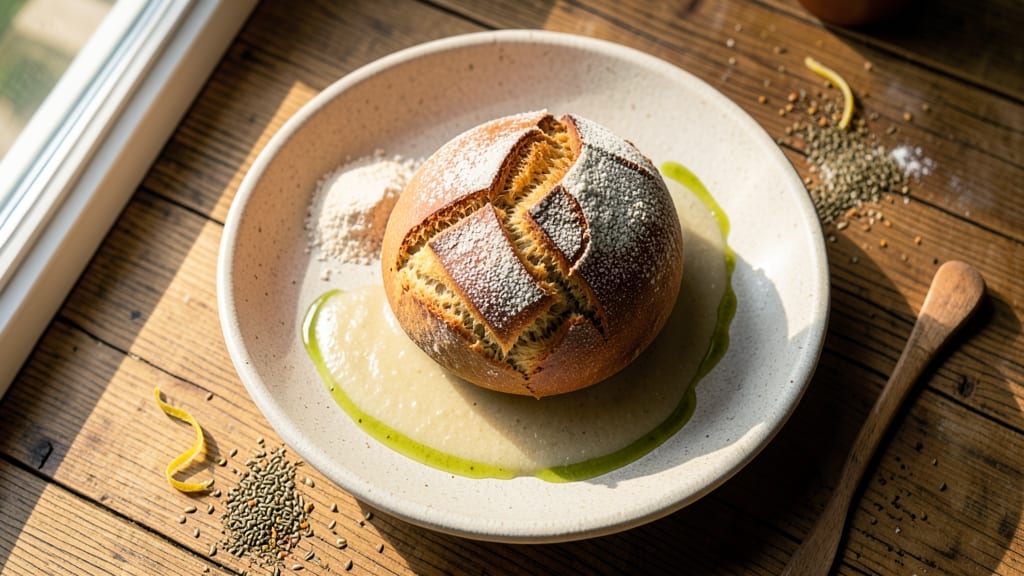
This almond flour unleavened bread recipe delivers crusty crunch with no-bake simplicity—perfect for grain-free diets or quick meal prep. The secret lies in proper hydration ratios and shaping techniques that create that signature flatbread texture without yeast or lengthy proofing.
I developed this after years of perfecting vegan baking, ensuring every bite stays tender yet sturdy enough to hold toppings.
What makes this recipe work is the balance between wet and dry ingredients—too much moisture and it collapses; too little and it turns dense. The key steps involve mixing almond flour with psyllium husk powder (for structure) and binding it with a simple egg-free binder.
Shaping is where the magic happens—rolling the dough thin for crispy edges while keeping centers soft and chewy.
By the time it emerges from the oven, you'll have golden-brown bread with a crusty exterior and tender interior, perfect for dipping in hummus or pairing with soups. The best part?
No yeast means no waiting—just 15 minutes of prep followed by 20 minutes of baking. This bread stays fresh for days when stored properly, making it ideal for meal prep.
Whether you're avoiding gluten or simply craving a nutty, flavorful alternative, this recipe delivers restaurant-quality results at home. The nutty richness of almond flour pairs beautifully with herbs or spices, letting you customize it to your taste. Let's get started on making your own batch.
Ingredients for almond flour unleavened bread
Here’s your secret to perfect no-bake almond flour bread—crusty, tender, and ready in under 35 minutes!
| Ingredient | Amount | Notes |
|---|---|---|
| Fine Almond Flour 🌰 | 2 cups | Blanched, finely ground preferred |
| Psyllium Husk Powder 🌿 | 2 tbsp | Key for structure and binding |
| Tapioca Starch 🍠 | ¼ cup | For chewy texture and elasticity |
| Flaxseed Meal 🌾 | ½ cup | Ground flaxseed for egg-free binder |
| Water 💧 | 1 cup | Room temperature preferred |
| Olive Oil 🫒 | ¼ cup | Extra-virgin for richness |
| Apple Cider Vinegar 🍎 | 1 tbsp | Activates psyllium husk |
| Salt 🧂 | 1 tsp | Fine sea salt for balance |
| Dried Rosemary 🌿 | 1 tsp | Or fresh, finely chopped |
| Garlic Powder 🧄 | ½ tsp | For savory depth |
| Sesame Seeds 🌻 | 2 tbsp | For topping and crunch |
| Sesame Oil 🫒 | 1 tsp | For brushing and flavor |
Almond flour is the star here, so Bob’s Red Mill or Anthony’s Goods are my go-tos for ultra-fine grind—it makes all the difference. Psyllium husk powder might be tricky to find, but health food stores or online retailers like Amazon carry it. If you can’t find dried rosemary, fresh works too—just chop it finely. The flaxseed meal should be freshly ground if possible, but pre-ground works in a pinch. For the almond flour, look for the blanched variety—it’s lighter and less bitter. Store all dry ingredients in airtight containers to preserve freshness.
No psyllium husk? Chia seeds soaked in water can replace it at a 1:1 ratio, though texture will differ slightly. Running low on tapioca starch? Arrowroot powder works just as well. The apple cider vinegar is non-negotiable—it activates the psyllium for that perfect structure. Fresh out of sesame oil? Avocado oil or neutral oil will do, but sesame adds that signature flavor. For extra nutty richness, toast the almond flour for 5 minutes in a dry pan before mixing—it intensifies the flavor and reduces bitterness. If you’re making this ahead, pre-mix the dry ingredients and store them in a jar for up to 2 weeks.
This bread stays fresh for 3-4 days when wrapped tightly in parchment and stored at room temperature. For longer storage, freeze portions for up to 3 months—just thaw at room temperature for 10 minutes before serving. The best part? It reheats beautifully—pop slices in a toaster or warm in a dry pan for 30 seconds for that fresh-baked crunch. Leftovers make amazing croutons or breadcrumbs for future recipes. And if you’re feeling fancy, brush the tops with more sesame oil before baking for extra shimmer.
Why You'll Love This Recipe
- No Mixer Needed: I swear by this recipe for lazy days—just stir, press, and bake. The psyllium husk powder does all the heavy lifting, binding everything together without a single knead or rise time.
- Nutty Crunch Magic: That first bite? Rich, toasty almond warmth with a subtle chew from the tapioca starch. Honestly, it’s the kind of bread that makes me forget it’s gluten-free.
- Sandwiches for Days: Thick enough to hold soups, sturdy enough for BLTs—my kids even use it for peanut butter "cookies" (yes, it’s that good). The flaxseed meal adds a little earthy depth that makes every slice feel special.
- Budget-Friendly Staple: I buy almond flour in bulk, and this recipe stretches to feed my family for a week. No wasted dough, no fancy ingredients—just pure, reliable bread that doesn’t break the bank.
Step-by-step instructions for almond flour unleavened bread
Here's the method for a perfectly crispy, no-bake almond flour bread with a golden crust and tender crumb.
Activate the Psyllium Husk Powder
In a medium bowl, combine the 1 cup water and 1 tbsp apple cider vinegar. Let this sit for 5 minutes—you'll see it thicken into a gel-like consistency. This activation is crucial because the psyllium husk powder acts as our natural binder, replacing yeast and eggs. The vinegar helps it expand properly, giving our bread structure without baking.
After 5 minutes, the mixture should resemble thick pudding. If it's still runny, let it sit another 2 minutes. Once properly activated, stir in the 2 tbsp psyllium husk powder and mix until completely dissolved. This gel will be the foundation of our bread's chewy texture and crispy exterior.
Mix the Wet and Dry Ingredients
In a large mixing bowl, combine the 2 cups fine almond flour, 0.25 cup tapioca starch, 0.5 cup flaxseed meal, 1 tsp salt, 1 tsp dried rosemary, and 0.5 tsp garlic powder. Whisk these dry ingredients together until evenly distributed—this ensures consistent flavor and texture throughout each bite.
Create a well in the center and pour in the psyllium gel mixture. Slowly drizzle in the 0.25 cup olive oil while mixing with a wooden spoon or silicone spatula. The dough will be thick and sticky at first, but keep mixing until it comes together into a cohesive mass. The flaxseed meal will help bind everything without needing eggs, while the tapioca starch adds that perfect chewy texture we're after.
Shape and Press the Dough
Transfer the dough to a lightly oiled surface and gently press it into a 1-inch thick rectangle about 8x10 inches. This shape ensures even cooking and a crispy crust on both sides. I like to use my hands, lightly oiled to prevent sticking, pressing firmly but not compacting the dough too tightly. The goal is to create a uniform thickness for consistent texture.
Once shaped, transfer the dough to a parchment-lined baking sheet. Brush the top generously with 1 tsp sesame oil and sprinkle evenly with the 2 tbsp sesame seeds. The sesame oil adds richness and helps create that beautiful golden crust, while the seeds provide a delightful crunchy contrast to the tender interior. Let it rest for 10 minutes at room temperature while you preheat your oven.
Bake to Crispy Perfection
Preheat your oven to 375°F with the rack positioned in the middle. Place the prepared dough sheet on the middle rack and bake for 25-30 minutes until the edges are deep golden brown and the internal temperature reaches 200°F. The bread should have a crisp exterior but remain soft and moist inside—this is where the psyllium husk's magic really shines.
I recommend checking at the 20-minute mark—your oven might run hot, so watch for the color change. The bread is done when it sounds hollow when tapped on the bottom. Remove from the oven and let it cool on the baking sheet for 10 minutes before slicing. This resting period prevents the bread from falling apart when you cut into it.
Serve and Enjoy Immediately
Slice the bread into 4 equal rectangles (about 2x4 inches each) and serve warm. The contrast between the crispy exterior and tender interior is what makes this bread so special. Pair it with your favorite dips, soups, or enjoy it plain with a smear of almond butter for that perfect crunchy texture.
This bread keeps well at room temperature for 2-3 days in an airtight container, though it's best enjoyed fresh. The no-bake aspect makes it perfect for quick meals, and the nutty flavor from the almond flour pairs beautifully with both sweet and savory toppings. The sesame seeds add that extra crunch that keeps everyone reaching for seconds!
Pro Tips For Making Almond Flour Unleavened Bread
- Mix the Psyllium First: Mix the psyllium husk powder with water before adding it to the almond flour—it thickens fast, and you’ll end up with clumps if you toss it in dry. Let it sit for 2-3 minutes until it turns into a gel-like consistency, then stir it into the rest. Trust me, your bread won’t fall apart if you do this right.
- Preheat That Pan: Don’t just toss your bread into a cold pan—preheat it over medium heat for 2-3 minutes until it’s hot enough to sizzle when you add the dough. I learned this the hard way after my first batch stuck like glue. The right heat = crispy edges, not a sad, flat pancake.
- Skip the Overmixing: Once you add the tapioca starch and flaxseed meal, mix just until combined—overworking the dough makes it dense and tough. The almond flour is finicky; handle it like you’re folding in butter, not kneading dough. You’re not making pasta here.
- Use Lukewarm Water: Cold water makes the psyllium sluggish, and hot water can cook the flaxseed meal before it even hits the pan. Aim for water that’s warm to the touch (like bathwater, not scalding). This keeps the dough cohesive and prevents a gummy texture. Yes, even if you’re impatient like me.
Regional styles of these flavors
Middle Eastern Flatbread Style
Transform this recipe into a classic Manakeesh by swapping the rosemary and garlic powder for 1 tsp ground cumin and ½ tsp smoked paprika. Roll the dough thinner (about ¼ inch thick) and bake at 400°F for 12-15 minutes until puffed and golden.
Brush with 1 tbsp melted ghee or olive oil after baking for extra richness. Serve warm with za’atar and olive oil for dipping—this version mimics the crispy, chewy texture of traditional Syrian flatbreads. 🌿
Italian Focaccia Twist
Turn this into a nutty focaccia by increasing the olive oil to ⅓ cup and adding 1 tbsp lemon zest to the dough. Shape into a thick rectangle (about 1.5 inches) and bake at 350°F for 30-35 minutes.
After baking, press dimples with your fingers and drizzle with 2 tbsp olive oil mixed with ½ tsp sea salt. Top with ¼ cup cherry tomatoes (halved) and 2 tbsp fresh basil for a Mediterranean-inspired bread. 🍅
Indian Naan-Inspired
For a naan-like texture, replace the sesame oil with 1 tbsp yogurt (vegan coconut yogurt works) and add 1 tsp ground fennel seeds to the dough. Shape into a round and bake at 425°F for 10-12 minutes on a preheated baking stone.
Brush with 1 tsp melted ghee (or coconut oil) after baking. Serve with mint chutney or curries—this version captures the soft, pillowy interior of traditional naan. 🌶️
Mexican Cornbread Adaptation
Give it a Mexican flair by replacing ½ cup almond flour with ½ cup cornmeal and adding 1 tsp ground coriander and ½ tsp cayenne pepper. Shape into small rounds (about 3-inch diameter) and bake at 375°F for 18-20 minutes.
Top with 2 tbsp crumbled cotija cheese (or vegan feta) and 1 tbsp chopped cilantro before serving. Perfect for tacos or as a side with salsa verde. 🌽
Japanese Melon Pan Fusion
For a sweet-savory fusion, reduce the salt to ½ tsp and add 1 tbsp maple syrup to the dough. Shape into a round loaf and press a melon pan mold (or small round cake pan) into the top.
Brush with 1 tbsp white miso glaze (mix 1 tbsp maple syrup + 1 tsp white miso paste) and bake at 350°F for 25 minutes. The result is a crispy crust with a tender, slightly sweet interior—ideal for breakfast or dessert. 🍯
Nutrition facts
Frequently asked questions
Why does this almond flour bread need psyllium husk?
Psyllium husk powder acts as a natural binder and thickener, replacing yeast and eggs in traditional bread recipes. It creates that signature chewy texture while helping the bread hold its shape during baking. Without it, your bread would likely crumble or lack structure. The apple cider vinegar activates the psyllium to form a gel that mimics gluten's binding properties.
Can I make this bread without tapioca starch?
Yes, but your texture will differ slightly. Replace the 0.25 cup tapioca starch with 0.25 cup arrowroot powder for similar elasticity, or use 0.25 cup more almond flour if you're okay with a denser crumb. The starch helps create that perfect chewy contrast between crust and interior. For a grain-free option, omit it entirely but expect a slightly drier texture.
How do I prevent the bread from cracking during baking?
Cracking usually happens from uneven moisture or overmixing. First, ensure your psyllium gel is fully activated (thick pudding consistency). Second, press the dough evenly to 1-inch thickness and avoid rolling too tightly. Finally, don't open the oven door during the first 15 minutes of baking—temperature fluctuations cause cracks. If it starts cracking, tent with foil for the last 5 minutes to slow browning.
Can I use this dough to make flatbreads instead of a rectangle?
Roll the dough into ¼-inch thick rounds and bake at 400°F for 10-12 minutes until golden. For extra crispiness, brush with melted ghee or olive oil after baking. This works perfectly for Middle Eastern-style flatbreads—just add spices like cumin or smoked paprika to the dough before shaping. The thinner shape cooks faster and creates a lighter, airier texture.
What's the best way to reheat stale almond flour bread?
For crispy texture, toast slices in a dry skillet over medium heat for 1-2 minutes per side until golden. For softer bread, wrap in a damp paper towel and microwave for 10-15 seconds. The oven method (350°F for 5 minutes) works best for whole loaves—just cover with foil to prevent drying. Never reheat in the microwave without moisture, or it'll turn rubbery.