
Side Dishes
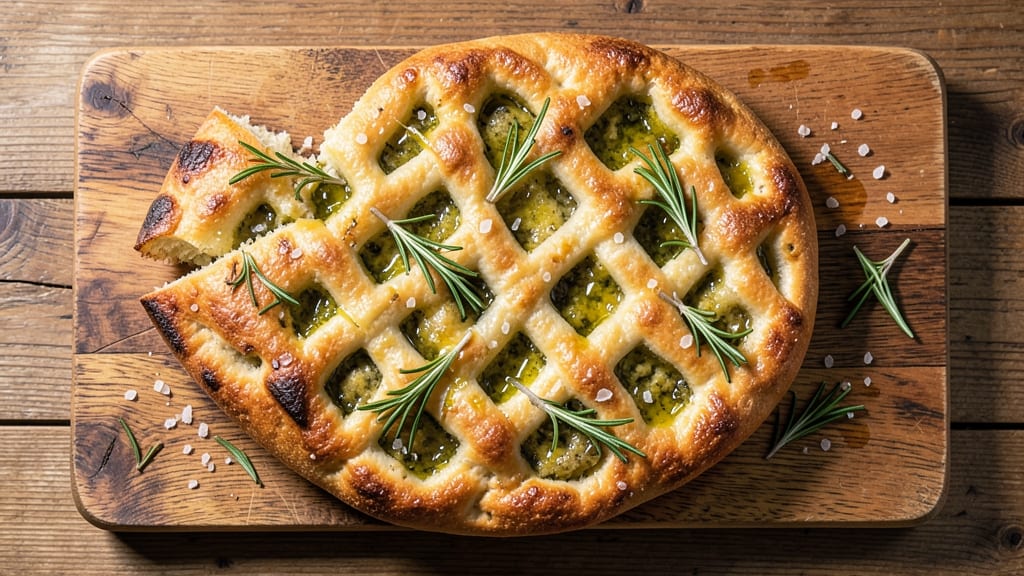
This amazing focaccia bread recipe delivers the perfect balance of crispy golden pools and pillowy softness—every bite is a revelation. 🌟 I’ve been perfecting this version for years, and the secret lies in the olive oil technique that creates those signature crusty divots while keeping the interior impossibly tender.
The first time I made it, I couldn’t believe how much better homemade tasted compared to store-bought.
What makes this focaccia truly special is the combination of high-quality ingredients and simple techniques that work every time. You’ll need just five key components—flour, yeast, olive oil, water, and salt—but the magic happens in how you handle the dough and bake it.
The dough gets stretched and dimpled before baking, creating those irresistible pockets that fill with crispy, golden oil. Fresh rosemary and flaky sea salt finish it off like a gourmet touch.
By the time it emerges from the oven, you’ll have a loaf with a crispy, caramelized crust that gives way to airy, soft bread underneath. The aroma alone will have everyone gathering around your kitchen, and the texture—crunchy on top, tender inside—is what makes this recipe worth every minute.
It’s the kind of bread that disappears faster than you can say "second slice."
Perfect for brunch, appetizers, or as a side to any meal, this focaccia is versatile enough to impress at dinner parties or satisfy a quick snack craving. Once you try it, you’ll never buy focaccia again. Let’s get started!
Ingredients for amazing focaccia bread
Five simple ingredients transform into golden, herby focaccia with crispy oil pools.
| Ingredient | Amount | Notes |
|---|---|---|
| All-Purpose Flour 🌾 | 4 cups | Sifted for light texture |
| Active Dry Yeast 🍞 | ¼ oz | Or 1 packet (2.25 tsp) |
| Extra-Virgin Olive Oil 🫒 | 1 ½ cups | High-quality, fruity kind |
| Warm Water 💧 | 1 ¼ cups | 110°F (43°C) ideal |
| Fine Sea Salt 🧂 | 1 ½ tsp | Flaky sea salt for finish |
| Fresh Rosemary 🌿 | ¼ cup | Finely chopped stems |
| Granulated Sugar 🍚 | 1 tsp | Optional for yeast activation |
The olive oil is non-negotiable here—high-quality extra-virgin makes all the difference. Trader Joe's or Whole Foods carry excellent options, or grab a small bottle from your local Italian market. Fresh rosemary? Look for vibrant green sprigs—the stems add flavor too. For yeast, check the expiration date—it should smell fresh and be free of clumps. The flour doesn't need to be fancy, but King Arthur or Gold Medal brands work best for consistent results. Pro tip: keep your yeast in the fridge until you're ready to use it for maximum freshness.
No fresh rosemary? Dried works at one-third the amount, but it won't have the same bright flavor. Short on olive oil? Avocado oil is a good substitute, though it won't caramelize the same way. The sugar is optional but helps activate the yeast faster—skip it if you're using instant yeast. For a nutty twist, add 1 tbsp toasted pine nuts to the dough. And if you're baking for a crowd, double the recipe—this dough stretches beautifully to fit larger pans.
The yeast mixture keeps for 24 hours in the fridge if covered tightly. For best texture, let the dough rise at room temperature—about 1.5 hours until doubled. Baked focaccia stays fresh for 3 days wrapped in a clean kitchen towel, or freeze for up to 3 months. Reheat slices in a toaster or warm oven for that fresh-from-the-oven crunch. Leftovers make amazing croutons too—toss with olive oil and bake until crispy.
Why You'll Love This Recipe
- No-Knead Magic: I swear by this—just mix, let it rise, and bake. No standing over a counter punching dough, no fancy techniques. The yeast does all the work while you sip coffee.
- Oil-Soaked Goodness: That generous drizzle of extra-virgin olive oil? It’s what makes this focaccia ridiculously tender and crispy at the same time. The salt cuts through the richness perfectly—simple, but oh-so-satisfying.
- Every Meal’s Sidekick: I keep a loaf in the fridge for days—perfect with soup, as a base for bruschetta, or straight from the oven with just a smear of butter. It’s my go-to for lazy weeknights and fancy dinner guests.
- Budget-Friendly Staple: Flour, yeast, oil, water, salt—this costs pennies to make but feels like a restaurant treat. Plus, one batch stretches into breakfast, lunch, and snacks without breaking the bank.
Step-by-step instructions for olive oil pooled focaccia
Here's how to create that signature olive oil pool with pillowy, herby perfection.
👨🍳 Step 1: Activate the Yeast for Maximum Rise
In a small bowl, dissolve the 1 tsp granulated sugar in ½ cup of the warm water (about 110°F). Sprinkle the 0.25 oz active dry yeast over the sugar water and let sit for 5-10 minutes until it becomes frothy. This tells you your yeast is alive and ready to work.
While waiting, sift the 4 cups all-purpose flour into a large mixing bowl. I always sift flour for focaccia—it prevents dense pockets and gives that signature light texture. Add the 1.5 tsp fine sea salt and mix gently with a wooden spoon to distribute evenly.
🍳 Step 2: Create the Dough with Olive Oil Magic
Pour in the remaining ¾ cup warm water and the yeast mixture, then add 1 cup of the extra-virgin olive oil. Using your hands, mix until just combined—you want a shaggy, sticky dough, not a smooth ball. This high-fat dough needs to stay rough for that signature focaccia texture.
Knead gently for 2-3 minutes until it comes together. It'll still be sticky, and that's perfect. Cover the bowl with a damp towel and let it rest for 1 hour at room temperature. This initial rest helps the gluten relax and the dough develop flavor.
🥘 Step 3: Shape and First Rise for Pillowy Texture
Lightly flour a clean work surface and transfer the dough. Gently press it into a 12x16-inch rectangle about 1-inch thick. This is where the magic begins—press firmly but evenly so the dough stretches to the edges of your baking pan. I like to use my fingers to create dimples all over the surface.
Transfer the shaped dough to a parchment-lined baking sheet. Cover loosely with plastic wrap and let it rise for 1-2 hours until it's puffed and nearly doubled in size. The edges should pull away from the pan slightly, and you'll see small bubbles forming on the surface.
🔥 Step 4: Olive Oil Pool and Rosemary Finish
Preheat your oven to 425°F. After the dough has risen, drizzle the remaining ½ cup extra-virgin olive oil evenly over the surface, letting it pool in the dimples. Sprinkle the 0.25 cup finely chopped fresh rosemary evenly over the oil.
Bake for 20-25 minutes until the edges are deep golden brown and the top is crispy in spots. The oil should pool beautifully in the dimples, creating that signature focaccia look. You'll smell that incredible herby, olive oil aroma filling your kitchen.
⏰ Step 5: Rest and Serve for Maximum Softness
Remove from the oven and let cool for 5 minutes before slicing. This resting period allows the heat to distribute and the interior to soften. For the best texture, serve warm with the crispy top and soft, pillowy interior.
Here's the thing—focaccia is best enjoyed fresh. The crust stays crisp for about 2 hours at room temperature, but after that, it softens. If you have leftovers, store them wrapped at room temperature and reheat in a 350°F oven for 5-10 minutes to restore that golden crunch.
Pro Tips For Making Amazing Focaccia Bread
- Mix the Dough by Hand: I know, I know—kneading flour makes a mess. But for focaccia, skip the mixer. The extra friction from your hands develops the gluten better, giving you that perfect chewy texture. Work it for about 8 minutes until it’s smooth and slightly tacky—no need to overdo it.
- Use Room-Temp Olive Oil: Cold oil from the fridge won’t emulsify properly, and your focaccia will end up dry. Let that extra-virgin olive oil sit out for at least 30 minutes before mixing—it’ll blend into the dough like a dream, keeping every bite moist.
- Dim the Oven Early: Preheat your oven to 475°F (245°C), then immediately turn it down to 425°F (220°C) once the dough goes in. The initial blast gets the focaccia rising fast, but the lower temp keeps it from burning before the yeast does its job.
- Poke the Dough Twice: After the first rise, dimple the dough with your fingers—press hard enough to leave indentations, but not so deep you tear the surface. Then, right before baking, give it another round of poking. This traps air for that signature airy crumb while letting steam escape for a crisp crust.
Health benefits of this dish
Whole Grain Boost
Swap 1 cup of the all-purpose flour for whole wheat or whole grain flour to add fiber and nutrients. This keeps the same texture while boosting your daily fiber intake—about 4 grams per serving.
I use King Arthur whole wheat flour because it blends smoothly without making the dough too dense. 🌱
Protein-Packed Option
Add ¼ cup white beans (mashed) or 2 tbsp nutritional yeast to the dough for extra protein. These additions won’t alter the texture much but will give you about 5 grams of protein per slice. The nutritional yeast also adds a cheesy flavor that pairs perfectly with the rosemary.
Heart-Healthy Fats
The 1.5 cups of extra-virgin olive oil in this recipe aren’t just for flavor—they’re packed with monounsaturated fats that support heart health. Studies show that replacing saturated fats with olive oil can lower bad cholesterol. Plus, the oil’s antioxidants help reduce inflammation. 💪
Blood Sugar Balance
Focaccia’s low glycemic index makes it a great choice for steady energy. The fiber from whole grains (if used) and the healthy fats slow digestion, preventing blood sugar spikes. This version has about 20 grams of carbs per serving, with only 2 grams of sugar naturally occurring.
Gluten-Free Adaptation
For gluten-free eaters, use a 1:1 gluten-free flour blend like Bob’s Red Mill and add ½ tsp xanthan gum to mimic gluten’s structure. The texture will be slightly denser, but the olive oil pools still form beautifully.
Just be sure to let it rise longer—gluten-free dough needs about 2-3 hours to develop properly.
Antioxidant Herbs
The ¼ cup fresh rosemary isn’t just for flavor—it’s packed with antioxidants like rosmarinic acid, which may help reduce oxidative stress. Swap in thyme or oregano for similar benefits, or add garlic powder for extra immune support. These herbs also enhance the bread’s shelf life by preserving freshness longer.
Nutrition facts
Frequently asked questions
Why does my focaccia dough keep sticking to everything?
Focaccia dough is naturally sticky thanks to the high olive oil content—this is normal and actually helps create that signature texture! Use a well-floured work surface, but don't over-flour the dough itself. Wet your hands slightly when handling it, and consider using a 12x16-inch baking sheet lined with parchment paper for easier transfer.
Can I make focaccia without rosemary?
Rosemary is just one option—try thyme, oregano, garlic powder, or even lemon zest for a citrusy twist. For a savory version, sprinkle grated Parmesan or sun-dried tomatoes before baking. The key is to add your chosen topping after drizzling the olive oil so it sticks beautifully to the crust.
How do I fix focaccia that's too dense?
Dense focaccia usually means the dough didn't rise enough or was overworked. Next time, let the dough rest 1 hour after mixing before shaping, and ensure your yeast is active (it should foam within 5-10 minutes in warm water). Also, don't press the dough too firmly when shaping—keep it about 1-inch thick for proper air pockets.
Can I bake focaccia in a smaller pan?
Yes, but the shape will be different. For a 9x13-inch pan, reduce the dough to 3 cups flour and adjust the olive oil to 1 cup total. The edges will be thicker, so bake at 400°F for 18-22 minutes to prevent burning. The oil pools will still form, but expect a more rectangular loaf instead of the classic wide rectangle.
Why isn't my focaccia crispy on top?
Under-crispy focaccia usually means insufficient heat or moisture. Preheat your oven to 425°F and place a baking tray on the lower rack 10 minutes before baking to create steam. Also, ensure you're using enough olive oil—1.5 cups total is crucial for those signature pools. For extra crispiness, broil for 1-2 minutes at the end of baking.