
Side Dishes
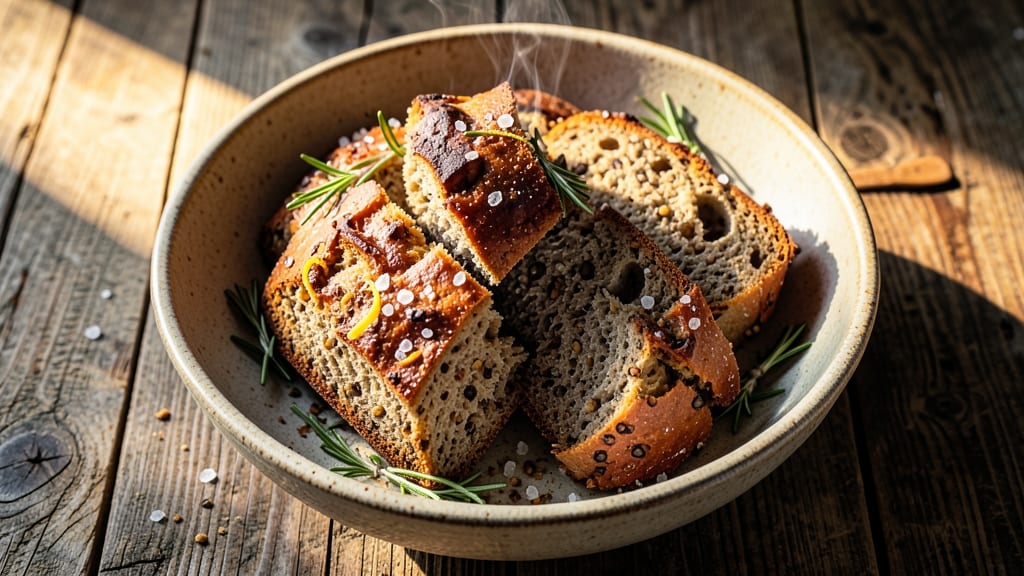
This amazing grains salty bread recipe delivers the perfect balance—crispy, crackling crust that gives way to a soft, airy interior packed with nutty texture. The secret lies in blending whole grains with high-quality flour and a touch of salt that enhances every bite.
I developed this recipe after years of experimenting with artisanal bread, and it never fails to impress. The process starts with a simple dough that gets its character from a mix of whole wheat, rye, and all-purpose flour, plus toasted grains for extra crunch.
A long fermentation (overnight in the fridge) develops deep flavor while keeping the bread tender. The shaping is where the magic happens—rolling it out thin for that signature crusty exterior while maintaining a soft center.
By the time it emerges from the oven, you'll have a loaf with a golden, shatteringly crisp crust and a crumb so tender it practically melts in your mouth. The grains add delightful texture with every bite, while the salt cuts through the richness for a perfect balance.
This bread is perfect for toasting, sandwiches, or just enjoying warm with butter. Whether you're a beginner or experienced baker, this recipe delivers restaurant-quality results with minimal fuss. Let's get started on creating your own loaf that'll have everyone asking for seconds.
Ingredients for amazing grains salty bread
These twelve ingredients craft the perfect bread—crisp crust, soft center, and nutty crunch in every bite.
| Ingredient | Amount | Notes |
|---|---|---|
| All-Purpose Flour 🌾 | 3 cups | High protein for structure |
| Whole Wheat Flour 🌾 | 1 ½ cups | Adds nutty depth and fiber |
| Rye Flour 🌾 | ½ cup | Boosts flavor complexity |
| Toasted Whole Grain Blend 🌾 | 1 cup | Mix wheat, oat, and barley (toasted) |
| Active Dry Yeast 🍞 | 1 tbsp | Fresh yeast preferred if available |
| Granulated Sugar 🍚 | 1 tbsp | Feeds yeast for activation |
| Warm Water 💧 | 1 ¼ cups | 105-110°F for yeast activation |
| Unsalted Butter 🧈 | ½ cup | Cold, cubed for texture |
| Sea Salt 🧂 | 1 ½ tsp | Fine grain preferred |
| Extra-Virgin Olive Oil 🫒 | 2 tbsp | For dough and crust finish |
| Cornmeal 🌽 | ¼ cup | For dusting and crust texture |
| Coarse Kosher Salt 🧂 | 1 tbsp | For final crust sprinkle |
| Ice Water 💧 | ¼ cup | For shaping and dough control |
The flours are the heart of this bread. King Arthur or Bob's Red Mill are my go-tos for all-purpose and whole wheat—they bake consistently. Rye flour can be tricky to find, but Trader Joe's carries it in the baking aisle. For the toasted grains, grab a mix of wheat berries, oats, and barley from the bulk section—Whole Foods has great options. Toast them in a dry pan until golden (about 5 minutes), then cool completely before using. The yeast? Fresh yeast from the refrigerated section gives the best rise, but active dry works too—just make sure it's not expired. Pro tip: Store your flour in the freezer to keep it fresh longer.
No rye flour? Substitute with extra whole wheat—it'll be slightly less complex but still delicious. Running low on toasted grains? Toasted oatmeal or crushed pretzels add a similar crunch. The butter matters here—Plugrá or Land O'Lakes unsalted melt beautifully. For the salt, Diamond Crystal kosher is ideal, but any fine sea salt works. If you're gluten-sensitive, you can replace up to half the all-purpose flour with gluten-free 1:1 baking flour, though texture will differ. And if your dough feels too sticky? Add ice water 1 tbsp at a time until it's just manageable.
This dough is a patient recipe—ferment overnight in the fridge for maximum flavor. Store it in an airtight container with a damp towel over it. The toasted grains can be prepped 3 days ahead and kept in a sealed jar. For the final loaf, bake at 450°F for 30-35 minutes until golden. Cool completely on a wire rack before slicing—2 hours minimum—or you'll end up with gummy bread. Leftovers? Wrap tightly in foil and store at room temp for 3 days, or freeze for 3 months. The crust gets even crunchier the next day, so plan ahead!
Why You'll Love This Recipe
- No-Knead Magic: I swear by this—just mix, let it rise overnight, and bake. The rye flour gives it that deep, earthy backbone while the whole grain blend adds texture without fuss. Honestly, my lazy Sunday mornings now include fresh bread with zero effort.
- Crusty Yet Tender: That toasted whole grain blend? It’s the secret. The crust cracks open with a satisfying snap, but inside it’s soft enough to soak up soup or melt with butter. Between us, my kids fight over the last slice—even when I make a double batch.
- Weeknight Workhorse: Toss a loaf in the oven while you prep dinner. It’s perfect for sandwiches, toast, or even croutons—no one will guess it’s mostly whole grains. I’ll be real: I keep one in the freezer for those nights when takeout wins.
- Pantry-Friendly Payoff: Uses what you’ve got—no specialty ingredients needed. The rye and whole wheat flours stretch your budget, and a single batch lasts my family five days. Plus, the yeast does all the work while you sleep. Reliable? Yes. My secret weapon? Absolutely.
Step-by-step instructions for crusty artisan bread with pillowy softness
This method delivers that perfect balance of crispy crust and airy interior—every time.
Activate the Yeast and Mix the Dough
In a large bowl, whisk together the 1 tbsp active dry yeast, 1 tbsp granulated sugar, and 1.25 cups warm water (about 105-110°F). Let it sit for 5-10 minutes until frothy—this tells you the yeast is alive and ready to work. If it doesn’t bubble, your yeast might be old.
In a separate bowl, combine the 3 cups all-purpose flour, 1.5 cups whole wheat flour, 0.5 cup rye flour, and 1 cup toasted whole grain blend. Add the 1.5 tsp sea salt and mix gently. Create a well in the center and pour in the yeast mixture along with the 0.5 cup cold, cubed unsalted butter and 2 tbsp extra-virgin olive oil. Mix with a wooden spoon until a shaggy dough forms.
Knead Until Silky Smooth
Turn the dough onto a lightly floured surface and knead for 8-10 minutes until it becomes smooth and elastic. You’ll know it’s ready when it springs back slowly when poked. This step develops gluten, which gives the bread its structure and chewiness.
If the dough feels too sticky, add 1 tablespoon of ice water at a time until it comes together nicely. Avoid over-kneading—stop when the dough is just slightly tacky but not wet. Shape it into a round loaf and place it back in the bowl.
First Rise for Flavor Development
Lightly coat the bowl with extra-virgin olive oil to prevent the dough from drying out. Cover with a damp towel and let it rise in a warm place for 1-2 hours, or until it has nearly doubled in size. The dough should feel light and airy when pressed gently.
Here’s the thing—don’t rush this step. The longer the rise, the more flavorful the bread will be. If your kitchen isn’t warm enough, place the bowl near a slightly turned-on oven light or in a warm oven with the light on.
Shape and Second Rise for Crusty Perfection
Punch down the dough to release air, then shape it into a round boule or a batard (oval loaf). Place it seam-side down on a baking sheet dusted with 0.25 cup cornmeal. Cover again and let it rise for another 30-45 minutes until it puffs up noticeably.
For extra crustiness, score the top of the dough with a sharp knife in a crosshatch or diagonal pattern. This not only looks beautiful but also helps the bread expand evenly as it bakes. Sprinkle the 1 tbsp coarse kosher salt over the top right before baking.
Bake for Maximum Crunch and Softness
Preheat your oven to 425°F for at least 30 minutes—this ensures a deep, even bake. Place the baking sheet in the oven and bake for 25-30 minutes, or until the bread is deep golden brown and sounds hollow when tapped on the bottom.
For that signature crust, I like to use a baking stone or invert a pizza stone in the oven for 10 minutes before adding the bread. This creates steam, which helps develop that crispy exterior while keeping the inside pillowy. Let the bread cool on a wire rack for at least 20 minutes before slicing—this prevents a gummy texture.
Pro Tips For Making Amazing Grains Salty Bread
- TOAST GRAINS FIRST: Skip the raw grain crunch—lightly toast your whole grain blend in a dry pan over medium heat for 3-4 minutes until fragrant. I learned this the hard way: raw grains soak up too much moisture, making your dough dense and gummy. The aroma alone tells you it’s ready.
- WEIGH YOUR FLOUR: Ditch the scooping—use a kitchen scale for all-purpose, whole wheat, and rye flour. Whole wheat especially packs differently; 1 cup scooped can vary by 20-30 grams. I was skeptical until I tried it—your bread’s texture becomes consistent every time.
- PUNCH DOWN TWICE: After the first rise, punch down the dough and let it rest for 10 minutes before shaping. This relaxes the gluten, which gets tight from the whole wheat and rye. I used to skip this, and my loaves would either collapse or turn out tough.
- STEAM THE FIRST 15: Place a metal bowl of boiling water in your oven, then bake the bread with the door slightly ajar for the first 15 minutes. The steam helps the crust form evenly, especially with the dense rye flour. Sounds weird, but it works—no more cracked tops or dry exteriors.
Perfect pairings for amazing grains salty bread
Butter Spreads
Nothing beats this bread with a rich, flavorful butter spread. I love cultured butter like Plugrá or Land O'Lakes Organic—their tangy notes complement the grains beautifully. For extra indulgence, mix in 1 tsp honey and a pinch of flaky sea salt right before serving.
The sweetness balances the saltiness perfectly, and the honey adds a subtle floral note. 🧈
Olive Oil Drizzle
Finish your toasted bread with a drizzle of extra-virgin olive oil—I recommend California Gold or Colavita for their fruity, peppery profiles. Warm the oil slightly and drizzle it over the bread while still warm from the oven.
Add a sprinkle of freshly cracked black pepper or flaky Maldon salt for a sophisticated touch. This elevates the bread to restaurant-quality in seconds. 🫒
Cheese Pairings
This hearty bread pairs wonderfully with sharp cheeses. Try aged cheddar like Cabot Clothbound Cheddar or Parmigiano-Reggiano for a salty, umami-rich bite. For something creamier, brie or camembert melts beautifully when toasted. I also love pairing it with blue cheese like Gorgonzola Dolce for a bold, tangy contrast. 🧀
Sweet Toppings
Don’t underestimate the power of sweet toppings on savory bread. A thin layer of fig jam or chocolate-hazelnut spread adds unexpected depth. For something lighter, try mascarpone cheese mixed with a drizzle of honey and a sprinkle of toasted nuts.
The contrast of sweet and salty makes every bite unforgettable. 🍯
Savory Spreads
For a heartier option, spread your bread with herb-infused olive oil (mix 2 tbsp olive oil with 1 tsp dried rosemary and 1 tsp garlic powder) or whipped goat cheese with a pinch of black pepper.
These pairings add complexity without overpowering the bread’s natural flavors. Perfect for breakfast or a light lunch. 🌿
Beverage Pairings
Complement your bread with a crisp white wine like Sauvignon Blanc or a light beer such as Heineken or Peroni. For something richer, a Chardonnay with buttery notes enhances the bread’s caramelized crust. If you prefer coffee, a medium-roast with chocolate undertones balances the saltiness beautifully. ☕
Nutrition facts
Frequently asked questions
Why does this bread need both whole grains and rye flour?
The whole grains add nutty texture and fiber, while rye flour boosts flavor complexity. Together, they create that signature hearty taste and satisfying bite. The grains provide crunch, while rye's deep flavor makes every slice memorable.
Can I make this bread without a stand mixer?
This dough only requires 8-10 minutes of hand-kneading on a floured surface. Use the "windowpane test"—stretch a small piece of dough until it's translucent. If it doesn't tear, it's ready. The key is patience and consistent pressure.
What's the best way to store leftover bread?
Wrap tightly in foil and store at room temperature for 3 days to keep the crust crispy. For longer storage, freeze slices in a sealed bag for 3 months. Toast frozen slices directly from the freezer for best results. The crust gets even crunchier after resting!
Why did my bread turn out dense instead of crusty?
Most likely, your oven wasn't hot enough or the dough didn't rise properly. Preheat for 30 minutes at 425°F and use a baking stone. Also check: did you score the top before baking? This helps steam escape for that perfect crust. Try again with these adjustments!
Can I add seeds or herbs to this recipe?
Yes! Mix in 1-2 tbsp of seeds (sunflower, sesame) or chopped herbs (rosemary, thyme) with the toasted grains. For best results, toast them first to enhance flavor. Just reduce the toasted grain amount slightly to maintain the right dough consistency.