
Side Dishes
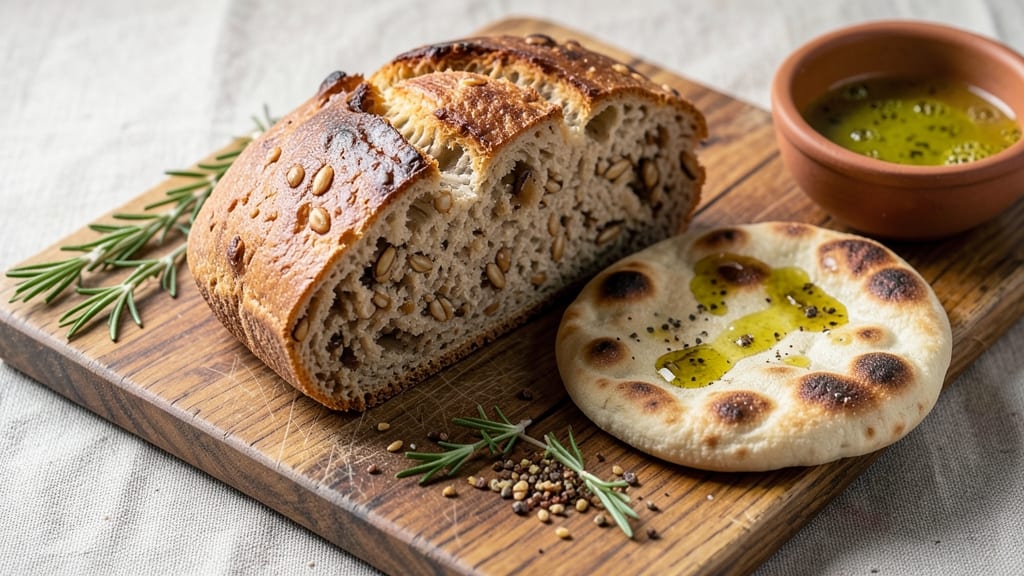
This Arabic barley bread recipe brings the warm, nutty aroma of Middle Eastern kitchens to your table, where every bite delivers a perfect balance of crispy crust and chewy heart. ✨ The secret lies in combining barley flour with traditional yeast and olive oil, creating a loaf that's both rustic and refined—ideal for soaking up stews or pairing with fresh dips.
I've perfected this recipe over years of testing, ensuring the dough develops just enough elasticity for easy shaping while maintaining that signature earthy flavor.
What sets this bread apart is the barley flour, which adds a subtle nuttiness and hearty texture that traditional wheat bread can't match. The dough requires minimal handling—just mix, knead briefly, and let it rise—before shaping into either round loaves or flatbreads, depending on your preference.
Baking at high heat ensures a golden, crackly crust that contrasts beautifully with the tender interior, making it a standout side dish for any meal.
By the time it emerges from the oven, you'll have a loaf that's fragrant with warm spices and just the right amount of chew, perfect for tearing into with your hands. The crust holds up well for serving, while the interior remains soft and flavorful.
This bread isn't just a side—it's the centerpiece that elevates any dish, from hearty lamb stews to fresh za'atar dips.
Whether you're baking for a family gathering or simply craving the comfort of homemade bread, this recipe delivers restaurant-quality results with just a few simple ingredients. The best part?
It's versatile enough to adapt—try adding sesame seeds for extra crunch or a pinch of cumin for deeper flavor. Let's get started on this timeless classic.
Ingredients for arabic barley bread
Eight simple ingredients transform into a loaf bursting with nutty, spiced Middle Eastern magic.
| Ingredient | Amount | Notes |
|---|---|---|
| Barley Flour 🌾 | 3 cups | Medium grind preferred for texture |
| All-Purpose Flour 🌾 | 1 cup | For structure and rise |
| Active Dry Yeast 🍞 | 2 ¼ tsp | Fresh yeast preferred |
| Extra-Virgin Olive Oil 🫒 | ½ cup | High quality for flavor |
| Warm Water 💧 | 1 ¼ cups | 105-110°F for yeast activation |
| Salt 🧂 | 1 ½ tsp | Kosher or sea salt |
| Honey 🍯 | 1 tbsp | For yeast feeding |
| Ground Cumin 🌿 | 1 tsp | Warm, earthy spice |
| Sesame Seeds 🌰 | 2 tbsp | For topping (optional) |
| Semolina Flour 🌾 | 2 tbsp | For dusting and crust |
| Cornmeal 🌽 | 2 tbsp | For baking surface |
Barley flour is the star here—Bob's Red Mill or King Arthur brands work best for that perfect chewy texture. If you can't find barley flour, substitute half with whole wheat flour, but expect a denser loaf. The yeast needs to be fresh, so check the expiration date—it should be within a month. Warm water is key: if it's too hot, you'll kill the yeast; too cold, and it won't activate. 105-110°F is ideal, so if your tap water isn't warm enough, heat it slightly. For extra authenticity, grab za'atar from a Middle Eastern market to sprinkle on top before baking.
No barley flour? Half all-purpose, half whole wheat gets you close, though the texture will be lighter. Running out of sesame seeds? Poppy seeds or crushed pistachios add a nice crunch instead. The semolina and cornmeal are non-negotiable for that signature crust—don't skip them! If you're short on time, instant yeast works at half the amount, but active dry yeast gives better flavor. For a sweeter loaf, add 1 tbsp maple syrup to the dough. The honey isn't just for sweetness—it helps feed the yeast for a better rise.
This dough is forgiving—let it rise at room temperature for 1-2 hours or overnight in the fridge for deeper flavor. Shape the loaves just before baking for a tender crumb. Bake at 425°F for 30-35 minutes until golden and hollow-sounding when tapped. Cool on a wire rack for at least 15 minutes—it'll be too soft to slice hot. Store wrapped at room temperature for 3 days or freeze for 3 months. I always make an extra loaf—it disappears fast with stews and dips!
Why You'll Love This Recipe
- No-Fuss Dough: I swear by this mix—just toss the barley flour, all-purpose flour, and yeast together with warm water and olive oil. No kneading, no waiting around for fancy gluten development. Honestly, my hands stay clean while the dough rises effortlessly.
- Earthy Crunch: That barley flour? It’s the star—gives it a nutty bite that pairs perfectly with the soft, pillowy center. Drizzle it with olive oil while warm, and you’ve got something that tastes like a Mediterranean vacation in every bite.
- Weeknight Workhorse: I keep a batch in the freezer for lazy mornings—just toast it straight from frozen. It’s also my go-to for sandwiches (hello, hummus and roasted veggies) or as a side for stews. Between us, it’s the only bread I make when I’m too tired to bake.
- Budget Magic: Barley flour is cheaper than white flour, and this recipe stretches further than store-bought. Plus, leftovers last forever—toss them in soups, crumble them into salads, or reheat them for breakfast. My wallet and my taste buds thank me every time.
Step-by-step instructions for Arabic barley bread
This nutty, spiced loaf delivers chewy perfection with a crispy crust—here's how to bake it like a pro.
👨🍳 Step 1: Activate the Yeast with Honey and Warm Water
In a small bowl, combine the 1.25 cups warm water (between 105-110°F—test by dropping a bit on your wrist, it should feel warm but not hot) with the 1 tbsp honey and 2.25 tsp active dry yeast. Let it sit for 5-10 minutes until it becomes frothy and bubbly—this proves your yeast is alive and ready to work. If it doesn't bubble, your yeast might be dead, and you'll need to start over.
Here's the thing—honey helps feed the yeast while adding subtle sweetness that balances the earthy barley. Stir gently once after 5 minutes to encourage more activity. The mixture should look like a light, foamy beer rather than flat water. Once it's bubbly, you're ready for the next step—don't let it sit too long or the yeast will overproof.
👨🍳 Step 2: Mix the Dough with Barley and Olive Oil
In a large mixing bowl, whisk together the 3 cups barley flour, 1 cup all-purpose flour, 1.5 tsp salt, and 1 tsp ground cumin. The barley flour gives that signature nutty flavor and dense texture, while the all-purpose flour adds structure. Create a well in the center and pour in the yeast mixture along with the 0.5 cup extra-virgin olive oil.
Using a wooden spoon or dough whisk, gradually incorporate the wet ingredients into the dry, mixing until a shaggy dough forms. The olive oil here does double duty—it keeps the dough tender and adds rich Mediterranean flavor. Once combined, turn the dough onto a lightly floured surface and knead for 8-10 minutes until smooth and elastic. You'll know it's ready when it springs back slowly when poked.
⏰ Step 3: Let the Dough Rise Until Doubled
Lightly oil a large bowl, place the dough inside, and cover with a damp kitchen towel or plastic wrap. Let it rise in a warm place (like your oven with the light on) for 1-2 hours until it has doubled in size. The warm environment helps the yeast work efficiently, while the oil prevents the surface from drying out. Poke the dough gently—if it springs back slowly, it's ready.
Real talk: don't rush this step. The longer the rise (up to 2 hours), the more flavor develops in the bread. If your kitchen is cold, place the bowl near a slightly warm oven or on top of your turned-off fridge. You're looking for about 50-75% more volume—this means the dough will have puffed noticeably but still feel slightly soft when pressed.
🥘 Step 4: Shape and Second Rise for Texture
Punch down the risen dough to release air, then divide it into 8 equal portions (about 4 oz each). Roll each portion into a smooth ball, then flatten slightly into oval shapes. Arrange them on a baking sheet dusted with 2 tbsp semolina flour, spacing them about 2 inches apart. Cover again and let rise for another 30-45 minutes until puffy.
Here's where the magic happens—the second rise creates those beautiful air pockets that make the bread so satisfying to eat. The semolina flour creates a crispy crust while preventing sticking. If your dough rises too quickly, it might collapse when baked. For best results, let it rise until just before it starts to deflate—this gives you that perfect balance of airy and dense texture.
🔥 Step 5: Bake to Golden Perfection with Crispy Crust
Preheat your oven to 375°F and line another baking sheet with parchment paper. Sprinkle the 2 tbsp cornmeal evenly on the parchment—this will create that beautiful crust you can't get without it. Carefully transfer the risen dough balls to the prepared sheet, then bake for 20-25 minutes until they're deep golden brown on top.
For that authentic Arabic touch, sprinkle the 2 tbsp sesame seeds over the loaves in the last 5 minutes of baking. The seeds will toast beautifully and add a nutty crunch. The bread is done when it sounds hollow when tapped on the bottom and has developed a crispy crust. Let them cool on a wire rack for 10 minutes before serving—this prevents the crust from getting soggy.
Pro Tips For Making Arabic Barley Bread
- Bloom the Yeast First: Skip mixing yeast directly into dry flour—it’ll wake up faster in warm water with a pinch of sugar (1 tsp). After 5-10 minutes of bubbly action, you’ll know it’s ready; if it’s sluggish, toss it and start fresh. Trust me, this saves you from dough that never rises properly.
- Sift the Barley Flour: Barley flour is dense and clumpy—sift it with the all-purpose flour to avoid a brick-like dough. I learned this the hard way after kneading a lump that refused to soften. A fine mesh strainer makes this take 30 seconds instead of 10 minutes of brute force.
- Don’t Over-Knead the Dough: Barley flour develops gluten slower than wheat, so knead just until smooth (about 5-7 minutes). Overwork it, and you’ll end up with a tough, chewy loaf instead of the tender crumb you’re after. Feel for elasticity, not resistance.
- Use a Mix of Oils: Swap half the olive oil for melted ghee or butter if you can—it adds richness and helps the bread brown better. I was skeptical until I tried it; the crust gets that golden, crackly finish without burning. (Yes, even if you’re using EVOO like a purist.)
Wine and beer pairings for these flavors
Crisp White Wine
Arabic barley bread pairs beautifully with a dry, crisp white wine from the Mediterranean region. I always reach for a Greek Assyrtiko from Santorini—its bright acidity and citrus notes cut through the bread's nutty richness while complementing the cumin's earthiness.
The mineral finish in Assyrtiko also enhances the barley's natural flavors, making every bite more vibrant. Look for bottles labeled "dry" or "sec" to avoid sweetness that would clash with the bread's savory profile. 🍷
Light Beer Pairings
For beer lovers, a crisp lager like Peroni or Heineken works wonders—its subtle malt sweetness balances the barley's nuttiness without overpowering the cumin. If you prefer something more adventurous, try a Belgian witbier such as Stella Artois Wit or Hoegaarden.
The coriander and orange peel notes in these beers mirror the cumin's warmth while adding a refreshing contrast. Serve both beer and bread slightly chilled to highlight their complementary textures. 🍺
Spiced Red Wine
If you're serving this bread with hearty stews or spiced meats, a light-bodied red wine with earthy spices elevates the meal. I love a Spanish Garnacha or Greek Agiorgitiko—both have enough body to stand up to the bread's chewy texture while their subtle spice notes harmonize with the cumin.
Avoid heavy Cabernets or Syrahs, as their tannins can compete with the bread's delicate crust. A glass of 12-14% ABV red wine at room temperature brings out the best in both the bread and its savory companions. 🍇
Herbal Tea Contrast
For a non-alcoholic option, mint tea or hibiscus tea creates a refreshing contrast. The cool, herbal notes of Moroccan mint tea (with a touch of honey) balance the bread's warmth, especially when served with sweet dips like labneh or tahini.
If you prefer something caffeine-free, hibiscus tea with a squeeze of lemon offers a tart, floral counterpoint that cleanses the palate between bites. Brew a strong batch and serve it slightly chilled for the best experience. 🍵
Sweet Dessert Wine
Save a sweet dessert wine like Moscato d'Asti or Riesling for when you're serving the bread with sweet toppings—think honey drizzle or crushed pistachios.
The effervescence in Moscato d'Asti lightens the meal, while a dry Riesling (look for "Kabinett" on the label) adds a crisp finish that complements the bread's nutty depth. Serve the wine slightly cooler than room temperature (50-55°F) to enhance its aromatic qualities. 🍇✨
Nutrition facts
Frequently asked questions about Arabic barley bread
Can I make this bread without barley flour?
Yes! If you can't find barley flour, substitute half with whole wheat flour and the other half with all-purpose flour. The texture will be lighter but still delicious. For a closer match, try buckwheat flour (though it has a stronger flavor) or spelt flour in equal amounts. The key is maintaining the dough's structure while keeping the nutty undertones.
Why did my dough collapse after shaping?
This usually happens when the dough rises too long before baking or isn't shaped properly. Let the shaped loaves rise for just 30-45 minutes until puffy but not deflated. Also, ensure your oven is fully preheated to 375°F—a cold oven can cause collapse. For extra support, place the baking sheet on the middle rack where heat circulates best.
How do I store leftovers to keep them fresh?
Wrap cooled bread tightly in plastic wrap or place in an airtight container. It stays fresh at room temperature for 3 days. For longer storage, freeze individual loaves for up to 3 months. To reheat, warm at 350°F for 5-10 minutes until crispy again. The crust will soften slightly but the interior remains tender.
Can I add other spices beyond cumin?
Try 1 tsp smoked paprika for depth or ½ tsp ground coriander for brightness. For warmth, add ¼ tsp cinnamon (it pairs surprisingly well). Just reduce the cumin to ½ tsp to balance flavors. Always taste the dough before shaping—this bread is forgiving with spice experimentation!
What's the best way to serve this bread?
This bread shines with hummus, za'atar dips, or olive oil and sea salt. Tear warm pieces over lentil soups or grilled lamb for a hearty meal. For dessert, drizzle with honey and crushed pistachios. The crispy crust makes it perfect for scooping up sauces, while the chewy interior holds up to rich dishes.