
Side Dishes
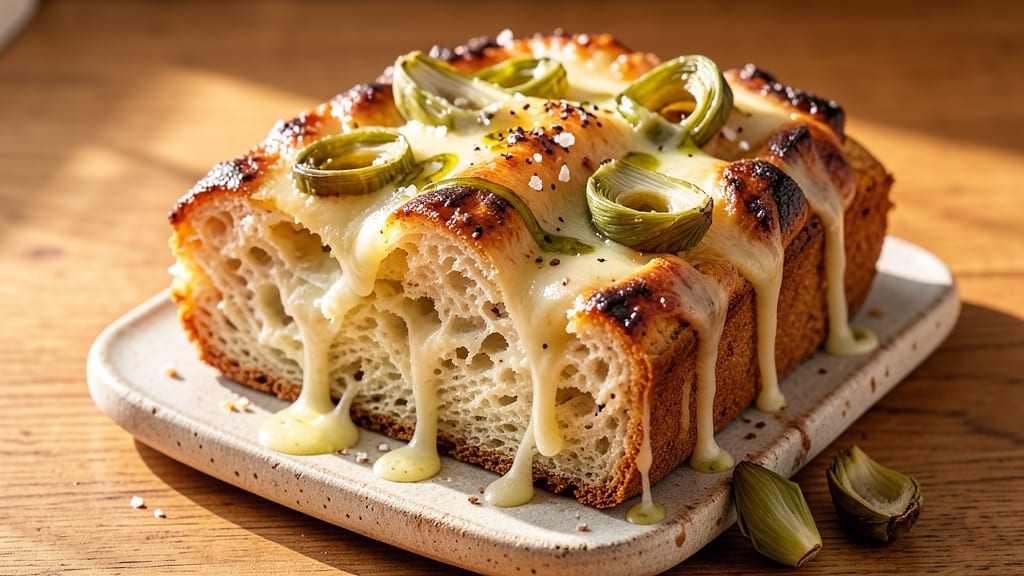
This artichoke cheese bread recipe delivers the perfect balance of chewy dough and melty, herby artichoke filling—so good you’ll want to pull it apart with your hands. 💛 The secret lies in a simple dough that’s enriched with olive oil for tenderness, while the artichoke and cheese filling adds rich, savory depth that bakes into golden perfection every time.
Whether you're serving it as a side for dinner or a hearty appetizer, this recipe transforms basic ingredients into something restaurant-worthy with minimal effort.
The dough comes together in just 10 minutes of mixing, followed by a 1-hour rise—no kneading required. While it proofs, you’ll prepare the filling with marinated artichoke hearts, cream cheese, and sharp cheddar, ensuring each bite is packed with flavor.
The filling is rolled into the dough, creating pockets that burst with gooey goodness when baked. This method guarantees a bread that’s crispy on the outside and soft on the inside, with a pull-apart texture that’s impossible to resist.
Once baked, you’ll have a loaf that’s impossible to slice neatly—because who wants to? The artichoke filling stays creamy and flavorful, while the dough develops a golden crust that’s perfect for dipping in marinara or enjoying on its own.
The aroma alone will have everyone gathered around the table, and the first pull will reveal why this recipe is a crowd-pleaser. Ready in under 2 hours, it’s the ideal make-ahead dish for any meal.
For extra flair, top with fresh herbs or a sprinkle of red pepper flakes before baking. This bread pairs beautifully with soups, salads, or as a standalone snack. Let’s get started—your kitchen will smell amazing in no time.
Ingredients for artichoke cheese bread
Olive oil, yeast, and artichokes—simple ingredients that transform into golden, pull-apart perfection.
| Ingredient | Amount | Notes |
|---|---|---|
| All-Purpose Flour 🌾 | 4 cups | Spooned and leveled for accuracy |
| Active Dry Yeast 🍞 | 2 ¼ tsp | One packet, dissolved in warm water |
| Granulated Sugar 🍚 | 1 tbsp | For yeast activation |
| Extra-Virgin Olive Oil 🫒 | ½ cup | High quality, fruity flavor |
| Warm Water 💧 | 1 ¼ cups | 110°F for yeast activation |
| Salt 🧂 | 1 ½ tsp | Diamond Crystal preferred |
| Marinated Artichoke Hearts 🌿 | 14 oz | Chopped, drained well |
| Cream Cheese 🧀 | 8 oz | Room temperature, full-fat |
| Shredded Sharp Cheddar Cheese 🧀 | 2 cups | Freshly grated preferred |
| Fresh Parsley 🌿 | ¼ cup | Chopped, for garnish |
| Red Pepper Flakes 🌶️ | ½ tsp | Optional, for heat |
| Garlic Powder 🧄 | 1 tsp | Freshly ground preferred |
| Ground Black Pepper 🌶️ | ½ tsp | Freshly cracked |
| Egg 🥚 | 1 whole | For egg wash |
The artichoke hearts make this bread special. Look for marinated hearts in olive oil at the grocery store—Trader Joe's or Whole Foods have the best quality. Drain them well before chopping, or the filling will get soggy. Freshly grated cheddar is a game-changer (pre-shredded gets clumpy), but if you're in a pinch, the block cheese works. The cream cheese adds richness, so don't skip it—Philadelphia brand is my go-to. For the dough, King Arthur flour is my favorite, but any all-purpose will work. Just make sure it's not expired—yeast hates old flour.
No marinated artichokes? Water-packed hearts work too, just pat them dry thoroughly. Short on cream cheese? Substitute with ricotta or mascarpone—both add creaminess. The dough can handle a pinch of dried Italian seasoning if you're out of garlic powder. For extra flavor, add a dash of lemon zest to the filling. The dough is forgiving—if the water's too hot, just let it cool a minute before mixing. And if your yeast isn't active after 5 minutes, start over with fresh yeast. Trust me, it's worth the extra minute.
This dough needs time to rise—at least 1 hour, but up to 2 hours works too. Keep it in a warm spot (like a turned-off oven with a cup of hot water). The filling can be prepped ahead and stored in the fridge for 24 hours before baking. Once baked, it's best served warm, but leftovers reheat beautifully in a 350°F oven for 10 minutes. I always make a double batch—half gets eaten the first day, the rest becomes breadcrumbs for next week's recipes. Store wrapped at room temp for 2 days or freeze for 3 months.
Why You'll Love This Recipe
- No-Knead Magic: I swear by this dough—just toss in flour, yeast, and a splash of warm water, then let it rise while I make dinner. The artichoke hearts and cheese fold in like a dream, no fancy skills needed.
- Cheese Pulls Hard: That stretchy, melty mozzarella and salty artichoke combo? It’s the kind of bite that makes you pause mid-chew. The olive oil keeps it rich without feeling heavy—trust me, you’ll want seconds.
- Weeknight Hero: Pull it out of the oven, slice it warm, and suddenly you’ve got a meal. Serve it with marinara for dinner, pack it for lunch, or freeze half for when you’re too tired to cook. It’s my lazy-day savior.
- Pantry Staple: You already have the ingredients—flour, yeast, sugar—so this isn’t a special shopping trip. A loaf costs less than takeout, feeds four, and keeps well for days. Budget-friendly? More like budget genius.
Step-by-step instructions for artichoke cheese bread
Here's how to make this pull-apart masterpiece with cheesy, herby goodness.
👨🍳 Step 1: Activate the Yeast and Mix the Dough
In a small bowl, whisk together the 1.25 cups warm water (about 110°F), 1 tbsp granulated sugar, and 2.25 tsp active dry yeast. Let it sit for 5-10 minutes until it becomes frothy and bubbly—this tells you the yeast is alive and ready to work. If it doesn't bubble, your bread won't rise properly.
In a large bowl, combine the 4 cups all-purpose flour and 1.5 tsp salt. Make a well in the center and pour in the yeast mixture along with the 0.5 cup extra-virgin olive oil. Use a wooden spoon to mix until a shaggy dough forms, then turn it out onto a lightly floured surface. Here's where it gets fun—knead the dough for 5-7 minutes until it's smooth and elastic. You'll know it's ready when it springs back slowly when poked.
🍳 Step 2: Add the Cheese and Artichokes
Return the dough to your mixing bowl and let it rest for 5 minutes. This brief rest prevents the cheese from melting too soon. While it rests, chop the 14 oz marinated artichoke hearts into small, bite-sized pieces (about ½-inch chunks) and drain them well—you want to remove as much liquid as possible to avoid a soggy dough.
Cut the 8 oz cream cheese into small cubes and let it soften slightly at room temperature. Add both the artichokes and cream cheese to the dough along with the 2 cups shredded sharp cheddar cheese, 1 tsp garlic powder, 0.5 tsp ground black pepper, and 0.5 tsp red pepper flakes (if using). Gently fold everything together with a spatula until just combined—overmixing can develop gluten and make the bread tough.
🥘 Step 3: First Rise and Shape the Loaf
Lightly grease a 9x5-inch loaf pan with olive oil. Transfer the dough to the pan and shape it gently to fit snugly, leaving about ½-inch headspace at the top. Cover the pan loosely with a clean kitchen towel and let it rise in a warm place for 1-1.5 hours until it doubles in size and puffs over the edges. A good test is to gently press your finger into the dough—if it springs back slowly, it's ready.
While it rises, preheat your oven to 375°F. Here's the thing—don't skip the rise time. This is what creates that beautiful cheesy pull-apart texture. If your kitchen is cold, place the pan near a warm spot like a lightbulb or in a turned-off oven with the light on.
🔥 Step 4: Bake to Golden Perfection
Once the dough has risen, brush the top with the 1 whole egg beaten with 1 tablespoon water for a golden finish. Sprinkle the 0.25 cup fresh parsley evenly over the top. Bake for 35-40 minutes until the bread is deeply golden brown and sounds hollow when tapped on the bottom. The internal temperature should reach 190-200°F—this ensures it's fully cooked through.
For the best results, don't open the oven during baking. The steam is crucial for that tender interior. If the top browns too quickly, tent it loosely with foil after 20 minutes to prevent over-browning while still allowing it to bake through.
⏰ Step 5: Rest and Serve Warm
Remove the bread from the oven and let it cool in the pan for 10 minutes. Then transfer it to a wire rack to cool completely (about 20 minutes). This resting period is crucial—it allows the cheeses to set slightly and makes the bread easier to slice. If you can't wait, serve it warm straight from the pan, but you'll lose that perfect pull-apart texture.
Slice while still warm for the best experience—each bite should deliver that perfect balance of chewy bread, creamy cheese, and briny artichoke. Store leftovers wrapped in the pan or foil for up to 3 days, or freeze for 2 months. The flavors actually improve as it sits!
Pro Tips For Making Artichoke Cheese Bread
- Bloom the Yeast First: Skip mixing yeast directly into flour—it’s lazy and unreliable. Instead, whisk it with warm water (110°F) and a pinch of sugar in a bowl for 5–10 minutes until frothy. If it doesn’t bubble, your bread’s rise will be weak, and you’ll end up with dense, flavorless loaves.
- Use Olive Oil Wisely: Drizzle the olive oil into the flour while mixing, not just pouring it in. This creates tiny pockets of fat that make the dough softer and help trap those artichoke-cheese flavors. Too much oil? Your bread turns greasy. Too little? It’ll be dry and crumbly.
- Knead Until Smooth: Stop when the dough passes the "windowpane test"—stretch a piece, and if it’s thin enough to see light through, you’re good. Over-kneading? Tough bread. Under-kneading? It won’t hold its shape or taste right. A stand mixer with a dough hook saves your arms and guarantees consistency.
- Proof in a Warm Spot: Your oven’s light-on setting (with a bowl of hot water inside) is better than a cold counter. The dough should double in size in 1–1.5 hours—if it’s slow, your kitchen’s too cold. Poke it: if it springs back slowly, it’s ready. If it bounces right back, wait longer.
Essential equipment for this dish
Dough Essentials
Your 9x5-inch loaf pan is the star here—lightly grease it with extra-virgin olive oil before shaping the dough to prevent sticking. I swear by King Arthur all-purpose flour for its reliable gluten structure, but any high-quality brand works.
A digital kitchen scale (like the OXO Good Grips) ensures accuracy when measuring flour, especially important for yeast-based doughs. 🌾
For yeast activation, a thermometer (I use Thermoworks Thermapen) keeps your warm water at 110°F—too hot and it kills the yeast; too cool and it won’t activate.
A wooden spoon and large mixing bowl (preferably stainless steel) are perfect for combining ingredients without adding extra fat that could inhibit gluten development.
Cheese Tools
Shred your sharp cheddar fresh with a microplane—pre-shredded cheese contains anti-caking agents that make it clumpy. For the cream cheese, a small offset spatula helps spread it evenly into the dough without overworking it.
Store your cheeses in the fridge until ready to use, but let them sit at room temperature for 10 minutes before mixing to ensure smooth incorporation. 🧀
Artichoke Prep
Chop your marinated artichoke hearts into ½-inch chunks with a sharp chef’s knife—a Wüsthof Classic handles this task effortlessly. Drain them thoroughly using a fine-mesh strainer (like OXO Good Grips) to remove excess liquid, which prevents a soggy dough.
For extra flavor, pulse the drained artichokes in a food processor for 2 seconds to create a chunky paste before mixing. 🌿
Baking Gear
A baking stone (like Lodge Prep & Serve) placed on the middle oven rack improves heat distribution for even browning. For brushing the egg wash, a pastry brush (I prefer Silpat’s silicone brush) distributes the egg wash evenly without leaving streaks.
Monitor internal temperature with an instant-read thermometer—aim for 190-200°F to ensure the center is fully cooked. 🔥
Optional Extras
Fresh parsley and red pepper flakes add the finishing touches. Use scissors to snip parsley stems for easy chopping, and a small spoon to sprinkle the flakes evenly. For a crispier crust, bake on the top rack for the last 5 minutes of cooking time.
A wire cooling rack prevents sogginess while the bread cools, preserving that pull-apart texture. ✨
Nutrition facts
Frequently asked questions
Can I make this bread without a loaf pan?
For a rustic version, shape the dough into a free-form round or oval on a parchment-lined baking sheet. Brush with olive oil and bake at 375°F for 30-35 minutes until golden. The texture will be slightly denser but still delicious—great for serving as a bread basket or appetizer. Just reduce the rise time to 45 minutes since it won't expand vertically.
What if my dough doesn't rise properly?
Check your yeast first—it should be fresh (test by dissolving in warm water with sugar; it should bubble within 5-10 minutes). If the yeast is fine, try these fixes: use a warmer spot for rising (like a turned-off oven with a cup of hot water), let the dough rise longer (up to 2 hours), or add 1 tsp sugar to the dough to help activate the yeast. Cold kitchens are the #1 culprit for flat bread!
Can I add other vegetables to the filling?
Yes! Try finely chopped sun-dried tomatoes (¼ cup), diced roasted red peppers (½ cup), or sautéed spinach (1 cup, squeezed dry). For extra flavor, add 1 tsp dried oregano or ½ tsp smoked paprika to the filling. Just be mindful of moisture—overloading with wet ingredients can make the dough soggy. Roast any added veggies first to remove excess water.
How do I store leftovers to keep them fresh?
Wrap cooled bread tightly in plastic wrap or aluminum foil, then store at room temperature for up to 3 days. For longer storage, freeze slices in a single layer on a tray, then transfer to a bag for up to 3 months. To reheat, warm frozen slices in a 350°F oven for 8-10 minutes or toast in a skillet over medium heat until golden. The cheese stays creamy when reheated properly!
Why did my bread turn out dense instead of pull-apart?
Overmixing the dough or skipping the rise time are the most common causes. For fluffier texture, knead just until smooth (5-7 minutes) and let it rise until doubled. Also, ensure your oven is fully preheated—cold spots can prevent proper expansion. If the cheese melted too soon, try chilling the dough for 15 minutes before the final rise to slow down the melting.