
Side Dishes
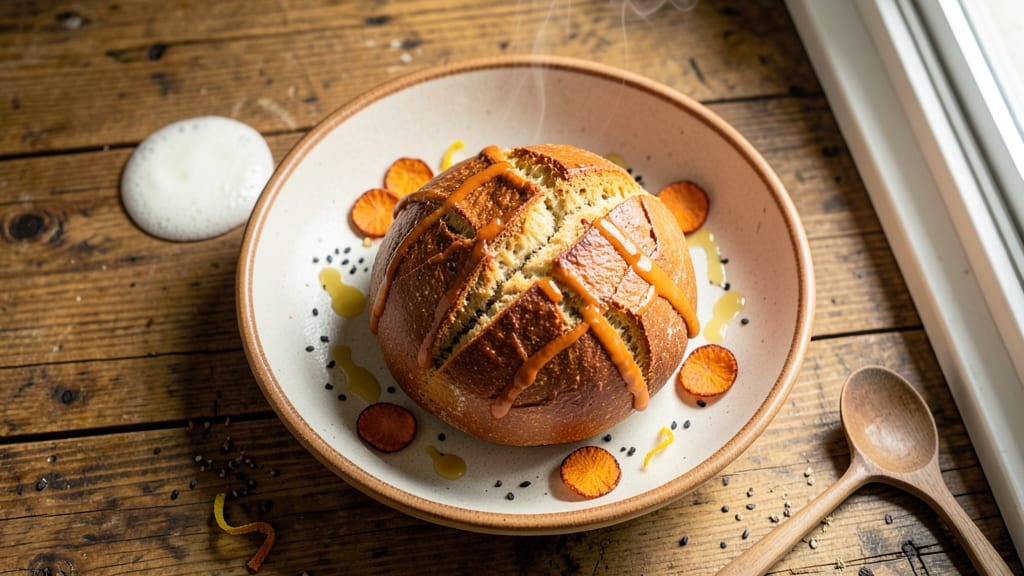
This artisan sourdough bread recipe cleverly incorporates carrot for a vegan twist that delivers warm spice harmony and moist, tender crumb in every slice.
The secret lies in blending carrot purée into the dough, creating a subtle sweetness that enhances the natural tang of sourdough while adding a vibrant golden hue.
I developed this recipe after years of perfecting vegan sourdough—this version stays light yet substantial, with a crispy crust that crackles at every bite.
The beauty of this method is its versatility. You can shape it into a classic loaf, a rustic boules, or even carrot-topped rolls for a festive touch. Using aquafaba instead of eggs ensures structure without compromising texture, while plant-based milk maintains perfect hydration.
The carrot infusion adds natural sweetness that balances the bread’s slight acidity, making each slice irresistibly flavorful and perfect for sandwiches, toast, or serving alongside soups.
What sets this recipe apart is the artisan approach—slow fermentation develops deep flavor, while the carrot integration creates a unique texture that’s both moist and airy. The dough requires patience (24 hours of proofing), but the result is a loaf with complex, layered taste that rivals traditional sourdough.
Whether you’re a seasoned baker or new to sourdough, this recipe delivers professional-quality results with simple techniques.
Once baked, you can finish with a light sprinkle of seeds or a carrot glaze for extra flair. The bread keeps well for days, making it ideal for meal prep or gifting.
Here’s how to craft this vegan, carrot-infused sourdough masterpiece—no special equipment needed, just time and attention to detail.
Ingredients for artisan sourdough bread recipe clever carrot
Twelve ingredients blend artisanal sourdough technique with carrot's natural sweetness for a vegan masterpiece.
| Ingredient | Amount | Notes |
|---|---|---|
| Active Sourdough Starter 🍞 | ½ cup | Unfed, bubbly starter |
| Organic All-Purpose Flour 🌾 | 4 cups | White or whole wheat blend |
| Organic Carrot Purée 🥕 | ½ cup | Freshly blended, no sugar added |
| Aquafaba 🌱 | ¼ cup | From canned chickpeas, whipped |
| Unsweetened Almond Milk 🥛 | ½ cup | Room temperature |
| Coconut Oil 🫒 | 2 tbsp | Melted, refined for neutral taste |
| Coconut Sugar 🍯 | 1 tbsp | Or maple syrup for liquid sweetness |
| Ground Cinnamon 🌿 | 1 tsp | Freshly ground preferred |
| Ground Ginger 🌶️ | ½ tsp | Freshly ground for warmth |
| Sea Salt 🧂 | 1 ½ tsp | Fine grain, Diamond Crystal preferred |
| Sesame Seeds 🌰 | 1 tbsp | For crust finishing |
| Flaxseed Meal 🌾 | 1 tbsp | For dough elasticity |
The sourdough starter is the foundation—look for a bubbly, active starter with a tangy aroma. For the carrot purée, organic carrots yield the best flavor; roast them first if you prefer deeper sweetness. Aquafaba replaces eggs perfectly, but ensure it's whipped to stiff peaks for structure. Whole Foods or local organic markets offer the freshest ingredients. The coconut oil should be refined to avoid overpowering flavors, while organic flour ensures a cleaner taste. For the spices, Penzeys Spices provides the freshest ground cinnamon and ginger, which are essential for that warm harmony.
No aquafaba? Flax eggs (1 tbsp flaxseed meal + 3 tbsp water per egg) work beautifully, though texture may vary slightly. Substitute almond milk with oat milk for creaminess or soy milk for neutral flavor. If coconut sugar isn't available, maple syrup or agave nectar will maintain the dough's moisture. For the carrot purée, frozen carrots work in a pinch—just thaw and blend. The flaxseed meal can be swapped for chia seeds at equal measure, though flaxseed offers better elasticity. Pre-ground spices lose potency quickly, so toast whole spices briefly before grinding for enhanced flavor.
Store the sourdough starter in a glass jar at room temperature, feeding it weekly. The dough requires 24 hours of proofing in a warm, draft-free environment—use a proofing box or turn on your oven light. Once baked, the bread keeps well for 3-4 days in an airtight container or 1 week in the freezer. For extra flair, brush the crust with a carrot glaze (equal parts carrot purée and maple syrup) before baking. The sesame seeds add a delightful crunch, so toast them lightly before sprinkling.
Why You'll Love This Recipe
- No-Fuss Mix-In: That carrot purée blends right into the dough—no grating, no peeling, just smooth and effortless. Honestly, I dump it in while the starter’s still bubbly, and the aquafaba keeps everything light without extra fuss.
- Sweet-Savory Magic: The carrot purée adds this subtle sweetness that plays so well with the tangy sourdough. It’s not cloying, just a bright, earthy depth—like a hug from a loaf that somehow tastes like autumn.
- Leftover Reinvention: This bread stays fresh for days, and the best part? Toast it with a smear of almond butter for breakfast, or turn slices into croutons for salads. My kids even beg for the stale ends—crumbled over yogurt or blended into soup.
- Budget-Friendly Artisan: You’re getting that bakery-worthy crust with just flour, starter, and a few pantry staples. Between us, the almond milk and aquafaba stretch the dough further than water ever would—plus, the carrots bulk it up without breaking the bank.
Step-by-step instructions for artisan sourdough bread with carrot and spice
This method delivers a tender crumb with carrot sweetness and warm spice notes, all while maintaining the signature tang of sourdough.
Combine Wet Ingredients for Optimal Hydration
In a large mixing bowl, combine the 0.5 cup active sourdough starter, 0.5 cup unsweetened almond milk, 0.5 cup organic carrot purée, 2 tbsp melted coconut oil, and 1 tbsp coconut sugar. The carrot purée adds natural sweetness while contributing moisture that prevents a dry crumb. Use a wooden spoon to stir until fully integrated—you should see a smooth, slightly thickened mixture with no visible flour particles at this stage.
Next, whisk in the 0.25 cup aquafaba until frothy. This egg-white substitute provides structure and elasticity to the dough, mimicking the properties of eggs without animal products. The mixture should now have a glossy sheen and hold its shape when spooned. If the aquafaba wasn't previously whipped, take an extra 30 seconds to incorporate air—this step is crucial for achieving an open, airy crumb.
Incorporate Dry Ingredients and Flaxseed for Structure
In a separate bowl, sift together the 4 cups organic all-purpose flour, 1.5 tsp sea salt, 1 tsp ground cinnamon, and 0.5 tsp ground ginger. The sifting ensures even distribution of the spices and prevents clumping in the final dough. Sprinkle the 1 tbsp flaxseed meal over the dry ingredients and mix thoroughly—this acts as a natural binder, replacing traditional eggs while adding a subtle nutty depth.
Gradually add the dry mixture to the wet ingredients while stirring with a dough whisk or large spoon. Begin with half the flour and mix until just combined, then add the remaining flour. Avoid overmixing—stop when the dough comes together into a shaggy mass that clings to the sides of the bowl. At this point, the dough will be sticky but manageable. If it appears too wet, add 1-2 tablespoons of additional flour, but resist the urge to overcorrect—this recipe relies on proper hydration for its tender texture.
Develop Gluten Through Kneading and Autolyse
Turn the dough onto a lightly floured surface and knead for 8-10 minutes by hand, or use a stand mixer with a dough hook attachment for 5-6 minutes on medium speed. You're aiming for a smooth, elastic dough that springs back slowly when poked. The carrot purée and aquafaba make this dough more delicate than traditional sourdough, so handle it gently to avoid overworking.
Shape the dough into a loose ball, place it back in the bowl, and cover with a damp towel. Let it rest at room temperature for 30 minutes—this autolyse step allows the flour to fully hydrate and the gluten to relax. During this time, the dough will become slightly softer and more pliable, making it easier to shape later. This resting period is non-negotiable; skipping it results in a denser final product.
Shape and Proof for Optimal Rise
After the autolyse, divide the dough into 4 equal portions (each roughly 8 ounces). Shape each portion into a round boule by pulling the sides toward the center and tucking them under. Place the shaped loaves in a lightly greased 9x5-inch loaf pan or directly onto a parchment-lined baking sheet if making free-form rounds. Cover again with the damp towel and allow them to proof at room temperature for 1-1.5 hours, or until they've risen by 50-75% and feel springy to the touch.
For a more pronounced rise, you can also proof in the refrigerator overnight. If using this cold proof, divide and shape the dough as directed, then refrigerate for 12-16 hours. The cold environment slows fermentation, developing deeper flavor while maintaining structure. When ready to bake, remove the loaves from the fridge and let them sit at room temperature for 30 minutes before proceeding to baking.
Bake to Golden Perfection with Sesame Topping
Preheat your oven to 375°F and position a rack in the lower third. If using loaf pans, place them directly on the rack. For free-form rounds, bake on a parchment-lined sheet. Score the tops of each loaf with a sharp razor or serrated knife in a simple crosshatch pattern—this prevents excessive expansion during baking and creates a professional finish.
Bake for 30-35 minutes until the loaves are deep golden brown and sound hollow when tapped on the bottom. In the final 5 minutes of baking, sprinkle each loaf with 1 tbsp sesame seeds for added crunch and visual appeal. The sesame seeds should toast slightly, adding a nutty aroma to the finished product. Remove from the oven and let cool on a wire rack for at least 20 minutes before slicing—this resting period allows the crumb to set and prevents a gummy texture.
Pro Tips For Making Artisan Sourdough Bread Recipe Clever Carrot
- STRAIN THAT PUREE: The carrot purée’s water content can turn your dough into a sticky mess. After blending, strain it through a fine-mesh sieve lined with cheesecloth—let it drip for 10 minutes. This removes excess moisture without losing sweetness, and your dough will handle shaping like a dream instead of collapsing in your hands.
- WEIGH YOUR FLOUR LIKE A PRO: Scooping flour from the bag is a rookie move. Use a scale and spoon the flour into the bowl, then level it off with a knife—don’t press down. Organic all-purpose flour varies in density, and sourdough relies on precise ratios. Trust me, your loaf’s structure will thank you more than your guesswork ever could.
- DON’T OVERMIX THE AQUAFABA: Whisk the aquafaba until it forms soft peaks, then stop. Overbeating it turns into meringue, which can make your bread dense or gummy. Think of it like folding in egg whites—just enough to hold air, not enough to turn it into a soufflé. A quick pulse in the mixer or 30 seconds by hand does the trick.
- PROOF IN A COOL SPACE: Skip the warm oven for bulk fermentation if your kitchen’s already toasty. Place the dough in the fridge for 12–16 hours—it develops flavor slowly and resists overproofing. When you bake, the cold start gives you a tighter crumb and a crust that’s crispy without burning. (Yes, even if you’re impatient like me.)
Perfect pairings for this dish
Sweet Carrot Glaze
For a festive touch, brush the baked loaves with a carrot glaze made by simmering ½ cup carrot purée, 2 tbsp maple syrup, and 1 tsp vanilla extract for 5 minutes.
This adds a glossy finish and enhances the bread’s natural sweetness. I like to drizzle it over warm slices—it pairs beautifully with vegan butter or hummus. 🥕
Spiced Nut Butter
Spread your sourdough with spiced almond butter for a protein-packed twist. Mix ½ cup almond butter with ½ tsp cinnamon, ¼ tsp ginger, and a pinch of salt.
The nutty richness complements the carrot’s earthiness while adding healthy fats. Serve with apple slices for a balanced snack or breakfast. 🌰
Herbed Vegan Cheese
Top slices with herbed vegan cheese for a savory option. Blend ½ cup cashews, 2 tbsp nutritional yeast, 1 tbsp lemon juice, 1 tsp garlic powder, and 2 tbsp water until smooth.
Spread on warm bread and broil for 2 minutes to melt. Fresh chives or parsley add a pop of color. 🧀
Warm Spiced Tea
Pair your carrot sourdough with warm chai tea for a cozy, aromatic experience. Brew a strong cup of Bigelow Chai or homemade spiced tea (black tea + cinnamon, cardamom, and cloves) and serve with a slice of toasted bread. The tea’s warmth enhances the bread’s caramelized crust. ☕
Roasted Veggie Platter
Create a roasted vegetable medley to serve alongside. Toss 1 cup diced sweet potatoes, 1 cup carrots, and 1 red bell pepper with olive oil, salt, and smoked paprika. Roast at 400°F for 25 minutes until tender. The smoky flavors complement the bread’s natural sweetness. 🥔
Creamy Avocado Toast
Mash ½ ripe avocado with 1 tsp lime juice, salt, and black pepper and spread generously on toasted slices. Top with everything bagel seasoning or microgreens for a fresh, vibrant finish. The creamy avocado balances the bread’s spiced crumb. 🥑
Nutrition facts
Frequently asked questions
Why does this recipe use carrot purée instead of grated carrots?
The purée blends seamlessly into the dough, creating a smooth, evenly distributed sweetness without altering the bread's texture. Grated carrots would add moisture inconsistently and risk creating dense pockets. The purée also infuses the dough with natural caramelized flavors during baking, enhancing the crust's golden hue.
Can I make this bread without a sourdough starter?
Yes! Replace the 0.5 cup starter with 0.5 cup aquafaba + 1 tsp apple cider vinegar to mimic sourdough's tang. For better rise, add 1 tsp baking soda to the dry ingredients. The flavor won't be identical, but you'll still get a tender, carrot-infused loaf with warm spices.
How do I know when the dough is properly proofed?
Press gently on the dough—if it springs back slowly (not immediately) and leaves a slight indentation, it's ready. For visual confirmation, look for 50-75% rise (the dough should nearly double in size). Cold proofing (overnight) will show less visible rise but still feel springy.
What's the best way to store leftover carrot sourdough?
Wrap cooled loaves in beeswax wrap or store in an airtight container at room temperature for 3-4 days. For longer storage, freeze slices wrapped in parchment—reheat in a 350°F oven for 5-7 minutes to restore crispiness. The carrot flavor actually improves slightly after 2 days!
Can I add other vegetables to this dough?
Try ½ cup puréed sweet potato for deeper sweetness or finely grated zucchini (squeeze out excess moisture first). For savory versions, swap carrot purée for roasted red pepper purée and reduce cinnamon to ½ tsp. Always purée veggies to maintain texture.