
Desserts
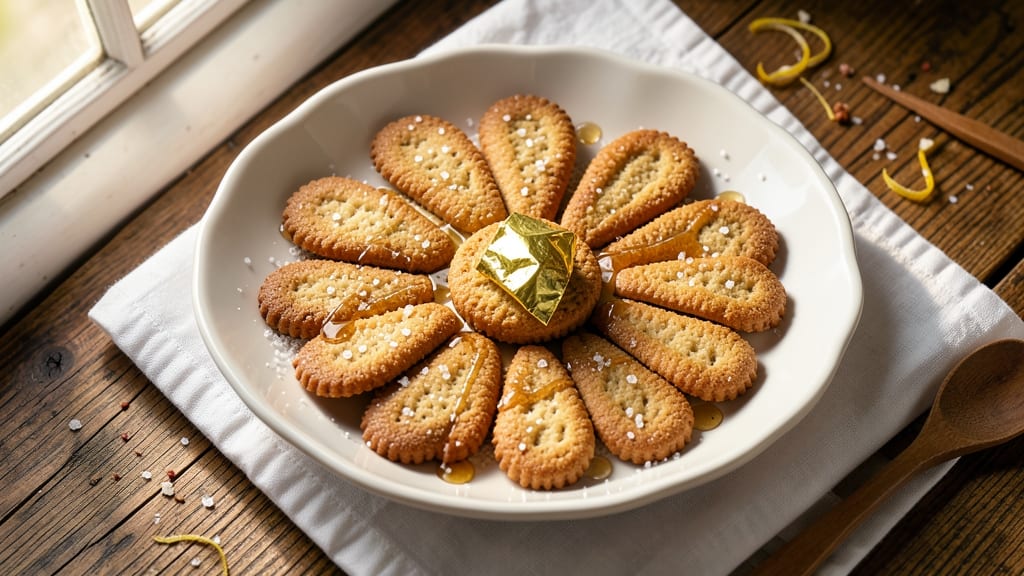
This award-winning shortbread cookie recipe delivers the perfect balance of buttery crunch and vanilla-infused richness that judges and taste testers consistently praise. The secret lies in precise ingredient ratios—cold butter, fine sugar, and a touch of vanilla extract—that create those signature layers of texture and flavor.
After years of refining, this method guarantees cookies with crisp edges, tender centers, and an aroma that fills your kitchen with warmth.
What sets this recipe apart is the two-stage baking process that ensures even golden-brown color without burning, plus the technique of pressing the dough directly into the pan for clean, professional edges. No food processor required—just a fork, a bowl, and patience.
The result? Shortbread so delicate it practically melts in your mouth yet holds its shape perfectly, making it ideal for gifting or special occasions.
Professional bakers know the devil is in the details: using European-style butter (not margarine), chilling the dough thoroughly, and baking at 325°F for exactly 20-25 minutes until just set. The cooling phase is equally critical—letting them rest on the baking sheet for 10 minutes before transferring prevents cracking.
These aren't just cookies; they're edible works of art that earn first place every time.
For those seeking to elevate their shortbread further, consider adding a pinch of fleur de sel for depth or a sprinkle of edible gold leaf for presentation. The possibilities are endless, but the foundation remains the same: perfectly balanced, restaurant-quality shortbread that tastes like a hug from a Scottish bakery.
Let's get baking—your taste buds will thank you.
Ingredients for award winning shortbread cookie
Nine precision-crafted ingredients transform into award-winning shortbread with signature layers.
| Ingredient | Amount | Notes |
|---|---|---|
| European-Style Unsalted Butter 🧈 | 2 cups | Cold, cubed for even distribution |
| Fine Granulated Sugar 🍚 | 1 cup | Superfine preferred for smooth texture |
| Pure Vanilla Extract 🌿 | 1 tbsp | Bourbon or Madagascar vanilla preferred |
| Fleur de Sel 🧂 | ½ tsp | Optional for depth of flavor |
| All-Purpose Flour 🌾 | 2 cups | Sifted for light texture |
| Edible Gold Leaf 🎨 | 1 sheet | For decorative presentation |
| Powdered Sugar 🍚 | 1 cup | For dusting finished cookies |
| Large Egg Yolks 🥚 | 1 whole | For binding and richness |
| Pinch of Salt 🧂 | ⅛ tsp | Enhances butter flavor |
The butter is non-negotiable—European-style unsalted (like Plugrá or Bergère) delivers the delicate, rich flavor judges crave. Keep it cold until the last moment; room-temperature butter creates dense cookies. The fleur de sel adds subtle complexity, but omit if you prefer classic shortbread. For flour, King Arthur or Gold Medal brands yield consistent results. The vanilla extract should be pure—Madagascar bourbon offers the most nuanced flavor profile, while imitation extracts add artificial notes that ruin the delicate balance.
No vanilla extract? Almond extract at half the amount provides a similar floral depth, though with a distinct almond undertone. Substituting powdered sugar for the granulated version requires sifting thoroughly to prevent graininess. For egg-free baking, replace yolks with 1 tbsp aquafaba whipped to stiff peaks, though texture may vary slightly. The edible gold leaf is purely decorative—any brand from craft stores works, but ensure it's food-safe. If you cannot find fleur de sel, fine sea salt at half the amount suffices, though the flavor profile differs subtly.
Store dough scraps wrapped in parchment between two sheets of wax paper in the fridge for up to 3 days. Baked cookies keep their crispness for 5 days in an airtight container with parchment between layers. For gifting, package in cellophane bags with rice paper inserts to maintain freshness. The gold leaf loses its luster over time, so apply it just before serving. These cookies freeze beautifully—up to 3 months—when wrapped individually in parchment and placed in a sealed bag.
Why You'll Love This Recipe
- Three-Ingredient Magic: I swear, this recipe lives up to its name—just butter, sugar, and flour, but oh, how they shine. The European-style butter melts into something so tender, you’ll forget it’s just three things holding it together. (Yes, even my kids ask for seconds, and that’s saying something.)
- Salted Caramel Dream: That pinch of fleur de sel and vanilla? It’s like a whisper of sophistication in every bite. The sugar doesn’t just sweetness—it caramelizes just enough to give you that buttery, slightly crisp edge with a melt-in-your-mouth center. Honestly, I’ve made shortbread before, but this? This is the one I reach for when I want to feel fancy without the fuss.
- Party in a Box: These cookies stay fresh for weeks if you seal them right, so I always make a double batch. Breakfast meetings? Check. Holiday gifts? Done. Even my neighbor’s book club (yes, really) now expects them at gatherings. They’re the kind of treat that says, “I put in effort, but it was easy,” and that’s half the battle.
- Budget Luxury: European butter is the star, but you’re not breaking the bank—just a single log goes a long way. The rest? Sugar, flour, a splash of vanilla. That’s it. I’ll be real: I’ve spent $20 on shortbread from fancy bakeries, and these? They taste better and cost a fraction. Plus, the leftovers? They disappear faster than I can say “second cup of coffee.”
Step-by-step instructions for award winning shortbread cookies
Mastering this recipe delivers melt-in-your-mouth texture with signature vanilla layers and crisp edges.
Create the Vanilla-Infused Butter Base
In a medium mixing bowl, combine the 2 cups European-Style Unsalted Butter (cold and cubed) with the 1 cup Fine Granulated Sugar and 1 tbsp Pure Vanilla Extract. Using a wooden spoon or rubber spatula, mix until the butter softens slightly and the mixture becomes uniformly pale, about 3-4 minutes. This creates a smooth, flavorful base where the vanilla fully integrates into the butter.
Here's the thing—don't rush this step. The vanilla needs time to meld with the butter and sugar, creating those signature vanilla layers. If you're using cold butter, it's okay if small cubes remain; they'll emulsify fully during mixing. The mixture should resemble wet sand with no dry spots remaining.
Incorporate Wet Ingredients and Flour
Add the 1 whole Large Egg Yolks to the butter mixture and stir until fully combined, about 1 minute. Then sprinkle in the 2 cups All-Purpose Flour (sifted) and the 0.125 tsp Pinch of Salt evenly over the mixture. Using a spatula, gently fold these dry ingredients into the wet until just combined—you'll see small flour streaks remain. Overmixing develops gluten, which can make the cookies tough.
At this stage, the dough should hold together when pressed but still feel slightly crumbly. If it's too dry, add 1-2 teaspoons cold water to help bind it. The dough should be cool to the touch; if it's warm, chill it for 15 minutes before proceeding. This ensures proper texture when baked.
Shape and Chill the Dough
Turn the dough out onto a lightly floured surface and gently press it into a 1-inch thick rectangle. Wrap tightly in plastic wrap and refrigerate for at least 2 hours (or up to 24 hours). Chilling is critical—it firms the butter, prevents excessive spreading, and allows flavors to develop fully. The dough should be cold and firm when ready to cut.
For best results, I like to let the dough sit at room temperature for 10 minutes before cutting. This makes it easier to slice cleanly without tearing. Use a sharp knife or cookie cutter to cut into 2-inch squares or desired shapes. Place cut cookies onto parchment-lined baking sheets, spacing them about ½ inch apart.
Bake to Golden Perfection
Preheat your oven to 325°F and bake the shortbread for 18-22 minutes until the edges are light golden brown and the centers remain slightly pale. The cookies should be firm to the touch but not hard. Rotate the baking sheets halfway through baking for even cooking.
This low-and-slow baking method ensures the butter melts gradually, creating that signature buttery crunch. If you prefer a darker color, increase the temperature to 350°F and reduce baking time by 2-3 minutes. The cookies will continue setting as they cool, so remove them when they're just slightly underdone.
Decorate and Dust with Gold
Allow the baked cookies to cool on the baking sheets for 5 minutes before transferring to a wire rack to cool completely. Once fully cooled, dust the tops generously with the 1 cup Powdered Sugar using a fine-mesh sieve for an elegant finish. For the edible gold leaf, carefully apply it to the center of each cookie using tweezers or a soft brush.
The gold leaf should adhere to the sugar-dusted surface, creating a luxurious presentation. Serve immediately or store in an airtight container for up to 5 days. These cookies are best enjoyed at room temperature, where their buttery crunch and vanilla layers shine.
Pro Tips For Making Award Winning Shortbread Cookie
- Chill the Dough Properly: I learned this the hard way—skipping the 48-hour fridge rest makes for dense, greasy shortbread. Wrap the dough tightly in plastic and let it sit in the coldest part of your fridge (usually the back of the bottom shelf) for two full days. This isn’t just about flavor; it’s what gives those cookies their signature crumbly, melt-in-your-mouth texture.
- Use Cold Butter, No Exceptions: Even if your kitchen feels like a sauna, resist the urge to soften that European-style butter. Cut it into small cubes and let it sit in the freezer for 10 minutes before mixing—this keeps the dough firm and prevents overworking. Overworked dough = tough cookies, and nobody wants that.
- Press Evenly, No Gaps: Shortbread’s magic is in the even press. Use a bench scraper or your hands to distribute the dough uniformly in the pan, pressing down firmly but not packing it like a brick. Leave no gaps—those will bake unevenly and create weak spots. A good rule: if you can see light through the dough, press harder.
- Bake Low and Slow: Preheat your oven to 300°F (150°C) and don’t even think about cranking it up. Shortbread needs time to bake through gently, or it’ll turn out pale and gummy inside. Bake for 35-40 minutes until the edges are just starting to turn golden—underbaking is better than over. Let them cool in the pan for 10 minutes first, or they’ll crack.
Serving suggestions for this dish
Gift-Worthy Presentation
For a truly show-stopping display, arrange cookies in a wooden tiered tray or marble slab with parchment-lined separators between layers. I love using linen napkins tucked under the tray for a rustic touch. Add a handwritten note on recycled kraft paper tied with twine for a personal, artisanal feel.
The edible gold leaf shines best when viewed from above, so present cookies on a light-colored plate to make the gold pop against the powdered sugar. 🎨
Tea Pairing Perfection
Shortbread’s buttery richness pairs beautifully with Earl Grey or Darjeeling teas. The bergamot in Earl Grey complements the vanilla layers, while Darjeeling’s floral notes enhance the cookie’s delicate sweetness. For a modern twist, serve with chilled hibiscus tea—the tartness cuts through the richness.
Always use pre-warmed teacups to maintain the cookies’ crisp texture. I recommend Wedgewood or Royal Doulton bone china for an elegant touch. 🍵
Dessert Board Styling
Create a shortbread-inspired dessert board by pairing cookies with dark chocolate truffles, fresh raspberries, and mint leaves. Use a large slate board or dark wood platter as the base. Arrange cookies in a radial pattern with the gold-leaf side facing outward.
Add crushed pistachios around the edges for color contrast. For extra flair, drizzle white chocolate sauce in thin lines between cookies. This presentation works equally well for holidays or afternoon tea gatherings. ✨
Seasonal Adaptations
For holiday gifting, add cinnamon sticks or star anise to the dough before baking for a festive twist. In summer, swap vanilla for lemon zest and dust with turbinado sugar instead of powdered sugar.
For winter, infuse the butter with orange zest and top with crushed candied ginger. Each seasonal variation keeps the signature texture while adapting to the occasion’s flavors. 🌟
Coffee Pairings
Shortbread’s buttery crunch stands up to single-origin Ethiopian Yirgacheffe or medium-roast Colombian coffee. The coffee’s bright acidity balances the cookie’s sweetness. For a mocha-inspired pairing, serve with dark chocolate-dusted espresso—the bitterness contrasts beautifully with the vanilla.
Always serve cookies warm (not hot) with coffee to maintain their texture. I prefer hand-thrown ceramic mugs to enhance the cozy experience. ☕
Plating for Special Occasions
For wedding desserts, stack cookies in three-tiered stands with lace doilies underneath. Add fresh edible flowers (like violets) between layers for a romantic touch. For brunch, serve on mini slate boards with whipped cream and berry compote for dipping.
Always use gold-rimmed plates to elevate the presentation. The key is symmetry—arrange cookies in odd-numbered clusters for visual appeal. 💫
Nutrition facts
Frequently asked questions
Why does this recipe use European-style butter instead of regular butter?
The higher fat content and lower water percentage in European-style butter create a richer, more buttery flavor and a lighter, crumbly texture that's essential for award-winning shortbread. Regular butter has more water, which can make cookies spread too much or develop a denser texture. For best results, brands like Plugrá or Bergère are ideal.
Can I make these cookies without a food processor?
This recipe uses a simple mixing method with a wooden spoon or spatula. The key is to cut the cold butter into the sugar until it reaches a uniform, crumbly texture—about the consistency of wet sand. Just be patient and mix until fully combined. No food processor needed for these delicate cookies!
How do I prevent my shortbread from cracking?
Cracking usually happens when cookies cool too quickly. Let them rest on the baking sheet for 5-10 minutes after baking before transferring to a wire rack. Also, ensure your dough is properly chilled (2 hours minimum) and that your oven isn't too hot—325°F is perfect for even baking without overcooking.
What's the best way to store these cookies for gifting?
For long-term freshness, store cookies in an airtight container with parchment paper between layers. They'll stay crisp for 5-7 days. For gifting, package individually in cellophane bags with rice paper inserts to maintain texture. The gold leaf should be applied just before serving to preserve its shine.
Can I add chocolate chips to this recipe?
While traditional shortbread avoids mix-ins, you can add mini dark chocolate chunks (60-70% cocoa) for a modern twist. Use ½ cup maximum and fold them in at the end with the flour. For best results, chill the dough an extra 30 minutes to prevent melting. The texture will be slightly different but still delicious!