
Desserts
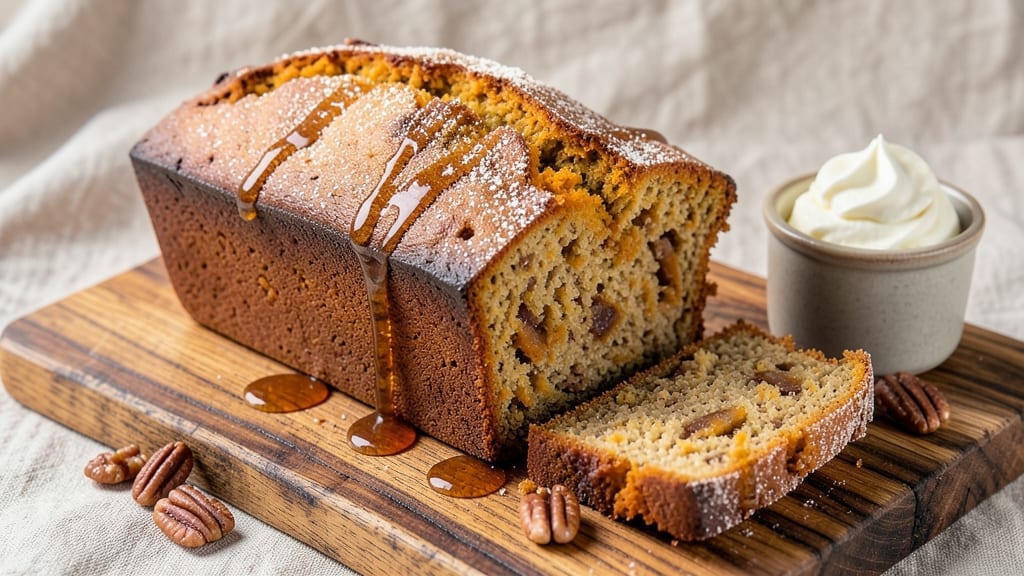
This awesome pumpkin bread recipe delivers the perfect balance of moist, spiced pumpkin cake with a caramelized molasses crunch that makes every slice irresistible. 🌟 The secret lies in combining pumpkin purée with warm spices—cinnamon, nutmeg, and ginger—and a touch of molasses for depth that transforms ordinary pumpkin bread into something extraordinary.
I've baked this version for years, and it never fails to impress, whether served fresh from the oven or wrapped in parchment for gifting.
The recipe starts with a simple yet foolproof method: mixing wet and dry ingredients separately ensures a light, airy texture without overmixing. A splash of buttermilk adds richness, while brown sugar and molasses create that signature caramelized flavor that lingers on your palate.
Baking at 350°F for 50-60 minutes yields a loaf with a golden crust and a tender crumb that stays moist for days—no dry, crumbly disappointment here.
What sets this recipe apart is the way the spices and molasses meld together, creating layers of warmth and sweetness that feel like autumn in every bite. The bread pairs beautifully with a cream cheese frosting, though it’s equally delicious on its own.
Perfect for holiday gatherings, weekend breakfasts, or as a comforting treat on chilly afternoons, this loaf is a crowd-pleaser that’s as easy to make as it is to devour.
For an extra touch, sprinkle a pinch of cinnamon sugar on top before baking or drizzle with a simple glaze of powdered sugar and vanilla. The possibilities are endless, but the foundation—rich, spiced pumpkin bread with that deep molasses caramel note—is what makes this recipe truly awesome.
Let’s get baking!
Ingredients for awesome pumpkin bread
These 15 ingredients blend into a moist, spiced loaf with deep molasses caramel notes.
| Ingredient | Amount | Notes |
|---|---|---|
| Canned Pumpkin Purée 🎃 | 1 ½ cups | Unsweetened, not pumpkin pie filling |
| All-Purpose Flour 🌾 | 2 ½ cups | Sifted for light texture |
| Granulated Sugar 🍚 | 1 ½ cups | White sugar preferred |
| Light Brown Sugar 🍚 | ¾ cup | Packed lightly |
| Molasses 🍯 | ¼ cup | Unsulphured preferred |
| Buttermilk 🥛 | 1 cup | Full-fat for richness |
| Large Eggs 🥚 | 2 whole | Room temperature |
| Melted Butter 🧈 | ½ cup | Unsalted, cooled slightly |
| Ground Cinnamon 🌿 | 2 tsp | Freshly ground preferred |
| Ground Nutmeg 🌿 | ½ tsp | Freshly grated |
| Ground Ginger 🌿 | 1 ½ tsp | Freshly ground |
| Ground Cloves 🌿 | ½ tsp | Lightly toasted |
| Salt 🧂 | ½ tsp | Kosher or sea salt |
| Baking Soda 🧪 | 1 ½ tsp | Freshly measured |
| Vegetable Oil 🫒 | ¼ cup | For greasing pan |
The pumpkin purée is the heart of this recipe—Libby’s or Storebrand are my go-tos, but any unsweetened canned pumpkin works. Molasses is non-negotiable for that deep caramel flavor; unsulphured molasses from Whole Foods or Trader Joe’s delivers the best results. For spices, freshly ground cinnamon and nutmeg make all the difference. Toast your whole spices lightly in a dry pan before grinding for an extra depth of flavor. The buttermilk adds richness, so don't substitute with regular milk—it won't give the same tender crumb. If you're short on time, cultured buttermilk powder mixed with milk works perfectly.
No molasses? Dark corn syrup at half the amount will get you close, though the flavor won't be identical. Freshly ground spices are ideal, but if you're using pre-ground, make sure they're labeled as freshly ground or toast your own. For a gluten-free version, swap the flour for a 1:1 gluten-free baking blend—just add an extra 0.5 teaspoons of baking soda. The brown sugar should be packed lightly to avoid clumping, and if you're out, white sugar plus a pinch of corn syrup works in a pinch. The baking soda is crucial for lift, so don't skip it or use baking powder as a substitute—it won't provide the same rise.
This loaf keeps beautifully for 4-5 days wrapped in plastic at room temperature or in the fridge. For longer storage, freeze slices wrapped individually—they reheat perfectly in the oven or toaster. The molasses flavor deepens over time, so leftovers often taste even better the next day. For gifting, wrap slices in parchment and tie with twine. The crust stays crisp for about 2 days if stored in an airtight container, but the crumb remains moist for up to 5 days. Double the recipe for a crowd—just use two loaf pans.
Why You'll Love This Recipe
- Pantry Magic: I swear by this recipe because it uses stuff I always have—no last-minute grocery runs. The canned pumpkin purée and molasses alone give it that deep, spiced soul without needing specialty ingredients.
- Spice & Moisture Balance: That molasses? It’s what makes this bread ridiculously good—caramel notes that cut through the pumpkin’s sweetness. Honestly, I’ve tried other pumpkin breads, but this one stays moist for days without tasting heavy.
- Breakfast or Snack Hero: Between us, I make this in the morning and it’s gone by noon. Toast it with butter and you’ve got a satisfying breakfast, or slice it cold for a cozy afternoon pick-me-up. (Yes, even on a Tuesday night.)
- No-Waste Winner: A single loaf lasts my family five days—no sad, dried-out crumbs here. And if I bake two? Freezer-friendly slices for when I’m too tired to turn on the oven. Budget-friendly, time-saving, and always a hit.
Step-by-step instructions for deep molasses pumpkin bread
Here's how to craft the perfect loaf with rich molasses depth and warm spice crunch.
👨🍳 Step 1: Whisk Wet Ingredients for Maximum Moisture
In a large mixing bowl, combine the 1.5 cups canned pumpkin purée, 1.5 cups granulated sugar, and 0.75 cup light brown sugar. Whisk vigorously until the sugars dissolve completely and the mixture becomes smooth and uniform. This ensures even distribution throughout the batter.
Next, add the 0.25 cup molasses, 1 cup buttermilk, 0.5 cup melted butter, and 2 whole large eggs one at a time. Whisk after each addition until fully incorporated. The molasses will darken the batter slightly, creating that signature deep caramel note we're after. Here's the thing—don't rush this step. The batter should be completely smooth with no visible streaks of flour or sugar.
👨🍳 Step 2: Sift and Fold Dry Ingredients Gently
In a separate bowl, sift together the 2.5 cups all-purpose flour, 2 tsp ground cinnamon, 0.5 tsp ground nutmeg, 1.5 tsp ground ginger, 0.5 tsp ground cloves, 0.5 tsp salt, and 1.5 tsp baking soda. Sifting prevents lumps and ensures even distribution of the spices throughout the batter.
With the mixer on low speed, gradually add the dry ingredients to the wet mixture. Mix just until combined—about 30 seconds. You'll see a few streaks of flour remain, and that's perfect. Overmixing develops gluten, which can make the bread dense. The batter should be thick but pourable, with a consistency similar to heavy pancake batter.
🔥 Step 3: Prepare the Pan and Bake to Golden Perfection
Preheat your oven to 350°F. Generously grease a 9x5-inch loaf pan with 0.25 cup vegetable oil, then dust lightly with flour, tapping out any excess. Pour the batter into the prepared pan and smooth the top with a spatula. Here's where it gets critical: Tap the pan gently on the counter 3-4 times to release any air bubbles that may have formed during mixing.
Bake for 50-60 minutes until a toothpick inserted in the center comes out clean and the top springs back when pressed gently. The bread should have a deep golden brown color with a crackly top crust. If the top browns too quickly, tent loosely with aluminum foil after 30 minutes to prevent overbrowning while ensuring the interior cooks through.
⏰ Step 4: Cool and Test for Doneness
Remove the bread from the oven and transfer it to a wire rack. Let it cool in the pan for 10 minutes—this prevents the loaf from collapsing as it cools. Then carefully invert it onto the rack to cool completely. The bread will continue to set as it cools, becoming firmer and developing those beautiful caramelized molasses notes.
For the ultimate test, slice a piece and check the interior. It should be moist but not wet, with a tender crumb and those warm spices visible throughout. The molasses should add a deep, slightly bitter caramel flavor that balances the sweetness perfectly. If the bread tastes slightly underbaked, return it to the oven for 5-10 minutes at 325°F to finish cooking.
Pro Tips For Making Awesome Pumpkin Bread
- STIR IN THE MOLASSES LAST: I learned this the hard way—adding molasses to the wet ingredients too early makes the batter darken prematurely and can throw off the flavor balance. Toss it in with the spices right before folding everything together, so it blends evenly without overpowering.
- USE A TOOTHPICK TEST: Pumpkin bread can look done but still be gummy inside. Stick a toothpick in the center—if it comes out with a few moist crumbs (not wet batter), it’s ready. If it’s clean, you’ve likely overbaked, and the texture will be dry.
- WHISK THE PUMPKIN FIRST: That canned purée has lumps, and they’ll make your bread dense and uneven. Whisk it vigorously for 30 seconds before mixing it into the wet ingredients—smooth purée means a lighter, more consistent crumb.
- SKIP THE EXTRA FLOUR: Resist the urge to add flour if the batter seems too thin. It’ll make the bread dense. Instead, let the loaf rise in the pan—it’ll hold its shape without extra flour, and the texture stays tender. (Yes, even if it looks like too much liquid.)
Pro cooking tips for awesome pumpkin bread
Spice Toasting Secret
Toast your whole spices—especially cinnamon sticks and cloves—before grinding for an extra depth of flavor. Lightly dry-toast them in a small skillet over medium-low heat for 1-2 minutes until fragrant. Let cool completely before grinding with a mortar and pestle or spice grinder.
This step intensifies the warm, aromatic notes that make this bread so special. I always do this with my Penzeys Spices cinnamon and cloves for that professional touch. 🌶️
Molasses Substitution
If you're out of molasses, don't skip it entirely—it's what gives this bread its signature depth. Use ½ cup dark corn syrup mixed with 1 tsp apple cider vinegar as a substitute. The vinegar mimics molasses' slight acidity, though the flavor won't be identical.
For a closer approximation, blend ½ cup blackstrap molasses with ¼ cup maple syrup—this combo delivers both the caramel notes and the deep, rich flavor. The bread will still be delicious, just with a slightly different profile.
Buttermilk Tricks
Full-fat buttermilk is non-negotiable for that rich, tender crumb. If you're in a pinch, mix 1 cup whole milk with 1 tablespoon lemon juice or white vinegar, let sit for 5 minutes, then proceed.
For an even richer texture, replace ¼ cup of the buttermilk with ¼ cup sour cream. The extra fat adds moisture and enhances the molasses flavor. I've found that Kroger brand buttermilk works perfectly when I can't find cultured buttermilk powder.
Baking Soda Boost
Fresh baking soda is crucial for lift, but it loses potency over time. If your baking soda is more than 6 months old, test it by mixing ½ teaspoon with ¼ cup vinegar—it should bubble vigorously.
For extra insurance, add ¼ teaspoon cream of tartar to the dry ingredients. This chemical leavener combo creates a lighter, airier crumb. I keep a small jar of Bob's Red Mill baking soda in my pantry and refresh it annually for best results. 🧪
Pan Prep Perfection
Greasing your loaf pan with vegetable oil and dusting with flour creates the perfect release, but here's the pro tip: Line the pan with parchment paper cut to fit snugly. This prevents sticking and makes removing the loaf effortless.
For extra insurance, brush the parchment with a thin layer of oil before adding the batter. I use King Arthur unbleached flour for dusting—it's fine enough to create a smooth surface without clumping. This method guarantees a clean release every time, even with the dense molasses batter.
Doneness Test
The toothpick test is standard, but I also check for the "spring back" method: Gently press the top of the loaf with your finger—if it springs back slowly, it's done. For a more precise gauge, use an instant-read thermometer to confirm an internal temperature of 205-210°F.
The bread should be just set but still slightly soft in the center. If it's underbaked, tent with foil and return to the oven for 5-10 minutes at 325°F. Overbaking dries out the crumb, so pull it out as soon as it passes these tests. 🌡️
Nutrition facts
Frequently asked questions
Why does your pumpkin bread recipe use molasses instead of just maple syrup?
Molasses adds that deep, caramelized depth that sets this recipe apart! The slight bitterness balances the sweetness perfectly, creating layers of flavor that maple syrup can't match. It also enhances the warm spices like cinnamon and ginger, making them sing in every bite. Think of it as the secret ingredient that transforms ordinary pumpkin bread into something extraordinary.
Can I make this recipe without buttermilk?
Mix 1 cup whole milk with 1 tablespoon lemon juice or white vinegar, let it sit for 5 minutes until thickened, then use as a 1:1 substitute. For extra richness, replace ¼ cup of the buttermilk with ¼ cup sour cream. The fat content makes the bread even more moist and tender, especially important when using molasses which can dry things out slightly.
How do I tell when the bread is fully baked?
Use the classic toothpick test—insert it in the center and check for moist crumbs (not wet batter). For extra accuracy, press the top gently with your finger—if it springs back slowly, it's done. The internal temperature should reach 205-210°F on an instant-read thermometer. The bread should have a deep golden color with a crackly top crust. If the top browns too quickly, tent with foil after 30 minutes to prevent overbrowning while keeping the interior moist.
Can I add nuts or chocolate chips to this recipe?
You can absolutely customize it! Fold in 1 cup chopped walnuts or pecans for crunch, or add ½ cup semi-sweet chocolate chips for pockets of melted chocolate. For best results, toast the nuts at 350°F for 5-7 minutes first to enhance their flavor. Just don't overmix after adding them—stir gently to distribute evenly. The molasses flavor pairs beautifully with both options!
How long does this bread keep, and can I freeze it?
This loaf stays fresh for 4-5 days at room temperature wrapped in plastic, or up to 1 week in the fridge. For freezing, wrap individual slices tightly in plastic wrap and place them in a freezer bag. Frozen slices reheat perfectly in the oven or toaster—just wrap them in foil and warm at 350°F for 10-15 minutes. The molasses flavor actually deepens over time, so leftovers often taste even better the next day!