
Side Dishes
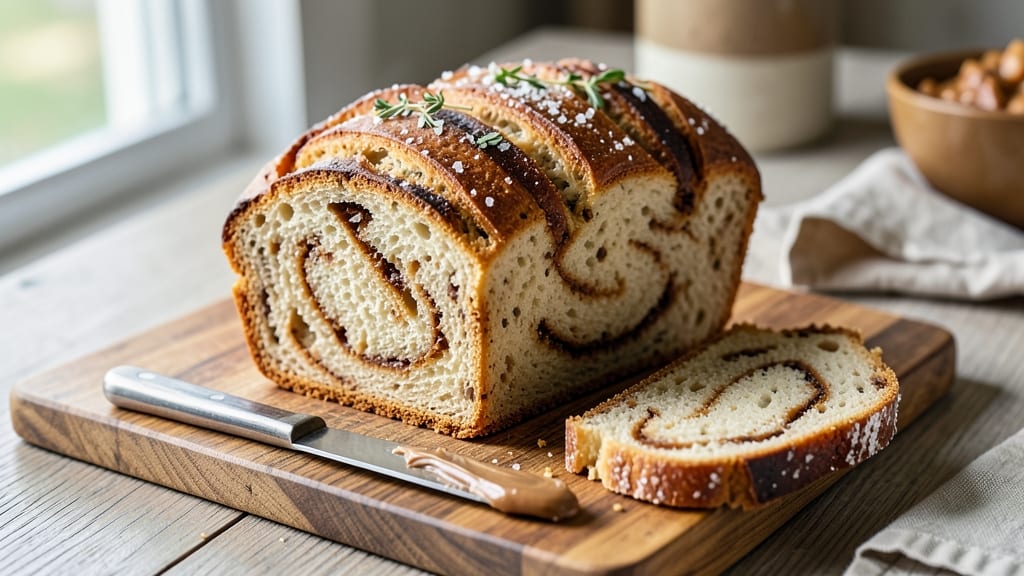
B Dylan Hollis' peanut butter bread recipe delivers that perfect balance of rich peanut butter flavor and tender, fluffy texture in every slice. 🌟 The secret lies in carefully layering the peanut butter swirls and baking at just the right temperature to create a golden crust while keeping the interior moist.
This isn't just bread—it's a comforting, versatile treat that works as toast, French toast, or even dessert with a drizzle of honey.
The recipe begins with a simple yeast dough that gets infused with peanut butter for that signature nutty aroma. What sets this apart is the technique of folding in dollops of peanut butter during the final shaping, creating those beautiful marbled swirls you see in every slice.
The baking process is straightforward but requires patience—about 25 minutes at 350°F—to achieve that ideal texture: soft, pillowy, and just slightly crisp at the edges.
Once baked, this bread transforms into something truly special. The peanut butter flavor is rich but not overpowering, and the swirls are visible throughout, promising a burst of nutty goodness in every bite.
It's the kind of bread that disappears quickly, whether you're serving it warm with butter or saving slices for toast the next morning.
Perfect for breakfast, brunch, or even as a sweet snack with jam, this peanut butter bread is a crowd-pleaser that feels like a hug in every bite.
The recipe is designed to be foolproof, ensuring you'll get that same viral-worthy result that made it so popular. Let's get started on making yours!
Ingredients for b dylan hollis peanut butter bread
Eight simple ingredients transform into B Dylan Hollis' iconic peanut butter bread with swirls.
| Ingredient | Amount | Notes |
|---|---|---|
| All-Purpose Flour 🌾 | 4 cups | Sifted for light texture |
| Granulated Sugar 🍚 | ½ cup | White or light brown |
| Active Dry Yeast 🍞 | 2 ¼ tsp | 1 packet, room temperature |
| Unsalted Butter 🧈 | ½ cup | Softened to room temp |
| Whole Milk 🥛 | ¾ cup | Warm to 110°F |
| Large Eggs 🥚 | 1 whole | Room temperature |
| Vanilla Extract 🌸 | 1 tsp | Pure extract preferred |
| Salt 🧂 | 1 tsp | Kosher or sea salt |
| Creamy Peanut Butter 🥜 | 1 cup | Natural, no added sugar |
| Powdered Sugar 🍚 | 1 tbsp | For dusting |
| Honey 🍯 | 1 tbsp | Optional for drizzling |
The peanut butter matters most—Creamy style with no added sugar gives the best flavor without overpowering. Jif Natural or Skippy Creamy are my go-tos, but any natural peanut butter works. For the yeast, Fleischmann's is reliable, but check the expiration date—it needs to be fresh. The butter should be soft enough to press with a finger but not melted. If your peanut butter is thick, microwave it 10 seconds to loosen it up before measuring. Flour? King Arthur or Gold Medal work perfectly for this recipe—no fancy brands needed.
No vanilla extract? Vanilla bean paste or imitation vanilla both work, though pure extract is ideal. Short on powdered sugar? Granulated sugar at half the amount will work in a pinch, though it won't give that same light dusting. The milk needs to be warm—dip your finger in and it should feel like bathwater, not scalding. If your peanut butter is chunky, give it a quick stir before measuring. For the egg, room temperature helps it incorporate better into the dough, but if it's cold, just let it sit out for 10 minutes. The dough will be sticky—don't fight it, just wet your hands before handling.
This bread keeps best in an airtight container at room temperature for 3-4 days. For longer storage, wrap tightly in plastic and freeze for up to 3 months. Thaw at room temperature before toasting. The swirls are best enjoyed fresh, but even reheated slices taste amazing. I always make an extra loaf—it disappears fast, especially when sliced and toasted with a little more peanut butter. Store-bought peanut butter? Skip the sugar version—it'll make the bread taste too sweet.
Why You'll Love This Recipe
- No-Yeast Struggle: This bread actually wants to rise—no fussing with proofing times or guessing if your yeast is alive. The active dry yeast in warm milk does all the work while you mix the rest, and honestly? That first pull-apart loaf feels like a win every time.
- Peanut Butter Magic: That rich, nutty swirl isn’t just decoration—it’s the star. The sugar and butter in the dough caramelize just enough to make each bite taste like a hug, and the peanut butter? It’s the kind of sweetness that disappears too fast (in a good way).
- Breakfast to Snack: I make this on Sundays because it’s that reliable—slice it for toast with jam, pack it for lunch, or just eat it straight from the pan when the kids are begging. The milk and butter keep it moist for days, so it’s always ready for whatever craving hits.
- Pantry Staple Power: Between us, this uses ingredients you already own. Flour, sugar, butter—no specialty items, no last-minute grocery runs. And because it keeps well, I bake two loaves, freeze one, and never stress about running out when the peanut butter cravings strike.
Step-by-step instructions for B Dylan Hollis' peanut butter bread
This recipe delivers perfect swirls and a tender crumb every time.
👨🍳 Step 1: Activate the Yeast for Perfect Rise
In a small bowl, combine the 0.75 cup warm whole milk (about 110°F) with the 0.5 cup granulated sugar and 2.25 tsp active dry yeast. Let it sit for 5-10 minutes until frothy. This activation step is crucial—you'll see tiny bubbles forming on the surface when it's ready. If it doesn't bubble, your yeast might be dead or the milk too hot.
While waiting, sift the 4 cups all-purpose flour into a large mixing bowl. This aerates the flour and prevents dense bread. Add the 1 tsp salt and mix gently with a whisk to combine. The flour should look light and fluffy at this stage.
🍳 Step 2: Mix the Dough Until Smooth
Add the yeast mixture to the flour, then stir in the 1 whole large egg, 1 tsp vanilla extract, and 0.5 cup softened unsalted butter. Mix with a wooden spoon until a shaggy dough forms. The butter should be soft enough to press into the dough but not melted.
Transfer the dough to a lightly floured surface and knead for 8-10 minutes until smooth and elastic. You'll know it's ready when it springs back slowly when poked. If the dough feels sticky, add 1 tablespoon flour at a time until it's just manageable. Kneading develops gluten, which gives the bread its structure and chewiness.
🥘 Step 3: Create the Signature Peanut Butter Swirls
Divide the dough into two equal pieces and roll each into a 12-inch rectangle on a floured surface. Spread ½ cup creamy peanut butter evenly over one rectangle, leaving a ½-inch border around the edges. This prevents the filling from oozing out during baking.
Roll up each rectangle tightly from the long side, starting with the peanut butter side. Seal the edges by pinching them together. Place both rolls seam-side down in a 9x5-inch loaf pan that's been lightly greased with butter. The dough should rise just above the pan's edges.
⏰ Step 4: First Rise and Shape for Perfect Swirls
Cover the loaf pan with a clean kitchen towel and let the dough rise in a warm place for 1-1.5 hours, or until it's doubled in size. The dough should puff up noticeably and feel light when pressed gently. If your kitchen isn't warm enough, place the pan near a turned-off oven with the light on.
Once risen, use a sharp knife to cut the loaf horizontally through the center, stopping about ½ inch from the bottom. This creates two equal halves. Spread ½ cup peanut butter evenly over the top half, then carefully place it back on top of the bottom half. Press gently to seal. This creates the signature swirl pattern.
🔥 Step 5: Bake to Golden Perfection
Preheat your oven to 350°F and bake the loaf for 45-50 minutes, until the top is deep golden brown and a toothpick inserted into the center comes out clean. The bread should smell rich and nutty when done. If the top browns too quickly, tent it loosely with aluminum foil.
Remove from the oven and let cool in the pan for 10 minutes, then transfer to a wire rack. While still warm, dust the top generously with 1 tbsp powdered sugar and drizzle with 1 tbsp honey. The powdered sugar adds a delicate sweetness, while the honey enhances the peanut butter flavor and gives a beautiful glaze. Let cool completely before slicing for clean cuts.
Pro Tips For Making B Dylan Hollis Peanut Butter Bread
- Mix Butter and Sugar First: I learned this the hard way—whipping the butter and sugar together until light and fluffy (about 3-4 minutes) creates pockets for the peanut butter to melt into later, giving that classic B Dylan Hollis gooey texture. Skip this, and you’ll end up with dense, dry bread that tastes like a peanut butter brick.
- Use Warm Milk for Yeast: The yeast in this recipe needs warmth to activate properly—pour the whole milk over the yeast and let it sit for 5 minutes until it’s bubbly before mixing it into the dough. Cold milk kills the yeast; lukewarm milk (about 105°F) guarantees a rise. (Yes, even if you’re impatient like me.)
- Don’t Over-Knead the Dough: This dough is sticky and forgiving, but the second you start overworking it, the gluten tightens up, and the bread turns tough. Knead just until the dough pulls away from the bowl (about 5-7 minutes by hand or 3-4 minutes with a stand mixer). Less effort = better crumb.
- Let the Dough Rise Twice: The first rise (1-2 hours) builds the structure, but the second rise (after shaping) is where the magic happens—it relaxes the gluten and lets the peanut butter flavor spread evenly. Skip the second rise, and you’ll get a dense loaf that’s more cake than bread. (Your future self will thank you.)
Regional styles of this dish
Southern Comfort Twist
In the South, peanut butter bread often gets a bourbon-infused upgrade. Replace 1 tbsp of the warm milk with 1 tbsp bourbon (like Maker's Mark) for a rich, caramelized depth that pairs beautifully with the peanut butter.
Southern bakers also love adding ½ tsp cinnamon to the dough for warmth. Serve warm with a drizzle of maple syrup instead of honey for that classic Southern breakfast vibe. 🥛
Midwest Classic
The Midwest version leans into buttery richness and extra peanut butter swirls. After the first peanut butter layer, add a thin layer of powdered sugar before sealing the loaf—this creates a subtle crunch and sweetness in every bite.
Some bakers in this region also add ¼ cup chopped pecans to the dough for texture. This style is perfect for apple butter or blueberry jam pairings, balancing the peanut butter's nuttiness. 🌾
West Coast Fusion
On the West Coast, you’ll find avocado-infused peanut butter bread—a surprising but delicious twist. Mix ¼ cup mashed avocado into the peanut butter before spreading it in the dough. This adds a creamy, slightly tangy element that cuts through the sweetness.
Pair it with sriracha honey or gochujang butter for a spicy-sweet contrast. The avocado also keeps the bread moist longer, making it ideal for French toast or banana bread sandwiches. 🥑
East Coast Elegance
The East Coast version often incorporates brown butter for a nutty, caramelized flavor. Replace the regular butter with ½ cup browned butter (cool completely before using) in the dough.
Top the baked loaf with a salted caramel glaze (mix 2 tbsp caramel sauce with 1 tsp flaky sea salt) for a gourmet touch. This style is perfect for brunch spreads or as a dessert loaf with dark chocolate chunks. 🍯
Global Twist: Japanese Matcha
For a unique fusion, add 1 tsp matcha powder to the flour mixture for a subtle earthy note. Use Japanese-style peanut butter (like Hana Hemp & Co.), which is smoother and less sweet.
After baking, dust with kinako (roasted soybean flour) instead of powdered sugar for a nutty, umami finish. This version pairs beautifully with green tea or white chocolate drizzle. 🍵
Nutrition facts
Frequently asked questions
Why does the dough need to rise twice?
The first rise develops the gluten structure and allows the yeast to ferment fully, creating lightness. The second rise after shaping with peanut butter ensures the swirls stay intact while the bread expands. Skipping either can result in dense bread with weak swirls. Think of it like letting the dough "breathe" before baking.
Can I use crunchy peanut butter instead of creamy?
While creamy peanut butter creates the smoothest swirls, you can use crunchy—but stir it well first to break up chunks. The texture will be slightly different, with tiny crunchy bits throughout. For best results, microwave the crunchy peanut butter for 10-15 seconds to soften it before measuring.
How do I fix if my swirls disappear during baking?
If the peanut butter spreads too much, try these fixes: Chill the shaped loaf in the fridge for 15 minutes before baking to slow spreading. Or, use slightly less peanut butter (½ cup total) and spread it thinner. The key is to keep the dough cold until it hits the oven—this helps maintain those pretty patterns.
Can I make this bread without a loaf pan?
Yes! Shape the dough into a round loaf and bake on a parchment-lined baking sheet at 350°F for 35-40 minutes. For a rustic look, brush the top with melted butter before baking. The swirls will still form beautifully, though the shape will be more freeform. Just watch the edges—they brown faster without a pan.
How can I make this bread extra moist?
Add 1 tbsp sour cream or Greek yogurt to the dough for tenderness, or replace 2 tbsp milk with water to reduce drying. For extra richness, brush the baked loaf with melted butter while still warm. Store it in an airtight container with a slice of bread or apple to keep it fresh longer.