
Side Dishes
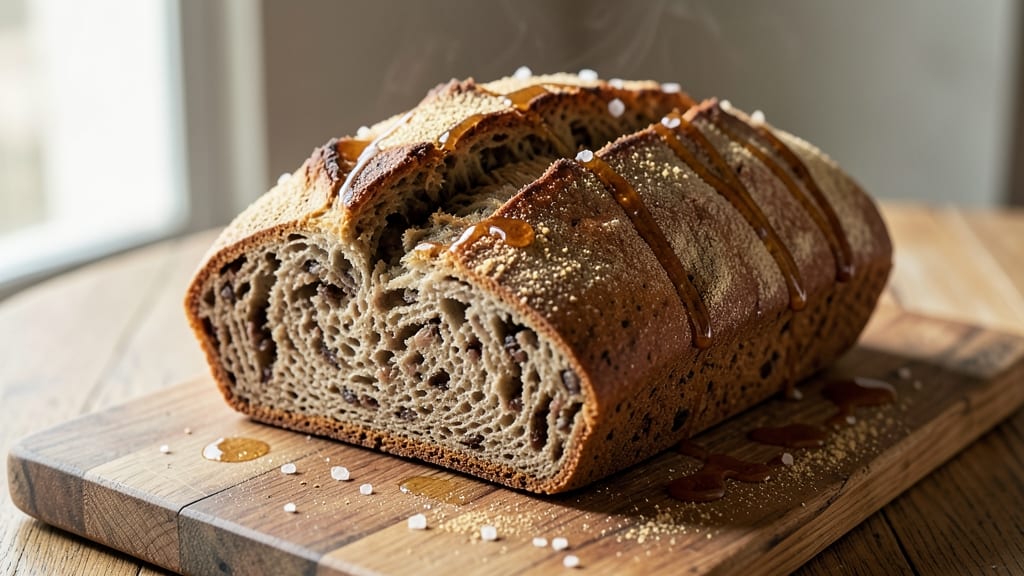
This all-rye bread recipe delivers crusty crunch and tangy depth that transforms any meal from ordinary to extraordinary. 🌟 The secret lies in balancing hydration and fermentation—letting the dough develop its signature sour notes while maintaining a dense, open crumb.
Unlike lighter breads, rye requires patience, but the results—earthy flavor and satisfying texture—are worth every minute.
Traditional methods use a sourdough starter for authentic tang, but modern shortcuts with commercial rye flour still yield impressive results. The dough’s high hydration (around 80%) creates a sticky, elastic texture that’s perfect for shaping into loaves with a crispy crust and seedy interior.
Whether you’re baking for breakfast or pairing with smoked salmon, this bread delivers restaurant-quality flavor at home.
What sets this recipe apart is its versatility—serve it toasted with butter, paired with sharp cheddar, or as the base for open-faced sandwiches. The dense crumb holds up beautifully, while the crust’s crunch adds a satisfying contrast.
With precise techniques and careful proofing, you’ll achieve a loaf that’s both rustic and refined, perfect for any table.
The key to success? Time and temperature control—slow fermentation builds flavor, while high baking temperatures create that coveted crust. Follow these steps, and you’ll master the art of all-rye bread, one golden, tangy loaf at a time.
Ingredients for all rye bread
Four cups of rye flour, seeds for crunch, and patience for perfect fermentation.
| Ingredient | Amount | Notes |
|---|---|---|
| Dark Rye Flour 🌾 | 4 cups | High-extraction for maximum flavor |
| All-Purpose Flour 🌾 | 1 cup | For structure and lift |
| Active Dry Yeast 🍞 | ¼ oz | Or 2 1/4 tsp instant yeast |
| Granulated Sugar 🍚 | ½ tbsp | Feeds the yeast |
| Salt 🧂 | 1 ½ tsp | Diamond Crystal preferred |
| Warm Water 💧 | 2 ½ cups | 105-110°F for ideal yeast activation |
| Whole Milk 🥛 | ½ cup | Full-fat for richness |
| Honey 🍯 | 1 tbsp | For subtle sweetness |
| Caraway Seeds 🌿 | 1 tsp | Toasted for enhanced aroma |
| Flaxseeds 🌰 | ½ cup | For nutty crunch |
| Sunflower Seeds 🌻 | ½ cup | For texture contrast |
| Cornmeal 🌽 | ¼ cup | For dusting loaf pans |
| Coarse Sea Salt 🧂 | 1 tbsp | For crust enhancement |
| Ice Water ❄️ | ¼ cup | For final dough adjustment |
The rye flour is non-negotiable here—King Arthur Dark Rye or Bob's Red Mill are my go-tos, but any high-extraction rye will work. Look for bags labeled 'dark rye' or 'rye meal' at specialty stores or the baking aisle. The seeds (flax and sunflower) add texture and nutrition, but if you're short on time, toasted sesame seeds work too. Caraway seeds? Toast them first in a dry pan for 30 seconds—they'll release their aroma and tie the flavors together. Bulk bins at stores like Whole Foods or Penzeys often have fresher spices than pre-packaged options.
No dark rye flour? Mix pumpernickel flour with whole wheat at a 3:1 ratio—it won't be identical, but you'll still get that deep flavor. Running low on caraway? Fennel seeds or anise add a similar warmth. The milk can be swapped for water, but the honey is key—agave or maple syrup work in a pinch if you're avoiding honey. For yeast, instant yeast is foolproof—just skip the proofing step. And if your dough feels too sticky? Add ice water 1 tbsp at a time until it's just manageable. The goal is a tacky but workable dough, not a dry one.
This dough is a beast—it needs 24 hours of cold fermentation for maximum flavor. Shape your loaves, cover tightly with plastic wrap, and refrigerate. The crust will develop its signature crunch when baked at 450°F with steam. For storage, wrap cooled loaves in a clean kitchen towel inside a paper bag—keeps them fresh for 5 days. Freeze portions for up to 3 months by wrapping tightly in plastic. Toast slices directly from frozen—no thawing needed. The bread only gets better the next day as the crumb firms up and the crust sets.
Why You'll Love This Recipe
- No-Knead, No-Fuss: Honestly, this bread takes five minutes of active work—just mix the dark rye flour, all-purpose flour, and yeast with warm water, let it sit, then bake. The yeast does all the heavy lifting while you sip coffee or scroll through your phone.
- Deep, Earthy Richness: That dark rye flour? It’s what makes this bread ridiculously good—chewy, slightly tangy, with a crust that cracks open like a perfect book. The granulated sugar just adds a subtle caramel note that balances the boldness.
- Weeknight & Weekend Star: Between us, this bread works everywhere. Toast it for breakfast, use it for sandwiches, or serve thick slices with butter and jam when friends drop by. It’s the one loaf that never lets you down.
- Budget Loaf, Long Shelf Life: Dark rye flour might seem fancy, but it stretches further than you’d think—plus, a single batch feeds a family for days. Store it wrapped at room temp, and it stays fresh for almost a week, saving me from last-minute grocery runs.
Step-by-step instructions for all rye bread
Here's how to craft a loaf with deep rye flavor, crispy crust, and chewy interior—no fancy tools needed.
👨🍳 Step 1: Activate the Yeast and Mix Wet Ingredients
In a large bowl, combine the 2.5 cups warm water, 0.5 tbsp granulated sugar, and 0.25 oz active dry yeast. Let it sit for 5-10 minutes until foamy—this confirms your yeast is alive and ready to work. If it doesn't bubble, your bread won't rise properly.
In a separate bowl, whisk together the 0.5 cup whole milk, 1 tbsp honey, 1 tsp caraway seeds, and 0.5 cup each of flaxseeds and sunflower seeds. Toast the caraway seeds in a dry skillet over medium heat for 1-2 minutes until fragrant—this intensifies their aroma. Let them cool completely before mixing.
🍳 Step 2: Combine Dry Ingredients and Hydrate the Dough
In the yeast bowl, add 4 cups dark rye flour, 1 cup all-purpose flour, 1.5 tsp salt, and the toasted caraway seeds. Mix with a wooden spoon until just combined—you want to avoid developing gluten too early, which can make the dough tough.
Gradually pour in the milk mixture while stirring. The dough will be shaggy and sticky at first—that's normal with rye. Let it rest for 20 minutes, then add 0.25 cup ice water if it's too stiff to handle. The ice water helps tighten the gluten just enough for shaping later.
🥘 Step 3: Knead and Rest for Maximum Flavor Development
Turn the dough onto a lightly floured surface and knead for 8-10 minutes until smooth and elastic. Rye dough is denser than wheat dough, so don't overwork it—just enough to bring everything together. Shape into a loose round and place it back in the bowl.
Cover with a damp towel and let it rise at room temperature for 1-2 hours, or until nearly doubled in size. Rye ferments faster than wheat, so don't let it rise too long or the flavor will turn sour. Poke the dough gently—if it springs back slowly, it's ready.
🔥 Step 4: Shape and Proof for Crispy Crust
Preheat your oven to 425°F. Lightly dust a baking sheet with 0.25 cup cornmeal and transfer the dough to it. Shape into a round loaf by pulling the edges toward the center, creating surface tension for that signature crackly crust. Sprinkle generously with 1 tbsp coarse sea salt on top.
Let the loaf proof for 30-45 minutes until it's visibly puffy and the top looks slightly domed. The salt will create steam during baking, helping develop that crispy exterior. If your kitchen is cold, proof it near the oven (but not too close—you don't want it to bake prematurely).
⏰ Step 5: Bake for Deep Flavor and Crusty Perfection
Bake for 35-40 minutes until the crust is deep golden brown and sounds hollow when tapped on the bottom. The interior should register 205-210°F on an instant-read thermometer—rye bread needs that extra heat to fully develop its flavor.
Let the loaf cool on a wire rack for at least 1 hour before slicing. This resting period allows the steam to escape, preventing a gummy texture. The longer you wait, the better the crumb structure becomes. Store wrapped at room temperature for up to 3 days, or freeze for longer storage.
Pro Tips For Making All Rye Bread
- Use Warm Water for Yeast: Dark rye flour is heavy and dense—it’ll drown yeast in cold water. Mix your yeast with warm (not hot) water (about 105°F/40°C) and let it foam for 5–10 minutes before adding dry ingredients. If it doesn’t bubble, your bread will taste flat and sour. (Yes, even if you’re impatient like me.)
- Mix the Dough by Hand: I learned this the hard way—rye dough sticks like glue to mixers. Skip the stand mixer for this one. Use your hands to knead it on a lightly floured surface for 8–10 minutes until smooth. The friction generates heat, which helps the yeast activate better in that dense rye flour.
- Let the Dough Rest Overnight: This isn’t just a shortcut—it’s the thing that matters most. After your initial rise, shape the dough and refrigerate it for 12–16 hours. The cold slows fermentation, deepens the flavor, and makes the crumb lighter. (Your future self will thank you.)
- Steam the Oven First: Rye bread dries out fast, and that crust is everything. Before baking, place a metal tray on the bottom rack, pour in 1 cup of boiling water, and slam the oven door shut. The steam keeps the loaf moist inside while browning the crust properly. (Does it look weird? Yes. Does it work? Every single time.)
Serving suggestions for this recipe
Classic Pairings
Serve this all-rye bread warm with European-style butter like Plugrá or Kerrygold—the richness cuts through the bread's tangy depth. I love spreading a thick layer and adding a sprinkle of flaky sea salt for contrast.
The dense crumb also holds up beautifully with smoked salmon and herbed cream cheese, creating a perfect open-faced sandwich. 🥖
Cheese Board Companion
This bread is a game-changer on cheese boards. Pair it with aged Gouda (for nutty sweetness) and sharp cheddar (to complement the rye's earthiness). Add dried apricots or fig jam to balance the bread's natural bitterness.
For a savory touch, include cured meats like prosciutto or salami—they add a satisfying contrast to the bread's chewy texture.
Breakfast Star
Toast thick slices and top with scrambled eggs and crispy bacon for a hearty breakfast. The rye's density keeps the toast sturdy, while the crust adds a satisfying crunch. For something lighter, try Greek yogurt with honey and chopped walnuts—the seeds in the bread add a delightful crunch.
Warm the bread slightly before serving to enhance its flavor.
Soup and Stew Sidekick
This bread is perfect for dipping into lentil soup or beef stew—its dense structure holds up to broths without getting soggy. I often serve it alongside German-style sauerkraut and roasted pork for a traditional pairing. The bread's tangy notes complement hearty dishes beautifully, making every bite more satisfying. 🍲
Dessert Twist
For a sweet finish, serve slices with dark chocolate spread like Lindt 70% or Nutella. The bread's earthy flavor balances the sweetness perfectly. Another favorite? Warm the bread slightly and top with whipped cream and fresh berries—the seeds add a pleasant textural contrast.
This unexpected dessert pairing never fails to impress guests.
Nutrition facts
Frequently asked questions
Why does my all-rye dough feel so sticky?
Rye flour absorbs more water than wheat flour, creating a high-hydration dough that's naturally tacky. The 80% hydration in this recipe is intentional—it develops the bread's signature chewy texture. Work quickly with wet hands or a dough scraper, and avoid adding too much flour, which can make the crumb dense. The stickiness will reduce slightly after the first proofing.
Can I make this without a sourdough starter?
This recipe uses commercial yeast for reliability, but for deeper flavor, you can replace 2 tbsp of the warm water with an active sourdough starter. Let the starter sit for 30 minutes before mixing to activate it. The yeast will still work, but the fermentation time may extend slightly—monitor the dough's rise closely.
How do I prevent a dense, heavy loaf?
Over-kneading or under-proofing are the biggest culprits. Knead just until the dough comes together (8-10 minutes), and let it proof until it springs back slowly when poked. For an open crumb, shape the dough gently to avoid compacting it. Baking at 450°F with steam (from the salt) also helps create that airy texture.
What’s the best way to store all-rye bread?
Wrap cooled loaves in a clean kitchen towel inside a paper bag to maintain freshness for 5 days. For longer storage, freeze slices wrapped in plastic—they toast beautifully straight from frozen. Avoid plastic bags, which trap moisture and make the crust soggy. The bread actually improves overnight as the crumb firms up!
Can I add seeds or nuts beyond what’s listed?
Yes! Try pumpkin seeds or chopped walnuts for extra crunch, but keep total additions to ½ cup to avoid overpowering the dough. Toast seeds first to enhance flavor—just 2-3 minutes in a dry pan until fragrant. For a sweeter twist, add dried cranberries or chopped dried apricots (soak them first if using in large amounts).