
Side Dishes
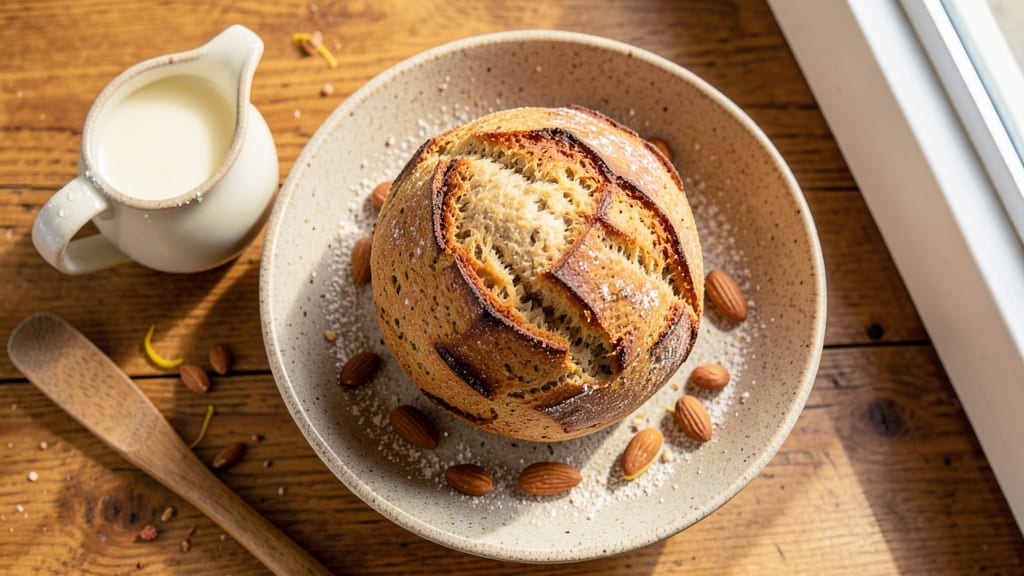
This almond flour soda bread recipe delivers the perfect gluten-free alternative to classic Irish soda bread—with a crispy top and tender crumb that bakes up in just 45 minutes.
Unlike traditional versions, this plant-based loaf uses almond flour for a nutty depth and sturdy structure, while baking soda creates that signature rise without yeast. The secret lies in proper hydration and a touch of psyllium husk for binding, ensuring it holds together without crumbling.
What sets this recipe apart is its versatility—it works as a hearty side for soups, a base for sandwiches, or even a toasted breakfast option. The almond flour adds natural sweetness and a satisfying crunch, while the crispy top (thanks to egg wash substitution with plant milk) makes it irresistible.
No special equipment is needed, just a standard loaf pan and a few pantry staples.
By the time it emerges from the oven, you'll have a golden-brown loaf with a crackly crust and a moist interior that's surprisingly substantial for gluten-free baking.
The flavor is nutty yet mild, allowing it to complement both savory and sweet toppings—think olive oil, flaky salt, or even a drizzle of maple syrup for a dessert twist.
Perfect for those avoiding gluten or looking for a nutritious twist on a classic, this bread proves plant-based baking can be both simple and impressive. Let's get started—your kitchen will smell amazing in no time.
Ingredients for almond flour soda bread
Eight simple ingredients transform into a golden, nutty loaf with a crispy top and tender crumb—no yeast needed.
| Ingredient | Amount | Notes |
|---|---|---|
| Almond Flour 🌰 | 3 cups | Finely ground, unsweetened |
| All-Purpose Flour 🌾 | ½ cup | Gluten-free blend preferred |
| Psyllium Husk Powder 🌿 | 1 tbsp | For binding and structure |
| Baking Soda 🧂 | 2 tsp | Ensures proper rise |
| Salt 🧂 | ½ tsp | Fine sea salt preferred |
| Unsweetened Almond Milk 🥛 | 1 ¼ cups | Room temperature for best mix |
| Maple Syrup 🍁 | ¼ cup | For natural sweetness |
| Flaxseed Meal 🌾 | 2 tbsp | Mixed with 6 tbsp water for egg wash |
| Olive Oil 🫒 | ¼ cup | Extra-virgin for richness |
| Vanilla Extract 🌸 | 1 tsp | Optional but adds depth |
| Flaky Sea Salt 🧂 | 1 tbsp | For topping before baking |
Almond flour is the star here, so grab the finest grind you can find—Bob’s Red Mill or Anthony’s Goods are my go-tos. The psyllium husk might be new to you, but trust me, it’s what keeps this loaf from falling apart. Buy it in bulk if you’re baking often, or grab a small bag at a health food store. For the almond milk, unsweetened is key—Silk or Planet Oat work perfectly. If you’re feeling fancy, a splash of vanilla extract adds warmth, but it’s totally optional. The key is to measure everything precisely—this isn’t a recipe where you can eyeball it.
No almond flour? Cashew flour or oat flour can work in a pinch, but the texture will differ slightly. Swapping the baking soda for powder won’t give you that same rise—stick with the soda. For the egg wash, flaxseed meal is a game-changer, but if you’re out, chia seeds or applesauce can substitute (though flaxseed gives the best crispy top). The maple syrup can be swapped for agave or date syrup if you prefer, but maple adds that classic soda bread sweetness. And if you’re worried about the psyllium husk being too strong, start with just 1 teaspoon and adjust—it’s all about balance here.
This loaf keeps well for 3-4 days in an airtight container at room temperature, but it’s best fresh. For a crispier crust, reheat slices in a toaster or 350°F oven for 5 minutes. The psyllium husk makes it shelf-stable for up to 1 week if wrapped tightly. Freeze slices for up to 3 months—just thaw at room temperature before toasting. Pro tip: Brush the warm loaf with extra olive oil and sprinkle with flaky salt right out of the oven for that bakery-fresh touch.
Why You'll Love This Recipe
- No-Fuss Mixing: I swear by the psyllium husk powder—it’s the secret that keeps this bread light without a single egg or yeast. Just toss everything in a bowl, fold it together, and you’re done. Honestly, my hands are rarely sticky when I make this.
- Nutty Crust, Soft Core: That almond flour gives it a delicate crunch while the baking soda keeps the inside tender. It’s not too sweet, not too bland—just a clean, satisfying bite that pairs perfectly with soup or butter.
- Leftover Hero: This bread stays fresh for days, even without a bag. I’ll be real: it’s my go-to for sandwiches, toast, or French toast. The psyllium keeps it from drying out, so it’s basically foolproof for lazy mornings.
- Budget-Friendly Luxe: Almond flour might sound fancy, but you only need a cup—mixed with regular flour, it stretches further than you’d think. Plus, no fancy equipment needed. My first batch cost less than $3 and fed my whole family.
Step-by-step instructions for almond flour soda bread
Here's how to bake a perfectly risen, gluten-free loaf with that signature crunchy crust.
Mix the Dry Ingredients
In a large mixing bowl, combine all 3 cups almond flour, 0.5 cup all-purpose flour, 1 tbsp psyllium husk powder, 2 tsp baking soda, and 0.5 tsp salt. Use a whisk to break up any lumps in the almond flour—this ensures an even texture throughout. I like to press the mixture through a fine-mesh sieve to eliminate any grit that might make the bread dense.
This dry blend is the foundation of your bread's structure. The psyllium husk powder acts like gluten, creating that classic soda bread rise without any wheat. Mix just until combined—overmixing develops gluten in the all-purpose flour, which could make the bread gummy instead of tender.
Create the Wet Mixture
In a separate bowl, whisk together 1.25 cups unsweetened almond milk, 0.25 cup maple syrup, 0.25 cup olive oil, and 1 tsp vanilla extract. The almond milk should be at room temperature—cold milk can make the batter separate. For the flax egg, mix 2 tbsp flaxseed meal with 6 tbsp water and let it sit for 5 minutes until it thickens into a gel-like consistency.
This wet mixture is where the magic happens. The flax egg replaces traditional eggs while adding binding power, and the olive oil keeps the bread moist. The maple syrup adds natural sweetness and helps with browning. Stir until everything is completely combined—you should have a smooth, slightly thick batter.
Combine Wet and Dry Ingredients
Pour the wet mixture into the dry ingredients and stir gently with a spatula until just combined. You'll notice the batter becomes thick and sticky—this is normal. Don't overmix; just fold until there are no more dry spots. The psyllium husk will start to absorb liquid and thicken the batter as you mix.
Here's the thing—this batter is different from traditional soda bread. It's thicker and stickier because of the almond flour and psyllium. If it seems too thick, add 1-2 tablespoons of almond milk at a time until it reaches a spreadable consistency. The goal is a thick batter that holds its shape when dropped onto a baking sheet.
Shape and Prepare for Baking
Line a baking sheet with parchment paper and lightly grease it with olive oil. Transfer the batter to the prepared sheet and shape it into a 9-inch round loaf using slightly wet hands. The batter will be sticky, so wet your hands first to prevent sticking. Press the edges up gently to create a smooth, even surface.
Sprinkle the top generously with 1 tbsp flaky sea salt—this is what gives gluten-free bread that authentic flavor. Use your fingers to press the salt into the surface so it adheres well. Let the loaf rest for 10 minutes while you preheat your oven to 350°F. This short rest helps the psyllium husk activate fully for that perfect rise.
Bake to Golden Perfection
Bake the loaf for 35-40 minutes until the top is deep golden brown and a toothpick inserted in the center comes out clean. The bread will rise slightly as it bakes, but it won't be as tall as traditional soda bread—this is normal with almond flour. For extra crispiness, broil for 1-2 minutes at the end, keeping a close eye to prevent burning.
Let the bread cool on the baking sheet for 10 minutes before transferring to a wire rack. This resting period is crucial—it allows the psyllium husk to set properly and prevents a gummy texture. The interior should be moist but not wet, with a tender crumb and that signature crunchy top. Slice while still slightly warm for the best texture.
Pro Tips For Making Almond Flour Soda Bread
- MEASURE PSYLLIUM FIRST: Psyllium husk powder is your bread’s glue—too much and it turns rubbery, too little and it collapses. Weigh it out separately (about 1 teaspoon per recipe) and whisk it into the dry mix last so it doesn’t clump. I learned this after one batch turned into a dense brick.
- STEAM THE FIRST 15 MINUTES: Almond flour loves moisture but hates drying out. Place a metal tray on the oven rack below your loaf and pour in 1 cup boiling water. This keeps the crust from cracking prematurely—especially important since almond flour lacks gluten’s stretch. (Yes, even if you’re impatient like me.)
- DON’T OVERMIX THE DOUGH: Fold the wet ingredients into the dry just until combined—stop when you see streaks of flour. Overworking it activates the psyllium too early, making the bread dense. My grandmother swore by this, and she was right: rough edges mean better texture.
- USE COLD WATER FOR THE BATTER: Cold water (not warm) slows the baking soda’s reaction, giving you more time to shape the loaf. Mix the wet ingredients first, then fold in the dry—this prevents a gummy center. I was skeptical until I tried it; the crumb stays light and even.
Troubleshooting this recipe
Dense Instead of Crispy
If your almond flour soda bread turns out dense rather than tender, you likely need more moisture. Almond flour absorbs liquid differently than wheat flour, so don’t hesitate to add 1-2 extra tablespoons of almond milk to your batter if it feels too thick.
Also, ensure your psyllium husk powder is fully dissolved in the wet mixture—it acts as a binder but can create dry pockets if clumped. Let the batter rest for 5-10 extra minutes before shaping to allow the psyllium to hydrate completely. 💡
Flat or Not Rising
For a flat loaf with poor rise, check your baking soda—it’s the leavening agent here. Make sure it’s fresh (old baking soda loses potency) and properly mixed into the dry ingredients. The batter should be thick but pourable, not dough-like.
If it’s too stiff, add 1 tablespoon of almond milk at a time. Also, avoid overmixing—just combine until no dry spots remain. Preheat your oven to 350°F and use an oven thermometer to confirm accuracy; uneven heat can prevent proper rise. ✨
Crumbly or Falling Apart
Crumbly texture usually means insufficient binding. Double-check that your psyllium husk powder is fully activated—it mimics gluten’s structure. If your loaf crumbles when shaping, let the batter rest 10-15 extra minutes to thicken further.
For extra stability, add 1 extra tablespoon of psyllium husk (up to 2 tbsp total). Avoid overhandling the batter, and shape it gently with slightly wet hands to prevent tearing. 🌰
Gummy or Raw Center
A gummy center often means the bread didn’t bake long enough or the oven wasn’t hot enough. Almond flour bread requires 35-40 minutes at 350°F—use an instant-read thermometer to check the internal temperature (205°F at the center).
If your oven runs hot, reduce the temperature to 340°F and bake for 5-10 extra minutes. For even baking, place a metal tray on the lower rack 10 minutes before baking to reflect heat upward. 🔥
Burnt Top Before Cooking Through
Broiling too long or an oven that’s too hot can burn the top before the inside cooks. Lower the oven temperature to 340°F and bake for 40 minutes, then broil for just 1-2 minutes at the end (if needed).
Brush the loaf with a little extra olive oil before baking to prevent over-browning. For even color, rotate the pan halfway through baking. If your oven has hot spots, use the middle rack for more consistent heat. 🌡️
Nutrition facts
Frequently asked questions
Why does this almond flour bread need psyllium husk?
Psyllium husk acts as a natural binder and gluten substitute, giving this bread its signature structure. Without it, the almond flour loaf would crumble or fall apart. The husk absorbs liquid and creates that satisfying chewiness in every bite—think of it as the secret ingredient that makes gluten-free baking work perfectly.
Can I make this recipe without all-purpose flour?
Yes! Swap the 0.5 cup all-purpose flour with an extra 0.5 cup almond flour for a completely nut-based version. For a grain-free option, try 0.5 cup tapioca starch instead—it adds lightness while maintaining the bread's texture. Just remember, the psyllium husk remains essential for binding.
How do I store leftovers to keep them fresh?
Wrap cooled slices tightly in plastic wrap or aluminum foil, then store in an airtight container at room temperature for up to 3 days. For longer storage, freeze slices for up to 3 months. To revive stale bread, warm slices in a 350°F oven for 5-7 minutes or toast in a toaster until crispy. The psyllium husk helps maintain moisture better than traditional bread.
What are the best toppings for this nutty loaf?
For savory versions, try flaky sea salt, smoked paprika, or fresh herbs like rosemary. Sweet lovers can drizzle with maple syrup, melted coconut butter, or a sprinkle of cinnamon. The crispy top pairs perfectly with olive oil and balsamic vinegar for a Mediterranean twist. Pro tip: Brush warm bread with extra olive oil before serving for maximum flavor.
Why does my almond flour batter look different from regular soda bread?
The batter is thicker and stickier because almond flour absorbs more liquid than wheat flour. This is completely normal! The psyllium husk also thickens the mixture as it hydrates. If it seems too thick, add 1-2 tablespoons of almond milk until it reaches a spreadable consistency. The final loaf will have a denser crumb but with a satisfying chewiness that traditional soda bread can't match.