
Side Dishes
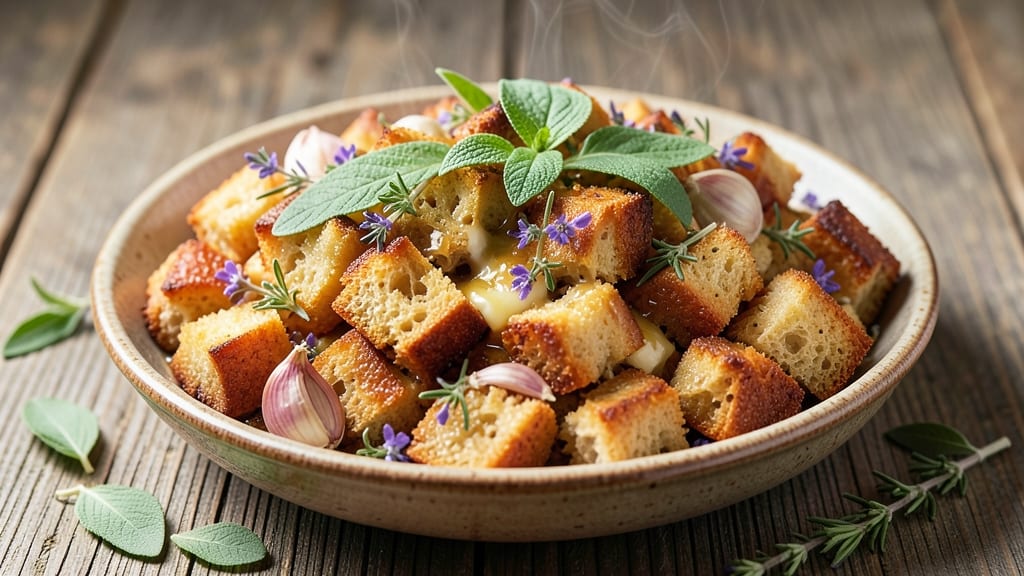
This artisan bread stuffing recipe transforms leftover crusts and stale loaves into a golden, fragrant centerpiece that absorbs flavors like no other. The key lies in toasting the bread just enough to crisp the edges while preserving tender crumbs—no soggy bites here.
I developed this method after years of holiday experiments, and it’s now my go-to for Thanksgiving, Christmas, or any special dinner where you want that restaurant-quality texture.
What sets this stuffing apart is the technique: cubed artisan bread (sourdough works best) gets toasted in butter until golden, then simmered in a rich broth with fresh herbs, garlic, and a touch of thyme.
The result? A stuffing with crispy crust bits that hold their shape and herbed juices locked in every bite. It’s simple but feels luxurious—no fancy ingredients, just quality bread and patience.
The payoff comes when it emerges from the oven: a golden, bubbling masterpiece with layers of texture and flavor. The crust stays crispy, the crumbs remain tender, and the aromatic herbs infuse the broth for depth.
Serve it alongside roasted turkey, ham, or even as a side for steak—it’s that versatile. This isn’t just stuffing; it’s the star of the meal.
For extra richness, fold in sautéed mushrooms or crispy bacon, or keep it classic with just herbs and broth. The beauty of this recipe is its adaptability—it’s foolproof yet customizable. Let’s make stuffing that steals the show.
Ingredients for artisan bread stuffing
Quality bread and fresh herbs create this restaurant-worthy stuffing with crispy crusts and herbed juices.
| Ingredient | Amount | Notes |
|---|---|---|
| Artisan Bread Loaves 🍞 | 3 whole | Stale or crusts preferred, sourdough ideal |
| Unsalted Butter 🧈 | ¾ cup | Cold, cubed for even toasting |
| Fresh Sage Leaves 🌿 | ½ cup | Chopped, stems removed |
| Fresh Thyme Sprigs 🌿 | 6 whole | Leaves only, stems discarded |
| Garlic Cloves 🧄 | 4 cloves | Minced, not powdered |
| Chicken Broth 💧 | 3 cups | Low-sodium, homemade preferred |
| Heavy Cream 🥛 | ½ cup | Full-fat for richness |
| Large Eggs 🥚 | 2 whole | Beaten for binding |
| Salt 🧂 | 1 ½ tsp | Diamond Crystal preferred |
| Ground Black Pepper 🌶️ | ¾ tsp | Freshly cracked |
| Parmesan Cheese 🧀 | ½ cup | Freshly grated, not pre-shredded |
| Olive Oil 🫒 | 1 tbsp | For greasing baking dish |
The bread choice makes all the difference. Sourdough or baguette from a local bakery gives the best texture, but stale loaves work too—just cube them evenly. For extra richness, I recommend Whole Foods or Trader Joe's for their artisanal options. The key is toasting the cubes in butter until golden—this creates those coveted crispy bits. Don't skip this step, even if it takes time. Fresh herbs are non-negotiable here: Penzeys or the bulk section at Costco have the best quality.
No sourdough? French bread or Italian loaves work beautifully. Short on fresh sage? Dried sage at one-third the amount gets you close, but the flavor won't be as vibrant. The chicken broth can be swapped for vegetable broth for a vegetarian version, though the depth will differ slightly. For extra flavor, fold in sautéed mushrooms or crispy bacon before baking. The Parmesan adds umami—grate it yourself for the best texture, as pre-shredded contains anti-caking agents that prevent proper melting.
This stuffing reheats beautifully—just add a splash of broth if it's dried out. Store leftovers in an airtight container for up to 4 days in the fridge. For make-ahead convenience, assemble the stuffing a day ahead and refrigerate until ready to bake. The flavors actually improve overnight as the herbs infuse the broth. When baking, cover loosely with foil for the first 30 minutes to prevent over-browning, then uncover to crisp the top.
Why You'll Love This Recipe
- No-Crumbling Chaos: I’ve ruined stuffing before—this time, the bread stays intact. Tear those crusty artisan loaves by hand (no food processor needed), and the texture holds up perfectly even when reheated.
- Herb-Packed Punch: That combo of browned butter, toasted sage, and thyme? It’s like a warm hug for your turkey. The garlic gets crispy in the oven, and honestly, the first bite makes me want to skip dessert.
- Leftovers That Shine: Stuffing’s weird—it’s better the next day. I make a double batch, stash it in the fridge, and reheat slices in butter until golden. My kids beg for it on sandwiches (yes, really).
- Weeknight Crowd-Pleaser: No fancy prep, no stress. Toss bread, herbs, and garlic in a pan, bake while you roast the bird—done. Even my picky uncle, who hates "fancy food," inhales this. (Between us, that’s the real test.)
Step-by-step instructions for artisan bread stuffing
Transform crusty artisan bread into a rich, herbed stuffing with crispy edges and tender centers.
Prepare the Bread Crumbs
Preheat your oven to 350°F and line a large baking sheet with parchment paper. Cut the 3 whole Artisan Bread Loaves into 1-inch cubes, discarding any soft interior if using stale bread. Spread the cubes evenly on the prepared sheet.
Drizzle the bread cubes with 1 tablespoon olive oil and toss gently to coat. Bake for 15-20 minutes, stirring once halfway through, until the cubes are golden brown and completely dry. Remove from the oven and let cool slightly before transferring to a large mixing bowl.
Sauté Aromatics and Infuse the Butter
In a large skillet, melt 0.75 cup unsalted butter over medium heat. Add the 4 cloves minced garlic and cook for 30 seconds until fragrant but not browned. Stir in the 0.5 cup chopped fresh sage leaves and thyme leaves from 6 sprigs, cooking for 1-2 minutes until the herbs release their oils and become vibrant.
Pour this aromatic butter mixture over the toasted bread cubes in the mixing bowl. Add 1.5 teaspoons salt and 0.75 teaspoon ground black pepper, tossing gently to distribute evenly. Let the mixture sit for 5 minutes to absorb the flavors completely.
Bind and Prepare for Baking
In a separate bowl, whisk together the 2 whole large eggs, 3 cups chicken broth, and 0.5 cup heavy cream until well combined. Pour this liquid mixture into the bread bowl and stir gently with a wooden spoon until everything is moistened but not soupy. The stuffing should hold together when pressed but remain slightly crumbly.
Fold in the 0.5 cup freshly grated Parmesan cheese until evenly distributed. The cheese adds a delightful umami depth and helps create a golden crust during baking. Transfer the mixture to a greased 9x13-inch baking dish, spreading it evenly and pressing down gently to compact.
Bake to Golden Perfection
Bake the stuffing uncovered at 350°F for 35-40 minutes, until the top is deep golden brown and the edges are crispy. If the top begins to brown too quickly, tent loosely with aluminum foil for the last 10 minutes to prevent over-browning while allowing the center to cook through.
For extra crispiness, broil for 1-2 minutes at the end, watching closely to avoid burning. The stuffing is done when a knife inserted in the center comes out clean. Let it rest for 10 minutes before serving to allow the juices to redistribute.
Pro Tips For Making Artisan Bread Stuffing
- Tear It Properly: Grab that artisan bread and rip it into chunks—not slices—about 1.5 inches thick. I learned this the hard way: cubing it first leads to a gluey mess when it bakes. The jagged edges toast better and soak up butter like a dream.
- Toast the Bread Low: Spread the bread chunks on a sheet pan and bake at 300°F (not higher) for 10–12 minutes, stirring once. Too hot, and you’ll burn the edges before the insides dry out. Think "warm and crisp," not "crunchy carbon."
- Sauté Herbs First: Pulse the thyme sprigs and sage leaves in a food processor for 2 seconds—just enough to break them up slightly. Then, sauté in butter with minced garlic until fragrant (about 2 minutes). This releases their oils without turning the stuffing into herb sludge.
- Butter in Layers: After mixing the bread with herbs and broth (if using), fold in cold cubed butter—about 2 tablespoons per pound of bread—before baking. The cold butter melts slowly, keeping the stuffing moist without making it greasy. (Yes, even if you’re impatient like me.)
Wine and beer pairings for this artisan bread stuffing
Crisp White Wine
For this rich, herbed stuffing, a dry Riesling or Sauvignon Blanc from New Zealand is my go-to choice. The bright acidity and citrus notes cut through the buttery richness while complementing the sage and thyme.
I love a Kim Crawford Sauvignon Blanc—its zesty grapefruit and herbal undertones mirror the stuffing’s flavors perfectly. Serve it slightly chilled to enhance its crispness. 🍷
Malty Amber Ale
If you prefer beer, an amber ale with caramel and biscuit notes pairs beautifully with the toasted bread and Parmesan. Look for a New Belgium Fat Tire or Allagash White—the malt sweetness balances the savory depth of the stuffing. The slight carbonation also cleanses your palate between bites. 🍺
Bold Red Wine
For a heartier pairing, a medium-bodied red like Pinot Noir or Chianti works wonders. The Pinot Noir’s earthy undertones enhance the herbs, while Chianti’s acidity keeps the dish from feeling too heavy. I recommend a Willamette Valley Pinot Noir—its red fruit flavors harmonize with the stuffing’s golden crust. 🍇
Creamy Stout
If you’re feeling adventurous, a dark stout like Guinness or Samuel Adams Black Lager adds a luxurious contrast. The roasted malt notes complement the toasted bread, while the creamy texture mirrors the stuffing’s richness. This pairing is especially great for a cozy winter meal. ☕
Non-Alcoholic Options
Skip the alcohol? A sparkling apple cider or ginger beer works beautifully. The effervescence and slight tartness refresh your palate, making each bite of stuffing feel lighter. I love Martinelli’s Sparkling Apple Cider—it’s crisp, sweet, and pairs effortlessly with the herbed flavors. 🍎
Nutrition facts
Frequently asked questions
Can I use any type of bread for this recipe?
While you can use most breads, artisan breads like sourdough, baguette, or rustic loaves work best because they hold their shape and create those coveted crispy crust bits. Avoid soft breads like brioche—they'll turn mushy. For extra flavor, try a whole grain or seeded bread for added texture.
How do I prevent soggy stuffing?
The key is toasting the bread cubes thoroughly before mixing. Bake them until golden brown and completely dry—this creates a moisture barrier. Also, don't add liquid all at once; mix the broth and cream separately and incorporate gently. The eggs help bind while keeping it light.
Can I make this stuffing ahead of time?
Assemble the stuffing up to 24 hours ahead and refrigerate it in an airtight container. When ready to bake, let it sit at room temperature for 30 minutes before baking. The flavors actually improve overnight as the herbs infuse the broth. For make-ahead convenience, this is a game-changer!
What if I don't have fresh herbs?
Use dried herbs at one-third the amount (e.g., 1 teaspoon dried sage instead of 0.5 cup fresh). For best results, rehydrate dried herbs in warm broth for 10 minutes before adding. While not identical, this method still delivers great flavor. Store-bought herb blends work too, though fresh is always superior.
How do I reheat leftovers?
For best results, cover the stuffing with foil and warm in a 350°F oven for 10-15 minutes, adding 2-3 tablespoons broth to restore moisture. Alternatively, microwave for 1-2 minutes (covered) but expect slightly softer texture. The oven method preserves the crispy edges better.