
Side Dishes
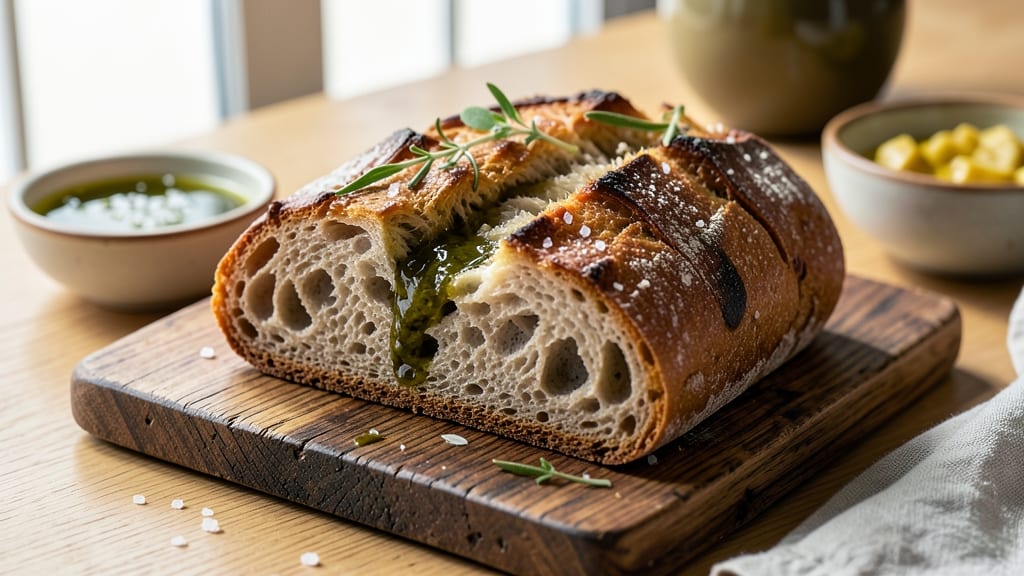
This artisan olive oil bread recipe delivers restaurant-quality results with a crisp golden crust and tender, herby crumb—perfect for any Mediterranean meal. 🔥 The secret lies in a precise blend of high-quality olive oil and fresh herbs, which infuse every bite with rich, aromatic flavor.
Unlike store-bought loaves, this recipe uses traditional techniques to create a texture that's both pillowy and satisfying.
The process begins with a simple dough that requires just a few ingredients: flour, olive oil, yeast, and herbs. No special equipment is needed—just patience for the dough to develop its signature texture.
The kneading and proofing stages are where the magic happens, allowing the gluten to relax and the flavors to meld together. This bread isn't just about taste; it's about the experience of breaking into a warm, fragrant loaf straight from the oven.
What sets this recipe apart is the balance of crispness and softness—achieved through careful baking and a touch of olive oil brushed on the crust just before it goes in.
The result is a loaf with a shatteringly crisp exterior and a crumb so tender it practically melts in your mouth. Serve it alongside soups, pair it with charcuterie, or enjoy it as a side to Mediterranean dishes.
Whether you're baking for a special occasion or simply craving something homemade, this artisan olive oil bread will elevate your table. The aroma alone will have everyone gathering around, and the first bite will convince even the most skeptical bread lovers. Ready to bake?
Ingredients for artisan olive oil bread
Nine simple ingredients transform into a golden, herby loaf with crisp crust and tender crumb.
| Ingredient | Amount | Notes |
|---|---|---|
| All-Purpose Flour 🌾 | 4 cups | Sifted for even texture |
| Extra-Virgin Olive Oil 🫒 | ¾ cup | High-quality, fruity variety |
| Active Dry Yeast 🍞 | 2 ¼ tsp | Freshly measured, not expired |
| Granulated Sugar 🍚 | 1 tbsp | For yeast activation |
| Warm Water 💧 | 1 cup | 110°F for yeast activation |
| Salt 🧂 | 1 ½ tsp | Diamond Crystal preferred |
| Fresh Rosemary 🌿 | 2 tbsp | Finely chopped, stems removed |
| Fresh Thyme 🌿 | 1 tbsp | Leaves only, finely chopped |
| Coarse Sea Salt 🧂 | 1 tsp | For crust sprinkle |
| Cornmeal 🌽 | 2 tbsp | For dusting baking sheet |
| Extra-Virgin Olive Oil (extra) 🫒 | 1 tbsp | For crust brushing |
The olive oil is the soul of this bread—look for extra-virgin with a fruity, peppery finish. Whole Foods or local olive oil shops often carry excellent options, but even a good grocery store brand works if labeled 'cold-pressed.' Fresh herbs make all the difference: rosemary and thyme should smell vibrant, not dried out. For yeast, Bob's Red Mill active dry yeast is reliable, but check the expiration date—old yeast won't activate properly. The sugar isn't for sweetness; it feeds the yeast to kickstart fermentation. Use warm water (110°F) to dissolve it completely before mixing with flour.
No fresh rosemary? Dried works at half the amount, but the flavor won't be as bright. Substitute thyme with oregano or basil if needed, though the Mediterranean profile changes slightly. For a sweeter crust, add 1 tsp honey to the dough (though it's not traditional). If your olive oil tastes bland, infuse it with herbs by heating 1/2 cup with rosemary and thyme for 10 minutes, then straining. The cornmeal is optional but prevents sticking—skip it if you've got parchment paper. For a gluten-free version, swap flour for a 1:1 GF blend, but texture will differ.
Proofed dough keeps 24 hours in the fridge for deeper flavor—just let it sit at room temp for 1 hour before baking. The baked loaf stays fresh 3 days at room temperature wrapped in a towel, or 1 week in the fridge in an airtight bag. For longer storage, slice and freeze portions—3 months max. Reheat slices in a 350°F oven for 5 minutes to restore crispness. The crust oil brushes best right after baking while still warm, but a quick oven toast later restores crispness.
Why You'll Love This Recipe
- Five-Ingredient Magic: I swear by this recipe—just flour, olive oil, yeast, sugar, and water. That’s it. No fancy mixers or confusing steps; it’s the kind of bread that proves good things don’t need to be complicated.
- Golden Crust, Soft Heart: The moment it pulls out of the oven? Chef’s kiss. That crisp, golden crust gives way to a pillowy interior, all thanks to the olive oil’s rich depth. It’s the kind of bread that makes you pause mid-bite—honestly, I’ve been known to eat it straight from the pan.
- Weeknight & Weekend Hero: Toss a loaf in your bag for a picnic or serve it warm with dinner—it’s equally at home. My kids grab it for lunchboxes, and my husband sneaks slices when he thinks I’m not looking. (Between us, I don’t judge.)
- Stays Fresh, Saves Money: This bread keeps for days, even without freezing, and costs pennies per serving. I bake two loaves on Sundays, and by Wednesday, I’m still finding scraps in the bottom of the bag. Budget-friendly? Absolutely. Reliable? Even more so.
Step-by-step instructions for artisan olive oil bread
This method delivers a crust so golden it crackles and a crumb so pillowy it melts in your mouth.
👨🍳 Step 1: Activate the Yeast with Warm Water and Sugar
In a small bowl, combine the 1 cup warm water (tested at 110°F—too hot kills yeast) with the 1 tbsp granulated sugar. Sprinkle the 2.25 tsp active dry yeast over the surface and let sit for 5-10 minutes until frothy. You'll see tiny bubbles form and the mixture expand—this confirms your yeast is alive and ready to work.
I always test the water temperature with a thermometer because my tap runs hot. If the mixture doesn't bubble after 10 minutes, start over with fresh yeast. This activation step is your foundation for that perfect rise we're after.
👨🍳 Step 2: Mix the Dough with Olive Oil and Herbs
In a large bowl, whisk together the 4 cups all-purpose flour and 1.5 tsp salt. Make a well in the center and pour in the yeast mixture along with the 0.75 cup extra-virgin olive oil. Using a wooden spoon, stir until a shaggy dough forms, then turn it out onto a lightly floured surface.
Here's where it gets fun—fold in the 2 tbsp finely chopped fresh rosemary and 1 tbsp fresh thyme by hand. The herbs should be evenly distributed throughout the dough. Kneading by hand gives you better control over the herb placement and prevents overdevelopment of gluten, which keeps that tender crumb we want.
👨🍳 Step 3: Develop the Dough Through Stretching and Folding
Work the dough for 8-10 minutes using the stretch-and-fold method: wet your hands, grab one side of the dough, stretch it upward, then fold it over itself. Rotate the bowl and repeat 4 times total. This technique builds strength without overworking the dough, resulting in that signature open crumb structure.
After each set of folds, the dough should feel smoother and more cohesive. If it's too sticky, add flour 1 tablespoon at a time—but don't overdo it. The dough should be soft but manageable, not dry. Cover the bowl with a damp towel and let rise in a warm place for 1-2 hours or until doubled in size.
🔥 Step 4: Shape and Proof the Loaves
Punch down the risen dough and turn it out onto a lightly floured surface. Divide it into 4 equal portions (about 1 pound each) and shape each into a round boule. To shape, cup your hands around the dough and gently press outward while pulling upward, creating surface tension that helps maintain the shape during baking.
Place the shaped loaves on a baking sheet dusted with 2 tbsp cornmeal. Cover with a damp towel and let proof at room temperature for 30-45 minutes until they've puffed noticeably. The tops should look slightly domed and feel springy when pressed gently with your finger.
🔥 Step 5: Bake with Olive Oil Brush for Maximum Flavor
Preheat your oven to 425°F with a baking stone or inverted baking sheet inside. Brush the tops of the loaves with the 1 tbsp extra-virgin olive oil and sprinkle with 1 tsp coarse sea salt. Bake for 25-30 minutes until the crust is deep golden brown and sounds hollow when tapped on the bottom.
Here's the thing about artisan bread—timing is everything. The crust should be crackling and pull away from the sides just slightly. If it browns too quickly, tent with foil. For that perfect oven spring, I always bake on a preheated stone which conducts heat more evenly than a regular baking sheet.
Pro Tips For Making Artisan Olive Oil Bread
- WEIGH YOUR FLOUR: I learned this the hard way—measuring flour by scooping from the bag packs way too much air, and my dough always came out gummy. Use a kitchen scale for 500g (about 4 cups) and spoon it in gently. The difference in texture is night and day.
- LET THE YEAST BLOOM: Skip the instant gratification and let that yeast sit with the sugar and warm water for 5–10 minutes until it’s bubbly and foamy. This guarantees it’s active before mixing—no more waiting hours for dough to rise because your yeast was asleep at the wheel.
- STRETCH, DON’T FOLD: When shaping the dough, resist the urge to knead it back together. Instead, stretch and fold the edges toward the center in three sets of motions. This builds gluten without overworking it, so your bread stays tender inside with that perfect olive oil crust.
- USE COLD OIL FOR CRUST: Drizzle the shaped dough with cold extra-virgin olive oil before baking—yes, even if it sounds counterintuitive. The oil stays liquid longer, creating a shatteringly crisp crust while keeping the interior moist. Warm oil? You’ll get a soggy bottom. Trust me.
Flavor customization for this dish
Herb Variations
Swap rosemary and thyme for other Mediterranean herbs like 1 tbsp each of oregano and basil for a brighter, more aromatic flavor. For a citrus twist, add 1 tbsp finely grated lemon zest to the dough—it pairs beautifully with the olive oil.
I once used 1 tsp dried marjoram instead of fresh herbs, and while it worked, the flavor was subtler. Fresh herbs always win for vibrant taste. 🌿
Spiced Olive Oil
Infuse your olive oil with warmth by adding ½ tsp red pepper flakes or 1 tsp crushed fennel seeds to the 0.75 cup olive oil before mixing into the dough. For a sweeter note, stir in 1 tsp honey or ½ tsp cinnamon—this works especially well with rosemary.
I love using Penzeys Spices for high-quality dried spices if fresh aren’t available.
Cheesy Twist
Add ½ cup shredded pecorino cheese or grated Parmesan to the dough for a salty, umami-rich variation. The cheese melts slightly during baking, creating pockets of flavor in every bite.
For a stronger punch, use feta crumbles—just be mindful it may make the dough slightly wetter. Sprinkle extra cheese on top before baking for a golden, crispy crust. 🧀
Seeded Crunch
Mix in 2 tbsp toasted sesame seeds, poppy seeds, or sunflower seeds for added texture. For a nutty flavor, fold in ¼ cup chopped walnuts or almonds after kneading.
These additions add visual appeal and a satisfying crunch. I recommend lightly toasting seeds in a dry pan before adding them to enhance their flavor. 🌰
Sweet Olive Oil Bread
Transform this into a sweet loaf by adding 2 tbsp honey or maple syrup to the dough, along with ½ tsp cinnamon. Top with coarse sugar before baking for a caramelized crust.
This version pairs perfectly with coffee or as a breakfast treat. For extra richness, brush the baked loaf with a mix of olive oil and honey while still warm. 🍯
Nutrition facts
Frequently asked questions
Why does my artisan olive oil bread turn out dense instead of light and airy?
Most likely, your dough wasn't kneaded enough or proofed properly. The stretch-and-fold method builds gluten structure for that open crumb. Also check your yeast—if it didn't activate properly (no bubbles in 5-10 minutes), the dough won't rise. Try using a warm oven with a baking stone for better oven spring next time.
Can I substitute butter for olive oil in this recipe?
Not recommended! Olive oil is key for that authentic Mediterranean flavor and tender crumb. Butter would make the crust softer and could overpower the herbs. If you must substitute, use 1/3 cup melted butter plus 1/4 cup olive oil—but expect slightly different texture. The crust won't be as crisp.
How do I store leftover artisan olive oil bread?
Wrap cooled loaves in a clean kitchen towel and store at room temperature for 3 days to maintain freshness. For longer storage, place in an airtight bag in the fridge for 1 week. To revive stale bread, warm slices in a 350°F oven for 5 minutes with a light olive oil brush. Freezing isn't ideal for this bread.
What's the best way to reheat sliced artisan olive oil bread?
For maximum crispiness, place slices on a baking sheet and toast in a 375°F oven for 3-5 minutes until golden. A quick fix is using the air fryer at 350°F for 2 minutes**. Avoid the microwave—it makes bread gummy. For extra flavor, brush slices with olive oil before reheating.
Can I make this bread without a stand mixer?
This recipe is designed for hand kneading using the stretch-and-fold method. The technique takes 8-10 minutes and develops gluten perfectly. Just wet your hands frequently to prevent sticking. The dough should be soft but manageable—add flour 1 tbsp at a time if needed.