
Side Dishes
Austrian rye bread delivers a deep, molasses-kissed crust and a tangy crumb that's perfect for sandwiches or toasted with butter. This recipe captures traditional Austrian techniques—like long fermentation—while keeping the process approachable for home bakers. The secret lies in balancing rye flour's earthiness with just enough sweetness to create that signature dark crust.
What sets this bread apart is its two-stage fermentation: an overnight cold proof and a final room-temperature rise, which develops complex flavors and a chewy texture.
The molasses adds richness without overpowering the rye's natural sourness, while a touch of honey balances the tang. No special equipment is needed—just time and patience.
By the time it emerges from the oven, you'll have a loaf with a glossy, caramelized crust and a dense, moist interior that stays fresh for days. The aroma alone—warm, molasses-sweet with hints of caramel—will transform your kitchen into a Viennese bakery.
This is bread that pairs beautifully with sharp cheeses, smoked meats, or simply slathered with butter.
The best part? This recipe scales easily, whether you're baking for a family or prepping for meal prep. Once you master the fermentation, you can experiment with seeds, nuts, or even a sprinkle of sea salt for extra depth. Let's get started on this classic loaf.
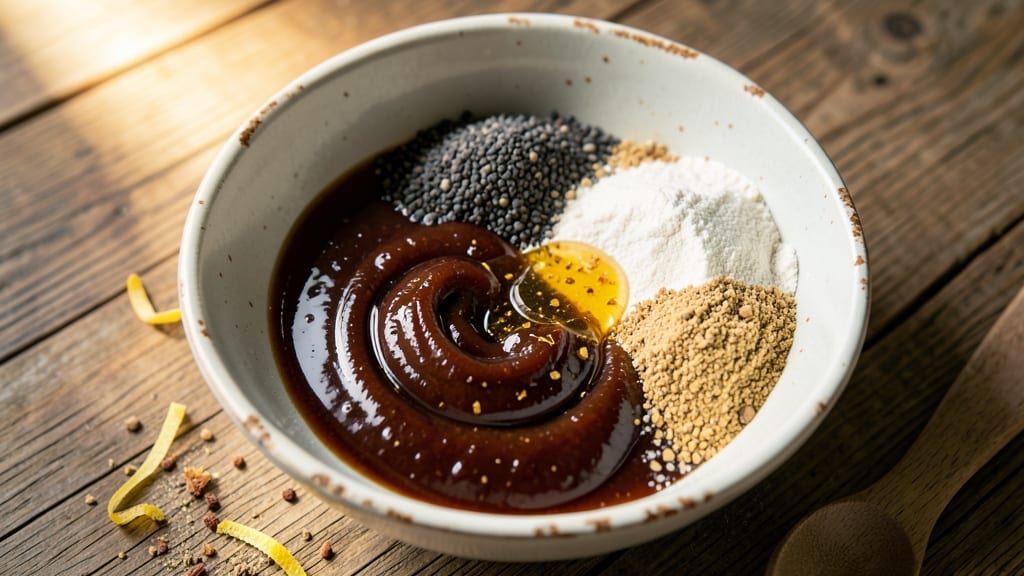
Ingredients for austrian rye bread
Dark rye flour, molasses, and honey create this Austrian classic's signature crust and crumb.
| Ingredient | Amount | Notes |
|---|---|---|
| Dark Rye Flour 🌾 | 3 cups | High-extraction for deep flavor |
| All-Purpose Flour 🌾 | 1 cup | For structural balance |
| Active Dry Yeast 🍞 | ¼ oz | Or 2 packets (2.25g each) |
| Molasses 🍯 | ½ cup | Unsulphured for authentic depth |
| Honey 🍯 | ¼ cup | Wildflower preferred |
| Warm Water 💧 | 1 ½ cups | 105-115°F for yeast activation |
| Salt 🧂 | 1 ½ tsp | Diamond Crystal preferred |
| Vinegar 🍶 | 1 tbsp | Apple cider for tang |
| Olive Oil 🫒 | 2 tbsp | Extra-virgin for richness |
| Sesame Seeds 🌱 | 1 tbsp | Optional for topping |
| Poppy Seeds 🌱 | 1 tbsp | Optional for topping |
| Coarse Sea Salt 🧂 | 1 tsp | For sprinkling crust |
The dark rye flour is non-negotiable here—King Arthur or Bob's Red Mill brands deliver that authentic earthy depth. Look for high-extraction rye (at least 85% extraction rate) for maximum flavor. If you can't find it, mix 2 cups whole wheat flour with 1 cup all-purpose as a substitute, though it won't be identical. The molasses should be unsulphured—Grocery Outlet or bulk bins often have the best prices. For the honey, local wildflower adds subtle floral notes that complement the rye's tang. Store your flours in airtight containers away from heat to preserve freshness.
No dark rye flour? Substitute with 2 cups whole wheat flour plus 1 cup pumpernickel (crushed if needed), though the texture will be slightly denser. The vinegar can be swapped for lemon juice at the same amount, but apple cider adds that classic Austrian tang. For the yeast, instant yeast works too—just skip the proofing step. If you're short on time, reduce the cold fermentation to 4 hours in the fridge, but the flavor won't develop as fully. The sesame and poppy seeds are optional but add beautiful contrast to the dark crust—Trader Joe's has affordable bulk bins for these.
This dough is all about patience. After the initial mix, cover with a damp towel and let it rest at room temperature for 30 minutes before the cold proof. The overnight cold fermentation (8-12 hours) is crucial—it develops those complex, caramelized flavors. Once baked, let the loaf cool on a wire rack for at least 2 hours before slicing (trust me, it's worth the wait). Store wrapped in a clean kitchen towel in an airtight bag for 3-4 days—it only gets better as it stales slightly. For longer storage, freeze slices for up to 3 months, toasting directly from frozen.
Why You'll Love This Recipe
- No-Knead Magic: I swear by this—just mix, let it rise overnight, and bake. That dark rye flour does all the heavy lifting while you sleep, so you’re not stuck slaving away on a weekday afternoon.
- Molasses-Kissed Richness: Between the deep caramel notes of molasses and the subtle sweetness of honey, this bread tastes like a hug from a bakery. The yeast gives it just enough lift to keep it from being too dense, so it’s hearty without feeling heavy.
- Breakfast to Picnic Hero: I make a batch every weekend because it’s perfect with butter, jam, or even as a sandwich base. It keeps beautifully for days, so it’s my go-to for lunchboxes, charcuterie boards, or when I’m too tired to bake anything fresh.
- Budget-Friendly Staple: Dark rye flour might sound fancy, but it’s cheaper than buying pre-sliced artisan bread, and a single loaf lasts me all week. Plus, the molasses and honey stretch my grocery budget without sacrificing flavor—every bite feels like a treat.
Step-by-step instructions for Austrian rye bread
Let's craft this rich, molasses-infused rye bread with a perfect balance of tangy depth and crispy crust.
Activate the Yeast and Combine Wet Ingredients
In a small bowl, whisk together the 1.5 cups warm water (between 105-115°F), 0.5 cup molasses, 0.25 cup honey, and 1 tbsp vinegar. The molasses will thicken the mixture slightly—this is normal. Sprinkle the 0.25 oz active dry yeast over the surface and let it sit for 5-10 minutes until it begins to foam and bubble actively. This confirms your yeast is alive and ready to work.
In a separate large bowl, combine the 3 cups dark rye flour and 1 cup all-purpose flour. The dark rye flour will give that distinctive deep flavor, while the all-purpose flour adds structure. Make a well in the center and pour in the yeast mixture along with the 2 tbsp olive oil and 1.5 tsp salt. The dough will be sticky—this is expected with rye bread.
Knead and Develop Gluten
Using a wooden spoon or your hands, stir the dough until it begins to come together. Then transfer it to a lightly floured surface and knead for 8-10 minutes. You're not looking for a smooth, elastic dough like with white bread—rye dough should be slightly rough and sticky. The goal is to develop just enough gluten to hold the dense structure together while maintaining that characteristic rye texture.
As you knead, you'll notice the dough becomes slightly smoother but still retains its sticky nature. If it's too wet to handle, wet your hands slightly and continue kneading. The molasses and honey help create a moist, tender crumb, so don't be tempted to add extra flour—this would compromise the bread's authentic character.
First Rise and Shape the Loaf
Lightly oil a large bowl and transfer the dough to it. Cover with a damp kitchen towel or plastic wrap and let it rise at room temperature for 1.5-2 hours, or until it has nearly doubled in size. The dough will be slow to rise due to the rye flour's lower gluten content, but patience is key here—this long rise develops the bread's complex flavors.
Once the dough has risen, punch it down gently to release air bubbles. Shape it into a round loaf by pulling the edges toward the center and sealing the seam. Place it on a parchment-lined baking sheet, seam-side down. Cover loosely with the towel and let it rise for another 30-45 minutes until it's just slightly puffy. This second rise gives the bread its final structure.
Score and Bake for Crispy Crust
Preheat your oven to 375°F with a baking stone or inverted baking sheet on the lower rack. This creates steam for a crispy crust. Once the oven is fully preheated, score the top of the loaf with a sharp razor or serrated knife in a crosshatch pattern. This allows the bread to expand properly and creates those beautiful crusty ridges.
Bake for 40-45 minutes until the crust is deep golden brown and sounds hollow when tapped on the bottom. The internal temperature should reach 190-200°F. The bread will smell intensely of molasses and caramelized crust—this is your cue that it's done. If the top browns too quickly, tent with foil after 25 minutes to prevent over-browning.
Cool and Finish with Seeds
Remove the bread from the oven and transfer it to a wire rack to cool completely. This is crucial—cooling too quickly will make the bread gummy. While it cools, mix together the 1 tbsp sesame seeds and 1 tbsp poppy seeds in a small bowl. Once the bread is cool enough to handle (about 1 hour), brush the top with a little melted butter if desired, then sprinkle generously with the seed mixture.
The finished loaf should have a dark, crackly crust with a rich molasses aroma that fills your kitchen. Each slice should reveal a dense, moist crumb with visible pockets of air from the fermentation. Serve warm with butter or jam for the ultimate Austrian rye experience.
Pro Tips For Making Austrian Rye Bread
- Bloom the Yeast First: Skip mixing yeast directly into dry flour—dissolve it in warm (not hot) water with a pinch of honey first, then let it sit for 5-10 minutes until foamy. I learned this the hard way: dry yeast hides in rye’s dense dough, and this step guarantees it wakes up properly before the molasses tries to steal all the moisture.
- Sift the Rye Flour: Dark rye flour is heavy and clumpy. Sift it with the all-purpose flour before mixing to avoid lumps that turn into dense pockets in your bread. My grandmother swore by this, and she was right: even "fine" rye flour needs breaking up, especially when paired with molasses, which loves to cling.
- Don’t Rush the Autolyse: Mix the wet and dry ingredients, cover, and let the dough rest for 20-30 minutes before adding yeast. This step hydrates the rye flour and relaxes the gluten just enough—no kneading required. I was skeptical until I tried it: the crumb becomes lighter, and the molasses flavor shines instead of getting lost in a heavy mass.
- Steam the Oven: Place a metal bowl of boiling water on the oven rack while preheating, then bake the bread with the oven door slightly ajar for the first 10 minutes. The steam mimics a bread oven’s humidity, preventing the molasses-sweetened crust from drying out too fast. Does it look weird? Yes. Does it work? Every single time.
Flavor customization for austrian rye bread
Sweet vs. Savory
The molasses and honey in this recipe create a naturally sweet profile, but you can easily adjust it to be more savory. Reduce the molasses to ¼ cup and add 1 tbsp caraway seeds (toasted and ground) for an authentic Austrian touch.
Caraway seeds add a warm, earthy note that balances the sweetness beautifully. For a completely savory loaf, omit the honey entirely and increase the apple cider vinegar to 2 tbsp—this enhances the tangy depth without sweetness. 🌾
Seed and Nut Variations
Experiment with different toppings to customize texture and flavor. Swap sesame and poppy seeds for 1 tbsp flaxseeds and 1 tbsp sunflower seeds for a nuttier profile.
For extra crunch, try 1 tbsp chopped walnuts or 1 tbsp pumpkin seeds—toast them first in a dry pan for 2-3 minutes until fragrant. If you love texture contrast, mix ½ tbsp sesame seeds with ½ tbsp black sesame seeds for a subtle nutty depth.
Herb Infusions
Add fresh herbs to brighten the rye’s earthiness. Finely chop 1 tbsp fresh rosemary or 1 tbsp fresh thyme and mix it into the dough during the final knead.
For a lighter touch, infuse the dough with 1 tsp dried marjoram or 1 tsp dried savory—these herbs complement the molasses without overpowering it. If using fresh herbs, reduce the salt slightly to 1 tsp to avoid bitterness. 🌿
Spiced Rye Twist
For a festive variation, add ½ tsp ground cinnamon and ¼ tsp ground cloves to the dough. These spices echo the warmth of Austrian holiday breads like Lebkuchen. For a smoky note, sprinkle ½ tsp smoked paprika on top before baking.
If you love heat, add ¼ tsp cayenne pepper to the dough—it’ll mellow out during baking but add a subtle kick to each slice.
Gluten-Free Adaptation
To make this rye bread gluten-free, replace the all-purpose flour with 1 cup gluten-free 1:1 baking flour (like Bob’s Red Mill) and add 2 tbsp xanthan gum to the dough.
For the dark rye, use 1.5 cups gluten-free rye flour (if available) or a blend of 1 cup sorghum flour and ½ cup buckwheat flour. Expect a denser texture, but the molasses and honey will still shine through. 💪
Nutrition facts
Frequently asked questions
Why does my Austrian rye dough feel so sticky?
Rye flour absorbs more moisture than wheat flour, creating a naturally sticky dough. This stickiness is normal and essential for the bread's moist crumb. Use wet hands when handling it, and avoid adding extra flour—it would compromise the bread's authentic texture and flavor. The molasses and honey also contribute to the dough's moisture content.
Can I make this bread without dark rye flour?
Yes, but the flavor won't be identical. Substitute with 2 cups whole wheat flour plus 1 cup pumpernickel flour (crushed if needed). For a lighter version, try 2 cups whole wheat flour plus ½ cup all-purpose flour. The bread will be less dense but still delicious. The molasses and honey will still create that signature sweet-tangy profile.
How do I know when the bread is fully baked?
Look for three key signs: the crust should be deep golden brown, the bread should sound hollow when tapped on the bottom, and the internal temperature should reach 190-200°F. The aroma of caramelized molasses will also fill your kitchen—this is your best indicator! If the top browns too quickly, tent with foil after 25 minutes.
Why is my rye bread dense instead of light?
Rye bread is naturally denser than wheat bread due to its lower gluten content. For a lighter texture, ensure you're using active dry yeast (not instant) and give it the full 8-12 hour cold proof—this develops flavor and structure. Also, avoid over-kneading (just 8-10 minutes is enough) and don't add extra flour during mixing. The molasses and honey contribute to moisture, not density!
Can I bake this in a Dutch oven for better crust?
A Dutch oven creates steam that gives an even crisper crust. Preheat it with the bread inside for 15 minutes before transferring to the oven. Bake for 35-40 minutes (5 minutes less than the recipe) since the Dutch oven retains more heat. The result will be a thicker, crackly crust with that perfect caramelized molasses flavor.